For muddy excursion dogs, you want waterproof, tear-resistant hammocks with anchor straps, non-slip backing, and full door-panel coverage—like the 4Knines Dog Seat Cover, with its 600D polyester and PU backing. For serious cargo protection, model-specific barriers with rubberized grips and D-pillar anchors outperform basic mesh underlays. Match seat measurements to your vehicle before buying. Stick around, and you’ll find out exactly which fabrics, treatments, and fit details separate trail-ready gear from towel failures.
TLDR Key Takeaways
- Choose waterproof, tear-resistant hammocks like the 4Knines with PU backing, double-stitched seams, and anchor straps for muddy paws.
- Look for full coverage: seat backs, door panels, and floor-reaching extensions to block mud and prevent gaps.
- Prioritize non-slip backing and rigid inserts to keep hammocks secure during braking and energetic movement.
- For cargo areas, pick model-specific or telescoping barriers that lock to D-pillar, C-pillar, or OEM anchor points.
- Measure your vehicle’s seat dimensions to ensure a proper fit, especially for trucks or 3-row SUVs.
The Problem With Towels and Loose Blankets in the Car
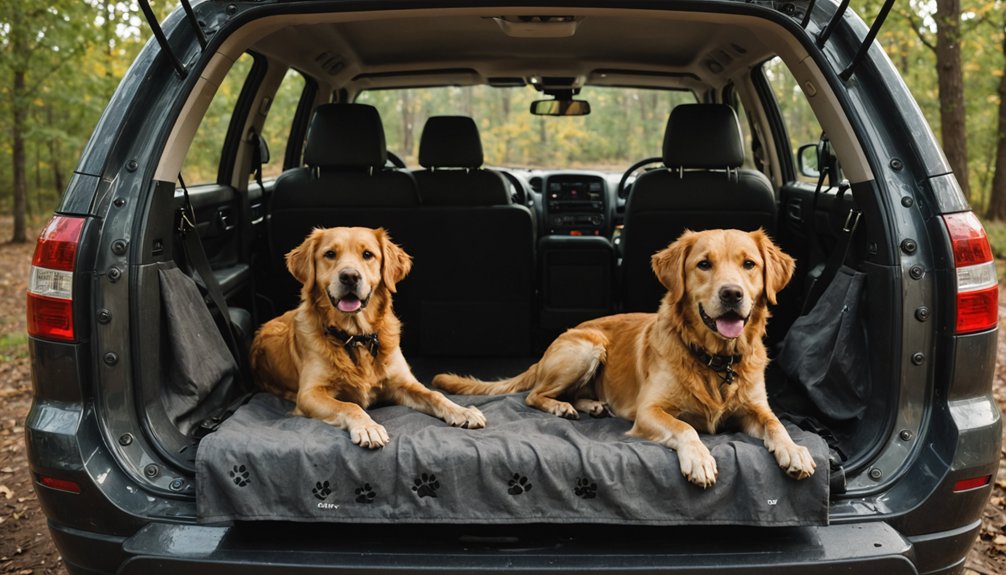
Slide, bunch, gap—that’s the lifecycle of any towel tossed across your back seat. You brake, it shifts. You corner, it bunches. Your dog turns, and there’s the gap—exposed upholstery ready to catch mud, sand, and fur.
No anchors, no straps, no continuous barrier between back seat and console means debris migrates forward every time your dog shakes off.
Once soaked, towels stop protecting and start transferring: mud seeps through to seats, water drips onto carpet, and that muddy mess spreads to windows, door panels, and trim you thought were safe.
Then comes the dirty laundry cycle—washing after every trip, hair clogging your machine, stains that won’t fully lift. Left damp in the car, those towels should really be washed immediately or hung to dry until the next laundry day. You’re chasing freedom on the trail, not doing extra loads at home. A dedicated car kit with proper barriers and covers can spare you this entire cycle of towel failure and laundry frustration.
What Makes a Good Back-Seat Dog Hammock
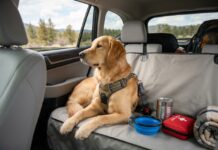
Because towels can’t solve a problem they’re not built for, a real hammock has to. You need waterproof, tear-resistant fabric that covers seat backs, bases, and door panels—so mud and claws never reach your upholstery. Quality options often use Oxford 600D fabric with PU coating to guarantee lasting waterproof protection.
Look for seat-belt openings and secure anchor straps that keep the hammock locked in place, because dog safety depends on stability, not guesswork. Regulators like the DGT actually require an arnés homologado for dogs riding loose in the cabin, so your hammock setup should still accommodate one.
Non-slip backing and rigid inserts close foot-well gaps, protecting paws during hard braking. Padded, breathable material adds pet comfort on long drives, while vented sections prevent overheating after a hard hike. Some sturdier models even feature a reinforced base capable of supporting up to 150 kg, so larger dogs can climb in without the floor sagging or shifting.
A good hammock adapts to your vehicle, not the other way around: adjustable straps, universal fit, and bench-cover options mean freedom to bring your dog anywhere, mess-free.
Top-Rated Muddy-Dog Hammocks Worth Buying
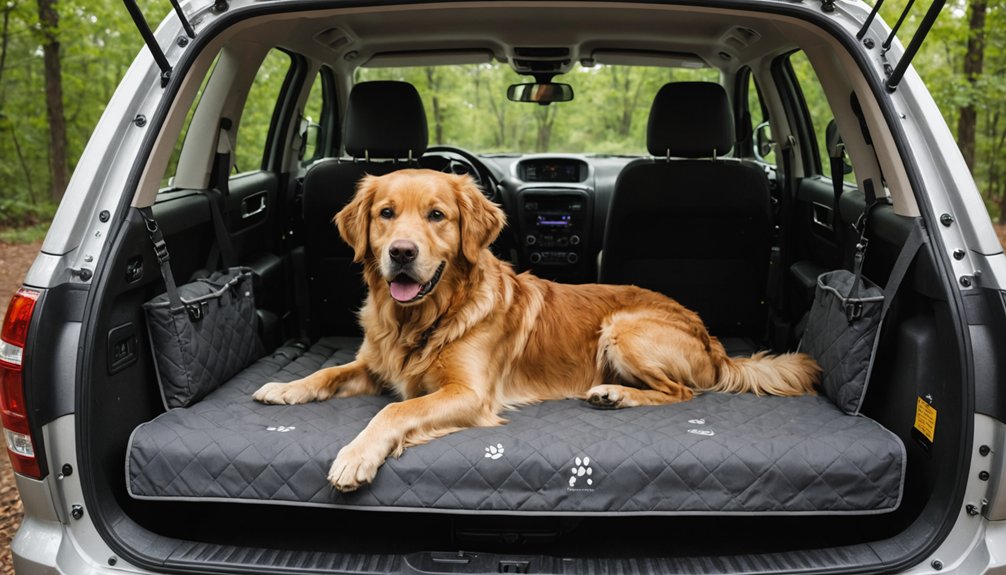
Mud demands more than a wish and a towel—it demands a hammock built to fight it.
If you’re chasing serious Mud Protection, the 4Knines Dog Seat Cover with Hammock leads the pack, built from 600D polyester with a thick PU waterproof backing that laughs at mud and spills.
Look for double-stitched, heat-sealed seams—no weak points for muddy water to exploit.
Extra-wide coverage and side flaps guard door panels, while reinforced headrest straps and metal hardware keep things intact when your 70+ lb dog gets excited.
Anti-slip backing and seat anchors stop sliding under wet, energetic paws.
Padded, quilted surfaces add Dog Comfort without sacrificing waterproofing, and dark colorways keep everything looking clean between trail runs. Backed by a Lifetime Warranty, these hammocks are built to handle years of muddy adventures without letting you down. Since fit is crucial, always double-check your vehicle’s measurements against the manufacturer information before buying. For heavy messes, machine washing should be saved as a last resort, since frequent washing can wear down the waterproof coating over time.
Waterproof Coatings That Keep Mud Off Seats
A hidden shield does most of the dirty work here. Nano coatings bond a SiO₂ layer to every fiber, letting mud and water bead up and roll off instead of soaking in. You still get your seat’s original color, feel, and breathability—just with armor built in. Beyond blocking moisture, this barrier also helps extend the life of factory seats by preventing scratches and tears from muddy claws. Multi-layer fabric treatments go further, pairing a DWR top with a PU/TPU barrier that blocks moisture from ever reaching factory upholstery. This matters most for dogs, since muddy paws and wet fur mean repeated liquid exposure rather than the occasional accident. Products like the Transition Wrap Extreme use this same TPU membrane approach, combined with a zippered headrest enclosure for a secure, gap-free fit.
| Protection Type | How It Works | Best For |
|---|---|---|
| Nano coating | SiO₂ layer repels fiber-level moisture | Light-to-moderate mess, quick trips |
| DWR treatment | Surface tension keeps liquid on top | Short exposure, occasional splashes |
| PU/TPU membrane | Impermeable backing blocks penetration | Heavy mud, frequent excursions |
| Combo systems | Layers stacked for full coverage | Serious off-leash discoverers |
| Reapplication | Every 6-12 months | Long-term freedom on the road |
Scratch-Resistant Fabrics for Muddy Paws
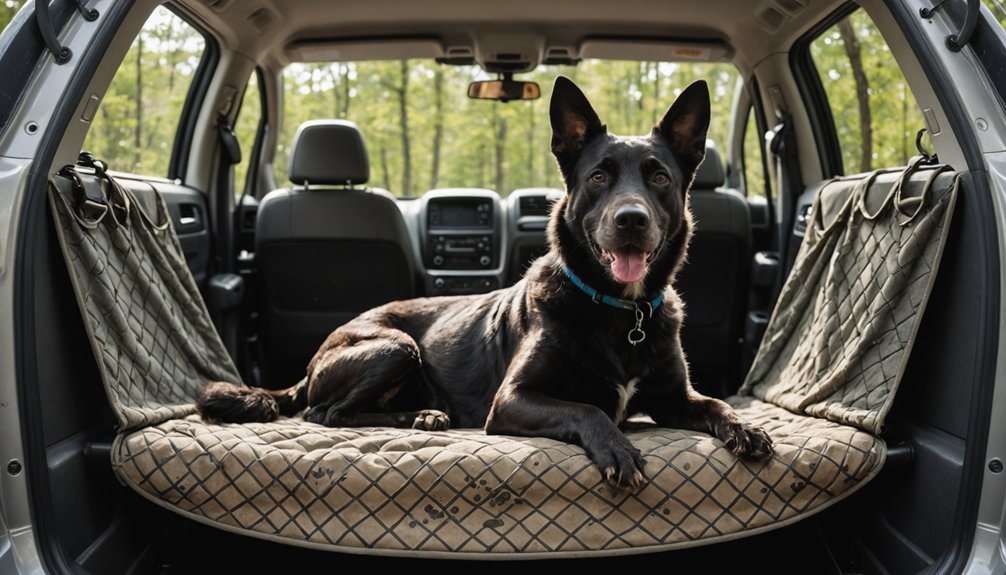
Coatings only handle half the battle—what’s underneath still takes the brunt of claws and grit. You need fabric built to survive daily scratching, not just repel water.
Tight, dense weaves—microfiber, canvas, denim—resist snagging because fibers pack too closely for claws to grab. Skip bouclé, tweed, or chenille; loose weaves invite fraying.
Synthetic fibers like polyester, nylon, and solution-dyed acrylic deliver strong, smooth filaments that shrug off scratches and muddy paw traffic. Performance textiles like Crypton add stain and moisture resistance for real expedition use. These fabrics also feature a tight weave that keeps dirt and hair from working their way into the fibers.
Don’t trust marketing claims—check fabric testing data instead. Look for Martindale scores above 25,000-30,000 cycles or double-rub counts of 15,000+. These numbers tell you what actually survives constant climbing, scratching, and grit—giving you the freedom to hit the trail without worrying about your gear. Beyond durability, a fabric worth trusting should also resist staining and clean easily without trapping pet hair. Regular vacuuming also goes a long way toward keeping these fabrics free of dust and buildup between deep cleans.
Keeping the Dog Hammock From Sliding Around
Sliding kills a hammock’s protection right when you need it most—during hard braking or a sharp turn.
Friction materials matter first: rubberized or silicone backing grips leather and vinyl far better than thin single-layer designs, and dual-layer builds outperform basic mesh underlays.
Keep the seat clean and dry—dust, hair, and water turn any backing slick.
Seat anchors lock the hammock in place structurally.
Foam or plastic anchor tubes wedged between seat back and bottom, combined with under-seat straps and multi-point tethers to headrests or LATCH points, stop fore-aft and side-to-side shifting. Adjustable headrest straps and anchor points are key to keeping any cover securely in place.
Get the fit right, too—sized-to-vehicle coverage, taut headrest straps, and edge-to-edge reinforcement coverage keep corners from curling and sliding forward.
Best Cargo Barriers for SUVs and Wagons
Cargo barriers solve a different problem than hammocks: instead of cushioning the seat, they wall off the entire rear compartment so your dog can’t launch forward during a crash or hard stop.
You’ve got options—universal tubular bars, mesh/grille panels, or model-specific steel frames. Universal bars telescope floor-to-roof, adjust to fit compact crossovers through large SUVs, and skip the drilling. Mesh barriers custom-fit specific models for full coverage.
For real cargo safety, skip seat-back mounts and choose barriers that lock to D-pillar, C-pillar, or OEM anchor points—they resist deformation under impact far better than tension-only setups.
Wagons with vertical tailgates favor full-width rigid designs; tall SUVs need adjustable height and angle for proper vehicle compatibility. Vets recommend solid barriers over unrestrained cargo areas for medium and large dogs.
Hammocks Plus Barriers for Full Coverage
When a hammock alone can’t stop mud from creeping onto door panels or dogs from lunging toward the front seats, pairing it with a barrier closes the gap.
Hammock integration with front-seat panels blocks off the console and footwell while letting airflow and sightlines stay open.
Extended side flaps guard door cards from claws and grit, and floor-reaching extensions catch paws before they hit muddy carpet.
Look for barrier systems with side zips or buckles—they connect to cargo dividers for full 360° containment.
Waterproof, multi-layer fabrics handle mud and moisture without sacrificing seat value, and non-slip backing with anchor points keeps everything locked down when your dog shifts or braces.
Together, hammock and barrier give you real freedom to investigate without cleanup dread.
Ventilation, Padding, and Seatbelt Compatibility
Because muddy hikes often mean warm, panting dogs, a good back-seat hammock can’t trap heat—it needs to breathe. Mesh materials and breathable fabrics enhance air circulation, keeping thermal comfort in check even on sun-soaked drives. Quilted padding delivers joint support and impact protection, absorbing bumps without creating pressure points—freedom to roam rough trails without worry.
Seatbelt compatibility matters just as much as comfort. Look for hammocks with belt-access openings that work with crash-tested restraints, so safety ratings aren’t compromised for dog comfort or owner convenience.
| Feature | Function | Benefit |
|---|---|---|
| Mesh window | Air circulation | Thermal comfort |
| Quilted padding | Impact protection | Joint support |
| Belt openings | Crash testing access | Owner convenience |
Does It Actually Fit Your Car?
Fit isn’t universal, no matter what the packaging claims. Before you buy, take real vehicle measurements: seat width, seat depth, backrest height, and the distance between front and rear seatbacks.
Standard bench seats run 48–56 inches, but full-size trucks and 3-row SUVs often need XL or truck-specific models for proper coverage.
Seat configurations matter just as much as size. Bucket seats create gaps that cause sagging. Split-fold seats and center armrests can break up anchor points unless the hammock has zippered panels built in.
Fixed or missing headrests limit strap-based designs, so check what your vehicle actually offers before assuming compatibility.
Skip the guesswork—measure first, match specs second, and you’ll avoid a hammock that shifts, sags, or leaves gaps on your next muddy trail run.
Cleaning Mud and Odor After the Hike
A hammock only solves half the problem—mud still hitches a ride on your dog’s paws, legs, and belly before it ever touches the fabric.
Stage a cleaning kit at the trailhead and hit these zones first with solid mud removal techniques:
- Silicone paw washer with warm water to clear toes, pads, and dewclaws.
- Soft-bristled brush for dried clay—less smearing, less water wasted.
- Damp towel or wipes on legs and belly before loading up.
- Vinegar-water spray for a quick odor control methods hit on the go.
Full drying matters just as much: towel-dry skin folds and between toes, then finish with a cool hair dryer before the ride home.
Gear That Survives Trail Abuse
Once mud-caked paws and river-soaked fur hit the seat, your hammock’s fabric takes the real test.
You need 600D–900D polyester oxford blends with TPU or PVC layers and non-slip backing—tough enough to shrug off claws, grit, and repeated washing.
Reinforced stitching at headrest straps, seat anchors, and side flaps stops tearing when big dogs jump in and out on every trail stop.
Look for weight capacities over 100–200 lb; that’s real assurance for large-breed expedition dogs and gear.
Metal or heavy-duty plastic buckles outlast thin plastic clips under constant tension.
Side-flap extensions guard door sills from nails and mud, protecting both the vehicle and your dog’s comfort.
For dog safety and pet comfort on rough terrain, this construction isn’t optional—it’s the foundation of freedom to discover hard.
Frequently Asked Questions
Can I Install a Dog Hammock Without Help From Another Person?
Yes, you can handle solo installation easily. Just clip headrest straps, secure bench beams, and tighten bungee cords yourself—no help needed. For large, active dogs, grabbing assistance is simply a personal preference, not a requirement.
How Long Do Dog Hammocks Typically Last With Regular Off-Road Use?
You’ll typically get 1–2 years off-road, since mud, grit, and cornering stress hammock durability fast. Choose 600D fabric resistance and hard-bottom builds, clean regularly, and you’ll extend that lifespan while still chasing every trail freely.
Are Dog Hammocks Safe to Use With Active, Large-Breed Dogs?
Yes, they’re safe when you pair them with a crash-tested restraint. You’ll curb unpredictable dog behavior, enhance pet safety, and still give your large, active dog freedom to relax without risking a dangerous lunge forward.
Can a Dog Hammock Be Used in a Rental Car Safely?
Yes, you can—but don’t rely on the hammock alone. Check rental policies first, then pair it with a restraint for real safety features. You’ll protect the interior, cut distractions, and still keep your dog properly restrained.
Do Dog Hammocks Work With Heated or Leather Car Seats?
Yes—you’ll get solid leather protection and full seat coverage from most hammocks. They shield leather from claws and moisture while allowing moderate heated-seat use. Just avoid max heat settings, secure wrinkles, and drive worry-free on your next excursion.
Conclusion
You don’t need to sacrifice your car’s interior for muddy escapades. Pick a hammock with waterproof coating, scratch-resistant fabric, and proper seatbelt anchors, and you’ll protect your seats through every hike. Measure your car first—fit matters more than brand names. Clean spills fast, and your gear will last for years of trail abuse. Invest once in quality, and you’ll stop dreading the drive home.
References
- https://patasyhogar.com/paseo/asiento-coche-perro/
- https://www.caranddriver.com/car-accessories/g60031018/best-dog-car-seat-covers-tested/
- https://primdog.es/p/waterproof-car-seat-cover-dog-hammock
- https://www.etsy.com/es/market/dog_hammock_for_car
- https://www.pacifiko.cr/compras-en-linea/dog-back-seat-cover-protector-waterproof-scratchproof-nonslip-hammock-for-dogs-backseat-protection-against-dirt-and-pet-fur-durable-pets-seat-covers-for-cars-amp-suvs&pid=Yzc1MDVjMj
- https://elpais.com/escaparate/comparativas/2025-07-28/mejor-protector-de-asiento-de-coche-para-perros.html
- https://www.compramejor.es/mejores-protectores-coche-mascota/
- https://primdog.es/p/dog-car-seat-protector-cover-waterproof-travel-hammock
- https://nestpath.com.au/homeowner-hub/best-dog-seat-cover-australia
- https://www.youtube.com/watch?v=AsGuRH9JdFM