To choose an ISO 11784/11785-compliant microchip, you’ll want to confirm it operates at 134.2 kHz using the FDX-B protocol—that’s what border scanners in the EU, UK, Australia, and New Zealand require. Check for sterile packaging, Paralyne-C coating, and clear ISO labeling with a 15-digit numeric ID. Verify the manufacturer against ICAR’s certified device list before you buy. There’s more you’ll want to know before your pet’s ready to travel.
TLDR Key Takeaways
- Confirm the microchip operates at 134.2 kHz and uses the FDX-B protocol for ISO compliance.
- Check for clear ISO labeling showing the 15-digit numeric ID format on packaging.
- Verify sterile or EO-sterilized packaging and Paralyne-C coating to prevent migration issues.
- Cross-check the manufacturer and product name against ICAR’s official certified device list.
- Ensure only a vet, vet nurse, or approved implanter performs the microchip implantation.
What Does ISO 11784/11785 Compliance Mean?
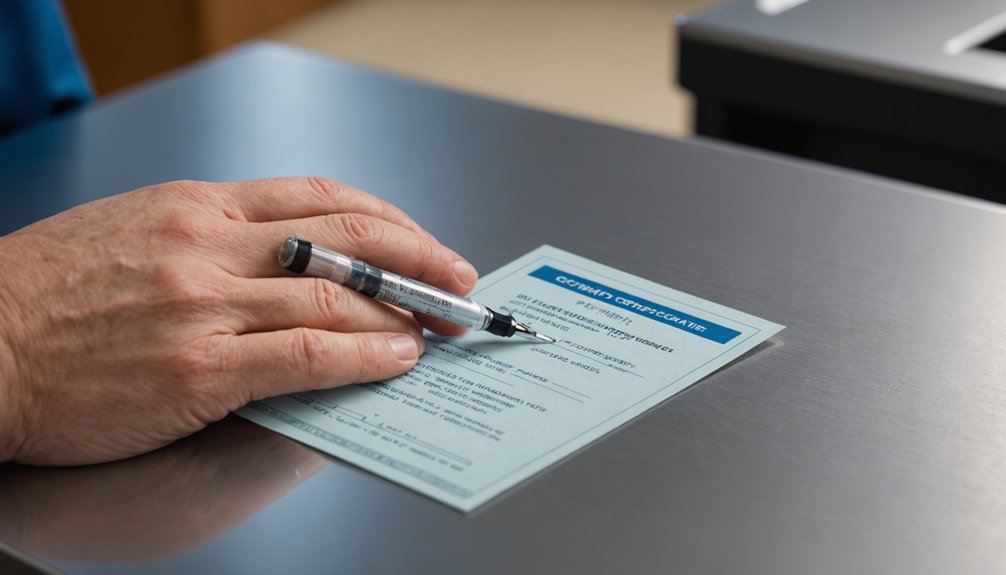
When you see “ISO 11784/11785 compliant” on a microchip’s packaging, you’re looking at adherence to two companion international standards that govern RFID-based animal identification.
ISO 11784 dictates the 64-bit code structure embedded in your pet’s chip—country code, national ID, and error-check bits that guarantee global uniqueness. ISO 11785 governs the technical handshake between transponder and reader: modulation, activation behavior, and communication protocol. The carrier frequency used for this communication is 134.2 kHz.
Together, these standards mean any compliant reader—regardless of manufacturer—can detect and decode your pet’s chip. That’s what gives you freedom to travel without worrying whether a border agent’s scanner will recognize your animal’s identity. Regulatory compliance isn’t bureaucratic red tape here; it’s the mechanism ensuring your pet’s identification holds up anywhere in the world, under any jurisdiction’s animal identification requirements. This unique identification code is stored on an RFID microchip for each animal, ensuring a permanent and tamper-resistant record. Notably, EU Regulation 576/2013 requires that pet animals be identified with such a compliant microchip before any international movement.
Why 134.2 kHz and FDX-B Matter for Pet Travel
Because ISO 11785 designates 134.2 kHz as the standard carrier frequency for animal identification, it’s the frequency your pet’s microchip needs to operate on for seamless recognition abroad.
Border scanners in the EU, UK, Australia, and New Zealand are calibrated for these frequency standards, leaving 125 kHz or 128 kHz chips vulnerable to non-reads. FDX-B, the dominant pet protocol under ISO 11785, pairs with 134.2 kHz to deliver continuous signal response, long read range through tissue, and strong resistance to interference. The 15-digit ISO code also ensures global uniqueness, with no duplication across countries or manufacturers. The International Committee for Animal Recording maintains a public registry of certified ISO-compliant devices, allowing owners to verify their chip’s compliance before traveling.
EU Regulation 576/2013 and similar rules abroad mandate this exact combination. Pets carrying older 9- or 10-character microchips may require re-implantation with a compliant 15-digit chip before international travel can proceed smoothly. If you want unrestricted movement across borders, don’t risk outdated tech—choose a 134.2 kHz FDX-B chip and travel with confidence, not complications.
What Do the 15 Digits on Your Microchip Mean?
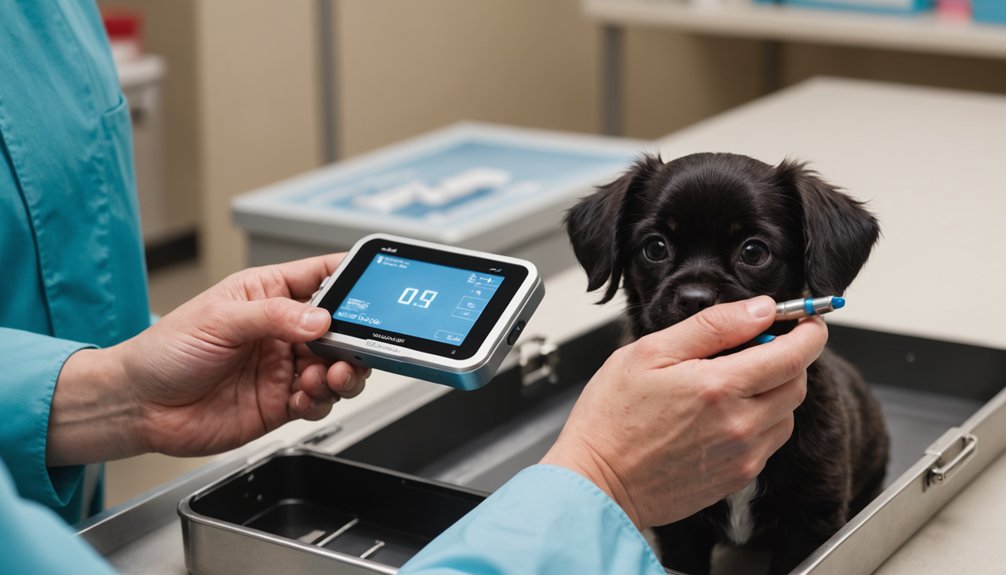
Getting the frequency and protocol right only solves half the puzzle—you also need to know what’s actually encoded on that chip.
Your microchip’s 15-digit number isn’t random—it’s a structured code built on strict microchip standards designed for global traceability.
Every digit serves a purpose, and understanding that structure gives you an advantage when verifying compliance before you travel.
- First 3 digits: Country code (like Peru’s 604) or ICAR-approved manufacturer code
- Last 12 digits: Unique identifiers linking your pet’s record to databases, certificates, and vaccination booklets
- The whole 15-digit sequence: Must match exactly across every travel document you carry
This number is your pet’s passport within a passport—get it wrong, and border officials won’t hesitate to flag it. The International Committee for Animal Recording maintains a registry of RFID devices that conform to ISO standards, giving officials a reliable way to confirm your chip’s legitimacy.
ISO vs. Non-ISO Microchips: What’s the Difference?
Since ISO and non-ISO chips look identical from the outside, you can’t judge compliance by appearance alone—you need to understand what’s happening beneath the surface. Microchip standards hinge on frequency, protocol, and data structure—not looks.
| Feature | ISO-Compliant | Non-ISO |
|---|---|---|
| Frequency | 134.2 kHz (FDX-B) | 125/128 kHz, FDX-A, or proprietary |
| ID Format | 15-digit numeric, ICAR-coded | Shorter, alphanumeric, no manufacturer code |
| Global Scannability | Universal | Requires special reader |
This isn’t bureaucratic nitpicking—it’s the difference between freedom to cross borders with your pet and getting stuck at a checkpoint. Reliable pet identification demands a chip that speaks the same language as scanners worldwide. Choose ISO, and you choose mobility without compromise. Even non-ISO chips like the AVID microchip can be acceptable for import purposes as long as they remain detectable with a universal scanner. Import rules have shifted so that microchips are no longer required to be ISO compliant, but they must instead be readable by an international scanner.
Why 125 kHz Chips Common in North America Cause Problems
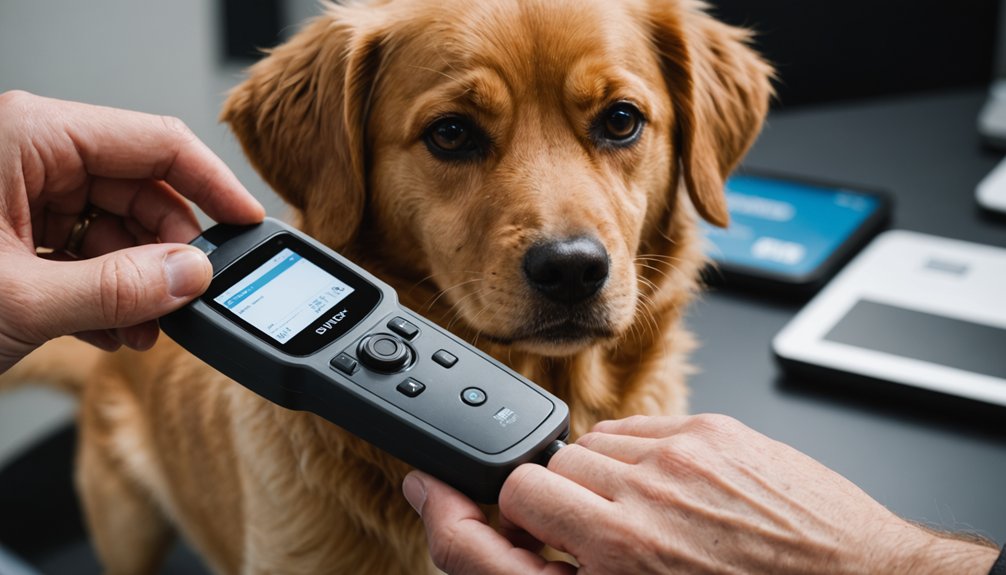
If you’ve microchipped your pet in North America, there’s a good chance you’re carrying a 125 kHz or 128 kHz chip—not the 134.2 kHz ISO standard used internationally.
This frequency mismatch creates real scanner problems at borders and shelters, where forward-reading devices detect only ISO chips. Your pet’s identity depends entirely on whether the equipment matches your chip’s frequency. A universal scanner must be able to pick up all three frequencies to avoid missing your pet’s chip entirely.
- 125 kHz is the oldest, most common U.S. frequency, still distributed by AVID and HomeAgain.
- 128 kHz remains the rarest, with limited distribution nationwide.
- Encrypted and unencrypted 125 kHz protocols add further complications for readers.
- ISO-compliant microchips use 15-digit identification numbers, unlike many older non-ISO chips.
Even scanners marketed as universal aren’t foolproof. US manufacturers have refused to adopt the ISO standard, leaving pet owners to navigate incompatible frequencies on their own. If you’re planning international travel, don’t assume your chip guarantees detection—verify it before you go.
EU Pet Passport Microchip Requirements
Because EU officials won’t accept just any microchip, you need one that meets strict technical standards before your pet travels. Your EU pet passport records your microchip number, implantation date, and location on your pet’s body—linking directly to your travel documentation. Remember that your pet must be microchipped before vaccination to ensure the vaccination remains valid.
It must also document rabies vaccination details: vaccine name, manufacturer, dates, and expiry, all tied to your microchip code. Officials cross-check this data at border controls, so incomplete records can stop your trip cold. Only an authorized veterinarian in an EU Member State can properly complete these official sections of the passport. Keep in mind that the rabies vaccine must be administered more than 21 days before your pet enters the EU.
Your vet keeps these records for at least three years, giving you a reliable paper trail if questions arise. Since pet insurance claims often require matching documentation, keeping your passport accurate protects both your travel plans and your coverage. Don’t leave these details to chance—verify everything before you go.
UK Microchip Rules (and Other Destination Variations)
While the EU sets its own microchip standards, the UK layers on additional rules you can’t afford to ignore.
Entering Great Britain means your pet’s ISO 11784/11785-compliant microchip must be readable at the border—unreadable chips risk quarantine or refused entry.
Timing matters too: implant before or alongside rabies vaccination, not after.
Beyond travel restrictions, domestic rules add another layer once you’re in the UK:
- Dogs must be microchipped and registered by 8 weeks old; cats in England by 20 weeks—fines hit £500 for non-compliance.
- Imported pets need microchipping within 30 days of entry, regardless of age.
- Only vets, vet nurses, or approved trained implanters can legally chip your pet for travel or residency.
Know these rules before you fly—freedom to travel means respecting the fine print.
Already Have a Non-ISO Chip? Here’s What to Do
Older pets often carry a microchip implanted long before ISO 11784/11785 became the global norm—and that legacy chip could jeopardize your travel plans.
You don’t need a full chip replacement, though—a microchip upgrade works just fine. Your vet can implant a second, ISO-compliant chip at 134.2 kHz, using the FDX-B protocol, without removing the original. Both IDs stay documented in your records, but the new chip becomes your primary travel ID.
Before moving forward with vaccinations or titer testing, ask your vet to scan the new chip to confirm it reads correctly. Register both microchip numbers with recovery databases and cross-reference them so either ID leads back to you. This upgrade keeps your travel plans compliant while preserving your pet’s original identification for local recovery systems.
Buying Checklist: Sterility, Coating, and ISO Labeling
Shopping for a compliant chip means checking more than a label that says “ISO.” You need to confirm sterile or EO-sterilized packaging, since implantation demands contamination-free equipment—most ISO listings specify a sterile syringe for this reason.
Beyond sterile packaging, verify coating features that keep the chip stable once implanted. Paralyne-C anti-migration coating prevents drift under the skin, supporting reliable long-term scanning. Don’t treat coating as proof of compliance on its own—it’s a physical feature you confirm separately.
Run through this checklist before you buy:
- Sterile packaging: EO-sterilized, syringe-based delivery documented in product specs
- Coating features: Anti-migration coating like Paralyne-C explicitly listed
- ISO labeling: Clear ISO 11784/11785 marking, 134.2 kHz, FDX-B, and 15-digit ID with manufacturer code
Verify each point independently—your freedom to travel depends on it.
Check the ICAR Registry Before You Buy
Checking sterile packaging, coating, and ISO labels only confirms the physical product—it doesn’t confirm certification. That step requires ICAR Verification.
Before you buy, cross-check the manufacturer and product name against ICAR’s official list of certified devices. This list confirms performance, reliability, and ISO 11784/11785 compliance—anything absent from it counts as uncertified.
Next, complete Microchip Validation by verifying the manufacturer’s code range.
Unshared codes (like 991) identify a single company outright. Shared codes (like 900) require checking the following three digits against ICAR’s sub-allocation tables.
Use ICAR’s online lookup to match your chip’s number to a legitimate manufacturer and range—this exposes counterfeit or non-authorized chips instantly.
Confirming this before purchase guarantees your chip’s number works within international databases and meets travel requirements.
Register Your Microchip in a Travel-Accepted Database
A compliant chip means nothing if no one can find its record.
Database selection determines whether border control officials, vets, or shelters can access your pet’s identity when it matters most.
Skip proprietary or local-only systems—choose one recognized under destination rules and country regulations, ideally referenced in official import structures.
Your microchip registration should confirm:
- Global searchability: The database supports FDX-B ISO chips and links directly to manufacturer/country codes.
- 24/7 access: Authorized searchers worldwide can retrieve records anytime, meeting travel requirements without delay.
- Secure record keeping: Contact details stay updated, protected, and consistent across health certificates.
Owner responsibility doesn’t end at implantation.
Proper pet identification through a travel-accepted database safeguards animal safety—and your freedom to cross borders without complication.
Do a Pre-Travel ISO Scan to Confirm Readability
Because a chip that fails at the border can end your trip before it starts, you shouldn’t rely on assumption alone—confirm readability with an actual scan. Schedule your first scan 8–12 weeks before departure, then verify again within 72 hours of travel. These travel precautions catch non-ISO or migrated chips early, giving time to correct issues before they threaten pet safety.
| Timing | Action |
|---|---|
| 8–12 weeks out | Scan with dual-frequency reader |
| Vet visit | Cross-check 15-digit ID vs. documents |
| Pre-departure | Second scan (owner + clinic device) |
| Within 72 hours | Final readability confirmation |
Use ISO-compliant, calibrated scanners, and verify the number matches your paperwork exactly—one wrong digit can trigger refusal of entry.
Frequently Asked Questions
How Much Does ISO Microchip Implantation Typically Cost at a Vet Clinic?
You’ll typically pay $38–$87 at full-service vet clinics, averaging $48. Vet fees cover the chip, implantation, and registration—implant costs stay low since chips wholesale under $11. You’re free to shop around confidently.
Does Pet Insurance Cover Microchip Replacement or Upgrades Before Travel?
Generally, no—you shouldn’t count on it. Most pet policies exclude replacement or upgrades as routine care, and insurance coverage for pre-travel chip swaps stays inconsistent. Check your wellness rider directly; don’t assume reimbursement before you book that trip.
Can Airlines Refuse Boarding Solely Due to Microchip Incompatibility Issues?
Yes, airlines can refuse you boarding solely for microchip incompatibility—it’s a documentation issue, not discrimination. You’re bound by airline policies and travel restrictions tied to destination rules, so verify ISO compliance before flying to protect your freedom to travel.
How Long Does Microchip Registration Typically Take Before Travel Documents Finalize?
You’ll typically see registration finalized within 24-72 hours, not weeks. It’s the rabies waiting periods that eat your timeline. Meet travel requirements early, respect registration deadlines, and you’ll keep your travel plans free and unrestricted.
Who Pays if a Non-Iso Chip Causes Travel Delays or Denial?
You pay. Owner liability covers travel costs when a non-ISO chip triggers delays or denial—airlines and border authorities won’t reimburse you. Choose ISO-compliant chips upfront; it’s your responsibility, your freedom to travel smoothly, and your wallet at stake.
Conclusion
You don’t want to gamble on customs day. Choose an ISO 11784/11785-compliant, 134.2 kHz FDX-B microchip, verify it against the ICAR registry, and register it in a travel-accepted database before you book anything. Skip 125 kHz chips built for North American use only—they’ll fail scanner checks abroad. Finish with a pre-travel ISO scan to confirm readability. That’s the standard vets and border agencies actually require.
References
- https://www.reddit.com/r/CatAdvice/comments/102443r/how_do_i_know_if_my_cats_microchip_meets_the_iso/
- https://wsava.org/wp-content/uploads/2020/01/Microchipping-The-Importance-of-ISO.pdf
- https://en.wikipedia.org/wiki/ISO_11784_and_ISO_11785
- https://tailwindglobalpet.com/blog/iso-compatible-microchips/
- https://www.24pet.com/products/microchips
- https://www.legislation.gov.uk/uksi/2023/468/regulation/5/made/data.xht
- https://www.petrelocation.com/stories/post/iso-compatible-microchips-for-pet-travel-to-the-european-union
- https://www.icar.org/icar-registry-of-rfid-devices-in-conformance-with-iso-11784-11785/
- https://www.dorfidtag.com/ISO-11784-11785-Pet-Microchip-Explained_2877.html
- https://www.petrelocation.com/blog/post/avid-microchips-clarification