Prevent dog theft at rest stops by parking in well-lit, visible spots near entrances, never leaving your dog alone in the car, and locking every door before you walk away. Keep your dog leashed with a short lead, limit bathroom breaks to under five minutes, and microchip your dog with updated contact info. Add GPS tracking for extra security. Stay alert for lingering strangers—these simple habits keep your dog safe, and there’s more to know ahead.
TLDR Key Takeaways
- Park in well-lit, visible spots near entrances with CCTV coverage and clear sightlines to buildings.
- Keep dogs leashed with a short, fixed lead at all times near vehicles and trails.
- Never leave dogs alone in a locked car; thieves target unattended vehicles within seconds.
- Equip dogs with registered microchips, ID tags, and secured GPS collars for fast recovery.
- Watch for warning signs like loitering strangers, odd markings, or uninvited attempts to pet dogs.
Why Dog Theft Happens at Rest Stops and Trailheads
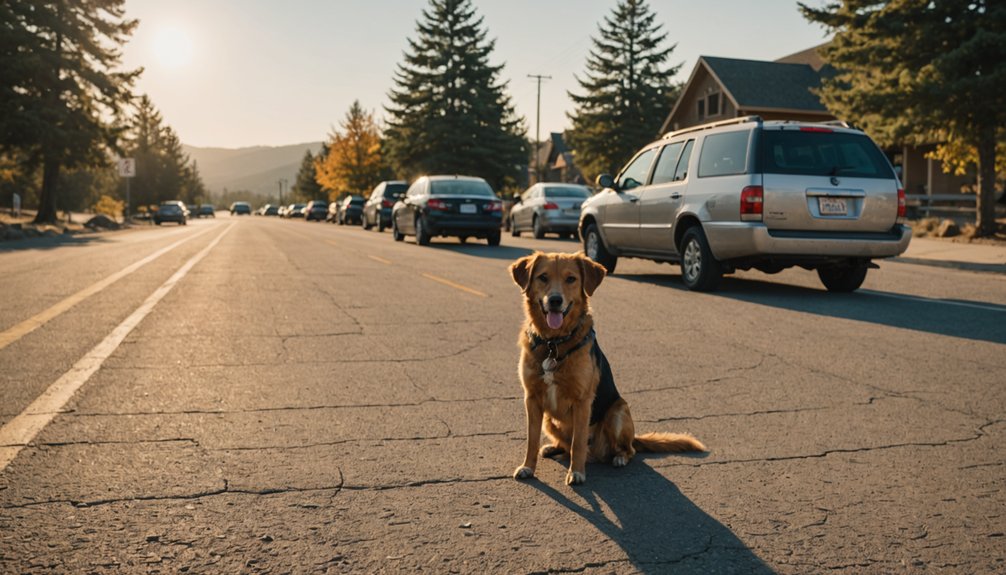
Because dogs have become precious commodities, thieves treat rest stops and trailheads as prime hunting grounds. Purebred and designer breeds fetch quick cash online, and you’re an easy target when you leave your dog unattended, even briefly.
These locations invite dog theft because transient traffic and distracted travelers create perfect windows of opportunity—thieves need mere seconds to strike. Small dogs and puppies are prime targets since they’re easy to grab and conceal. Intact dogs face risks from breeders and puppy mills, while popular breeds like French Bulldogs and Chihuahuas attract profit-driven criminals. Some thieves even approach dogs in a friendly manner, which explains why many pets remain calm during these thefts.
Minimal surveillance and rare patrols at rural trailheads embolden offenders further. Protecting your freedom to travel with your companion means understanding these risks. Only 10–15% of stolen pets are ever recovered, making prevention at these vulnerable locations even more critical. Nearly two million pets are stolen each year, underscoring how widespread this threat truly is. Pet safety starts with recognizing why these spaces attract criminals in the first place.
Choose a Safe, Visible Parking Spot
Where you park matters as much as how long you’re gone. Smart parking strategies start with visibility: pick spots near building entrances, main walkways, or staffed facilities where foot traffic stays constant.
Avoid corners, dead-end rows, and spaces hidden behind trucks, RVs, or dense vegetation—these create blind spots thieves exploit. Choose well-lit, open rows with clear sightlines to the rest area building or information kiosks, so help stays close if something looks wrong.
Vehicle safety improves when you steer clear of truck lanes, RV clusters, and remote pet walk areas that lack regular observation. Look for CCTV coverage and designated parking zones instead of informal pull-offs. Many welcome centers, such as the Adirondacks Welcome Center, are LEED-certified and feature staffed facilities with regular foot traffic, making them safer choices for parking. Since quality and cleanliness of amenities vary greatly from state to state, researching rest stops ahead of time can also help you identify which locations offer safer, well-monitored parking. Locations like North Point RV Resort near I-95 are known for offering quiet, spacious sites that add an extra layer of visibility and security for travelers. Know your exit paths, but don’t choose spots that offer thieves the same quick escape route.
Never Leave Your Dog Alone in the Car
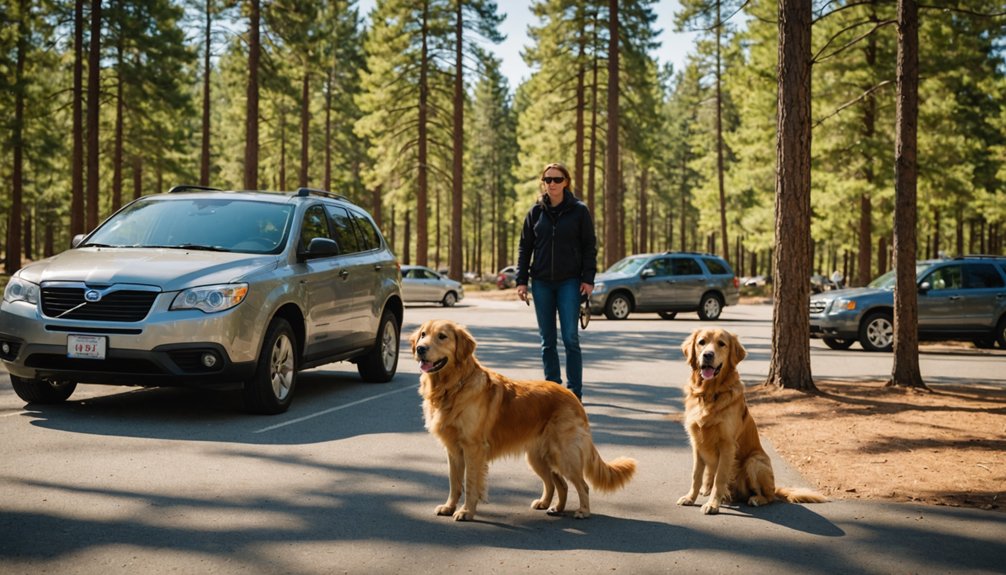
A locked car isn’t a safe room—it’s a trap waiting to spring. Rest stops and trailhead lots draw transient traffic, and thieves scan for dogs left alone in vehicles.
Step away for even a few minutes, and you’ve handed them the opportunity they’re waiting for. Dog safety means never treating your car as a kennel, no matter how quick the errand feels.
Beyond theft, pet welfare takes a direct hit—cars heat up fast, turning into ovens in warm weather and iceboxes in the cold. Your dog can’t regulate that environment, and stress from confinement in unfamiliar surroundings only adds to the danger.
Freedom on the road means bringing your dog with you, not locking them away. Leash up, step out together, and eliminate the risk entirely. Even authorities note that pet theft cases are often filed under broader property offences, making a stolen dog from your car harder to trace and prioritize. Since microchipping is a legal requirement, having your dog microchipped before any road trip gives you a far better chance of reunification if theft occurs at a rest stop.
Lock Your Car Every Time You Step Away
Every time you step away from the car, lock it—no exceptions.
Rest stops and trailhead lots create short, predictable windows where thieves watch for easy targets.
Grabbing food, checking a map, or stretching your legs takes seconds, but so does a theft when a door’s left open. Since dogs cannot be left alone in vehicles, you’ll need a trusted companion or plan to bring them with you whenever you step away.
Vehicle security means locking every access point—doors, hatchback, and any rear entry—not just the driver’s side.
If your car locks automatically, confirm every door actually engaged before you walk off.
Do this before you touch bags or direction-finding, since distraction is what creates openings. Many rest areas along highways such as IH 10, IH 20, IH 35, and US 287 are located far apart, so travelers often stop for extended periods, giving thieves more time to act.
Car locking also keeps leashes, crates, and other visible gear out of sight, so your vehicle doesn’t signal a target.
Make locking automatic, and you close the gap thieves count on.
Handle Bathroom Breaks Without Leaving Your Dog Exposed
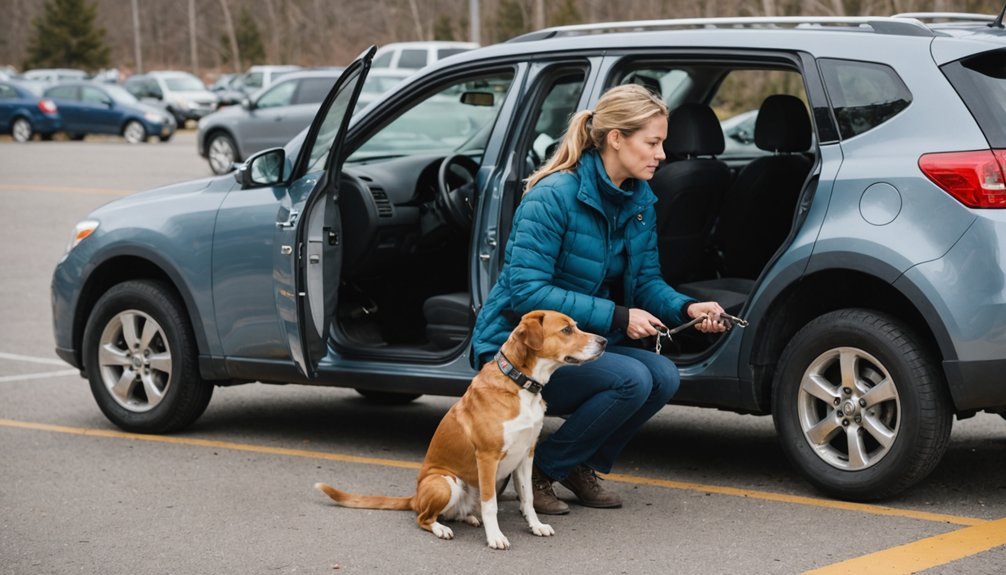
Locking your car handles one risk, but bathroom breaks create a different kind of exposure—one where your dog sits alone and visible while you’re out of sight entirely.
Dog safety starts with smart rest stop planning: choose exterior-access restrooms or dog-friendly businesses that let your leashed dog wait just outside, under your watch.
Park close to the entrance, use drive-throughs and pay-at-pump options for fuel and food, and keep bathroom visits under five minutes.
Prepare beforehand—wallet ready, phone away—so you’re in and out with a single purpose.
Skip peak-crowd plazas where lines stretch your absence. Apps like USA Rest Stops can help you identify busier, well-monitored locations ahead of time.
Favor daylight hours and busier, monitored travel plazas with more foot traffic.
Every minute you shave off cuts theft risk and keeps your dog safer, cooler, and closer to you.
Avoid Tying Your Dog Up at Rest Stops
Tethering your dog outside a rest stop feels convenient, but it’s an open invitation to thieves.
A tied leash tells everyone nearby that no one’s watching, and that’s all a thief needs.
Rest areas lack surveillance, staff oversight, and controlled access, giving criminals easy exits onto highways or trails within minutes.
Your dog’s predictable routine at these spots makes theft even easier for opportunists scanning for unattended pets.
Pet safety means never treating your dog as expendable for a few minutes of convenience.
Dog security starts with you staying present, not a rope or clip:
- Skip the tether: Take your dog inside or leave them secured in your vehicle instead.
- Stay visible: Keep your dog within arm’s reach at all times.
- Trust your instincts: If a stop feels off, move to another location.
Freedom means keeping your dog safe, not leaving them vulnerable.
Choose Trailheads That Are Busy, Bright, and Watched
Where you park matters just as much as how closely you watch your dog. Trail safety starts before you even hit the trail—it starts with parking security. Skip secluded corners, unlit pullouts, or roadside shoulders where no one’s watching. Instead, choose trailheads buzzing with hikers, staff, or volunteers. Busy lots mean less time your vehicle sits unattended, and bright, open spaces make thieves think twice. Checking a trailhead’s history of incidents beforehand can help you decide whether researching parking areas is worth the extra effort before you arrive. Whenever possible, also consider alternative transportation like carpooling or a trailhead shuttle, so your vehicle isn’t left alone in a vulnerable spot at all. During larch season, parking areas fill up quickly, so arriving early or choosing a well-monitored lot becomes even more essential for keeping your dog and vehicle safe. You deserve the freedom to discover without worrying about what’s happening back at your car.
| Parking Choice | Risk Level | Peace of Mind |
|---|---|---|
| Isolated roadside | High | Low |
| Dim, hidden lot | High | Low |
| Busy, lit trailhead | Low | High |
| Managed park lot | Low | High |
Choose visibility. Choose freedom. Choose safety for your dog.
Keep Your Dog Leashed Near Parking and Trails
A leash is your dog’s lifeline the moment you step out of the car. Clip it before you open the door, and keep it clipped through every rest stop or trailhead visit.
Leash safety isn’t about restriction—it’s what gives you the freedom to discover without fear of losing your dog to traffic, distraction, or a thief scanning the parking lot. Skip the retractable leads here; a short, fixed leash gives you real control when things get chaotic. Most rest stops even have designated dog potty areas, so keeping your dog leashed while heading there reduces the chance of a quick grab in a busy lot.
- Attach the leash before opening the car door, every time
- Use a 4–6 ft non-retractable lead near trailheads and lots
- Keep leashed dogs close to prevent stranger contact or lunging
Dog security starts with your grip. Never loosen it near roads, crowds, or unfamiliar faces.
Microchip and Tag Your Dog for Fast Recovery
Permanent identification gives your dog a second layer of protection that a leash alone can’t provide.
A rice-grain microchip implanted between the shoulder blades can’t fall off, fade, or get torn away during a scuffle at a rest stop.
But the chip only works if you complete lifetime registry enrollment with accurate contact details—an unregistered chip is just inert plastic.
Update your information immediately after any move or phone change, and have your vet scan the chip annually to confirm it’s reading correctly.
Pair the microchip with a legible collar tag showing your current number.
Tags offer instant contact without a scanner; chips guarantee identification even if the collar’s gone.
Together, they’re the ASPCA’s gold standard for fast, reliable recovery.
Add GPS Tracking to Protect Your Dog
GPS tracking closes the gap that microchips and tags can’t: real-time location.
When your dog roams free at a rest stop or trailhead, you need to know exactly where they are, instantly.
Choose an off-grid system that works without cell service, since backcountry lots often have none.
Set virtual fences around parking zones and campsites—if your dog crosses that line, you’ll get an alert immediately.
- Charge fully before hitting the road; dead batteries mean blind spots
- Secure the collar tightly—device security stops thieves from removing it easily
- Check your setup before every stop: app running, signal strong, subscription active
Pair GPS tracking with ID tags and a microchip.
Layered protection keeps your freedom—and your dog—intact.
Spot the Warning Signs of an Attempted Dog Theft
Technology alone won’t stop a determined thief—you need to know what to look for before they strike.
Dog owners must stay alert to strangers lingering near vehicles, cruising the lot at walking pace, or watching kennel doors and crate latches without reason.
Watch for anyone calling to your dog through a cracked window or asking pointed questions about breed, value, or how often you visit that trailhead.
Uninvited attempts to pet or grab a leash while you’re distracted are red flags, as are people photographing your dog or license plate.
Check for chalk marks, zip ties, or odd symbols near your regular parking spot—thieves mark targets in advance.
Pet safety depends on recognizing these signs early, before a coordinated approach becomes a theft in progress.
What to Do the Moment You Suspect Dog Theft
The moment you suspect your dog’s been stolen, don’t waste time hoping he’ll wander back—act fast and act decisively.
Your dog safety depends on speed, not hesitation.
Every minute matters when a thief has a head start, so treat this as a crime scene, not a waiting game.
- Call the police immediately and report it as stolen property—give them exact time, location, and a full description of your dog and any suspect or vehicle.
- Check for CCTV at rest stops, trailheads, or nearby businesses before footage gets erased.
- Alert microchip databases and local shelters to flag your dog as missing.
Pet protection means taking control now—your fast action gives your dog the best shot at coming home safe.
Frequently Asked Questions
Is Dog Theft Covered by Pet Insurance or Homeowner’s Policies?
Yes, but only sometimes: pet insurance may cover theft, while homeowner’s policies won’t. Check policy exclusions carefully—microchipping requirements, waiting periods, and paid-care exclusions create real insurance limitations. Don’t assume you’re protected; verify your coverage before you hit the road.
Can I Legally Use Force to Stop Someone Stealing My Dog?
Yes, you can use reasonable, non-deadly force to stop dog theft—this isn’t self defense of a person, though. Avoid weapons or deadly force; you’ll face serious legal consequences. Stay proportional, prioritize safety, and call police immediately.
Do Certain Dog Breeds Get Targeted More Often by Thieves?
Yes, breed targeting is real. You’ll see clear theft patterns favoring French Bulldogs, Cockapoos, Chihuahuas, and Spaniels—breeds with high resale value and demand. Don’t assume your dog’s safe; thieves target opportunity and profit, not just popularity.
How Long After Theft Should I Wait Before Assuming My Dog Is Stolen?
You don’t wait. If you see evidence of taking, act instantly—there’s no required waiting period. File your stolen notification with police and shelters immediately; delay only weakens recovery odds and lets thieves gain ground.
Are There Dog-Theft Prevention Apps or Community Alert Networks Worth Joining?
Yes—join HOWL and Lost & Stolen Dog networks for instant alerts, plus pair dog tracking GPS collars with pet monitoring apps. You’ll gain real-time location control, community backup, and evidence-gathering tools that keep your freedom to roam intact.
Conclusion
You don’t have to accept dog theft as a risk of travel. Pick visible parking, keep your dog with you, lock up every time, and never leave the car unattended with your dog inside. Add a microchip, ID tags, and GPS tracking as backup layers. Stay alert to suspicious behavior around your vehicle. If something feels wrong, act immediately—alert others, call authorities, and use your tracker. Preparation beats panic every time.
References
- https://www.facebook.com/groups/9003421258/posts/10161086952291259/
- https://www.reddit.com/r/roadtrip/comments/19debf1/rest_stop_etiquette_with_dogs/
- https://www.fdot.gov/maintenance/restareaqa.shtm
- https://figopetinsurance.com/blog/locating-dog-friendly-rest-stops
- https://www.wftv.com/news/local/2-dogs-found-tied-dumpster-central-florida-rest-stop/TRXQXMDP2BDZVGKBCNY6J3YMNM/
- https://www.rspca.org.uk/adviceandwelfare/pets/theft
- https://www.reddit.com/r/roadtrip/comments/159nmzd/solo_drive_with_doghow_do_i_use_the_restroom_not/
- https://www.fourpawsusa.org/our-stories/publications-guides/keep-your-pets-safe-from-theft
- https://www.bringfido.com/blog/top-dog-park-rest-stops/
- https://www.ourwatch.org.uk/protectyourpooch