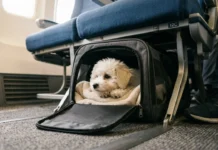
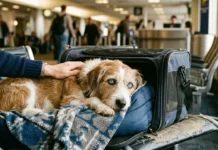
Confirm your cargo terminal’s exact address and building before you fly, then gather essential documents—health certificates, rabies records, microchip data, and the Air Waybill number. Track your flight for real-time updates, and time your arrival around customs hours to dodge delays. Once cleared, locate the cargo office, open the crate safely, and give your dog a potty break before heading home. The steps ahead cover exactly how to traverse each stage smoothly.
TLDR Key Takeaways
- Track your dog’s flight via the airline’s cargo system and wait until landing is confirmed before departing.
- Locate the correct cargo terminal or “Cargo City” building using the Air Waybill number and airport maps.
- Bring all required documents, including health certificates, rabies records, microchip certification, and ID.
- Allow time for customs clearance, health inspection, and documentation review before release.
- After clearance, give your dog a potty break, water, and a calm, secure ride home.
Confirm Cargo Terminal Details Before You Fly
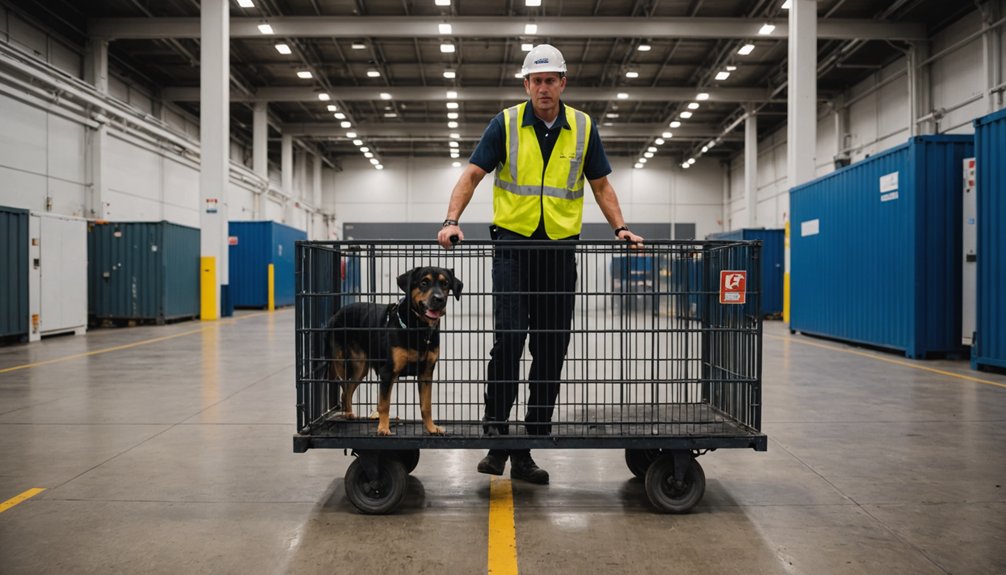
Three details can save you hours of confusion on arrival day: the exact cargo terminal name, its street address, and written directions to get there.
Don’t assume your dog lands at the passenger terminal—cargo logistics often route animals to off-site buildings with names like “Cargo City” or “Airfreight Centre.”
Call the airline before departure and get the specifics in writing.
Confirm which cargo building handles live animals, since large airport terminals sometimes split carriers across multiple locations.
Ask whether inspections happen at a separate quarantine or border facility within the cargo complex.
Check access roads, security gates, and whether pedestrian routes exist.
Remember that dogs can weigh up to 60 lbs and still fly in cargo, so confirm the building can accommodate a crate of that size.
Your dog’s air waybill number lets you track its status online, so keep it handy in case you need to confirm arrival details with the cargo terminal directly.
If your dog is arriving from a high-risk country, be aware that airlines must notify U.S. Customs and Border Protection before transporting the dog to a CDC-registered animal care facility.
This groundwork gives you control over pickup day, so you’re not scrambling to find a building buried deep in unfamiliar airport infrastructure.
Gather Required Documents for Pickup
Knowing where to go means nothing if you show up empty-handed. Document preparation is your shield against customs delays, so build a complete pickup folder before you leave home.
Include the veterinary health certificate, rabies vaccination record, and microchip certificate with matching ID numbers throughout. Add your CDC Dog Import Form receipt, any required foreign or U.S. rabies certifications, and APHIS declarations if your dog traveled from a screwworm-affected country. If your U.S.-vaccinated dog visited a high-risk rabies country within the past six months, include the Certification of U.S.-Issued Rabies Vaccination form completed by a USDA-accredited veterinarian.
Don’t forget the Air Waybill number, flight itinerary, and your passport or government ID with destination address details. Pack duplicates of everything—originals get lost, and you won’t have time to scramble. Remember that this receipt must be printed or saved on your phone, since you’ll need to show it to the airline and U.S. Customs and Border Protection.
Import regulations vary by country, so verify every form matches your dog’s specific origin and risk category before departure. Since dog import rules are subject to change, double-check that all your documents reflect the most current requirements before you travel. Precision here means freedom on arrival.
Track Your Flight to Time Your Arrival
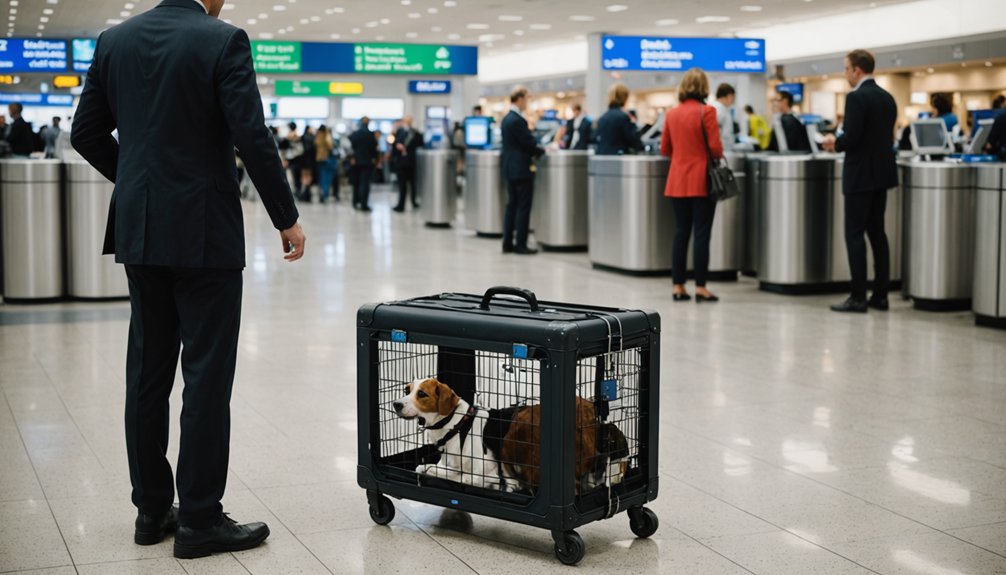
Your carefully assembled documents won’t help if you’re stuck in traffic while your dog waits in cargo.
Flight tracking through the airline’s cargo system, using your AWB number, gives you real-time milestones: check-in, departure, and arrival.
Sign up for airline updates via email or notifications so you’re not revitalizing pages manually.
Don’t leave home the moment the flight departs—status changes fast, and early tracking data may lag.
Wait until landing’s confirmed before heading out.
Domestic pickups typically need 15–20 minutes post-landing; international arrivals demand 30 minutes to an hour for customs and cargo processing. Remember that attendants must observe your dog’s kennel at least every 4 hours during transit, so delays in cargo handling can sometimes affect pickup timing.
American Airlines pegs pet pickup at roughly one hour after arrival.
Once you’re at the airport, use digital maps for step-by-step navigation to locate pet relief areas and find your way to cargo pickup.
Watch for delays or gate changes—they’ll shift your timing, so stay flexible and let the data drive your departure.
Find the Cargo Office or Reception Center
Forget the passenger terminal—your dog won’t be there. Cargo logistics send your pet to a separate cargo terminal, cargo office, or customer care center—often blocks away from where human passengers deplane.
Airport mapping matters here: don’t assume signage will guide you automatically. Look for directions toward “Cargo,” “Freight,” “Cargo City,” or “Cargo District” instead of following arrivals signs.
Some airports split operations further, running a distinct airport office for paperwork and a separate warehouse for physical release.
You’ll need your air waybill number ready—it’s the key identifier linking you to your shipment’s exact location. Facilities can also be located by searching country, state, and city to confirm the correct cargo pickup point.
If you’re unsure which building applies, call the airline’s cargo customer service before you arrive. For example, LOT Cargo’s customer service can be reached through their Cargo and Mail Bureau at their Warsaw headquarters.
Confirming the station and address in advance saves you from wasted time circling an unfamiliar airport perimeter. This kind of pet pickup process mirrors airport-to-airport shipping, where cargo is dropped off and later retrieved by the consignee or an authorized agent at a designated destination facility.
Check Customs Hours to Avoid Delays
Timing is everything when it comes to clearing your dog through customs.
Every airport enforces its own regulations, and ignoring them costs you time, money, and freedom of movement.
Before you book a flight, check the destination’s quarantine procedures and confirm operating hours for animal reception and government vet services. Even after clearing inspection, you should allow 4-8 hours total before your dog is fully released, even on routes with no formal quarantine.
- Weekends and holidays: Many facilities reduce staff or close entirely, delaying release.
- Daily breaks: Lunch closures (often 1–2 PM) can stall inspections mid-process.
- Cut-off times: Arriving after 7–8 PM often means overnight holding. Animals that arrive outside of CAPQ’s opening hours will be held at the ground handling agent’s animal holding areas until the next working day.
Singapore’s CAPQ shuts down Sundays; LAX and JFK only process dogs on weekdays. Countries like the UK often require pet owners to hire a customs broker due to their complex clearance procedures, so factor this into your planning.
Plan your arrival to match these windows, and you’ll avoid unnecessary fees, holding periods, and frustrating airport delays.
What Happens During Customs Clearance?
Once your dog’s flight touches down, a structured clearance process kicks in before you can take them home. Customs authorities, veterinary inspectors, and airport handling teams verify your dog meets all import regulations before granting entry.
The customs process follows a clear sequence: arrival and transfer, documentation review, health inspection, customs approval, and release to you or your handler.
Officials check health certificates, vaccination records, import permits, and your dog’s air waybill, then scan the microchip to confirm it matches these records. If you’re entering the U.S., you’ll need your CDC Dog Import Form receipt on hand.
A visual health check confirms your dog’s fit for release. Skipping any requirement risks quarantine, delays, or refused entry—so tight compliance keeps you moving toward pickup fast.
Budget for Customs and Handling Fees
Money matters just as much as paperwork when your dog clears customs. Pet costs stack up fast, and customs fees rarely arrive alone.
You’re looking at $550–$750 for clearance and processing, plus handling charges that vary by airport and provider. Budget wisely, and you keep control over your dog’s homecoming instead of scrambling for cash at the counter.
Plan for these direct costs:
- Customs clearance & import processing: $550–$750, with weekend surcharges possible
- Airport handling fees: $175–$450 depending on crate size and service level
- Destination delivery: $250–$500 to get your dog from the airport to home
Add airline pet fees and documentation, and your total can climb past $1,950. Know these numbers before you fly, and you’ll walk through customs with confidence, not surprises.
Verify Your Dog’s Microchip and ID
Budgeting covers the financial side, but customs officers won’t clear your dog on cash alone—they’ll want proof of identity that matches the paperwork you’ve paid for.
Before you arrive, confirm your microchip is ISO 11784/11785 compliant, since foreign scanners often can’t read non-standard chips. Have a vet scan it and verify the 15-digit code matches your dog’s passport or ownership documents. If the scanner shows nothing, request a full-body sweep—chips migrate toward the shoulders, sternum, or armpits. Microchip verification doesn’t stop at scanning; check that the number is active in a national or international registry with your current contact details. Pet identification only works if the data behind it’s accurate, registered, and traceable at the border.
Pack These Pickup Essentials
A checklist beats a memory scramble every time you’re standing at a cargo counter with a stressed dog on the other side of a door.
Pack smart, not heavy.
You need originals and photocopies of every permit and health document, cash for handling fees, and comfort supplies ready before your dog clears customs.
Freedom on the road means preparation, not improvisation.
Solid pet care starts with anticipating the mess, the stress, and the paperwork snags before they happen.
- Documents: permits, health certificates, ID, photocopies
- Comfort: water, food, blanket, leash
- Cleanup: wipes, gloves, pads, trash bags
These travel tips aren’t optional extras—they’re the difference between a smooth pickup and a chaotic one.
Pack once, pack right, and walk through customs with confidence.
Open the Crate Safely After the Flight
Before you touch the latch, size up the dog’s temperament—you can’t rush this step. Crate safety starts with your stance: crouch beside the crate, never sit. Speak quietly, then crack the door just enough to block the exit with your body. Slip the lead on while the dog’s still inside, cinch the stopper, and only then swing the door wide open.
If anything feels off, stop. Uncertain dog handling calls for backup, not bravado.
| Step | Action | Purpose |
|---|---|---|
| 1 | Crouch, assess behavior | Stay mobile, gauge risk |
| 2 | Crack door, block exit | Prevent bolting |
| 3 | Apply lead, secure stopper | Control before release |
| 4 | Open fully, grip lead | Safe full exit |
| 5 | Re-latch all points | Confirm closure |
Give Your Dog a Potty Break First
Once you’ve got the lead secured and the crate door open, don’t head straight for baggage claim—your dog’s bladder should top your priority list.
After 10-15+ hours without a proper break, your dog needs relief now, not after you’ve cleared customs. Head straight for designated Relief Areas—many airports offer pet rooms or outdoor spots near baggage claim specifically for this purpose.
A prompt Potty Break isn’t just about comfort—it’s about control:
- Reduces accident risk during customs and inspection
- Eases stress from motion sickness and dehydration
- Prevents urinary irritation, especially in small or senior dogs
If no relief area exists in the secure zone, get outside as soon as you’re permitted. Your dog’s freedom to move, sniff, and reset starts here.
Load Up and Head Home Safely
After that potty break, it’s time to get your dog settled in the car for the ride home.
Your Vehicle Preparation matters now: place the crate on flat, stable ground, secure it with seat belts or cargo straps, and skip the front seat where airbags pose a real risk.
Check that ventilation stays clear for Safe Transit, and keep the crate door accessible for quick checks.
Offer small sips of water in a no-spill bowl to manage Dog Hydration without triggering nausea, and skip the big meal—light snacks only.
Keep the drive calm: choose quiet roads, moderate the temperature, and hold the volume low.
A Calm Environment reduces stress after flight noise, so limit handling and watch for signs of anxiety along the way.
Frequently Asked Questions
What Happens if My Flight Is Delayed and Customs Offices Close Before I Arrive?
Your dog gets kenneled safely until customs reopens. Flight delays and travel disruptions can trigger storage fees and extended holding times. You’ll retain control by prepping documentation early, minimizing costly holds, and ensuring quick release once clearance resumes.
Can Someone Else Pick up My Dog if I Can’t Be There in Person?
Yes, you can arrange authorized pickup. Give your representative a signed letter of authorization, your ID copy, and all original shipping documents. Confirm alternate arrangements with the airline or broker beforehand—you’re free to delegate without losing control.
What Should I Do if My Dog Seems Sick or Injured Upon Arrival?
Act fast: notify airport authorities and demand immediate vet services on-site. Don’t wait for permission—insist on medical care now. Keep your dog calm, avoid food or water, and handle gently until professionals take charge.
Will My Dog Be Fed or Walked if Pickup Is Delayed Several Hours?
You’ll get water and possibly food based on transit time, but you won’t get walks—crate confinement stays enforced. Pet care during animal transport covers basic needs only; exercise happens after you claim your dog.
What if My Dog’s Crate or Paperwork Appears Tampered With on Arrival?
Do a thorough crate inspection immediately, photograph any damage or altered seals, and alert the airline and customs on the spot. Use digital document backups to fill gaps, then file a travel insurance claim if needed.
Conclusion
You’ve got one job on pickup day: stay organized and move fast. Confirm your cargo terminal, track your flight, and check customs hours before you leave home. Bring your documents, leash, and water. Once you’re there, open that crate carefully, let your dog relieve itself, and get on the road. Handle each step in order, and you’ll turn a stressful reunion into a smooth one.
References
- https://bunnysbuddies.org/airport-pickup-information/
- https://www.reddit.com/r/Seattle/comments/12zm2jg/seatac_airport_customs_immigration_with_a_dog/
- https://ffexpresspets.com/self-customs-clearance-for-my-pet/
- https://www.freekoreandogs.org/adoption/airport-pickup-guide/
- https://www.pedigreedatabase.com/community.read?post=893772-picking-up-import-dog-from-airport
- https://animalaircare.co.uk/wp-content/uploads/2022/06/LGW-ARC-Arrivals-Guide.pdf
- https://www.aacargo.com/learn/how-to-transport-pets.html
- https://tomkingskennel.com/all-you-need-to-know-about-picking-up-your-frenchie-at-the-airport-tips-from-puppy-parents/
- https://www.cityoflondon.gov.uk/services/animal-health-welfare/heathrow-animal-reception-centre/importing-your-dog-cat-or-ferret
- https://www.internations.org/guide/global/expat-pets-relocating-with-your-best-friend-16211/preparing-for-travel-3