For backcountry dog emergencies, you want a PLB or satellite messenger, not just a GPS collar. The McMurdo FastFind 220 and ACR ResQLink View lead the PLB category, offering rugged reliability with no subscription fees. If you travel often, the Garmin inReach Mini 2 or SPOT X give you two-way messaging to coordinate directly with rescuers. Pair either with a GPS collar for full coverage. Here’s how to match the right device to your trips.
TLDR Key Takeaways
- McMurdo FastFind 220 offers six years of service life for $250, ideal for emergency-only backup.
- ACR ResQLink View provides 28 hours of battery life plus a display for status confirmation.
- Garmin inReach Mini 2 delivers compact design with true global Iridium coverage for two-way messaging.
- SPOT X offers an affordable entry point on the Globalstar network for satellite communication.
- Pair a PLB or messenger with a GPS collar for real-time tracking and emergency signaling together.
Why Backcountry Dog Emergencies Need Satellite Devices

When your dog tears a pad on volcanic rock or takes a porcupine quill to the face ten miles from the trailhead, the clock starts ticking immediately.
Severe injuries follow a golden hour: survival odds drop fast once definitive care is delayed beyond 60–90 minutes.
On foot, you’re moving 2–3 mph at best, slower off-trail while assisting an injured dog.
Add darkness or a storm rolling in, and self-rescue stalls completely.
Your first aid kit stabilizes—it doesn’t cure fractures, venomous bites, or heatstroke.
That’s where Dog Safety meets Emergency Preparedness.
Most backcountry terrain has zero cell coverage, so calling for help isn’t an option.
Satellite devices bypass that gap entirely, connecting you to rescue and veterinary coordination the moment you need it, no signal required. Many of these devices rely on the Iridium network, which provides reliable global satellite coverage even in the most remote backcountry terrain. Unlike satellite messengers, a true PLB relies on the Cospas-Sarsat network, which has logged over 18,000 successful rescues since the 1970s. Devices like the Garmin inReach Messenger Plus carry a 10.0 rating for SOS/emergency messaging, making split-second dog rescue coordination possible even in total dead zones.
PLB vs Satellite Messenger vs GPS Collar: Which Do You Need?
Three devices, three different jobs—confusing them can cost you critical minutes in an emergency.
This device comparison boils down to purpose: a PLB is your last-resort, one-way distress trigger, hitting COSPAS-SARSAT directly with superior signal strength on 406 MHz.
A satellite messenger gives you two-way communication, letting you cancel false alarms and coordinate with SAR—useful when your dog’s situation is serious but not always life-threatening. Many hikers also value satellite messengers for their ability to provide monthly subscription plans that fit a range of budgets.
A GPS collar, meanwhile, tracks your dog’s location in real time but offers no direct emergency signaling of its own.
You don’t have to choose just one.
Many backcountry owners carry a PLB or messenger for their own safety, paired with a GPS collar to keep tabs on their dog’s whereabouts. Because PLBs should only be activated for life-threatening situations, they shouldn’t be relied on for routine tracking of your dog’s location. A PLB’s multiyear battery life means it can sit ready in your pack for years without needing to be recharged or replaced.
Battery Life, Waterproofing, and Range: What Actually Matters
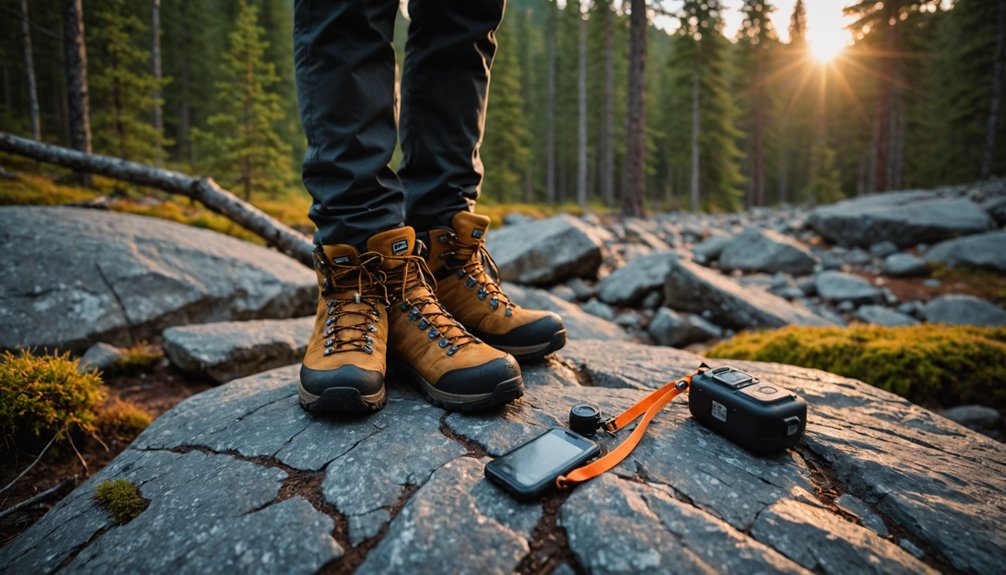
Picking the right device only solves half the problem—you also need it to survive the conditions and last long enough to matter.
PLBs stay dormant for years, providing 24+ hours once activated—pure emergency insurance. Satellite messengers span 2–28 days, shrinking fast with frequent updates, screens, or Bluetooth use. GPS collars range widest: 12 hours to months, with 10–14 days realistic for dual-network models, and up to 3–4 weeks on high-capacity options like the Tractive XL Expedition. Standard collar trackers like the Tractive collar can run up to 7 days on a single charge. Devices like ZOLEO have proven battery endurance, lasting for days before needing a recharge even under heavy use.
Waterproofing matters just as much. IPX7 handles brief submersion; IP68 and 1 ATM ratings hold up to river crossings and mud. Sealed housings also enhance durability against chewing and impact.
In any device comparison, prioritize safety features that match your terrain—because battery life and waterproofing determine whether protection actually holds when you need it most.
The Best PLBs for Dog Backcountry Emergencies
Budget-conscious hikers get real value from the McMurdo FastFind 220 at $250, with six years of service life. Unlike a PLB, a dedicated GPS tracker offers rastreo en tiempo real, allowing owners to pinpoint their dog’s exact location at any moment.
For extended Backcountry Safety margins, the ACR ResQLink View offers 28 hours of battery life and a display for status confirmation—critical when every minute matters and cellular networks don’t exist. Just as physical containment systems provide humane security without causing stress, a reliable PLB offers dependable protection for dogs in remote emergencies without the false confidence of less effective alternatives. Beyond wilderness gear, comprehensive protection also means ensuring adequate liability coverage for dog owners, since obligatory liability insurance has been required for all dog owners in Spain regardless of breed or size since September 2023.
The Best Satellite Messengers for Dog SOS Situations

While PLBs give you a reliable one-way distress signal, two-way satellite messengers let you tell rescuers exactly what’s wrong with your dog and receive confirmation that help’s on the way.
When you’re assessing satellite options, the Garmin inReach Mini 2 stands out for its compact build and true global Iridium coverage—critical if you’re roaming remote or polar terrain with your dog. Larger inReach handhelds add detailed mapping for complex searches, while SPOT X offers a cheaper entry point on the Globalstar network, though with coverage gaps at high latitudes. Globalstar relies on Satélites de órbita terrestre baja to deliver its global reach, which is why coverage can behave differently than Iridium’s network in certain regions. For emergencies specifically, SPOT X also provides direct communication with search and rescue services in life-threatening situations, giving dog owners added peace of mind.
Your device comparison should also factor in message delays: store-and-forward transmission means updates aren’t instant. Prices per minute for satellite calls can range from 1 to 10 euros, depending on the operator and plan, so it’s worth weighing ongoing costs alongside device features. For serious backcountry freedom, Iridium-based devices give you the most dependable link when your dog’s safety is on the line.
The Best Satellite GPS Collars for Backcountry Dogs
Your dog’s collar becomes the frontline tool for keeping tabs on its whereabouts long before any SOS device comes into play.
Real backcountry Dog Tracking demands more than cellular apps—it requires GPS/GLONASS systems like Garmin Alpha or Astro, which use radio links instead of relying on spotty mobile networks. That independence matters when you’re chasing freedom off-grid, far from cell towers.
Collar Durability separates a reliable system from a liability. Look for:
- IP67/IP68 waterproofing for river crossings and storms
- Rugged, shock-resistant housings built for brush and rock
- LED lights or alarms for night or dense-cover recovery
Pair these with breadcrumb trails and geofencing, and you’ve got a system that keeps your dog’s location—and your peace of mind—intact. Some of these collars even feature a virtual fence that alerts you the moment your dog crosses a set boundary.
Comparing Battery Life Across Dog Safety Devices
Battery life splits dog safety devices into two camps: rechargeable and replaceable.
Your battery comparison starts here: the Ruffwear Lighthouse runs on a 280 mAh LiPo, providing up to 20 hours per charge and recharging in about 90 minutes.
Treeline’s device testing confirms similar collar lights hit 5–20 hours, translating to 1–2 weeks of casual nighttime use.
On the replaceable side, SportDOG’s dual CR2032 setup lasts 250 hours, while SATELLAI’s 90 mAh cell stretches to 3.5 months.
Halo’s CR2477 coin cell pushes even further—15 months for the Zone Lighthouse, 9–12 for the Remote.
If you’re chasing backcountry freedom, replaceable coin cells cut recharge logistics; rechargeables demand more planning but offer flexibility for shorter trips.
Which Devices Survive Rough Terrain?
Power management means little if the device can’t survive the fall that triggers an emergency in the first place.
When you’re chasing your dog through rocky washes or dense brush, terrain resistance isn’t optional—it’s survival gear. Rugged devices built to MIL-STD-810G standards handle drops, impacts, and vibration without flinching.
Look for these traits when choosing your device:
- Reinforced housings: Garmin’s inReach Mini and GPSMAP 67i earn “trail tested” reputations for a reason
- Marine-grade toughness: ACR ResQLink and Ocean Signal rescueME PLB1 endure harsh handling and transport
- Sealed simplicity: fewer buttons and ports mean fewer failure points in chaotic rescue scenarios
Dense internal construction matters too. Compact PLBs pack thick casing into small frames, shrugging off knocks that would cripple lesser electronics when you need reliability most.
What Should You Budget for a Full Setup?
Numbers tell the real story here. Budget planning for your backcountry setup hinges on whether you choose a PLB or a satellite messenger, and cost analysis over multiple years reveals stark differences.
| Device Type | Upfront Cost | Ongoing Cost |
|---|---|---|
| Budget PLB | $150–$250 | None |
| Premium PLB | $380–$460 | None |
| Satellite Messenger | $150–$340 | $120–$300/year |
| GPS + Satellite Combo | $500+ | $120–$300/year |
| 5-Year Total (Messenger) | $200–$350 | $600–$1,500+ |
A PLB demands one payment and delivers years of freedom from fees. A messenger costs less upfront but compounds annually. Match your choice to how often you’re actually off-grid—occasional trips favor PLBs, frequent ones may justify messenger flexibility.
Subscription vs Subscription-Free: Which Fits Your Trips?
Those five-year totals only tell half the story—the real question is what kind of trips you’re actually taking with your dog.
Cost comparison aside, device suitability comes down to frequency and communication needs.
If you’re heading out a few times a year for emergency-only backup, a PLB gives you freedom from bills and accounts—buy it once, register it, and forget it until you need it.
If your trips look more like this, a subscription messenger earns its keep:
- Frequent backcountry travel with regular check-ins
- Group trips requiring coordination and location sharing
- Extended trips needing weather updates or two-way texting
Match the device to your actual use pattern, not your worst-case fear.
That’s how you avoid overpaying or being underprepared.
How to Pair a PLB With Your Dog’s GPS Collar
You carry the PLB on your body or the dog’s saddle for emergency activation, while the collar handles routine tracking through its own app or handheld.
There’s no direct RF pairing between these systems—PLB Integration works procedurally, not electronically. Start with Collar Pairing: on Garmin Alpha units, use Dog List → Add Dog → Pair Collar, then long-press the collar’s power button until it beeps and flashes. SportDOG TEK owners traverse SETTINGS → MY COLLARS → PAIR COLLAR, confirming via the amber indicator.
Once paired, cross-reference the collar’s tracking ID with your PLB’s HEX ID in field notes. Confirm the update interval on your handheld, and log last-known collar coordinates on a map app—giving rescuers accurate situation the moment your PLB signal reaches them.
Your Backcountry Safety Checklist for Dogs
Preparation separates a manageable incident from a backcountry tragedy.
Solid Backcountry Planning starts before you hit the trailhead: share your route with someone at home, confirm your dog’s veterinary clearance, and scout terrain hazards along your path.
Dog Preparation means pairing gear with judgment—you can’t call for help if your PLB’s dead or your dog’s paws are shredded miles from the truck.
Before every trip, run through this checklist:
- Navigation and comms: paper map, compass, charged PLB with tested SOS, backup power
- Medical readiness: first aid kit, pre-measured meds, hydration plan, heatstroke/hypothermia awareness
- Gear and visibility: rated leash, paw protection, reflective collar, current ID and microchip
Freedom in the backcountry comes from readiness, not luck.
Plan hard, then go investigate.
Frequently Asked Questions
Can a Satellite Dog Collar Interfere With My Plb’s Signal?
No—you won’t see real device interference here. Your dog’s collar transmits on cellular or telemetry bands, not 406 MHz, so there’s no signal overlap. You’re free to run both systems together without risking your PLB’s distress capability.
Will Cold Weather Significantly Shorten My Device’s Battery Life?
Yes—low temperatures accelerate battery drainage substantially. You’ll see 20-40% capacity loss below freezing, and up to 90% runtime reduction near 0°F. Keep your device warm, insulated, and backed up for reliable emergency signaling in extreme conditions.
Can I Use These Devices Internationally Without Extra Fees?
It depends. A 406 MHz PLB gives you global coverage without international fees since there’s no subscription. Satellite messengers, though, often charge international fees for roaming or out-of-zone use—check your provider’s plan before you roam freely.
Do Satellite Collars Work if My Dog Swims Underwater Briefly?
Yes—you’re fine. Water resistance (IP67/IP68) handles brief dunks up to 1.5m, but signal strength drops underwater since satellites need line-of-sight. Your dog’s collar resumes tracking the instant it surfaces, keeping you free to roam confidently.
Can Search-And-Rescue Teams Directly Access My Device’s GPS Data?
No—you control device tracking. SAR teams don’t tap your GPS directly; they get coordinates through official networks or your shared data during emergency responses. You decide what’s shared, keeping your autonomy intact while still enabling rescuers to reach you fast.
Conclusion
You don’t need every gadget on this list—you need the right combination for your terrain, trip length, and dog’s temperament. Pair a reliable PLB with a GPS collar, understand your subscription tradeoffs, and test your gear before you’re miles from help. Backcountry emergencies don’t wait for perfect timing, so build your safety kit now. Check your batteries, confirm your coverage, and hit the trail knowing you’re both covered.
References
- https://www.youtube.com/watch?v=JbBsehBRKJA
- https://www.dogventura.com/gps-para-perros-recomiendo-a-todo-el-mundo/
- https://www.madridiario.es/top-10-localizadores-con-gps-para-perros-sin-cuotas-mejores-de-2025
- https://eroskiasegura.es/consejos/los-mejores-localizadores-gps-para-perros-y-gatos/
- https://www.sentidoanimal.es/dog-trackers-los-mejores-collares-gps-para-perros/
- https://emmenetonchien.com/es/le-top-5-des-colliers-gps-pour-chien/
- https://www.treelinereview.com/gearreviews/best-gps-dog-collars
- https://acfc.org/best-gps-dog-collars/
- https://www.chienvoyageur.com/preparer-voyage/traceurs-gps-chiens
- https://backpackingguys.com/best-gps-dog-collar/