For your senior dog, choose a ramp rated at least 1.8× their body weight, ideally 150–200 lb capacity for heavy seniors. Target a gentle 18–20° incline to protect arthritic joints and IVDD-prone spines—never exceed 25°. Match ramp length to your lift height using the 1:12 rule or 15° math. Demand verified traction, a 16–20-inch base, and anti-wobble supports. The right ramp depends on your rig’s setup, so let’s break it down.
TLDR Key Takeaways
- Choose a ramp rated at least 1.8× your dog’s weight, ideally 150–200 lb capacity, with under ¼-inch midspan deflection.
- Target a joint-safe 18–20° slope, keeping 25° as the absolute ceiling to prevent slipping, strain, and refusal.
- Measure vertical rise to the entry point; lifted rigs at 28–36 inches typically need 84–120 inches of ramp length.
- Prioritize verified traction (rubber, grit tape, or high-friction carpet) suited for muddy or sandy overland ground.
- Use a wide 16–20+ inch base with ground rails and mid-span support legs to prevent wobble and flex.
What Senior Dogs Need in a Vehicle Ramp
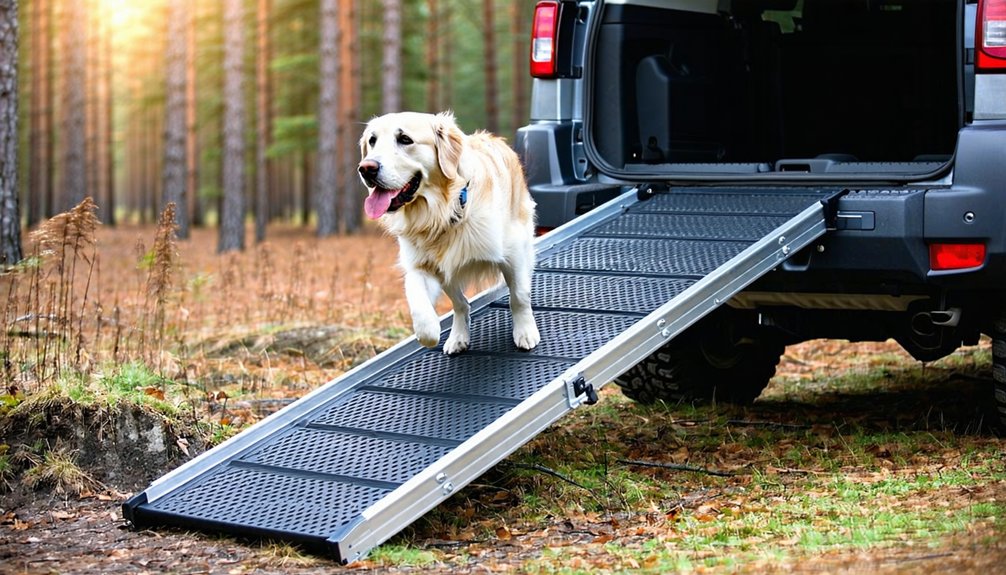
As your dog ages, the right ramp becomes less of a convenience and more of a necessity. You’re joining countless owners who refuse to let mobility loss limit their journeys.
Start with a safety threshold: choose a ramp rated at least 1.8× your dog’s body weight, with midspan deflection under ¼ inch. For heavy seniors, look toward 150–200 lb capacities to eliminate wobble.
Traction matters just as much. Perform a traction inspection on every surface, favoring embossing depth of 1.5 mm or rubber around Shore A 60–75.
Seek grip certification or measurable specs, since unverified non-slip claims fail arthritic joints. Watch for surface wear that smooths texture over time.
Finally, pick widths of 22–24 inches for medium-to-large seniors, ensuring lateral stability and confident footing.
How to Match Ramp Length to Your Lift Height
Before you compare any products, measure your lift height: the vertical rise from level ground to the top of the entry point where your dog steps in—not the bumper or hitch.
Park on a level surface for accurate ramp measurement, then let that number drive your ramp planning. Your overland lift likely sits taller than a standard pickup, so the same ramp may no longer be safe.
Use two source-backed methods:
- 1:12 rule: A 24-inch rise needs about 24 feet; 26 inches needs about 26 feet.
- 15-degree angle math: Ramp Length = Tailgate Height / sin(15°); a 36-inch height yields roughly 11.5 feet.
- Real-world fit: Choose the longest ramp your setup space and storage allow.
Steeper means riskier—go longer.
The Right Incline for Arthritic and Frail Dogs
Having measured your lift height and calculated ramp length, you’ll want to verify the resulting incline falls within a safe range for your dog’s joints.
Veterinary rehab sources target 15–20°, with 18–20° cited as the safest sweet spot.
For severely arthritic or frail companions, you’ll favor ≤18°, while small, fragile, or IVDD-prone breeds do best at 18–20° for spinal protection.
Treat 25° as your absolute ceiling—steeper angles raise joint loading, slipping, and refusal risk.
Shallow inclines preserve near-normal gait, reduce forelimb braking forces, and offer real joint protection your dog deserves.
Always finish with traction testing: if you see scrabbling claws, sliding, or mid-ramp pausing, reduce the angle or improve grip.
Why Weight Capacity Matters for Large Breeds
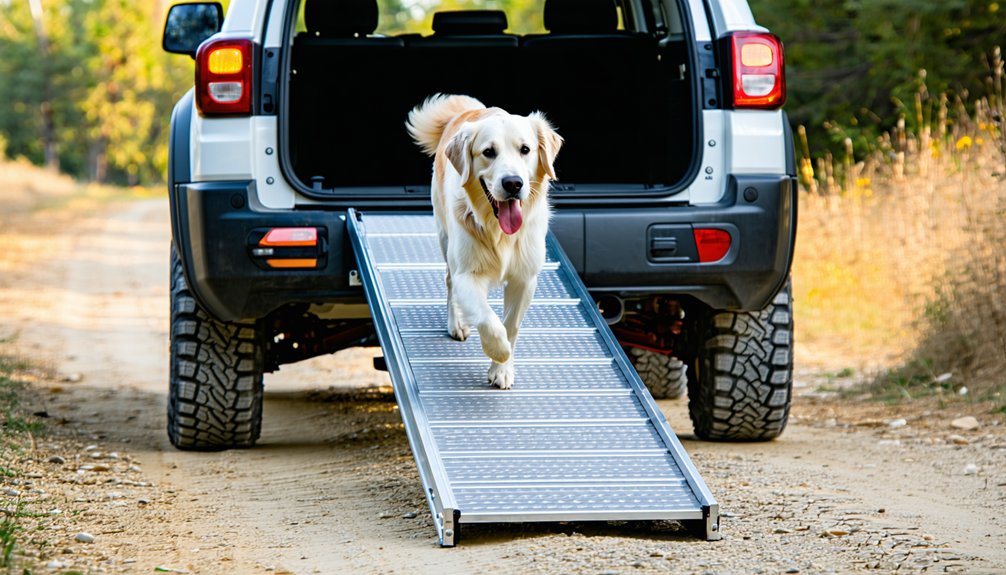
Every large dog puts far more stress on a ramp than its body weight alone suggests. When your dog steps, trots, or jumps, kinetic load spikes can hit 1.2–1.5× body weight at paw impact.
Lifted SUVs and trucks lengthen the climb, amplifying gravitational and braking forces. That’s why smart safety factor planning matters for you and your companion.
Choose a ramp rated for real-world use, not just static weight:
- Minimum 1.8× body weight: Canine physical therapists recommend this rating to absorb uneven gait and missteps.
- Asymmetric loading: Senior dogs with arthritis or hip dysplasia overload one side, spiking force on a single section.
- Behavioral margin: Sudden stops, slips, or mid-ramp turns create localized peak loads.
Stability Features That Stop Wobble on Gravel
A ramp rated for your dog’s weight won’t help if it rocks and wobbles on a gravel campsite. You’ll want an extra-wide base footprint—often 16 to 20-plus inches—with a non-tapered profile that keeps full-width contact across uneven stones.
Full-length ground rails distribute load, so individual feet won’t sink between aggregate. For real gravel grip, look for articulating feet that conform to irregular angles and large-diameter rubber anti slip pads that enhance friction when stones roll.
Integrated leveling pads and shock-absorbing bushings dampen wobble and vertical bounce as your dog’s weight shifts mid-ramp.
On longer ramps, mid-span support legs stop that “trampoline” flex. Pair these with a rigid, cross-braced deck, and you’ll give your senior companion the steady footing they deserve.
Traction Surfaces That Protect Aging Joints
Traction is where a ramp either protects your senior dog’s joints or quietly works against them. Rubberized and textured surfaces distribute paw pressure evenly, cut peak forces on arthritic joints, and keep grip even when wet. Coarse, consistent texture maintains a natural stride, limiting the compensatory tiptoeing that strains hips and spine. Skip glossy plastics, which force extra muscle work to stabilize weak rear legs.
You’ll want surfaces that prioritize paw pad comfort and reliable boot traction compatibility for booted dogs.
- Gel cushioning options or EVA-foam overlays absorb descent shock to elbows, shoulders, and hips.
- Directional grooves improve braking and stop joint-jarring “skiing.”
- Debris management keeps sand, gravel, and road salt from creating slick, dangerous patches.
Trim nails first—you’ll maximize every surface.
Folding vs Telescoping for Tight Cargo Areas
| Feature | Folding | Telescoping |
|---|---|---|
| Stored Length | 24–40 in | 28–39 in |
| Hinge Bulk | Higher | Lower |
| Parallel Fit | Limited | Excellent |
| Deploy Clearance | Swing-out | Straight-out |
| Weight | 1–3 lb less | Slightly more |
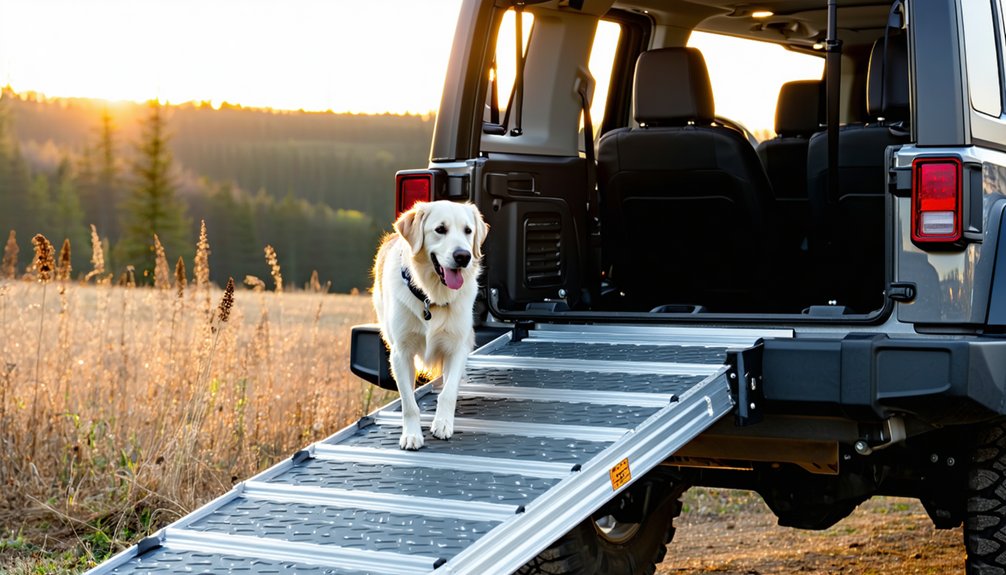
For tight rigs, telescoping designs improve deploy clearance, extending straight from the hatch around overland obstacles like trees and swing-out carriers.
Best Extra-Long Telescoping Ramps for Lifted Rigs
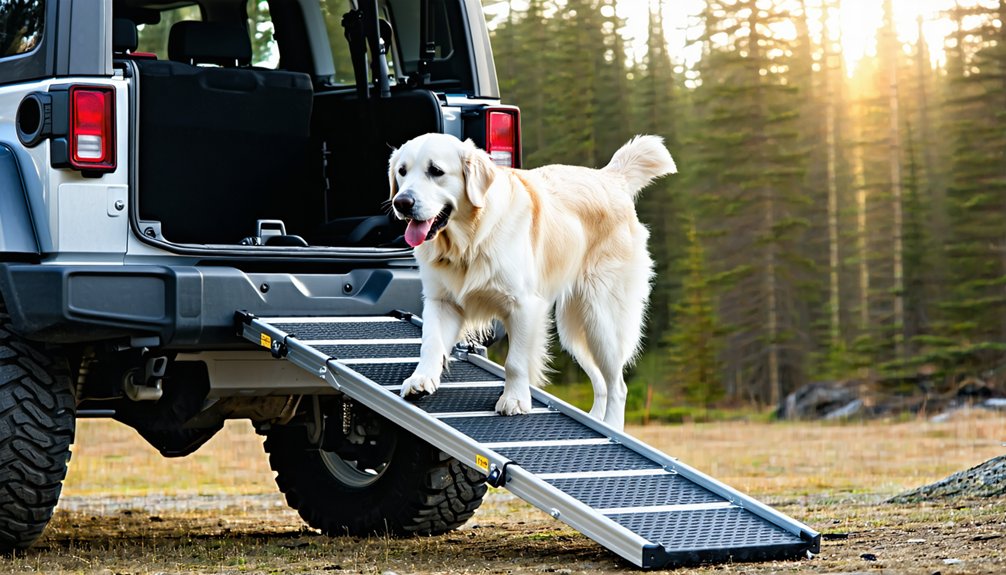
For lifted overland rigs, you’ll need more ramp than most “extra-long” listings deliver. Many XL telescoping ramps top out around 87–99 in., but an 87 in. ramp on a 38 in. tailgate creates a steep ~24–25° slope—harder on senior joints.
Engineering guidance recommends roughly 3× your loading height, so a 35–40 in. lifted load needs 9–10 ft for that gentler 18–20° target.
When you’re choosing for your pack, prioritize:
- Length: 9–10 ft to match lifted load heights and reduce incline.
- Capacity: 200–300 lb rated, with aluminum cutting weight 30–50%.
- Grip underfoot: dense, weather-resistant tread plus side rails.
Look for stability testing and reinforced box sections, so your dog won’t hesitate on a flexing, bouncy surface.
Heavy-Duty Aluminum Ramps for Big Dogs
Length gets your senior dog up the slope, but capacity keeps the structure from flexing once a big breed steps on.
You’ll want heavy-duty aluminum ramps rated 200–300 lb, with commercial-style models reaching 400–500 lb for giant breeds.
Look for welded or riveted frames with internal braces that resist flex under kinetic loads when your dog runs or jumps.
Wider 17–20 in decks distribute weight and reduce edge drop-off, while raised chew resistant rails keep paws centered and guide dogs with weak vision.
Weatherproof aluminum stands up to rain, mud, and dust on overland trips without degrading.
Pair high-friction grip surfaces with a gentle 18–22 degree slope, and you’ve got a ramp your German Shepherd, Lab, or Rottweiler trusts every single time.
Modular Step Systems When Space Is Tight
When your rig’s cargo area is already crammed with drawers, a fridge, and gear, a 4–6 ft ramp simply won’t store flat anywhere. Modular step systems solve this by breaking into individual blocks—typically 12–16 in L × 12–16 in W × 5–8 in H—that pack into irregular cubbies and stack under an 18 × 18 in footprint. You’ll appreciate how they pull double duty as camp seating, gear risers, or bed levelers.
- Lightweight modules (2–6 lb each) let you lift and rearrange them effortlessly.
- Joint friendly traction from rubberized, textured covers protects arthritic paws on damp surfaces.
- Mat size compatibility enables covers to fit snugly without slipping.
Choose hard-plastic cores for muddy overland use, and you’ll join handlers who’ve reclaimed their cargo space.
Side-Door Ramps for Rigs With Rear Gear
Because your rear cargo zone holds drawers, a fridge, or a spare tire that you’d rather not disturb, the side door often becomes your dog’s only clean approach.
Several ramp styles fit here: bi-fold aluminum pet ramps, swivel-mounted units that deploy curbside without blocking rear drawers, and free-standing telescoping ramps that adjust to your side-step height.
For lifted rigs sitting 28–36 inches high, you’ll want 84–120 inches of length to keep the slope gentle on senior joints.
Run side doorway clearance checks first—most openings span 30–48 inches, so a 15–20 inch ramp clears seals and trim.
Prioritize traction surface selection like rubber, grit tape, or high-friction carpet for muddy, sandy ground.
Mount to the passenger side, and your dog exits safely away from traffic.
How to Test the Ramp Fit Before You Buy
How do you know a ramp will actually fit your rig before money changes hands? You measure, mock up, and match specs—just like the rest of us who refuse to gamble on our senior dogs’ safety.
- Measure and mock the geometry. Tape the vertical rise to your entry point, then simulate with a plank until the angle matches a gentle 18–20° incline.
- Run a parking space check. Mark the deployed footprint on your driveway or campsite, confirming it clears doors, bumper swing-outs, and spare tires.
- Confirm storage clearance. Compare folded dimensions against your loaded cargo area, and verify one adult can deploy and stow it in about 45 seconds.
Cross-check ramp length against retail sizes—72″, 78″, 84″, 96″—before buying.
Frequently Asked Questions
How Do I Train a Hesitant Senior Dog to Use a Ramp?
Start with gentle rampwork: lay the ramp flat, scatter treats, and keep sessions short. Use positive reinforcement—praise and rewards—for every micro-step. Gradually raise the incline over days. You’ll have your companion confidently climbing within 1–2 weeks.
How Should I Clean a Dog Ramp After Muddy Trips?
After mud rinse, hose loose dirt with lukewarm water and mild soap. Microbial drying in shade aids odor control, while wiping metal parts dry prevents rust stains. Like fellow overlanders, you’ll keep traction safe for years.
Are Dog Ramps or Pet Stairs Better for Joints?
Ramps win for joints. You’ll give your dog better weight distribution, grip traction, and a joint-friendly angle that protects paw safety. Unlike stairs’ repeated impact, ramps lower stress on hips and spine—keeping your companion comfortable and confident.
How Much Do Quality Senior Dog Ramps Typically Cost?
You’ll typically spend $150–$250 on quality senior dog ramps for lifted vehicles. Compare ramp materials—aluminum and hardwood cost more than plastic. Evaluating budget vs worth, sturdier builds save you replacement costs, keeping your loyal companion safe.
Can One Ramp Work for Both Home and Vehicle Use?
Yes, you can. Choose an adjustable telescoping ramp (39–87 in) with textured traction, ample width, and 150–500 lb capacity. You’ll get Safe Stability for sofas and lifted SUVs, plus folding Travel Storage your pack deserves.
Conclusion
You’ve got the criteria to make a confident choice. Match the ramp’s length to your rig’s lift height, prioritize a gentle incline for aching joints, and verify the weight capacity exceeds your dog’s heaviest day. Don’t skip stability features that anchor the ramp on gravel. Test the fit before you commit, and you’ll give your senior dog a safe, dignified way up. Your faithful companion’s earned that easier climb.
References
- https://devotedtodog.com/best-dog-ramps-and-stairs-for-car-suv/
- https://www.thedrive.com/reviews/32021/best-dog-ramps-for-cars-and-suvs
- https://www.roadandtrack.com/gear/g60385400/best-dog-ramps-for-car/
- https://www.rover.com/blog/pet-ramps/
- https://www.amazon.com/Best-Sellers-Dog-Car-Ramps/zgbs/pet-supplies/3024186011
- https://www.youtube.com/watch?v=P5lG0T3oqRM
- https://www.youtube.com/watch?v=ZsxlUSqc-8s
- https://moorepet.com/ramps-steps/vehicle-heavy-duty-models/
- https://petsciencereview.com/blog/best-dog-ramps-stairs-senior-dogs/
- https://www.seniorpawsguide.co.uk/guides/best-dog-ramps-uk