Moving your dog to Australia takes seven to twelve months and costs between $4,000 and $10,000 or more. You’ll need to microchip first, then vaccinate for rabies, then run an RNATT blood test showing a titre of at least 0.5 IU/mL, drawn 180 days before export. Every imported dog goes to Mickleham, the single government facility near Melbourne—you don’t get to choose. One misstep can reset everything, and the details below explain how.
TLDR Key Takeaways
- Imported dogs go only to Mickleham PEQ near Melbourne, with no private kennel choice and collection limited to a 10am–12pm window.
- Quarantine minimums rose from 10 to 30 days for many Group 3 countries under March 2023 rules, with stays reaching 180 days.
- Order is critical: microchip first, then rabies vaccination, then RNATT blood test—mistakes can reset the entire process and inflate timelines.
- The RNATT blood draw is typically required at least 180 days before export, with disputes over whether Day 0 is draw or lab-receipt date.
- Expect AUD $1,877–$2,200 for the minimum stay, $29–$53 per extra day, plus ~$1,500 vet costs and $2,000–$3,000 airfreight.
Why Australia’s Dog Quarantine Catches Owners Off Guard
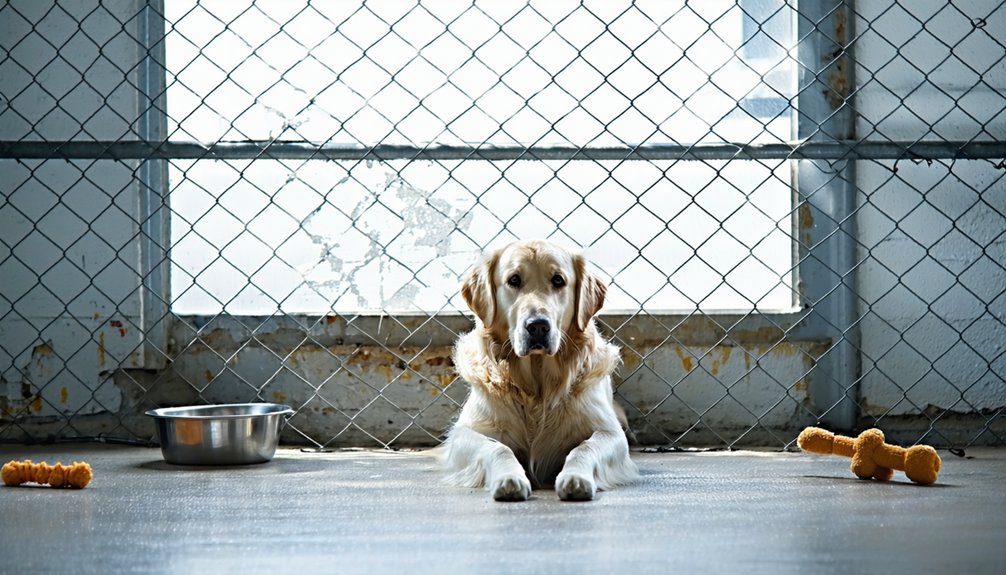
While you might expect Australia’s quarantine to mean a quick, comfortable stay for your dog, the reality blindsides most owners. Surprise rule changes in March 2023 pushed the old 10-day minimum to 30 days for many Group 3 countries, catching owners who relied on outdated information off guard.
You’re also facing a maximum 180-day stay if ticks, fleas or paperwork problems surface, plus a 180-day pre-export period in an approved country—stretching your timeline beyond six months.
Then there’s dog owner logistics: every imported dog goes to one facility, the Mickleham Post Entry Quarantine Facility near Melbourne. Even if you fly into another city, your dog still ends up there.
You can’t choose private kennels, and you’ll collect your dog within a narrow 10am–12pm window.
How Your Country of Origin Decides Everything
Your dog’s country of origin determines everything that follows—eligibility, quarantine length, testing, and the entire pre-export timeline. If you’re moving from a DAFF approved country, you’re already part of the pathway. If not, you’ll need to relocate your dog there for at least 180 days first.
The category grouping—Group 1, 2, or 3—reflects rabies status and dictates exactly what you’ll face.
- Group 1 (New Zealand, Norfolk Island): rabies-free equivalence, often no post-entry quarantine.
- Group 2 and 3: mandatory rabies vaccination plus RNATT testing.
- RNATT blood draw: typically required ≥180 days before export.
- Quarantine: 30 days at Mickleham PEQ for most Group 2 and 3 dogs.
- Non-approved countries: relocation and a 180-day stay required first.
The Rabies Test That Controls Your Timeline
Because the rabies test sets the clock for everything that follows, you can’t afford to get it wrong. After a valid rabies vaccination and correct microchip check, you’ll need the RNATT (FAVN or RFFIT) drawn and sent to an approved lab in an approved country. It must show a protective titre of ≥0.5 IU/mL to pass.
From the day that lab receives your sample, Australia enforces a strict 180-day wait—no exceptions—and your entry window runs from 180 days to roughly 12 months.
Cold chain shipping and accurate lab sample labeling matter enormously here. Mishandling, breakage, or paperwork errors get samples rejected, forcing a repeat test and restarting your clock. Get this step right, and you’ll join thousands who’ve successfully brought their dogs home.
When Does the 180-Day Countdown Actually Start?
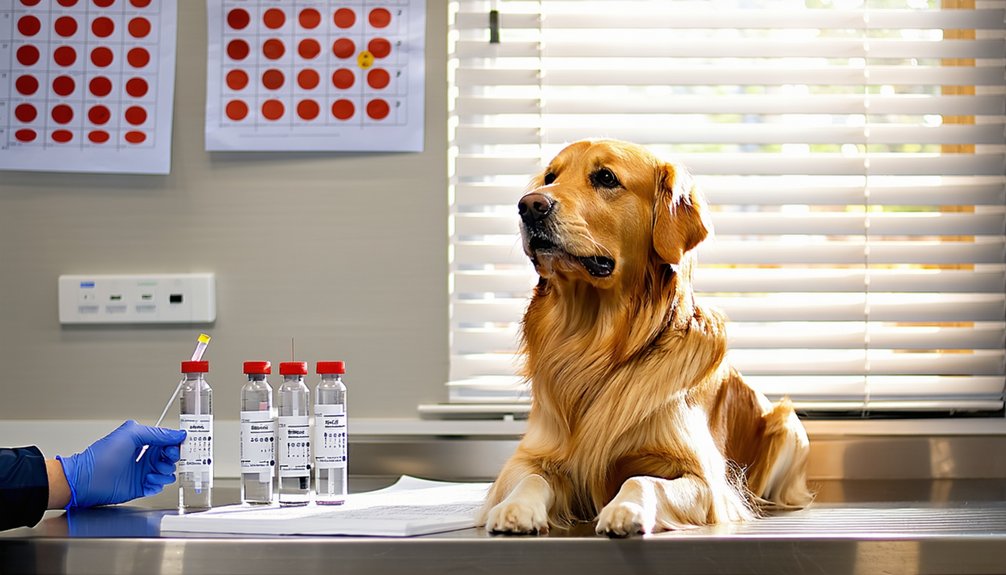
Pinning down the exact “Day 0” matters more than most owners realize, because a few days’ difference can reshape your entire export schedule. DAFF ties the 180-day clock to your valid RNATT, but the industry can’t agree on where it begins.
Here’s where you’ll find yourself navigating conflicting guidance:
- Blood-draw start date: Some providers count 180 days from when your vet draws the sample, sparing you any shipping lag.
- Lab-receipt start date: Others treat the lab’s stamped receipt as Day 0, fueling lab receipt disputes.
- Blood sample delays: Slow courier handling pushes back the lab-receipt clock significantly.
- Degradation risk: Earlier draws risk rejection if samples spoil.
- DAFF validation: Officials reference both sampling and receipt dates to confirm your waiting period.
Microchipping, Shots, and Vet Checks in Order
Microchip scanning consistency matters at every single vet visit; government-approved vets must verify and record that number each time. This is where documentation mismatch prevention becomes your priority—the chip number has to appear identically across vaccination records, lab forms, parasite treatments, and health certificates.
You’ll also keep core vaccines current, then complete a pre-export clinical exam within five days of travel.
How to Get Your Australian Import Permit
Once your dog’s microchip, vaccinations, and rabies preparation are locked in, you’ll need an import permit before anyone boards a plane.
The Department of Agriculture, Fisheries and Forestry (DAFF) issues this permit, and you’ll apply online through the BICON system.
Get it right the first time so you join the families who’ve made it through smoothly.
- BICON account: Register before applying; your details link to a permit management dashboard.
- Case selection: Choose “Cats and dogs – non-commercial import”; the wrong case type can invalidate your assessment.
- Document uploads: Submit identity records, RNATT results, and vaccination evidence as PDFs or JPEGs.
- Application timing: Apply only after meeting health and country-pathway pre-conditions.
- Permit number: Required to confirm your Mickleham quarantine booking.
Why Your Dog Must Fly Straight to Melbourne
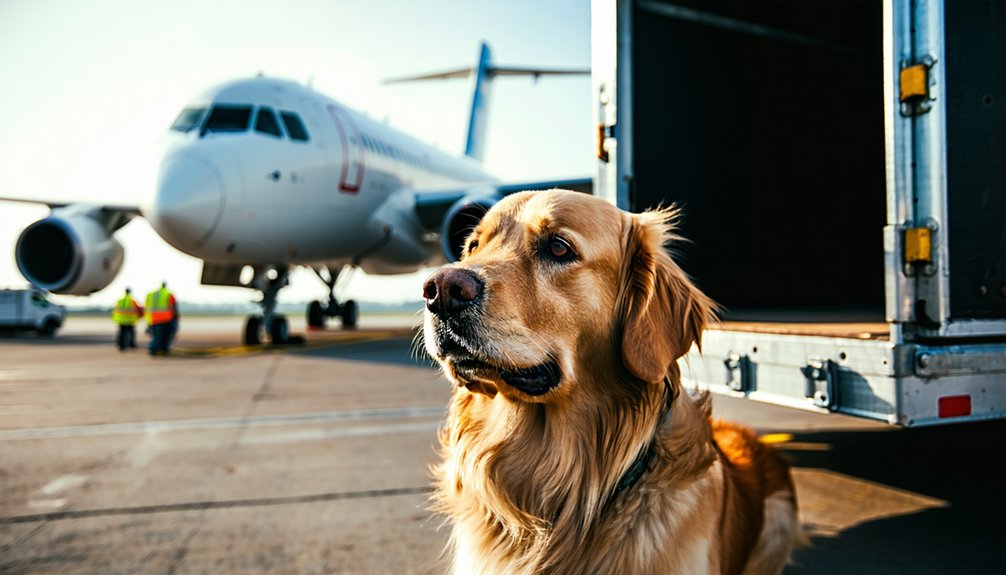
Because Mickleham is Australia’s only government post-entry quarantine (PEQ) facility for cats and dogs, your dog has to fly directly into Melbourne International Airport (Tullamarine).
No other Australian airport is approved as a port of entry for quarantine-bound pets, so routing through Sydney, Brisbane, Perth, or Adelaide simply isn’t permitted.
This is non-negotiable jurisdiction compliance: regulations require your dog to arrive on an international flight terminating in Melbourne, then transfer roughly 30 km to Mickleham under controlled biosecurity conditions.
You’ll need careful flight coordination, which is why airlines and pet transport agents design itineraries that land your dog straight in Melbourne.
Get it wrong, and you risk refused landing, re-export, or extended holding.
Plan it right, and your dog joins you sooner.
10 Days or 30? Which Quarantine You’ll Face
When your dog lands at Mickleham, you’re facing one of two timelines: a 10-day stay or a 30-day stay. The difference comes down to identity verification and paperwork timing.
When your prearrival approval is in order and authorities can confirm your dog’s identity, you’ll join the many imports completing the standard 10-day quarantine length. When identity can’t be confirmed or documentation arrives incomplete, you’re looking at the longer 30-day hold.
- Group 1 countries (like New Zealand) are exempt from PEQ entirely.
- Group 2 countries face a minimum 10-day stay.
- Group 3 countries face 10 or 30 days, depending on timing.
- Identity must be verified before the RNATT blood draw.
- That draw must occur at least 180 days before export.
Inside the 10-Day Stay at Mickleham
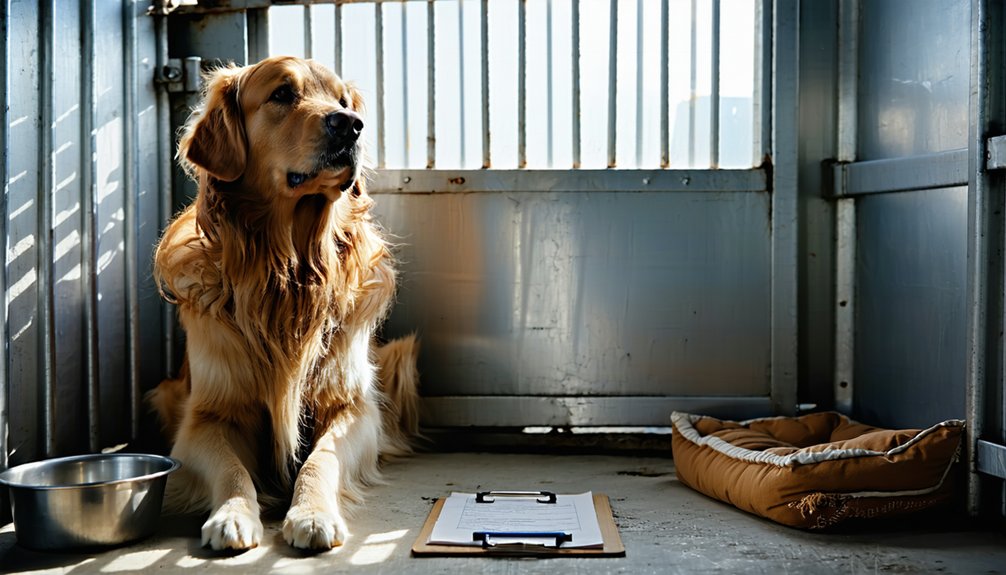
Assuming your paperwork’s in order and your dog clears identity verification, you’ll complete the standard 10-day stay at the Mickleham post-entry quarantine facility, the single national site DAFF operates for cats and dogs.
Located at 135 Donnybrook Road, the complex runs on staffed hours—08:00 to 16:00, Monday to Friday—so feeding, watering, cleaning, and visual checks happen only within that window, with no continuous overnight monitoring.
You’ll face no weekend visits and limited owner access; in-person contact’s prohibited until release, with only authorized staff and vets handling your dog under biosecurity protocols.
Strict kennel hygiene governs everything, including disinfection and controlled waste management, so many soft toys or bedding get destroyed.
You’ll request updates by phone or email during office hours.
What Permits, Fees, and Quarantine Really Cost
Though the headline figure reads “10 days,” the true cost of moving your dog to Australia stacks up across three distinct categories: import permits, quarantine facility fees, and pre-export veterinary work. You’re not alone in underestimating this—most owners do. Watch for hidden fee creep, where corrections, re-bookings, and DAFF schedule changes quietly inflate your total.
- Import permit: roughly AUD $480 per pet, charged per animal—critical for multi pet budgeting.
- Quarantine package: about AUD $1,877–$2,200 per pet for the minimum 10-day stay.
- Extended stays: AUD $29–$53 per extra day, adding up fast with delays.
- Out-of-hours collection: AUD $170–$180, plus release charges of AUD $170–$350.
- Pre-export vet program: around AUD $1,500 per dog for rabies, RNATT, and exams.
The Real Price Tag of Moving Your Dog
Quarantine and permits are just one slice of the bill. When you map out the full move, you’re looking at roughly USD $4,000 to $10,000+, with many standard relocations landing between $5,000 and $9,500. Larger breeds, complex routes, or premium services can push you toward $10,000–$29,000.
Here’s where it adds up: vet preparation runs USD $300–$1,500, airfreight often hits AUD $2,000–$3,000, and IATA-compliant crates add another USD $25–$100.
Then come hidden shipping surprises—government endorsement stamps, domestic transport legs (AUD $350–$1,500), and relocation agency fees that drive the upper ranges.
Watch for surprise airline surcharges during peak travel periods, when limited pet cargo capacity inflates fares.
Knowing these numbers upfront puts you alongside families who’ve budgeted wisely and moved their dogs successfully.
Mistakes That Stretch the Process to 12 Months
Because Australia’s import process runs on a rigid sequence, a single misstep can enhance your timeline from roughly seven months to nearly twelve.
You’ve got to nail the order: microchip first, then rabies vaccination, then the RNATT blood test.
Get it backwards, and you’ll restart the 180-day clock entirely.
Common paperwork errors and timeline derailments often catch families off guard, turning a 10-day quarantine into a 30-day stay.
Watch for these costly mistakes:
- Microchipping after rabies vaccination, invalidating the vaccine
- Drawing the RNATT before compliant vaccination, resetting the 180-day wait
- Letting rabies boosters lapse, voiding your test results
- Using non-accredited vets, forcing repeated tests
- Booking quarantine too late, losing your desired slot
Plan early—you’ll thank yourself.
Frequently Asked Questions
Can I Visit or Stay With My Dog During Quarantine?
No, you can’t visit or stay with your dog during quarantine. Quarantine visitation rules at Mickleham ban in-person contact for biosecurity reasons. Companion travel legality won’t help—you’ll first reunite at release, after the required 10‑day period.
What Happens if My Dog Gets Sick at Mickleham?
Staff monitor your dog daily, following symptom reporting process and emergency vet guidance. They’ll contact you, arrange treatment, and you’ll cover costs. Quarantine inspection and health document rules guide care, keeping your companion safe alongside you.
Are Certain Dog Breeds Banned From Entering Australia?
Yes, you can’t bring certain breeds into Australia. Breed-specific entry rules ban Pit Bulls, Dogo Argentino, Fila Brasileiro, Japanese Tosa, Presa Canario, and wolfdogs. Legal breeding restrictions apply too—these dogs aren’t welcome, regardless of health status.
Can I Bring My Dog’s Food and Toys?
You’ll want to leave most food behind—it’s high-risk and often prohibited. Clean toys can come if they’re free of residue. Declare everything, and keep your airline paperwork and export permits handy for smooth inspection together.
What Airlines Are Approved for Transporting Pets to Melbourne?
You’ll find Qantas, Singapore Airlines, Emirates, Qatar Airways, Cathay Pacific, and Air New Zealand approved for pet cargo. Confirm airline eligibility and Melbourne routes through DAFF, since not every carrier lands pets directly at Melbourne.
Conclusion
Moving your dog to Australia isn’t impossible, but it demands precision. You can’t afford to skip the rabies test, miscalculate the 180-day window, or overlook a single vet check. One mistake stretches your timeline to a year and inflates your costs. Start early, follow the sequence exactly, and keep every document in order. Mickleham’s 10-day stay is the final hurdle, not the first. Plan carefully now, and you’ll reunite with your dog sooner.
References
- https://www.petprofessional.com.au/info-centre/moving-australia-understanding-pet-quarantine/
- https://petraveller.com.au/blog/understanding-pet-quarantine-in-australia
- https://worldcarepet.com/how-to-move-my-pet-to-australia/
- https://purrfectpilots.com/bringing-pets-to-australia/
- https://www.aphis.usda.gov/pet-travel/us-to-another-country-export/pet-travel-us-australia
- https://www.petrelocation.com/blog/post/bringing-dogs-and-cats-to-australia-a-simple-guide
- https://www.jamescargo.com/blog/taking-dog-to-australia-from-uk-pet-import-guide.php
- https://www.starwoodpet.com/blog/australia-pet-quarantine-requirements-what-to-expect-at-mickleham
- https://www.ibo.guide/en/bringing-a-dog-to-australia-entry-requirements-quarantine-and-returning-home/
- https://www.agriculture.gov.au/biosecurity-trade/cats-dogs