For bumpy forest roads, you’ll want a spill-proof bowl built for stability, not just capacity. Look for Road Refresher-style designs with floating plate barriers that calm slosh and a small drinking opening that traps splash. Choose a low, wide body with a continuous rubber bottom to resist tipping on washboard and potholes. Fill it to 60–80% to cut slosh energy. Below, you’ll find the top picks and the placement tricks that keep them steady.
TLDR Key Takeaways
- Choose a low, wide bowl with full-surface rubber or silicone grip to resist tipping on washboard sections and potholes.
- Pick bowls with floating plate barriers and small drinking openings to limit wave action and braking splash.
- Fill spill-proof bowls only to 60–80% capacity to reduce slosh energy on rough forest roads.
- Use lidded travel bowls with threaded, gasketed screw-on caps for watertight sealing during transport.
- Select collapsible silicone bowls sized to your dog that pack flat and weigh almost nothing for road trips.
What Makes a Dog Bowl Truly Spill-Proof
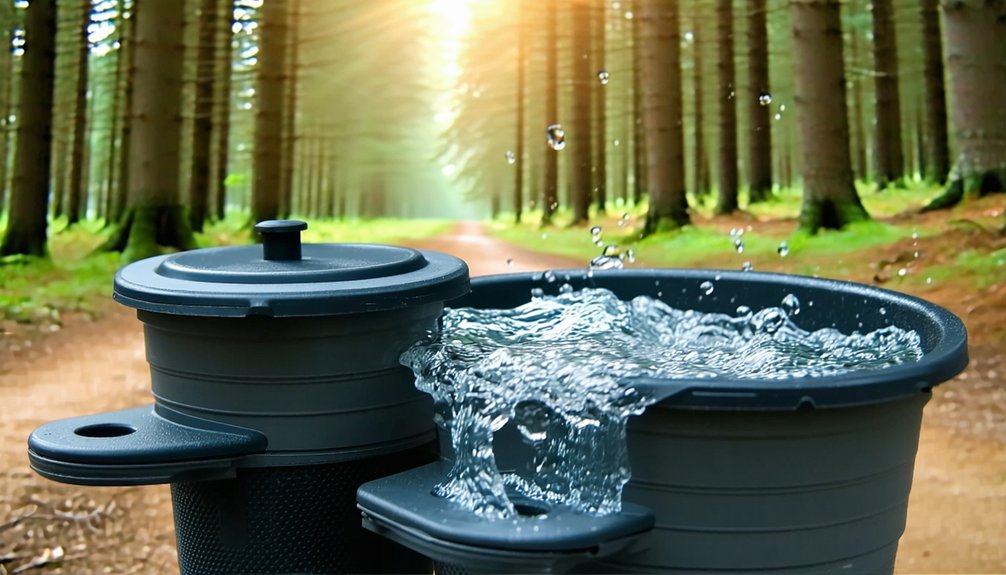
Three forces work against a dog bowl during drinking: push, tilt, and slosh.
To beat them, you need real spill control, not gimmicks.
Start with the base: a continuous rubber or silicone bottom grips smooth floors, while a wide footprint and appropriate weight resist tipping.
Full-surface adhesion outperforms isolated dots or thin rings every time.
Next, manage the water itself.
Raised, angled, or anti-splash rims trap splash, and higher walls keep water in during vigorous drinking.
Smaller openings and slow-drink surfaces calm the water line, so leave usable headroom—overfilling defeats everything.
Finally, demand material durability.
Stainless steel resists scratches, odor, and wear that erode seals and grip longevity.
Keep contact surfaces clean and dry, and you’ll belong among owners who travel mess-free.
Why Stability Beats Capacity on Rough Roads
Durable materials and grippy bases handle the basics, but rough roads test your bowl differently. When you and your dog hit washboard sections and potholes, capacity becomes your enemy.
A fuller, taller bowl raises the center of gravity and leaves less empty space to dampen motion, so water sloshes, waves, and overflows with every jolt.
Smart travelers like you know better:
- Consider a low, wide bowl hugging the floor mat, steady through every turn.
- See standing water staying calm instead of crashing over the rim.
- Imagine filling only what your dog needs for this trip segment.
- Visualize smart mat placement catching any stray splatter.
Choose stability first, and you’ll keep your ride clean and your companion hydrated.
Best Road Refresher-Style Spill-Proof Bowls
Why does the Road Refresher style top so many spill-proof roundups? Because its floating plate barriers limit wave action and slosh, keeping water inside the bowl when you hit a stop or quick start. You’ll find this style ranked among the best for braking splash reduction in travel splash testing, and its low, rounded body adds rough road stability tips you can trust on uneven terrain.
| Feature | What It Does for You |
|---|---|
| Floating plate | Limits slosh on movement |
| Small drinking opening | Restricts splash layer |
| Rounded low body | Lowers tipping risk |
| Travel-friendly build | Works home and on the go |
| Spill control focus | Suits messy drinkers |
If you want containment over capacity, you belong here.
Best Travel Water Bowls With Lids and Caps
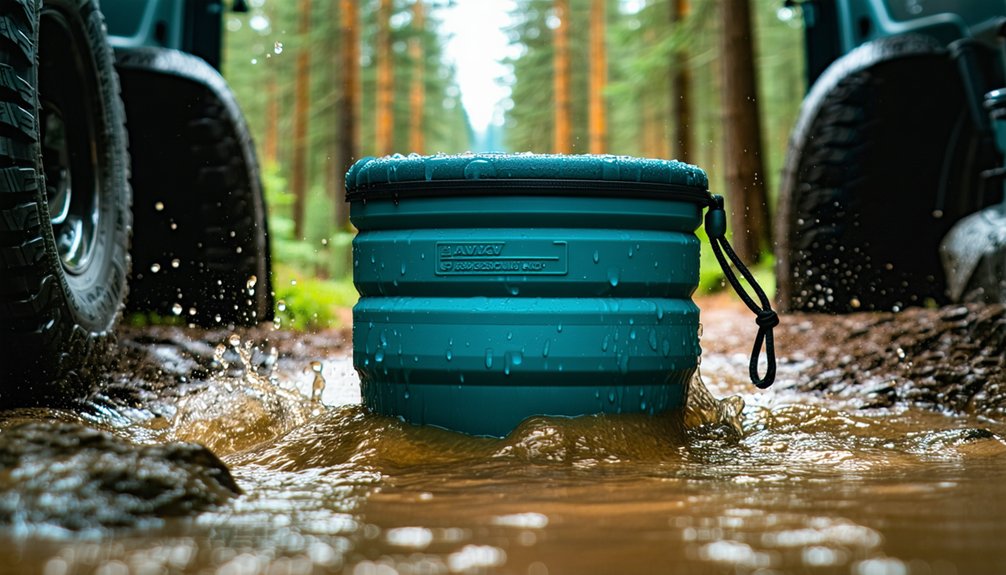
When you need true containment, lidded travel bowls add a physical barrier over the water surface that cuts slosh during transport. For those bumpy forest roads we all love, closure reliability matters most. Screw-on caps resist accidental opening better than press-fit tops, while flip-top designs trade some security for quick access at rest stops.
- A threaded cap spinning shut with a satisfying, watertight click.
- A snug gasket compressing flat against the rim, blocking every leak.
- A latch you’ve flexed and tugged before trusting it on the trail.
- A sealed transport mode locking water still over washboard gravel.
Remember these gasket sealing tips: check fit before each trip. For lid latch testing, tug hard—imperfect seals leak even when a bowl has a cap.
When Collapsible Silicone Bowls Make Sense
Because they pack flat and weigh almost nothing, collapsible silicone bowls earn their place in any pack where space is tight.
You’ll appreciate them most on hikes, road trips, and camping outings, where lightweight carry matters and every ounce counts.
Think of them as your travel backup or emergency handoff—a secondary water container for short stops and day-use, not your only solution for every situation.
Silicone holds its shape better than fabric foldables, and after muddy access on dusty trails, a quick rinse leaves them clean and food-safe.
Match capacity to your dog: 250–500 mL for small breeds, 500–800 mL for medium, 27–40 oz for large.
Look for loops or carabiner tabs, and you’ve got hydration that fits right in.
Best Gravity-Fed Dispensers for Long Drives
If long-haul driving is your routine, a high-capacity gravity-fed dispenser cuts your refill stops dramatically. A 3–3.5 gallon tank covers one to two days for a medium-large dog, so you’ll keep your companion hydrated between distant stops.
Look for air-pressurized reservoirs that release water through air displacement, delivering reliable drinking flow consistency without pumps or electronics.
When you’re choosing your dispenser, prioritize these features:
- Anti-siphon design that prevents continuous flow during modest vehicle tilts
- Adjustable mounting brackets for securing the unit against cargo walls
- Transparent reservoirs for at-a-glance water checks
- Wide, low bases that resist tipping on gravel roads
Matching Bowl Size to Your Dog
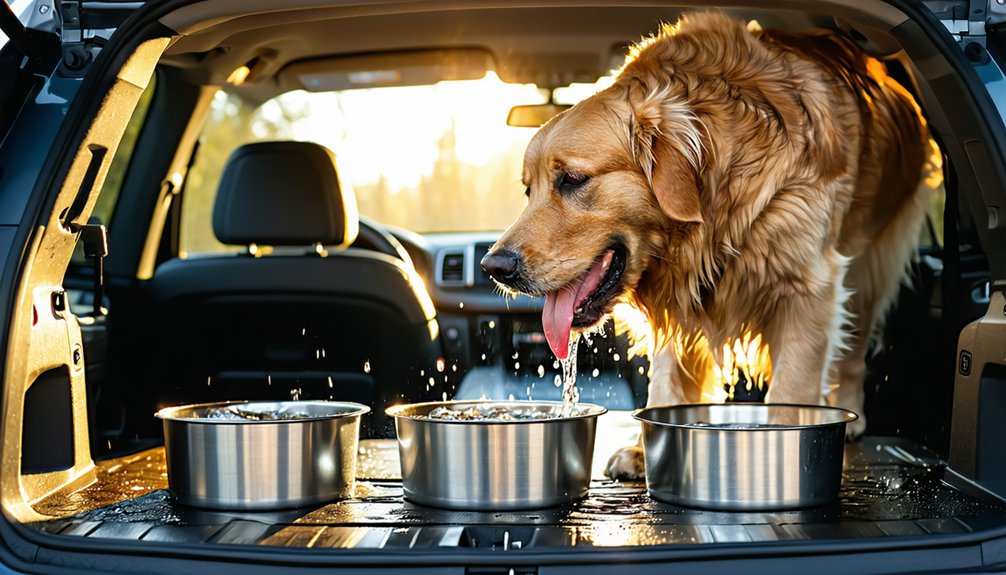
A high-capacity dispenser solves your refill problem, but the bowl your dog actually drinks from needs its own sizing logic.
Start with daily water needs: figure 1 ounce per pound, so a 50-lb dog needs about 50 ounces.
For size fitment, small breeds under 25 lb do well with 1–2 cups, while large breeds over 60 lb need 3–4 cups to avoid constant stops.
Match the breed specific snout, too: brachycephalic dogs need shallow, wide bowls, long-snout breeds need depth, and long-eared dogs benefit from central-access lids.
Size your bowl to each travel segment, not your whole day—you’ll carry reserve water separately.
Fill spill-proof bowls to just 60–80% capacity, reducing slosh energy and keeping your companion hydrated through every bump.
Why Separate Food and Water Bowls Matter
While combining food and water saves cabinet space, it sabotages your dog’s hydration and health. When kibble fragments float into the water, they fuel bacterial growth and biofilm, contaminating the very source your dog relies on during bumpy forest drives. Smart owners like you keep these functions separate to protect every member of the pack.
Here’s why separation matters:
- Prevent Biofilm Growth by keeping water clear of food residues and oxidized fats.
- Reduce Cross Contamination from greasy surfaces harboring salmonella and listeria.
- Improve Feeding Scheduling by staging meals and drinks 30–60 minutes apart for bloat-prone breeds.
- Support Multi Dog Harmony with distinct bowls that prevent resource guarding and crowding.
You’ll deliver cleaner hydration, calmer mealtimes, and steadier digestion everywhere you roam.
Where to Place Your Bowl in the Vehicle
The right placement makes or breaks your spill-proof setup.
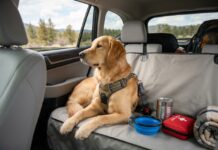
Position the bowl in the rear passenger footwell behind the front passenger seat, where seat structure shields it from sloshing and you can monitor it easily.
Use non slip tray setups or rubberized mats to stop sliding on hard braking and washboard roads.
If you run a crate, mount a spill-resistant bowl at chest height on the wall facing the aisle.
In the cargo area, push the bowl against a side wall, forward of the rear axle, away from HVAC vents and direct sun.
Pair everything with a belted restraint or secured crate—seat mount reliability matters when terrain turns rough.
Keep water clear of under-seat wiring, airbag paths, and shifting gear.
How Often Should Your Dog Drink on the Road?
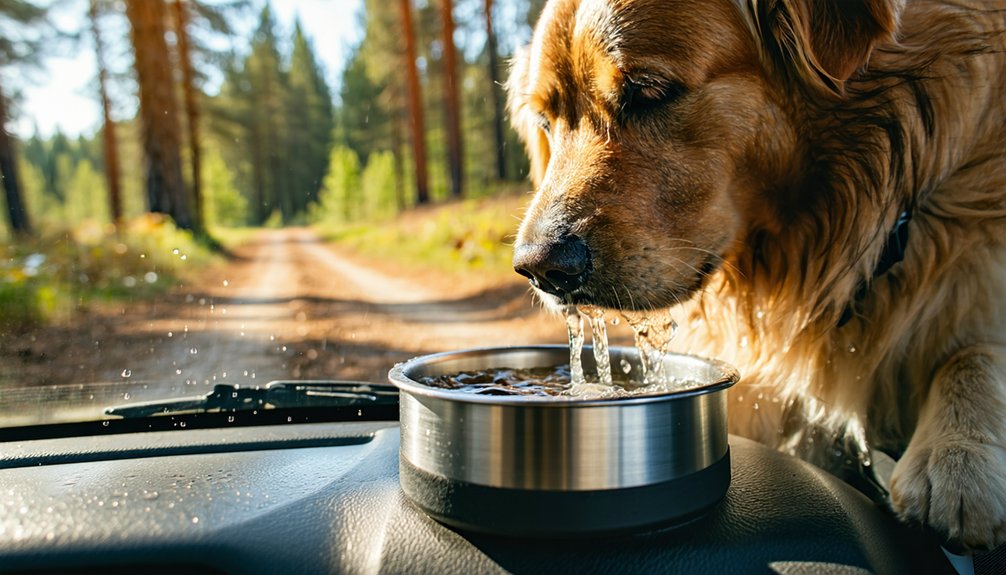
How often should your dog drink on the road? Like every careful traveler in our community, you’ll want a reliable rhythm. Offer small drinks every 1–2 hours, shortening that hydration timing in warm weather.
Heat adjustment matters because hot conditions and direct sun increase fluid loss fast. Watch for panting cues, restlessness, or reduced urination—these signal you should offer water sooner than planned.
Match your stop frequency to route length, temperature, and your dog’s tolerance.
Follow this simple pattern:
- Offer a small drink before leaving home.
- Re-offer water at every parked rest stop.
- Keep portions small to prevent carsickness.
- Allow a longer drinking window so intake isn’t rushed.
Carry fresh water from home, and you’ll keep your companion comfortably hydrated.
Cleaning Travel Bowls With Limited Water
When water’s scarce on the road, you can still keep your dog’s bowl clean with a few deliberate steps. Start by scraping out kibble and biofilm, then apply the spot rinse technique—pour a controlled trickle over the dirtiest spots from a squeeze bottle instead of filling the whole bowl. A dedicated brush and one or two drops of biodegradable soap cut your rinse volume further.
| Step | Action |
|---|---|
| Pre-clean | Scrape debris dry |
| Spot rinse | Trickle over grime |
| Scrub | Dedicated brush, soap |
| Sanitize | 1:5 vinegar soak |
| Dry | Microfiber wipe, air-dry |
For microfiber drying steps, wipe loosened residue between rinses, then let bowls air-dry in direct sun. Fellow travelers know UV disinfects and keeps gear trail-ready.
Building a Two-Bowl System for Overland Trips
Because mixing food and water in one container invites contamination, a two-bowl system keeps your dog’s drinking water cleaner over long travel days. Dedicate one spill-proof bowl to water at all times, avoiding flavor transfer that can reduce your dog’s drinking enthusiasm. Reserve a collapsible silicone bowl for food at stops or camp.
- Image a 40–50 oz splash-free bowl anchored in the footwell, water barely rippling over washboard ruts.
- See a non-slip mat beneath both bowls, catching every drip and crumb.
- Imagine topping off from a mounted jug using easy refill systems, no bowl removal needed.
- Visualize antimicrobial coatings fighting biofilm across multi-day trips.
You’ll join overlanders who keep water flowing, rotating bowls so your companion never goes thirsty.
Frequently Asked Questions
Can Spill-Proof Bowls Be Used Safely Inside Crates During Travel?
Yes, you can! Prioritize crate safety by confirming a secure fit with non-tip bases, maintaining airflow ventilation around your dog, and running a leak check routine before driving. Together, we’ll keep our companions hydrated and protected.
Are Spill-Proof Bowls Airline-Approved for Combined Road and Air Trips?
Yes, spill-proof bowls suit your trips since airline travel regulations treat empty bowls as screening-friendly, ensuring airline cargo compatibility. You’ll fit right in by maintaining in-cabin water safety—pack it empty, then fill after security.
How Do I Prevent Water From Freezing in Winter Conditions?
Choose bowls with an insulated design, then refill frequently with warm water at stops. You’ll join savvy travelers protecting winter hydration by sheltering bowls from wind, using heated pads, and emptying them completely before long, freezing drives.
What’s the Average Lifespan of a Quality Spill-Proof Travel Bowl?
You’ll get 5–10 years from quality stainless steel, thanks to its Long Term Durability. Collapsible silicone needs Replacement Timing every 12–14 months. For rough forest trips, expect 3–5 years—join fellow explorers who maintain theirs carefully.
Can I Add Ice Cubes to Spill-Proof Bowls While Driving?
You can, but ice isn’t tested for spill-proofing. Under bumpy roads, larger cubes amplify slosh, so consider insulated chilling instead. A positioning tip we trust: partially fill, secure on a non-slip mat, and stay safe together.
Conclusion
You don’t need the fanciest bowl—you need the right one for your terrain. Prioritize stability over capacity, choose a spill-resistant design that matches your dog’s size, and secure it low in your vehicle. Pair a sturdy primary bowl with a collapsible backup, keep water accessible, and clean smart when supplies run low. Get this system dialed in, and you’ll keep your dog hydrated no matter how rough the road gets.
References
- https://dogsanddetours.com/blog/best-dog-bowls-for-hiking-and-road-trips/
- https://www.thesprucepets.com/best-travel-water-bowls-for-dogs-5268019
- https://www.youtube.com/watch?v=UKqy6eohEGc
- https://www.reviewed.com/home-outdoors/best-right-now/the-best-travel-dog-bowls
- https://www.rover.com/uk/blog/the-must-have-dog-water-bottles-and-travel-bowls/
- https://www.youtube.com/watch?v=sJZFCL8jXV8
- https://www.youtube.com/watch?v=b6JSt27sK6I
- https://www.caninejournal.com/no-spill-dog-water-bowl/
- https://www.amazon.com/Best-Sellers-Dog-Travel-Bowls/zgbs/pet-supplies/3024201011
- https://www.reddit.com/r/RVLiving/comments/1r50w8w/pet_water_station_that_doesnt_spill_when_im/