If you’re sleeping in a vehicle with your dog, turn the engine off completely—never let it idle while you rest. Cracking one window isn’t enough; you need real cross-airflow. Open two windows on opposite corners, like front-left and rear-right, 1–3 cm each, so air actually moves through the cabin. Keep generators and stoves at least 20 feet away. CO’s odorless and kills fast, so a few smart habits make all the difference.
TLDR Key Takeaways
- Never sleep with the engine running; turn it off completely before resting, as cracking a window alone is insufficient.
- Open two windows on opposite corners (front-left and rear-right) 1–3 cm to create steady inlet-outlet cabin airflow.
- Keep generators, stoves, and fuel-burning sources at least 20 feet (6 meters) away, with exhaust directed from intakes.
- Install a CO alarm near sleeping zones, close enough to wake everyone, and never cover it with bedding or crates.
- Keep dogs warm using blankets, wool layers, hot water bottles, and window insulation instead of running the engine.
Why Carbon Monoxide Is So Dangerous for Dogs
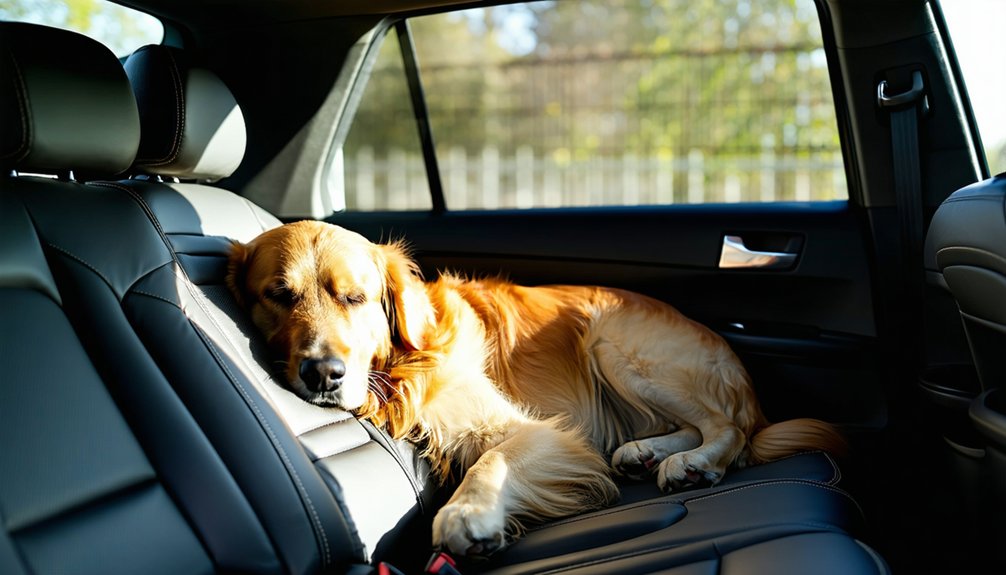
Carbon monoxide poses a uniquely lethal threat to dogs because it attacks the very system that keeps their tissues alive: oxygen delivery.
CO binds your dog’s hemoglobin with 200–250 times the affinity of oxygen, forming carboxyhemoglobin that starves the brain and heart of what they need.
Your dog faces colorless detection barriers, too—CO is odorless and tasteless, so neither you nor your dog gets any warning before dangerous levels accumulate.
Because dogs breathe faster and often rest in enclosed spaces, they absorb the gas quickly, fueling rapid hypoxia progression that can shift to seizures, coma, or sudden death.
Dogs with pre-existing heart, lung, or anemia conditions face even greater danger.
Understanding this mechanism helps you protect the companion who depends on you.
How CO Builds Up Inside a Parked Vehicle
Although you might assume a parked vehicle is safe, carbon monoxide builds up there through a simple combination: combustion plus confinement. When your engine runs or a nearby vehicle idles, exhaust infiltration begins.
CO migrates through ventilation leaks—worn body seals, rust holes, floor pan gaps, and damaged weatherstripping let exhaust-rich air seep inside.
Your HVAC intake near the cowl makes things worse, pulling in contaminated air and spreading it through HVAC recirculation, even on “fresh air” settings.
Enclosed spaces amplify the danger. Garages, covered lots, and dead-air corners trap exhaust, raising ambient CO that diffuses into your cabin.
Wind can push the plume against rear seals, while low pressure at open hatches sucks gases back in.
Confinement keeps it accumulating—silently, dangerously, around you and your dog.
The Hidden Danger of a Snow-Blocked Tailpipe
When snow packs against your tailpipe, it blocks the exhaust’s normal exit and forces carbon monoxide back toward your parked vehicle. The backpressure effects build as gases can’t disperse, and because carbon monoxide is odorless and invisible, you won’t smell or see the danger.
Your engine might sound completely normal while exhaust collects around and under your vehicle.
This matters most for your dog. Dogs breathe close to the ground, and smaller ones sit right in that ground-level exhaust zone.
Snowdrifts trap fumes under the body, raising exposure fast—especially when you’re parked near a wall or garage that limits fresh air access.
Don’t treat a snowed-in vehicle as safe shelter. Keep your tailpipe clear, and never let snow seal your exhaust path.
Warning Signs of CO Poisoning in Dogs
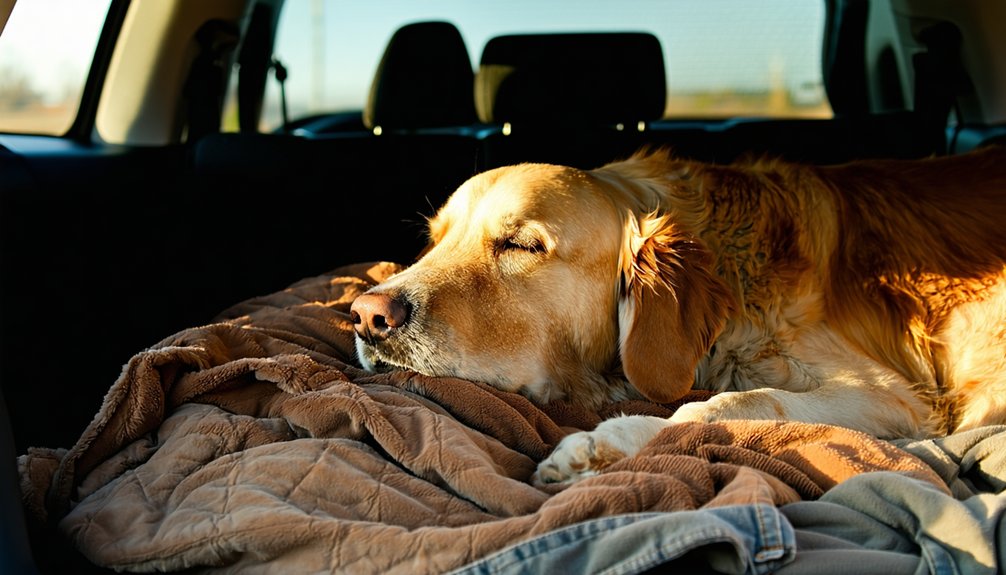
Spotting CO poisoning early gives your dog the best chance, but the signs are easy to miss because they look like ordinary tiredness. Watch for lethargy, sudden confusion, or aggression—behavioral change recognition matters because these signal early brain hypoxia. As exposure worsens, you’ll notice ataxia, panting, racing heart, vomiting, and exercise intolerance.
| Stage | What You’ll See | Your Action |
|---|---|---|
| Early | Drowsiness, inappetence, nausea | Get fresh air |
| Neurologic | Staggering, blindness, seizures | Emergency vet triage |
| Cardiac | Tachycardia, labored breathing | Rapid oxygen therapy |
| Visible | Cherry-red gums, red ears | Gum color assessment |
| Severe | Collapse, coma | Call ahead, transport now |
Don’t wait for fever—dogs often stay normal or mildly hypothermic. When in doubt, act fast.
Why Dogs Show CO Symptoms Before You Do
Inside a closed garage or stuffy car, your dog often crashes before you feel a thing—and it’s not because dogs can smell the gas. Carbon monoxide is odorless, so your dog can’t detect it.
What’s happening is faster toxic burden. Dogs breathe quicker than you do, so they take in CO faster. They’re smaller, with less blood volume, so the same room concentration delivers a larger dose per kilogram and disrupts oxygen transport sooner.
That’s why you’ll recognize lethargy early in your dog—weakness, incoordination, vomiting—while you still feel normal. Treat those signs as a warning that the air’s dangerous, not as gas detection.
Get everyone into fresh air immediately, then head for emergency vet triage. CO exposure in pets is a medical emergency.
Turn the Engine Off Before You Sleep
If you’re tempted to nap in your car with the engine running for heat or AC, don’t—it’s the leading cause of CO poisoning in vehicles. Health authorities are clear: never sleep with the engine on, no matter how you’ve set the windows or HVAC.
CO is colorless and odorless, so you won’t smell danger before it’s too late—and your dog will feel it first.
Exhaust can infiltrate the cabin even on “fresh air,” especially if your tailpipe’s blocked by snow or you’re parked in a walled-in lot.
Shut the engine off completely before resting.
Smart backup power planning—blankets, layered clothing, a portable battery—keeps you and your dog warm without combustion.
And always leave a window cracked for emergency ventilation.
We look out for each other here.
How to Open Windows for Real Cross-Ventilation
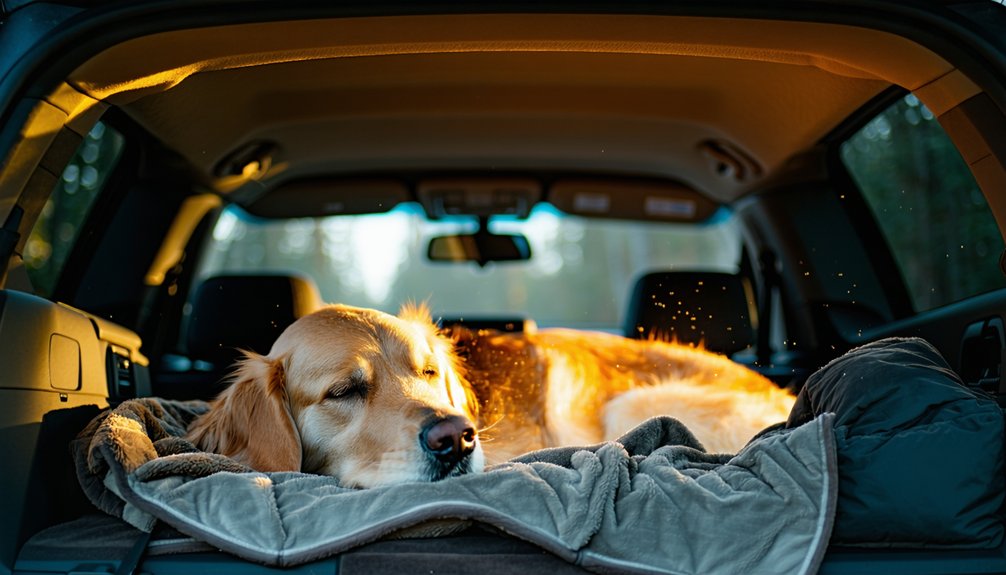
Cracking a window isn’t enough—you need air actually moving through the cabin, not just sitting near one opening.
The trick is diagonal window spacing: open two windows on opposite corners, like front-left and rear-right. This creates true inlet outlet airflow, where higher pressure at the front intake pushes air toward the lower-pressure rear exhaust. Those pressure balance basics keep stale, warm air moving out while fresh air flows in, protecting your dog from dangerous buildup.
When you’re parked, crack each diagonal window 1–3 cm. That’s enough to set a steady cabin breeze direction without inviting rain, insects, or security risks.
Avoid opening same-side windows only—you’ll get turbulence, not circulation.
Done right, diagonal openings keep everyone you love breathing easier together.
Keep Generators and Stoves Far From the Vehicle
Anyone running a generator or stove near their vehicle needs to keep it far away—at least 20 feet (about 6 meters) from any car, van, RV, or camper.
Your dog can’t tell you when CO is building up, so exhaust distancing protects them.
Point exhaust away from doors, windows, roof vents, and air intakes, and place the generator downwind.
Use long, outdoor-rated extension cords so you can power devices while keeping that backyard isolation between exhaust and your sleeping space.
Never run stoves, grills, or generators under awnings, in carports, or near tailgates—CO accumulates around bodywork, undercarriage, and cargo areas, then seeps inside.
Remember, CO can linger for hours after shutoff in low wind.
Keep cooking and generators outdoors, open-air, and distant always.
Do You Need a CO Detector in Your Vehicle?
Sleeping in a parked vehicle, idling for heat, or running an exhaust system that’s older or modified all raise your risk of carbon monoxide building up where you and your dog rest. CO is odorless, colorless, and tasteless, so detection’s your only reliable early warning. No law requires detectors in passenger vehicles, but fire and child-safety advocates strongly recommend them, especially where you sleep.
Consider an aftermarket, purpose-built vehicle detector when you:
- Drive an older or modified vehicle with potential exhaust pathways
- Sleep in a camper van or idle for climate control
- Need nighttime monitoring near sleeping areas
For alarm placement, position the detector close to where you and your dog breathe while resting. Maintenance plus detection together keep your shared space safe.
Where to Place a CO Detector for Pet Safety
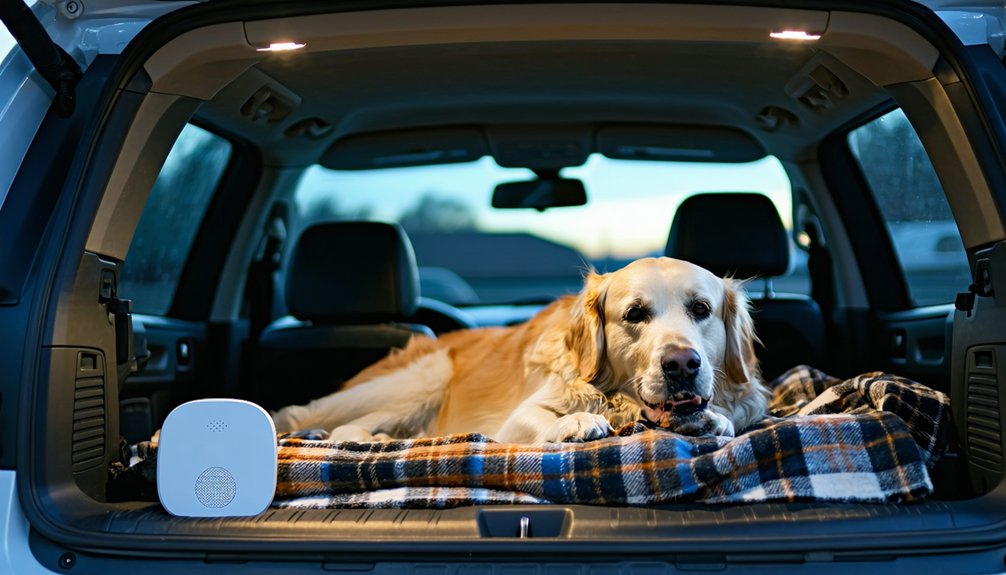
For accurate CO detection that protects your dog, mount the alarm about 5 feet above the floor or on the ceiling, keeping it above your dog’s reach while still sensing gas that mixes through the room.
This Pet Reach Distance keeps curious noses from tampering with or blocking the vents.
Put at least one alarm on every level, and add one in your dog’s main living area, where pets spend long, unsupervised hours.
Near sleeping zones, you’ll want it close enough to wake everyone during night exposures.
Keep at least 10 to 15 feet from fuel-burning sources to avoid nuisance alarms.
Avoid corners, furniture, and dead air spaces that delay response.
Maintain Unobstructed Airflow—never let beds, blankets, or crates cover the unit.
Always follow manufacturer instructions.
Staying Warm Without Burning Fuel
When you’re keeping your dog warm overnight in a vehicle, you don’t need to run the engine to fight the cold. Passive warmth keeps you both safe and comfortable.
Layer the cabin with blankets and quilts to trap body heat, and insulate the windows—one of the most effective ways to retain warmth.
Minimize air gaps around your sleeping area to limit convective heat loss.
For non-fuel heat, lean on these:
- Emergency bedding choices like wool and synthetic layers, which hold heat better than cotton
- Hot water bottles and heat packs for steady overnight warmth
- Hand warmers and pre-warmed clothing ready before you settle in
Keep insulation dry; damp bedding chills fast.
Brief ventilation offers smart condensation control tips without sacrificing warmth.
What to Do If CO Poisoning Strikes Overnight
Because carbon monoxide is colorless and odorless, your dog can slip into danger before you notice anything’s wrong.
Watch for sudden lethargy, labored breathing, cherry-red gums, vomiting, staggering, or collapse after a night in an enclosed vehicle.
Act fast.
Shut off the engine, heater, or generator, then move your dog and everyone else into fresh air.
Position your dog on its chest or side with neck extended.
If breathing stops, start artificial respiration; if there’s no heartbeat, begin CPR.
Don’t wait and see.
Call the nearest 24-hour vet or poison hotline, and prioritize rapid transport to a clinic offering emergency oxygen.
Use human EMS coordination too—CO affects everyone aboard.
Tell clinicians the suspected source, exposure time, and signs you’ve observed.
Frequently Asked Questions
Can Dogs Fully Recover From Carbon Monoxide Poisoning, or Is Damage Permanent?
Your dog can fully recover from mild CO poisoning with quick treatment, but severe exposure may cause permanent damage. Watch for emergency hyperbaric indications and continue CO symptom monitoring, since delayed neurologic problems sometimes appear later.
How Long Does CO Stay in a Dog’s Bloodstream After Exposure?
In room air, CO’s bloodstream half-life runs 4–6 hours, so full clearance takes 12–18 hours. With 100% oxygen, you’ll cut that to 1–3 hours. Your vet’s monitoring timeline keeps your dog safe throughout recovery.
Are Certain Dog Breeds or Ages More Vulnerable to CO?
No clear breed-specific risk exists, but exposure dose variability matters most. Smaller dogs and those with heart or lung disease face age-related sensitivity. Watch for early symptom differences—your puppies and seniors deserve extra protection.
Does Pet Insurance COver CO Poisoning Treatment and Hyperbaric Therapy?
Yes, most accident and illness plans cover CO poisoning treatment like oxygen and hospitalization. But watch pet insurance exclusions—pre-existing conditions or neglect can void claims. Hyperbaric coverage varies, so you’ll want to verify your plan’s specifics.
How Much Does an In-Vehicle CO Detector Typically COst?
You’ll typically spend $30–$70 for a solid in-vehicle CO detector. Basic unit pricing starts around $15–$30, while reputable sensor brands with electrochemical sensors run higher. For your family’s safety, mid-range models offer the dependable protection you’ll want.
Conclusion
You’ve got the knowledge now, so use it. Never run your engine while you sleep, and always check that tailpipe after snowfall. Install a CO detector, place it near your dog’s level, and crack a window for ventilation. Your dog can’t tell you when something’s wrong until it’s too late, so you’ve got to stay ahead of the danger. Trust the symptoms, act fast, and you’ll both wake up safe.
References
- https://firstaidforpets.net/carbon-monoxide-pets/
- https://www.petmd.com/dog/emergency/poisoning-toxicity/e_dg_carbon_monoxide_poisoning
- https://www.adt.co.uk/blog/keep-your-pets-safe-from-carbon-monoxide
- https://vetster.com/en/conditions/dog/carbon-monoxide-poisoning
- https://norwichterrierclub.org/wp-content/uploads/2020/04/Carbon-monoxide-poisoning-in-dogs.pdf
- https://veteriankey.com/carbon-monoxide-2/
- https://www.aspca.org/news/protecting-your-pets-and-your-family-carbon-monoxide-poisoning
- https://www.productcare.org/about/blog/pet-carbon-monoxide-poisoning/
- https://lortsmith.com/need-help-now/dog/poisons-toxins/chemicals/carbon-monoxide-in-dogs/
- https://vethelpdirect.com/vetblog/2024/11/25/can-dogs-and-cats-get-carbon-monoxide-poisoning/