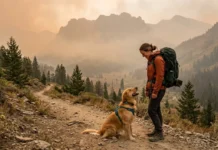
If you’ve ever pulled up to a national park entrance with your dog in the back seat only to learn she’s banned from every trail past the visitor center, you already know the frustration. Most people assume “national park” and “dog friendly” go together the way “beach” and “sand” do. They don’t.
The National Park Service restricts dogs from the vast majority of backcountry trails to protect wildlife, fragile soil, and even your own dog from predators. But a real, meaningful list of dog-friendly national parks does exist — you just need to know where to look, what the rules actually mean, and how to prepare.
This guide was built to answer the questions that most “top dog parks” listicles skip: which parks let dogs onto actual wilderness trails (not just paved loops), how the B.A.R.K. Ranger program works, what happens if a ranger catches your dog off-leash, and how national forests and BLM land often out-perform national parks for off-leash freedom. We’ll also cover heat and altitude safety, gear, regional roundups, and what to do when things go wrong on the trail.
TL;DR — Quick Answer
- Only a small handful of the 63 national parks allow dogs on true backcountry or wilderness trails — most restrict dogs to roads, parking lots, and campgrounds.
- Acadia, Shenandoah, Cuyahoga Valley, and Great Smoky Mountains (limited) offer the best genuine trail access for dogs.
- Yellowstone, Yosemite, Zion, and Grand Canyon (below the rim) ban dogs from nearly all trails to protect wildlife and fragile ecosystems.
- The standard NPS leash rule is 6 feet maximum, and it’s strictly enforced — citations and fines are common.
- National forests and BLM land near national parks often allow off-leash hiking where the park itself does not.
- Heat, altitude, and paw injuries are the top real-world risks for dogs in parks like Death Valley, Big Bend, and Rocky Mountain National Park.
Understanding “Dog Friendly” in the National Park System
Here’s the distinction that almost every generic roundup glosses over: “pet friendly” and “dog hiking-friendly” are not the same thing. A park can be pet friendly — meaning dogs are welcome in the car, on paved roads, in picnic areas, and at drive-up campgrounds — while still banning dogs from 95% or more of its actual hiking trails. This is true of some of the most famous parks in the country, including Yellowstone, Yosemite, and Grand Canyon.
True dog hiking-friendly national parks are the ones where your dog can join you on unpaved, natural-surface trails — not just paved multi-use paths. Very few national parks fall into this category, and the ones that do usually have specific mileage limits, seasonal closures, or leash requirements that vary trail by trail.
The general rule across nearly every unit of the National Park Service is a maximum 6-foot leash at all times, even in areas where dogs are technically allowed off pavement. Retractable leashes longer than 6 feet, even when locked short, are frequently prohibited or discouraged because rangers can’t verify the lock is holding.
The B.A.R.K. Ranger Program
B.A.R.K. is an NPS-created acronym that stands for:
- Bag your dog’s waste
- Always leash your pet
- Respect wildlife
- Know where you can go
Parks that participate in the B.A.R.K. Ranger program — including Acadia, Cuyahoga Valley, Golden Gate National Recreation Area, Petrified Forest, and Rocky Mountain, among others — offer dogs a chance to be “sworn in” as honorary rangers, usually with a bandana, tag, or certificate available at the visitor center.
It’s a fun photo-op, but it also does real work: rangers use the program to hand out maps of exactly where dogs can and can’t go, which solves the single biggest source of confusion for visiting dog owners. If a park has a B.A.R.K. Ranger booth, that’s usually a strong sign it takes dog visitors seriously and has clear trail guidance ready for you.
Service Dogs vs. Pets: Different Rules
Under the Americans with Disabilities Act, trained service dogs are allowed anywhere the public can go inside a national park, including backcountry trails that are otherwise off-limits to pets. This is a real legal distinction, not a courtesy. Rangers can ask two questions only: whether the dog is a service animal required because of a disability, and what task it’s trained to perform.
They cannot ask for documentation, require a demonstration, or charge a pet fee for a service dog. Emotional support animals and therapy dogs do not qualify for this exception and are treated as regular pets under park rules, which surprises a lot of visitors who assume any working vest grants trail access.
NPS Pet Policy Categories, Explained
Every national park’s pet policy falls into a handful of predictable buckets. Knowing these categories before you go saves you from showing up with a disappointed dog and a wasted trip.
| Policy Category | What’s Allowed | Example Parks |
|---|---|---|
| Developed areas only | Parking lots, picnic areas, campgrounds, paved roads | Yellowstone, Grand Canyon (below rim), Zion (canyon trails) |
| Paved paths/carriage roads | Dogs allowed on paved or gravel multi-use paths but not natural-surface trails | Yosemite Valley loop, Grand Canyon South Rim Trail |
| Select natural-surface trails | Specific unpaved trails open to leashed dogs, others closed | Shenandoah, Rocky Mountain, Great Smoky Mountains (2 trails only) |
| Broad trail access | Most or all trails open to leashed dogs | Acadia, Cuyahoga Valley |
| Near-total ban | Dogs prohibited even in most developed areas due to endangered species or fragile habitat | Channel Islands, portions of Everglades |
The Most Dog-Friendly National Parks for Hiking
These are the parks where a leashed dog can actually get real trail miles, not just a stroll around the visitor center.
| Park | State | Approx. Dog-Friendly Trail Miles | Leash Rule | Backcountry Access | Best Season |
|---|---|---|---|---|---|
| Acadia National Park | Maine | 100+ miles of carriage roads plus many hiking trails | 6 ft max | Y (most trails, some summit trails excluded) | Late spring–fall |
| Shenandoah National Park | Virginia | Most of the park’s 500 miles of trails | 6 ft max | Y (nearly all trails except a few) | Fall (foliage), spring |
| Cuyahoga Valley National Park | Ohio | Most trails including the Towpath Trail | 6 ft max | Y | Spring–fall |
| New River Gorge National Park | West Virginia | Several dozen miles across multiple trail systems | 6 ft max | Y (most trails) | Spring–fall |
| Great Smoky Mountains National Park | NC/TN | Only 2 short trails (Gatlinburg and Oconaluftee River Trails) | 6 ft max | N (limited to those 2 trails) | Spring, fall |
| Rocky Mountain National Park | Colorado | Roads, campgrounds, a few paved paths only | 6 ft max | N (trails closed to dogs) | Summer |
Notice the gap between Shenandoah/Acadia and Great Smoky/Rocky Mountain — this is exactly the pet-friendly versus dog hiking-friendly distinction in action. Always confirm current trail status directly on the individual park’s NPS pet policy page before you drive out, since closures shift seasonally for wildlife breeding, trail rehab, or fire risk.
Parks That Ban or Severely Restrict Dogs
Some parks aren’t just unenthusiastic about dogs — they actively bar them from almost everything beyond a parking lot. The reasoning is consistent across all of them: protecting endangered or sensitive wildlife, preventing disease transmission to native species (canine diseases can spread to wolves, foxes, and other wild canids), and reducing predator-attractant incidents in bear and mountain lion country.
- Yellowstone National Park — Dogs are restricted to roads, parking areas, and campgrounds; they’re banned from boardwalks near geothermal features and all backcountry trails, largely due to wildlife safety (bison, bears, wolves) and fragile thermal ground.
- Yosemite National Park — Dogs are limited to paved roads, sidewalks, and a few specific paved trails in the valley; the vast majority of the park’s iconic granite trails are off-limits, largely to protect black bear habitat and hikers on narrow cliffside paths.
- Zion National Park — Only the paved Pa’rus Trail allows dogs; the rest of the canyon’s trails, including Angels Landing and The Narrows, are closed to protect fragile riparian zones and because many routes require technical scrambling unsafe for dogs and other hikers.
- Grand Canyon National Park — Dogs are allowed on the South Rim Trail (paved) but banned below the rim on any inner-canyon trail, due to extreme heat exposure and mule traffic.
- Channel Islands National Park — Dogs are prohibited almost everywhere on the islands to protect endemic species found nowhere else on Earth, including the island fox.
If you’re set on visiting one of these parks with your dog, plan for the reality that most of your trip will be sightseeing and short paved walks, not backcountry hiking. Boarding facilities and pet sitters in nearby gateway towns (covered later in this guide) are the standard workaround.
Grand Canyon vs. Acadia vs. Shenandoah for Dog Accessibility
| Park | Dog Access Level | What Your Dog Can Actually Do |
|---|---|---|
| Grand Canyon (South Rim) | Low | Walk the paved rim trail; no descent into the canyon |
| Acadia (carriage roads) | High | Miles of packed gravel carriage roads plus many dirt hiking trails |
| Shenandoah (Skyline Drive corridor) | High | Nearly the entire trail network, including sections of the Appalachian Trail within the park |
Regional Roundups: Where to Take Your Dog by Region
Terrain, climate, and trail length vary enormously by region, which changes both what your dog can handle and what gear you’ll need.
| Region | Dog-Friendly Standouts | Terrain/Climate Notes |
|---|---|---|
| East Coast | Acadia, Shenandoah, Cuyahoga Valley, New River Gorge | Humid summers, rocky/rooty trails, moderate elevation gain, fall foliage crowds |
| West Coast | Redwood (some road-accessible groves), Point Reyes (technically a national seashore), Golden Gate NRA | Cooler coastal climate, but most true national parks (Yosemite, Sequoia, Redwood backcountry) restrict trail access heavily |
| Southwest | Petrified Forest (limited), Big Bend (roads and river areas) | Extreme heat, sandy/rocky terrain, scorpions and rattlesnakes, minimal shade |
| Rocky Mountain | Roads and campgrounds mainly; national forests around the parks are better for trail access | High elevation, sudden weather shifts, elk and bear activity |
| Alaska | Denali (park road corridor, not backcountry), some national forest trails nearby | Cold, remote, limited services, bear country requires extra caution |
The East Coast versus West Coast comparison is worth calling out directly: East Coast dog-friendly national parks tend to offer longer, moderate-elevation trail networks with denser tree cover and more forgiving summer heat in the mornings and evenings. West Coast parks, by contrast, are more likely to restrict dogs from trails altogether because of sensitive alpine or coastal ecosystems, pushing dog owners toward national forest land instead.
National Parks vs. National Forests vs. BLM Land
This is one of the most useful things to understand before planning a dog hiking trip: national forests and Bureau of Land Management (BLM) land are managed under a completely different mission than national parks, and it shows in the pet policies.
| Land Type | Managing Agency | Typical Dog Policy | Off-Leash Allowed? |
|---|---|---|---|
| National Park | National Park Service | Dogs restricted to roads/campgrounds; few trails open; 6 ft leash required | Almost never |
| National Forest | U.S. Forest Service | Dogs generally allowed on nearly all trails | Often, in areas without specific leash postings |
| BLM Land | Bureau of Land Management | Dogs generally allowed with few restrictions | Often |
| State Park | Varies by state | Varies widely; many allow trail access with leash | Rarely, but more common than national parks |
The National Park Service exists to preserve land in as close to a pristine, unaltered state as possible, and dogs — as a non-native predator scent and potential disease vector — work against that mission on backcountry trails. National forests and BLM land are managed for multiple uses, including recreation, grazing, and logging, which is why their pet policies are dramatically more relaxed. If a national park’s trails are off-limits, check the neighboring national forest; you’ll frequently find similar scenery with far fewer restrictions.
Real Trip Examples: Itineraries and Trail Breakdowns
Sample 3-Day Dog-Friendly Itinerary: Acadia National Park
- Day 1: Arrive, get your dog sworn in as a B.A.R.K. Ranger at the visitor center, then walk the flat, packed-gravel Jordan Pond carriage road loop (about 3.3 miles) as an easy warm-up.
- Day 2: Hike the Around-the-Mountain carriage road system near Eagle Lake (6+ miles), packing extra water since much of the route is exposed to sun near the lake.
- Day 3: Choose a shorter, dog-friendly summit trail like the Beech Mountain loop (about 1.1 miles round trip) for panoramic views without excessive rock scrambling, then finish with a dip-and-rinse stop at a dog-friendly beach area before departure.
New River Gorge: Trail-by-Trail for Dogs
- Long Point Trail — about 3.2 miles round trip, moderate, leads to an overlook of the New River Gorge Bridge; leashed dogs welcome.
- Endless Wall Trail — roughly 2.4 miles one way along the rim with several overlook spur trails; watch leash length carefully near cliff edges.
- Kaymoor Miner’s Trail — a steeper, longer historic route (about 2 miles one way) with old mining ruins; better suited to fit, well-conditioned dogs.
Where Dogs Are Barred From Trails But Allowed in Campgrounds
Yellowstone and Yosemite are the textbook examples of “pet friendly” without being “dog hiking-friendly.” In both parks, a dog can ride along, sleep in the tent or RV at a pet-designated campground loop, and walk on paved roads — but the second you step onto a dirt trail, the dog has to stay behind (usually with another person, in a kennel, or at a nearby boarding facility).
This is the single most common disappointment first-time visitors report, so plan your itinerary assuming your dog will experience the campground and scenic drives, not the trail system.
Case Example: Leash Rules Near Elk in Rocky Mountain National Park
Rocky Mountain National Park closes many trails to dogs entirely, but even on the roads and pullouts where dogs are allowed, rangers strictly enforce leash rules during elk rutting season in fall. A loose or even a leashed-but-reactive dog barking near a bull elk during rut can trigger a charge — elk have injured hikers in exactly this scenario.
This is a useful real-world illustration of why national parks lean so heavily on leash and trail restrictions: it’s not bureaucracy for its own sake, it’s a direct response to documented safety incidents.
Wildlife Safety: Bears, Big Cats, Snakes, and Elk
A dog’s presence changes the entire wildlife safety equation on a trail, and this is the core reason so many backcountry trails restrict dogs in the first place.
- Bears: A loose or barking dog can startle a bear into a defensive charge, and a fleeing dog may lead an agitated bear straight back to you. Keep dogs leashed and close, and carry bear spray you know how to use.
- Mountain lions: Small dogs in particular can trigger a prey response. Keep dogs leashed and never let them range ahead on trail sections with recent cougar sightings posted.
- Rattlesnakes: Dogs investigate with their nose first, which puts their face directly in strike range. Stick to the center of the trail and keep dogs on a short leash in rocky, sunny areas where snakes bask.
- Elk and bison during rut/calving season: Both species become significantly more aggressive in fall (rut) and late spring (calving). A dog is read as a predator threat and can provoke a charge even from a distance.
This is also the disease transmission piece rangers and park biologists point to when explaining trail restrictions: domestic dogs can carry parvovirus, distemper, and other pathogens that native wolves, foxes, and coyotes have little resistance to. Off-trail dog waste is a real transmission vector, which is why the “bag it” rule in B.A.R.K. isn’t just about smell — it’s a genuine conservation measure.
Heat, Altitude, and Paw Protection
Desert Parks: Death Valley, Big Bend, and Heat Risk
Ground temperature in direct desert sun can run 40-60°F hotter than the air temperature, which means a 90°F day can mean pavement or sand hot enough to burn paw pads within seconds. In parks like Death Valley and Big Bend, plan hikes for early morning only, carry more water than you think you need, and do the simple back-of-hand test on the ground surface — if you can’t hold your hand on it comfortably for five seconds, it’s too hot for paws.
Altitude Acclimation
Dogs can experience altitude sickness symptoms similar to humans — lethargy, vomiting, rapid breathing — when moving quickly from low elevation to parks above 8,000 feet like Rocky Mountain National Park. Give your dog a day or two at moderate elevation before attempting a strenuous hike, watch for excessive panting or reluctance to move, and turn back at the first sign of distress.
Paw Protection
Rocky, volcanic, or sun-baked terrain shreds unconditioned paw pads quickly. Snow and ice packed with salt or chemical de-icers can also cause chemical burns and frostbite on exposed pads.
| Gear Item | Purpose | Best For |
|---|---|---|
| Dog hiking booties | Protect pads from heat, sharp rock, cactus spines, snow | Desert and rocky/alpine terrain |
| Paw wax/balm | Adds a protective barrier without full boot coverage | Moderate terrain, cold weather |
| Cooling vest or bandana | Helps regulate body temperature | Desert and high-heat summer hikes |
| Collapsible water bowl | Easy hydration stops | All climates |
| Hydration backpack (dog-carried) | Lets fit dogs carry some of their own water | Longer trails with capable dogs |
Gear and Packing Checklist
A good rule of thumb from experienced trail dog owners: budget roughly half a liter to a full liter of water per hour of moderate hiking for a medium-to-large dog, more in high heat, and pack out every ounce of what you bring in, including waste.
Pre-Trip Packing Checklist
- 6-foot fixed leash (not retractable)
- Well-fitted harness with a sturdy front or back clip
- Collapsible water bowl and extra water beyond your own supply
- Waste bags (pack extra — you cannot bury or leave dog waste on most trails)
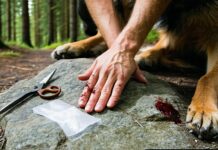
- Basic dog first-aid kit: tweezers for quills/spines, vet wrap, antiseptic wipes, digital thermometer
- Up-to-date ID tags and, ideally, a copy of vaccination records
- Paw booties or protective wax
- Reflective gear or a light for low-visibility trail sections
Day-of-Hike Checklist
- Check the park’s current pet policy page and trail alert page the morning of your hike
- Check the weather forecast, including ground/pavement temperature estimates for desert parks
- Confirm no active wildlife closures (bear activity, elk rut, nesting season)
- Identify water sources along the route, or plan to carry all water needed
- Tell someone your route and expected return time
Lodging, Camping, and Boarding Near the Parks
Overnight options for dogs inside national parks are more limited than most people expect. Historic in-park lodges — think the Ahwahnee in Yosemite or the Old Faithful Inn in Yellowstone — generally do not allow pets in guest rooms, with rare exceptions for service animals. Dogs are far more commonly welcomed at designated pet-friendly campground loops, where they can stay in a tent, RV, or camper as long as they’re leashed and never left unattended outside.
When a park’s trails are largely off-limits, gateway towns become the practical solution. Most major national parks have at least one dog boarding facility or pet-sitting service within a 20-30 minute drive, which lets you tackle a dog-restricted trail (like the Grand Canyon’s inner canyon or Zion’s Narrows) without leaving your dog in a hot car — something that’s both dangerous and, in most parks, explicitly prohibited even for short periods.
Book pet-friendly lodging, campsites, and boarding well in advance for peak season (May through September in most parks), since pet-designated spots sell out faster than standard ones.
Permits, Fees, and Vaccination Requirements
Most national parks do not charge a separate pet entrance fee — your dog is covered under the standard vehicle or per-person entrance fee. However, some backcountry camping permits and specific trail permits may require you to disclose you’re traveling with a dog, and a few parks (particularly those with sensitive wildlife zones) may deny backcountry permits to parties with dogs even where day-use trail access is allowed.
Proof of rabies vaccination is rarely checked at the gate but is often required at campground check-in or if a ranger asks during a trail encounter, so keep a digital or paper copy handy. Some parks and many national forests also require dogs to be current on flea/tick prevention given the tick-borne disease risk in wooded areas.
Trail Etiquette for Multi-Use Areas
- Yield to horses and pack stock — step off-trail on the downhill side and keep your dog close and quiet.
- Give wildlife-viewers space; a leashed dog approaching too close to a photographer’s setup can spook the animal being observed and ruin the moment for everyone.
- Announce yourself when passing other hikers from behind, especially with a larger or reactive dog.
- Always pack out waste — bury methods used for human waste under Leave No Trace principles don’t apply to dog waste the same way, since dog diets differ from wildlife diets and can introduce pathogens.
- Keep dogs off cryptobiotic soil crusts in desert parks; a single paw print can take decades to recover.
Off-Season vs. Peak-Season Access
Trail access for dogs isn’t static year-round. Many parks impose seasonal dog restrictions around wildlife breeding and nesting windows — for example, some coastal trails close to dogs during shorebird nesting season in spring and early summer, and certain Rocky Mountain trails add extra leash enforcement during fall elk rut.
Off-season visits (late fall through early spring in most parks outside the Southwest) often mean fewer crowds and sometimes expanded informal access, but also higher risk of trail closures from snow, ice, or reduced ranger staffing to confirm current rules. Always check the specific park’s alerts page before a shoulder-season trip.
Off-Leash Dogs and Ranger Citations
Letting your dog off-leash or leaving it unattended (tied outside a shop, left in a vehicle, or left at a campsite) is treated seriously in national parks, not as a minor courtesy issue. Rangers can and do issue citations with real fines for leash violations, and repeat or aggravated violations (a dog chasing wildlife, for instance) can result in a mandatory court appearance, higher fines, or in extreme cases the dog being impounded until the incident is resolved.
If a ranger stops you, the practical response is straightforward: leash the dog immediately, be polite, and don’t argue the rule in the moment — you can always contact the park’s visitor services office afterward if you believe the citation was issued in error.
Big Dogs vs. Small Dogs: Matching Breed to Terrain
Terrain and climate should influence which trails you choose as much as your dog’s fitness level does.
- Large, athletic breeds (Labs, shepherds, hounds) generally handle longer mileage and moderate elevation gain well but overheat faster in desert conditions due to their body mass and often thicker double coats.
- Small breeds (terriers, dachshunds, small mixed breeds) tire faster over long distances and are more vulnerable to predator attacks from raptors and coyotes, but they run cooler on hot exposed trails and fit easily into a dog-carrying pack if they get tired.
- Brachycephalic breeds (bulldogs, pugs) struggle with both heat and altitude due to restricted airways and should be limited to short, flat, cool-weather trails regardless of the park.
Common Mistakes Dog Owners Make
- Assuming “pet friendly” means trail access. Always confirm the park’s specific trail-by-trail pet policy, not just whether dogs are allowed in the park at all.
- Underestimating desert heat. A hike that feels fine for you at 9 a.m. can become dangerous for your dog by noon.
- Using a retractable leash. Most parks require a fixed leash of 6 feet or less; retractables are often cited as violations.
- Leaving a dog in a parked car to hike a dog-restricted trail — this is both risky in warm weather and against the rules in most parks.
- Skipping the conditioning hike. A dog that’s never hiked more than a neighborhood block shouldn’t attempt an 8-mile mountain trail on day one of a trip.
- Forgetting waste bags and either leaving waste on trail or burying it, both of which violate Leave No Trace and park rules.
Troubleshooting Trail Emergencies
Heat Exhaustion
Watch for heavy panting, drooling, weakness, or a bright red tongue and gums. Move the dog to shade immediately, offer small amounts of cool (not ice-cold) water, wet the belly and paw pads, and head for the nearest emergency vet — heatstroke can escalate quickly and is a genuine emergency, not a wait-and-see situation.
Porcupine Quills, Cactus Spines, or Snake Bites
Do not attempt to pull deeply embedded quills or spines yourself if there are many of them; get to a vet where sedation can be used safely. For a suspected snake bite, keep the dog as calm and still as possible, carry them if feasible to reduce venom circulation, and get to the nearest emergency veterinary clinic immediately — do not attempt to cut, suck, or ice the wound.
Finding Emergency Vet Care Near Remote Parks
Before you go, search for the nearest 24-hour emergency veterinary clinic to your gateway town and save the number and address in your phone; cell service is unreliable inside many parks, so knowing the route in advance matters more than being able to search for it later.
Startled or Fearful Dogs
Sudden wildlife noises — elk bugling, owl calls, a startled deer crashing through brush — can spook even calm dogs. Keep a short leash grip in these moments, speak in a calm, low voice, and avoid pulling or jerking the leash, which can heighten a dog’s fear response.
Ranger Citations
If cited for a leash or off-trail violation, comply on the spot, note the ranger’s name and badge number, and follow the instructions on the citation for how to contest or pay it. Arguing on the trail rarely helps and can escalate the situation.
Expert Insights
Veterinary guidance generally emphasizes matching hike distance and pace to a dog’s age, breed, and conditioning level rather than a single one-size-fits-all mileage number — a young, fit, medium-to-large breed can often handle several miles of moderate terrain, while senior dogs, puppies under a year with still-developing joints, and brachycephalic breeds should stick to shorter, flatter, cooler-weather outings.
From a park management perspective, the reasoning behind trail restrictions is consistent: protecting sensitive wildlife from disease transmission and predator-scent disturbance, preserving fragile soil and vegetation from off-trail wandering, and reducing dangerous wildlife encounters in bear, cougar, and elk habitat.
This is also echoed in general search-and-rescue experience in desert and canyon parks, where dog-related trail incidents most commonly involve heat exhaustion, paw injuries from hot or sharp terrain, and falls on exposed, narrow cliffside trails — all of which are largely preventable with the acclimation, hydration, and gear steps covered in this guide.
Professional dog trainers who work with reactive or leash-sensitive dogs typically recommend practicing calm-focus exercises on quieter local trails before attempting a busy multi-use national park path, since sudden encounters with horses, bikes, and wildlife are common triggers that are easier to manage with a dog that’s already comfortable holding attention on cue.
Conclusion: Plan Around the Rules, Not Around Assumptions
The honest truth about dog-friendly national parks is that very few of the most famous parks in the country will let your dog do more than ride along and sleep in the campground. But that’s not the whole story — parks like Acadia, Shenandoah, Cuyahoga Valley, and New River Gorge offer genuinely rewarding trail miles for you and your dog, and neighboring national forests and BLM land can fill the gap almost everywhere else. The key to a good trip is checking the specific park’s current pet policy before you go, matching your itinerary to your dog’s fitness and the local climate, and packing the gear that keeps paws, hydration, and safety covered from the trailhead to the summit.
Ready for your next trip? Check the individual park’s official pet policy page, book pet-friendly lodging or a boarding backup early, and start with a shorter conditioning hike close to home before tackling a full day on unfamiliar terrain with your dog.
Frequently Asked Questions
Are dogs allowed in national parks for free, or is there a pet fee?
Most national parks don’t charge a separate pet fee — your dog is covered under the standard per-vehicle or per-person entrance fee. Some backcountry permits or specific campground fees may apply if you’re bringing a dog into a designated pet camping loop, so it’s worth checking the specific park’s fee page before your trip.
Can I leave my dog in the car while I hike a dog-restricted trail?
This is discouraged and often against park rules, especially in warm weather when vehicle interiors can heat up dangerously within minutes even with windows cracked. Most parks prohibit leaving pets unattended in vehicles for safety and welfare reasons. Use nearby boarding, a pet sitter, or trade off hiking with a travel companion instead.
Do national parks provide water stations or shade for dogs?
Almost never. National parks generally do not provide dog-specific water stations, and shade availability depends entirely on the trail and terrain. You should plan to carry all the water your dog will need, especially in desert parks like Death Valley or Big Bend where natural water sources are scarce or unreliable.
What’s the maximum leash length allowed in national parks?
The standard rule across most national parks is a maximum 6-foot leash, and it must be a fixed-length leash rather than a retractable one in many locations. This rule applies even in areas where dogs are allowed off pavement, and rangers actively enforce it, especially near wildlife-heavy zones.
Can my dog swim in park lakes or rivers?
It depends entirely on the specific park and body of water. Some parks allow leashed dogs to wade or swim in designated areas, while others prohibit it to protect water quality, native fish, or nesting shorebirds. Always check the park’s specific pet policy page, since swimming rules are rarely uniform even within a single park.
Is pet insurance recommended for national park trips?
Pet insurance can be worthwhile if you frequently hike in remote areas, since emergency veterinary care for injuries like heat exhaustion, snake bites, or paw lacerations can be costly and harder to access near remote parks. It’s a personal financial decision, but many frequent trail dog owners consider it valuable peace of mind.
Which national parks are the least dog friendly, and why?
Yellowstone, Yosemite, Zion, Grand Canyon (below the rim), and Channel Islands are among the least dog-friendly national parks. Dogs are restricted to roads, parking areas, and campgrounds in most of these parks to protect sensitive wildlife, fragile ecosystems, and endangered species, and because narrow cliffside or geothermal terrain poses safety risks.
Can I bring my dog on a national park shuttle or tour bus?
Generally, no. Most national park shuttle systems, including those at Zion and Grand Canyon, prohibit pets except for trained service animals, since shuttles are often crowded and dogs could pose a safety or comfort issue for other passengers. Check the specific park’s shuttle policy page, as a few smaller regional shuttles may allow crated small pets.
Are there age restrictions for puppies or senior dogs on park hikes?
National parks don’t set official age restrictions for dogs, but veterinarians generally recommend limiting strenuous hikes for puppies under a year old, since their joints and growth plates are still developing, and for senior dogs with reduced stamina or joint issues. Choose shorter, flatter trails and watch closely for signs of fatigue in both groups.
What is the difference between a national park, national forest, and national monument for dog policies?
National parks, run by the National Park Service, tend to have the strictest dog policies, often limiting dogs to roads and campgrounds. National forests, managed by the U.S. Forest Service for multiple uses, are typically far more relaxed and often allow dogs on nearly all trails, sometimes off-leash. National monuments vary depending on which agency manages them, so policies can range from park-like restrictions to forest-like freedom.