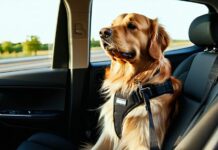
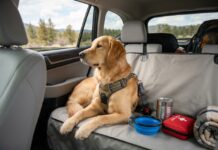
Start crate training at home first, where there’s no engine, motion, or traffic to overwhelm your dog. Keep the door open, feed meals inside, and reward calm, voluntary entry. Once your dog relaxes, pair the car with high-value treats and practice crate time with the engine off. Then build short drives gradually, watching for stress signs like drooling or panting. Don’t forget crash-tested containment for the trip itself. Here’s exactly how to do it.
TLDR Key Takeaways
- Begin crate training at home in a low-distraction room with the door open so entry and exit stay voluntary.
- Build positive associations by feeding meals inside the crate and reserving high-value chews and toys exclusively for crate time.
- Progress gradually from engine-off crate practice to short drives around the block, extending duration only when zero stress signs appear.
- Watch for stress signals like drooling, panting, or whining, and return to the last successful step rather than pushing forward.
- Choose a crash-tested, rigid-frame crate with published test parameters and verified standards to ensure true collision protection for the trip.
What Makes Crate-Averse Dogs Panic in Cars?
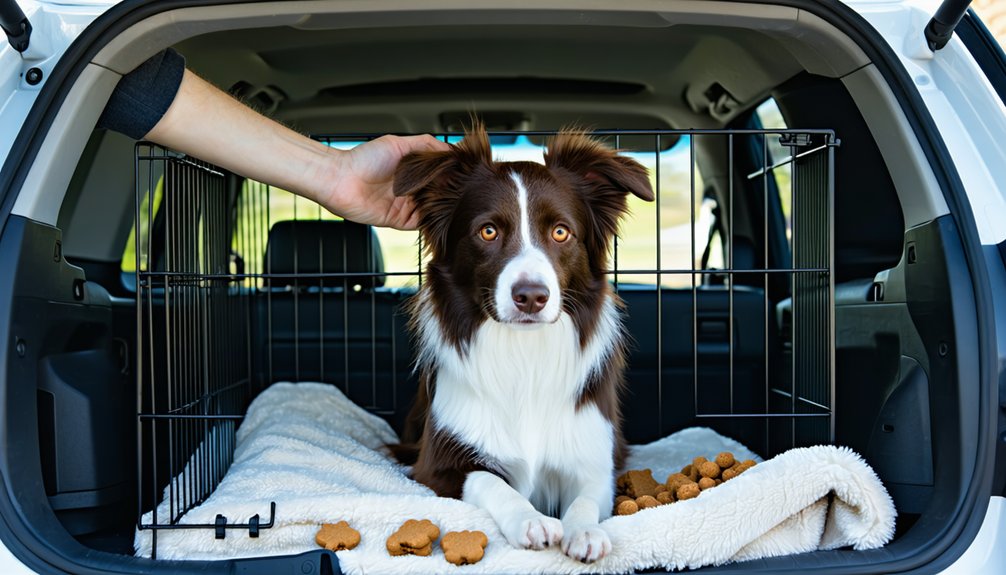
When your dog panics in the car, you’re rarely dealing with a single cause. Multiple triggers often overlap, and recognizing them helps you respond effectively.
Prior negative crate experiences can condition fear, especially when confinement has meant isolation or punishment. Some dogs panic the moment the door closes, distressed by lost escape options.
Motion sickness adds another layer, producing drooling, panting, and restlessness that look like fear but stem from nausea.
Car sensory triggers—engine noise, vibration, traffic sounds, and unfamiliar visual movement—can overwhelm sensitive dogs, and a crate intensifies this by restricting repositioning.
Negative trip associations, like vet or grooming visits, build anticipatory anxiety before you’ve even left. When you watch for dog relaxation cues, you’ll pinpoint which factors are driving your dog’s distress.
Start Crate Training at Home First
Once you understand what’s driving your dog’s panic, you can address it where the stakes are lowest: at home, with no engine, no motion, and no traffic to overwhelm an already anxious dog.
Start in a low-distraction room to reduce arousal and prevent negative early associations with confinement. Run several short sessions daily—just 3–4 reps each—rather than infrequent long ones that overwhelm. Keep the door open at first so your dog moves in and out voluntarily.
Your crate placement strategy matters: position it near household activity, like the living room, so auditory and visual access to the family eases isolation distress. Use the same crate consistently before any vehicle practice. This predictability speeds learning and builds the calm foundation every confident traveler needs.
Turn the Crate Into a Happy Place
Although a crate may currently trigger panic, you can flip that association by making the space genuinely rewarding. Start by feeding full meals inside, gradually moving the bowl deeper so your dog connects the crate with good outcomes. Reserve high-value stuffed toys and long-lasting chews exclusively for crate time, teaching that valued resources live inside.
- Build scent comfort routines using an unwashed blanket or worn T-shirt to ease anxiety through familiar smells.
- Toss treats during approach and entry to reinforce voluntary movement toward the crate.
- Establish crate relaxation cues by rewarding loose posture and quiet lying down.
- Return special toys to the crate when your dog exits, anchoring rewards to the space.
Over time, your dog will choose the crate willingly.
Build Good Feelings About the Car
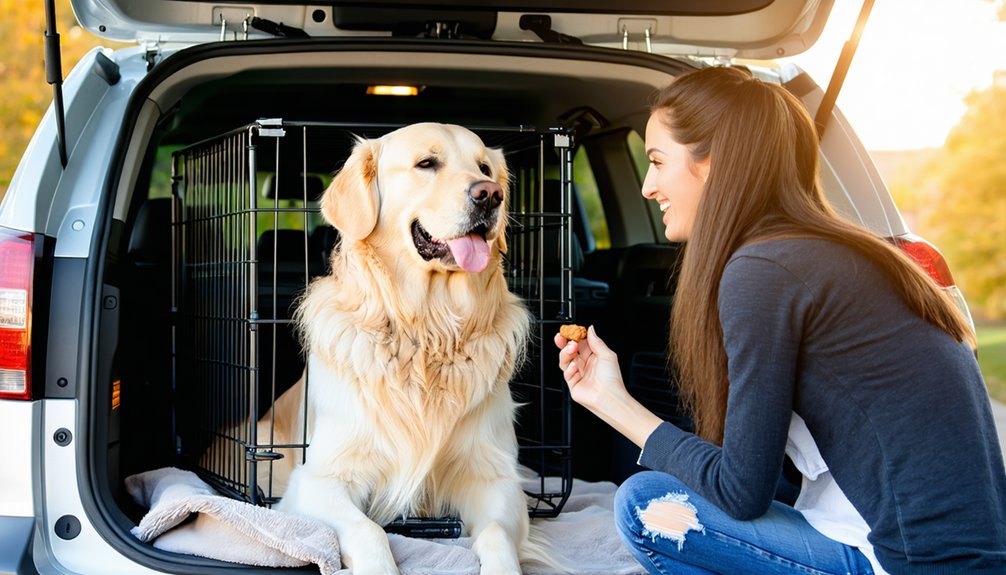
Just as you converted the crate into a positive space, you can teach your dog that the car predicts good things.
Pair car exposure with high-value treats, turning the vehicle into a reliable predictor of reward.
Start small: walk near the car, open the doors, and let your dog investigate at their own pace.
Keep sessions short and successful, increasing difficulty only after calm behavior stays consistent.
If your dog won’t eat in the car, use scent marker cues from familiar bedding to create comfort, and offer muzzle soothing breaks or play to preserve the positive association.
Reward relaxed body language, and watch for stress signs—pause rather than push forward.
Training without a destination removes pressure, so you’re rewarding calmness, not excitement about a specific trip.
Practice Crate Time With the Engine Off
Park your car in a quiet location, switch off the engine, and you’ve created the ideal setting for calm, stationary crate practice. Secure the crate in its travel position so it won’t rock or shift, then line it with familiar bedding your dog already connects with relaxation at home. Keep the doors open early to ease confinement, and favor a gradual approach that lets your dog enter and exit freely.
- Session length: Limit early sessions to 5–15 minutes before extending duration.
- Calm repetition: Allow repeated in–out reps so entering feels routine and safe.
- Reward timing: Deliver high-value treats the moment your dog settles inside.
- Gradual approach: Progress only when body language stays loose and willing.
You’re building lasting confidence together.
When Should You Close the Crate Door?
Before you ever touch that door, your dog needs to prove genuine comfort inside the crate—not just tolerance. Look for calm, voluntary entry, the ability to stand, turn, and lie down, plus relaxed body language—soft eyes, loose muscles, normal breathing, and willingness to take treats.
Multiple positive open-door sessions without hiding, vocalizing, or scratching signal readiness to progress.
Time your first closures during high-value moments, like eating a meal placed at the back of the crate. Close the door only after your dog’s fully inside and eating, never mid-entry.
Keep early closures to seconds, then reopen before the bowl empties.
Pair every closure with rewards so the door predicts good things.
Timing consistency builds the trust that turns confinement into a safe, familiar space.
Watch for Stress Signals That Mean Stop
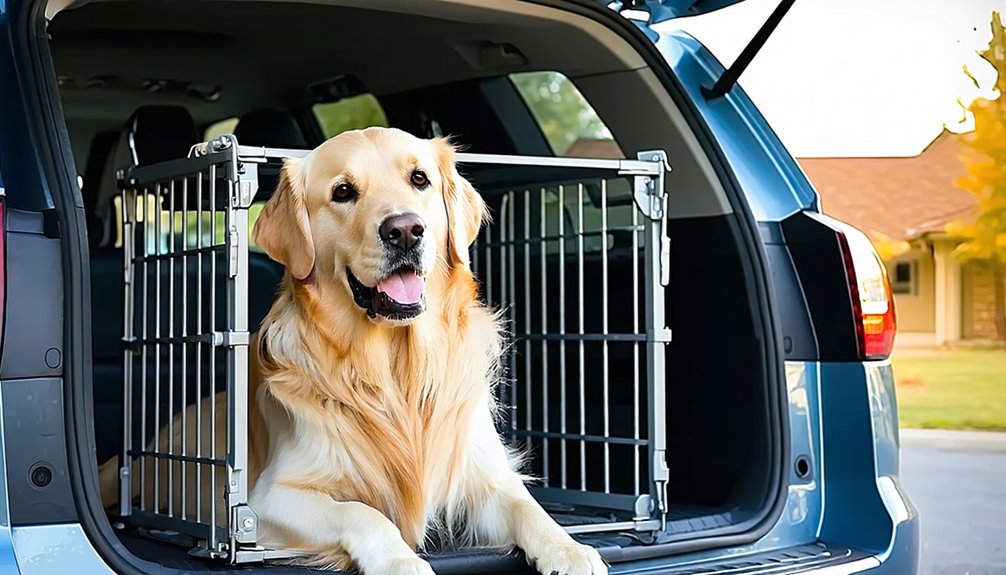
While progress matters, your dog’s stress signals matter more—and they always override your training timeline. Red flag recognition keeps you connected to what your dog’s communicating, so you stop before fear becomes panic. When you spot pacing triggers—frantic repositioning, head darting toward doors—you’ve already crossed your dog’s stress threshold. Honor that limit; it’s how trusted handlers earn lasting confidence.
Watch closely for these stop-now signals:
- Excessive panting or heavy drooling that appears once the vehicle starts moving
- Persistent trembling, tucked tail, and lowered, crouched posture
- Refusal of high-value treats previously accepted inside the crate
- Repeated swallowing, gulping, or retching—classic motion sickness cues
When you see these, pause immediately. Stopping isn’t failure—it’s the foundation of real, durable progress together.
Take Your First Short Drive Around the Block
Once your dog stays calm through stationary engine trials, you’re ready for motion—and you’ll keep it short. Drive a single loop around the block, just 3–5 minutes, beginning and ending at home to preserve predictability.
To desensitize motion sickness and lower vestibular load, choose a route that avoids heavy traffic, frequent stops, and complex maneuvers.
Deliver high-value treats before and during the drive, and keep talking minimal so your dog can process the new motion and sound changes.
When you shorten exposure duration this way, calm behavior predominates over rising arousal—exactly what you want.
After parking, switch off the engine and wait for a few quiet moments before release.
Repeat this same loop daily; you’re building habituation that’ll carry your companion confidently toward the bigger trip.
Reward Calm Crate Behavior on the Road
Now that your dog rides calmly around the block, you’ll start reinforcing the specific behaviors you want to see on the road. Calm reinforcement works best when you time treats only during quiet intervals—when your dog lies still, breathes loosely, or rests their head on their paws. Choose high-value, low-crumble treats like soft training bites or stuffed Kongs that encourage settled licking and reduce mess.
Scented bedding from home carries existing relaxation conditioning into the crate, helping your dog feel grounded.
- Mark and reward brief moments of silence to build longer quiet intervals
- Withhold attention during whining, barking, or scratching
- Shift to a variable reward schedule over longer distances
- Reduce difficulty if panting or drooling escalates
You’re shaping lasting calm together.
Stretch Car Drives Longer Without Setbacks
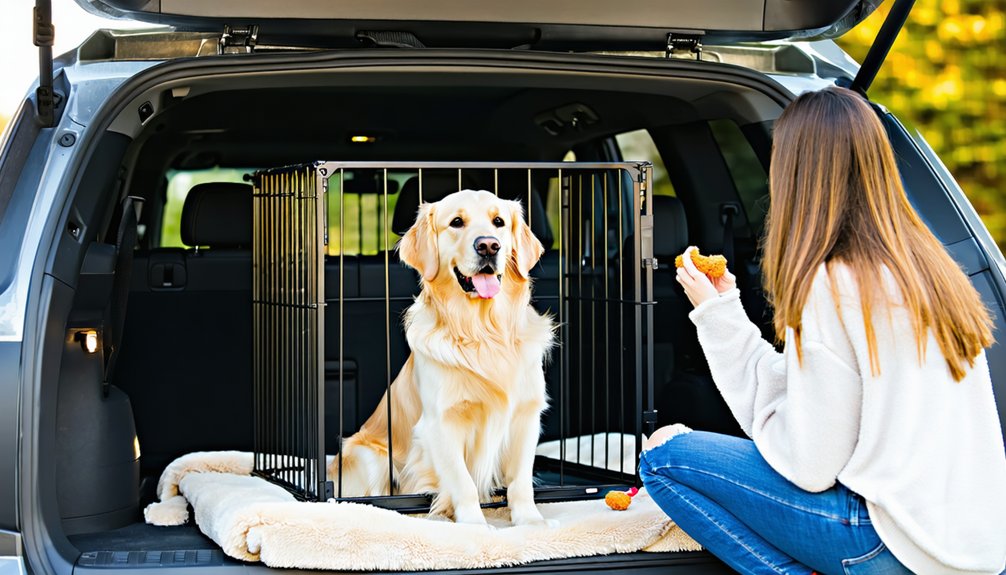
Your dog rides calmly around the block, so you’re ready to extend drive duration without triggering a relapse. Start with very short drives of one to five minutes, then add three to five minutes per session only when zero stress signs appear. Drooling, panting, or whining mean you’ve moved too fast—return to the last successful duration next time. Run multiple short sessions weekly instead of occasional long trips, building gradual success that prevents regression. Change just one variable at a time, like distance while keeping the same route, so you can pinpoint what’s working.
Predictable cues help your dog anticipate calm outcomes, reinforcing trust. Pair longer drives with high-value destinations—a park, a friend’s yard—so travel predicts enjoyment. You’re building lasting confidence, one steady drive together.
Practice Crate Travel in New Places
Why does a dog that’s calm in the living room crate suddenly panic in a parking lot?
Comfort is often context-specific, so you’ll need to deliberately generalize it. Take the familiar crate to new low-distraction spots—your driveway, garage, a friend’s yard—and keep first sessions brief, just 1–5 minutes with the door closed only while your dog stays calm.
Smart reinforcer selection matters here: reserve top-tier treats, stuffed food toys, and edible chews exclusively for crate time. Effective location pairing turns each new place into a predictor of good things.
- Run multiple mini-sessions daily across different nearby spots
- Release before agitation escalates, not after
- End on success if any distress appears
- Vary time of day and lighting conditions
You’re building resilience everywhere your dog goes.
Pick a Crash-Tested Crate for the Trip
While your dog’s growing comfort with crate travel matters enormously, the crate itself becomes your last line of defense in a collision. Don’t settle for vague “safety-tested” marketing. Demand test standard verification—look for CPS-style protocols where crates survive simulated 30 mph frontal impacts without catastrophic failure.
Prioritize manufacturers who publish their test parameters: speed, dummy weight, vehicle setup, and anchoring points. Published crash performance data, like an 80%-plus reduction in dummy movement, tells you the restraint actually works.
Choose rigid-frame construction—rotomolded plastic, reinforced steel, or aluminum—with strong welds, reinforced corners, and secure metal latches.
Skip lightweight wire or soft-sided carriers for medium and large dogs. When you pick a verified crate, you’re joining responsible owners who refuse to gamble with their companions’ lives.
Frequently Asked Questions
How Long Does the Entire Crate Acclimation Process Usually Take?
You’ll typically need 2–4 weeks, though crate-averse dogs often require several weeks to a few months. With short gradual sessions and positive reinforcement pacing, you’ll join countless owners who’ve reached calm, reliable containment—watch readiness signals, not deadlines.
Can I Use Medication or Calming Supplements During Car Training?
Yes, you can—but stick with vet-advised options like trazodone or calming supplements. Discuss gradual dosing timing, and always trial them before trip day. They support your training, not replace it, helping your dog feel safe.
What Crate Size Is Best for My Dog?
Measure your dog’s length and standing height, adding 2–4 inches. You’ll want enough floor space to stand, turn, and stretch comfortably. Consider airflow needs and travel comfort, and use divider adjustments if your pup’s still growing.
Should I Crate Train Puppies and Senior Dogs Differently?
Yes, you should. Age Approach Differences matter: puppies learn faster, so build routines early; seniors need slower pacing and comfort first. We recommend checking Vet Consult Timing for joint health and bladder limits before you start.
What if My Dog Gets Carsick Despite Training?
Ask your vet about anti-nausea meds. You’ll identify indoor vomiting triggers, apply hydration strategies, and try timing relocation outings below your dog’s threshold. Prioritize post-episode recovery with rest, water, and reassurance—you’re both learning this together.
Conclusion
You’ve got the tools to turn panic into calm. Start at home, build positive associations, and progress gradually—never rushing through setbacks. Research shows incremental desensitization works, so trust the process and stay consistent. Reward every calm moment, practice in varied locations, and invest in a crash-tested crate for safety. By trip day, your dog won’t just tolerate the crate—they’ll feel secure inside it. Your patience now means a stress-free journey ahead.
References
- https://www.kinship.com/uk/dog-behaviour/how-train-dog-car-crate-anxiety
- https://www.akc.org/expert-advice/travel/dog-car-safety-training/
- https://vcahospitals.com/know-your-pet/dog-behavior-and-training-traveling-air-and-car-travel
- https://www.akc.org/expert-advice/travel/teach-dog-ride-car-prevent-anxiety/
- https://www.thule.com/en-us/articles/guides/introducing-your-dog-to-a-car-crate
- https://www.diggs.pet/blogs/posts/how-to-calm-dog-car
- https://www.whole-dog-journal.com/training/dogs-riding-safely-and-calmly-in-cars/
- https://robertcabral.com/how-to-train-your-dog-to-travel-in-a-crate/
- https://www.coastalpet.com/blog/how-to-crate-train-your-dog-for-a-stress-free-experience/
- https://www.zoomroom.com/tips/car-trips-with-dog/