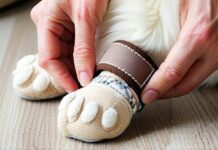
Hot granite can top 135°F on sunny days, burning your dog’s pads in seconds. Watch for licking, limping, or refusal to walk, plus pink, red, whitened, or charred patches and blisters. Rinse gently with lukewarm water, restrict movement, and prevent licking. Call your vet if your dog won’t bear weight or you spot pus, odor, or spreading redness. Most mild burns heal in 7–10 days. Here’s everything you need to protect those paws.
TLDR Key Takeaways
- Watch for early signs like licking pads, sudden limping, paw lifting, or refusal to walk on sun-heated surfaces.
- Inspect pads for redness, whitened-gray patches, blisters, peeling, or dark charred areas indicating burn severity.
- Provide first aid by rinsing with lukewarm water, restricting movement, and applying pet-safe ointment with an Elizabethan collar.
- See a vet if the dog won’t bear weight, shows infection signs, or doesn’t improve within 24–48 hours.
- Prevent burns by avoiding granite during peak heat (10 a.m.–4 p.m.), using shaded routes, and protective boots.
Why Hot Granite Burns Your Dog’s Paw Pads
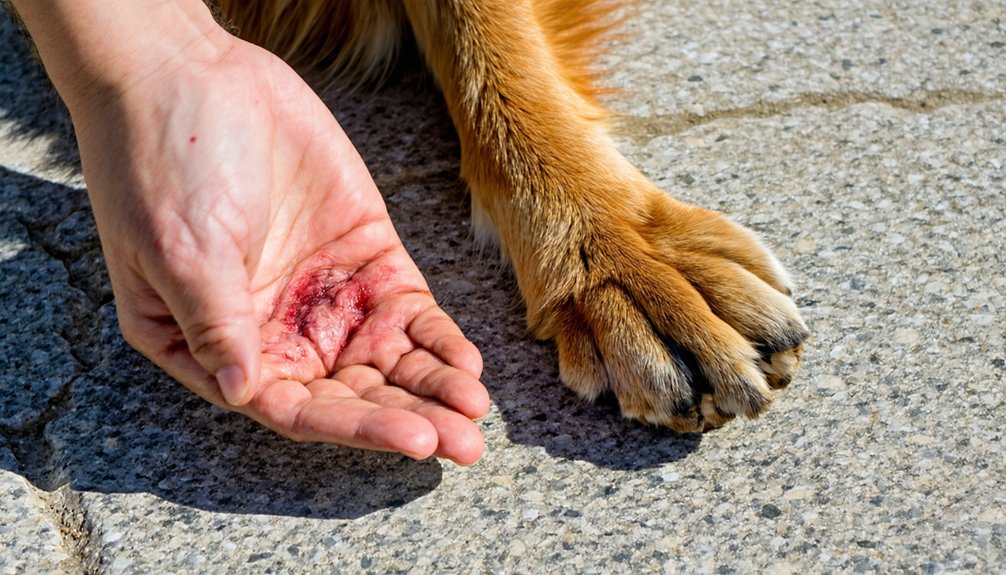
Because granite absorbs and stores solar radiation so efficiently, its surface temperature can climb far above the surrounding air on a sunny day. Dense, dark granite heats faster and to higher levels than lighter surfaces, thanks to its high thermal mass and low albedo.
Under direct sun exposure, exposed slabs can exceed 57°C (135°F)—a range veterinarians call dangerous for paw tissue, even with brief contact.
Your dog’s paw pads aren’t built for this. Direct heat transfer from hot rock rapidly heats the superficial pad layers, causing protein denaturation and thermal burns.
Because pads have limited sweat glands and poor evaporative cooling, they can’t shed heat fast enough. Once the surface exceeds tolerance, you’ll see microcracks, blistering, and loss of outer layers exposing sensitive dermis.
Which Dogs Face the Highest Burn Risk
Knowing which dogs burn most easily helps you adjust your routine before granite ever damages a paw. Puppies share your concern here: their thin, incompletely keratinized pads and low body mass raise heat vulnerability dramatically. Senior dogs face age related decline—thinning, cracking pads and neuropathy that delays withdrawal from painful surfaces. Comorbidity impact matters too; endocrine, cardiac, or metabolic conditions and certain medications impair healing after burns.
| Risk Group | Key Trait | Burn Factor |
|---|---|---|
| Puppies | Soft pads | Poor keratinization |
| Seniors | Dry, cracked pads | Reduced pain sensing |
| Brachycephalic | Poor cooling | Overheating risk |
Breed traits compound everything: brachycephalic breeds, thin-padded toy breeds, sighthounds, and light-pigmented pads all heighten danger. Recognizing your dog here keeps you ahead of injury.
Early Signs Your Dog’s Paws Are Hurting
When your dog’s pads start hurting, the warning signs show up fast—often before you’d ever spot a blister. Watch for licking or chewing at the pads after a walk; it’s usually the earliest clue something’s wrong.
Observe sudden limping, paw lifting, or a stiff, cautious gait, and notice when your dog refuses to continue on a sun-heated path. Note early warmth—pads that feel hotter than the surrounding skin signal inflammation building beneath the surface.
Check pad tenderness gently: flinching, withdrawal, or refusal to let you touch a paw points to real pain. You’ll also see redness, mild swelling, or a softened, mushy pad surface.
Catch these signs early, and you’ll protect your companion before a minor burn turns into something serious.
What Burned Paw Pads Actually Look Like
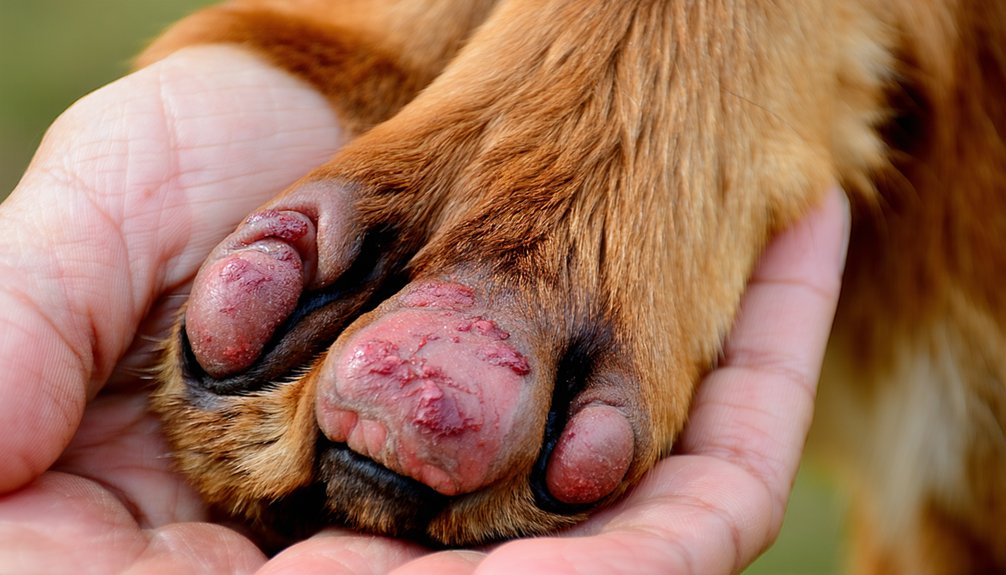
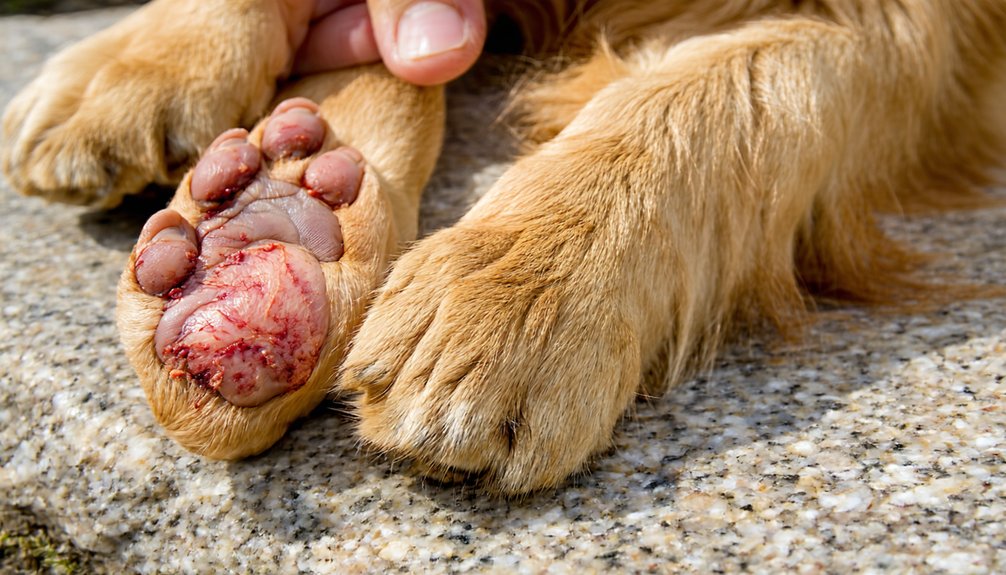
Once you know what to look for, burned paw pads reveal themselves through clear visual and textural changes. Healthy pads feel firm and look smooth, so any deviation signals trouble.
Look for swelling alongside reddening or darkened discoloration where your dog’s pads contacted the hot granite.
Check pad sensation too—burned tissue often feels soft, spongy, or mushy instead of resilient.
Watch for these telltale signs:
- Color shifts: pink, red, or whitened-gray patches indicating tissue damage.
- Blisters and moisture: clear fluid-filled blisters or weepy, serum-leaking surfaces.
- Pad material loss: peeling, sloughing, or missing chunks exposing raw tissue.
- Deep injury markers: dark brown, blackened, or charred areas signaling serious burns.
Trust these patterns—they’ll help you protect every dog who depends on you.
How to Spot a Severe Paw Burn
Recognizing a burn is one thing—gauging its severity is another, and that distinction determines whether you’re managing a minor injury at home or rushing to the emergency vet.
Watch for deep tissue damage: missing chunks of pad, exposed raw tissue, or full-thickness loss of the pad surface.
Severe burns blister, peel, or slough, leaving gray, white, or charred patches.
If your dog refuses to bear weight, yelps when you touch the paw, or bleeds without stopping, you’re dealing with something serious.
Emergency vet signs include fluid-filled lesions, multiple pads burned at once, and systemic distress like lethargy or rapid panting.
Loose, hanging pad tissue and swelling extending into the toes also signal danger.
When you spot these, don’t wait—seek professional care immediately.
First Aid for Burned Paws Right Away
The moment you spot a burn, your first job is to stop the damage from getting worse. Like every owner who’s faced this, you can act fast and protect your dog.
Effective first aid triage starts with cooling and restriction, then moves into protective home care basics that shield fragile pads while you reach your vet.
- Cool the paw by gently rinsing with room-temperature or lukewarm water, removing debris without alcohol, harsh chemicals, or hydrogen peroxide.
- Stop weight-bearing by carrying your dog and confining movement to cool, clean, non-abrasive indoor surfaces.
- Apply a pet-safe topical antibiotic or veterinary hydrogel to superficial burns for barrier protection.
- Prevent licking using an Elizabethan collar until you secure proper bandaging.
How to Cool and Clean Burned Pads
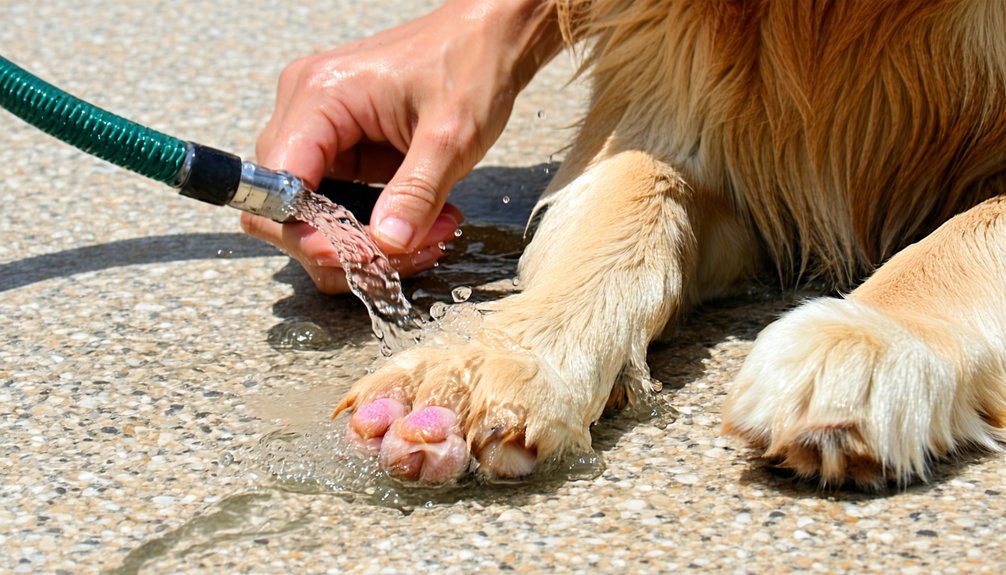
After a paw burn, you’ll want to cool and clean the tissue properly, since these two steps shape how well your dog heals. Start with cool, not icy, water—run it over the affected pads or soak them for 5–20 minutes, depending on severity. Skip ice or cold packs directly on burns, since they cause vasoconstriction and added damage.
Keep the rest of your dog warm to prevent chilling, then gently pat pads dry without rubbing.
Next, rinse loose dirt and granite grit with lukewarm water, then move to pet safe cleaning using mild antibacterial soap or dilute betadine.
Inspect for embedded debris, removing visible particles carefully. Avoid alcohol and full-strength peroxide.
Later, when you bandage, bandage fit checks matter—two fingers should slide underneath comfortably.
When to Call the Vet About Paw Burns
How do you know when a paw burn crosses the line from home care to emergency? Trust your instincts, and watch for these warning signs that tell you it’s time to call your vet. Burn severity grading matters: full-thickness burns with charred, leathery, or sloughing pad tissue demand immediate care.
So do chemical burns, which risk deeper injury and toxicity.
Watch closely for these red flags:
- Refusal to bear weight, marked lameness, or holding a paw up after cooling attempts.
- Vocalization when you lightly touch the paws, signaling significant pain.
- Possible infection signs, including pus, foul odor, spreading redness, fever, or lethargy.
- No improvement within 24–48 hours, or deterioration after initial healing.
When these appear, don’t wait—reach out promptly.
What Vets Do to Treat Paw Burns
Walk into the clinic with a burned paw, and your vet starts by evaluating the damage before touching a single bandage. Clinic burn grading classifies the injury as first-, second-, or third-degree, examining blisters, sloughing, and exposed tissue, while documenting with photos.
Your vet checks essential signs to catch shock or heatstroke, then performs a pain assessment by evaluating lameness and gait. In serious cases, IV fluids and oxygen stabilize your dog.
Next comes gentle cleansing with sterile saline, plus wound debridement under sedation to remove dead tissue. Your vet applies silver sulfadiazine, prescribes analgesics and antibiotics when needed, then wraps a multi-layer bandage that’s snug but not constrictive.
With ongoing bandage monitoring for swelling or discoloration, you and your vet keep healing on track together.
How Long Do Paw Pad Burns Take to Heal?
Once your vet’s treated the burn, you’ll want to know what recovery looks like and how long it’ll take. Healing time depends on tissue depth, not just visible redness or pain.
Mild, superficial burns often close in 7–10 days, while deeper injuries can stretch up to 21 days. Severe burns or pad sloughing may need weeks for full recovery.
Watch for these signs your dog’s on track:
- Reduced limping and improved comfort during walking
- Drying and closing of the wound surface
- Less redness and swelling around the pad
- Return of normal toughness after rekeratinization
Keep up Infection Risk Monitoring for discharge or contamination, and ask your vet for a Scar Severity Assessment if mild burns linger past the usual window.
Caring for Healing Paws at Home
Treating a paw burn at home starts with clean, careful wound care that protects fragile new tissue. Flush pads with cool water or dilute chlorhexidine, remove easily grasped debris, then pat thoroughly dry. Apply a thin, dog-safe ointment, cushion with nonstick gauze, and secure snugly—two fingers should fit underneath.
| Care Focus | What You Do |
|---|---|
| Bandage hygiene | Change daily; keep dry with booties |
| Infection monitoring | Watch for redness, warmth, odor, discharge |
| Pain management | Use cool soaks and vet-approved relief |
| Home safety | Provide soft, non-abrasive resting areas |
| Activity control | Limit to short, leashed walks |
Use an Elizabethan collar to stop licking. Together, these steps support healing and help your companion recover comfortably and safely.
Keep Your Dog Off Hot Granite for Good
Healing a burn is hard work, but preventing the next one is easier—and it starts with keeping your dog off hot granite entirely.
You’re not alone in this; smart heat prevention keeps your companion safe alongside other caring owners. Combine timing, shaded routes, surface barriers, and protective gear to eliminate exposure for good.
- Time your walks: Stick to early morning or late evening, and avoid granite during peak heat hours of 10 a.m.–4 p.m.
- Choose shaded routes: Prioritize grass, dirt, or trails over exposed stone.
- Install surface barriers: Cover granite with outdoor rugs, rubber matting, or raised decking.
- Use proper boot fit: Trim nails and fur between toes to improve contact and comfort.
Use the 7-second hand test consistently.
Frequently Asked Questions
Can I Use Human Burn Creams on My Dog’s Paw Pads?
No, you shouldn’t—human burn creams contain ingredients that are toxic when your dog licks them. Instead, join fellow pet parents using cooling compresses, monitoring infection signs, and seeking your vet’s guidance for safe, dog-approved treatments.
Are Certain Dog Breeds More Prone to Paw Pad Burns?
Yes, but breed isn’t the main factor. You’ll want to watch flat-faced, thin-padded, young, or senior dogs closely. Focus on prevention strategies—avoiding environmental hotspots like hot granite keeps every pup in your pack safe.
Does Pet Insurance Typically Cover Treatment for Paw Pad Burns?
Yes, pet insurance typically covers paw pad burns under accident or accident & illness plans, including diagnostics, wound care, and medications. You’ll share costs through deductibles and reimbursement rates, while coverage limits and waiting periods apply.
Can Paw Pad Burns Affect My Dog’s Nails or Toes?
Yes, burns can affect your dog’s toes and nails, especially deeper injuries. Keep a signs of infection watch—swelling, discharge, odor. There’s no fixed toenail regrowth timeline, so let your vet guide you.
Are Indoor Surfaces Like Heated Floors a Burn Risk Too?
Usually not—your typical heated floors stay around 80–85°F, well below burn thresholds. Watch for faulty thermostats, trapped heat under rugs, or high-temp panels. Knowing these Causes, Prevention, and Winter Traction tips keeps your pup safe alongside ours.
Conclusion
You’ve got the tools now to protect your dog’s paws and act fast when burns happen. Recognize the early signs, assess severity honestly, and don’t hesitate to call your vet when blisters or raw tissue appear. Most burns heal within one to three weeks with proper care. The smartest move you can make, though, is prevention—test surfaces with your hand and keep your dog off scorching granite entirely.
References
- https://www.youtube.com/watch?v=N6QBFC8Yvjk
- https://petcarelab.co/blog/dog-paw-pad-burns-hot-pavement-first-aid-and-prevention
- https://www.facebook.com/groups/9003421258/posts/10162935286251259/
- https://tomlinsons.com/blogs/articles/hot-weather-help-avoiding-dog-paw-burns
- https://www.petmd.com/dog/general-health/paw-pad-burns-dogs-what-do
- https://www.fourpawsusa.org/our-stories/publications-guides/hot-asphalt-a-danger-to-your-dogs-paws
- https://montclairpethospital.com/blog/dog-paw-burns/
- https://www.violetcrownvet.com/paw-pad-burns-what-to-do-how-to-protect-your-pooch
- https://uptownvethospital.org/articles/434194-protect-your-pet-from-painful-paw-pad-burns
- https://www.cbsnews.com/philadelphia/news/hot-summer-surfaces-may-burn-dogs-paws/