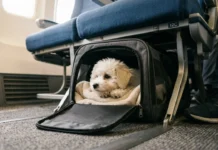
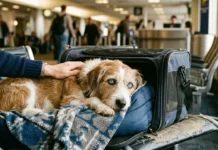
Your dog’s weight opens the first door. If your dog plus carrier stays under 8–10 kg (17–22 lb) and fits beneath the seat, you’ll likely qualify for in-cabin travel. Medium dogs (10–25 kg) typically can’t ride in-cabin, so you’ll book cargo. Large and giant dogs over 25 kg usually fly cargo or charter, especially when breed bans raise risk. Below, you’ll find exactly how each option fits your situation.
TLDR Key Takeaways
- Small dogs under 8–10 kg (17–22 lb) with carriers fitting under-seat (~45×35×20 cm) qualify for in-cabin travel.
- Medium dogs (10–25 kg) typically cannot fly in-cabin on commercial airlines and shift to cargo.
- Large and giant dogs over 25 kg generally fly cargo or private charter due to weight and space constraints.
- Cargo requires pre-reserved animal space and may restrict brachycephalic or strong-jawed breeds like Bulldogs and Pit Bulls.
- Charter becomes practical when in-cabin fit fails and cargo bans or thresholds increase risk for the dog.
Match Your Dog’s Size to the Right Flight Option
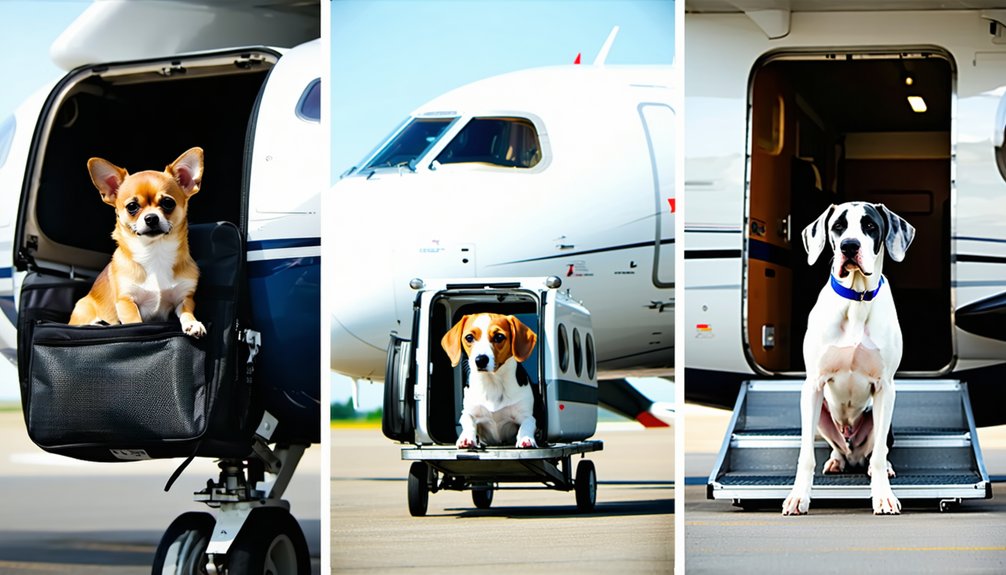
Before you book anything, weigh and measure your dog, because size dictates your options. If your dog plus carrier stays under 8–10 kg (17–22 lb) and fits beneath the seat (roughly 45×35×20 cm), you’ll likely qualify for standard in-cabin programs—just book early, since most flights cap cabin pets at 1–2.
Medium dogs (10–25 kg) typically can’t ride in the cabin on commercial airlines, so you’re looking at cargo, semi-private carriers like JSX (up to 79 lb), or shared pet jets.
Large and giant dogs (over 25 kg) generally fly cargo or private charter, which imposes no weight limit.
Throughout, weigh temperament fit alongside airline seating rules; a nervous dog in cargo isn’t the same belonging you’ll find together in-cabin.
When In-Cabin Travel Actually Works for Dogs
Once you’ve confirmed your dog fits the size threshold, the next question is whether in-cabin travel actually suits your dog’s itinerary, temperament, and health.
Pick nonstop or single-leg flights under ~6 hours to match bladder capacity and cut confinement time.
Midday departures spare sensitive dogs early wake-ups, while quieter red-eyes help sound-reactive pups.
Temperament matters: calm, noise-tolerant dogs that rest quietly in enclosed carriers belong in the cabin.
Carrier acclimation wins here—dogs sleeping in their carriers for weeks beforehand show markedly less anxiety.
Keep a stress signals watch for panting, whining, scratching, or escape attempts, which flag poor fit.
Brachycephalic breeds and dogs with respiratory, cardiac, or seizure conditions are safer in climate-controlled cabins.
Secure a vet health certificate within 10 days before flying.
Carrier Size Limits That Make or Break It
Every cabin pet policy hinges on one hard gate: your carrier has to fit completely under the seat in front of you, without creeping into the aisle. That underseat positioning decides everything.
Published limits cluster around 19″ x 13″ x 9″, though soft-sided guidance often lands near 18″ x 11″ x 11″ and hard-sided around 17.5″ x 12″ x 7.5″.
Soft carrier compliance gives you an edge here, since flexible sides flex into tight spaces rigid shells can’t.
But don’t guess—airline measurement standards vary, so confirm directly before you book.
Check pet container labeling against your specific carrier’s published dimensions.
Measure your carrier’s internal space too, because your dog needs room to stand, turn, and lie down.
Miss the gate, and you’re rerouted to cargo.
Why Large Dogs Usually Fly Cargo
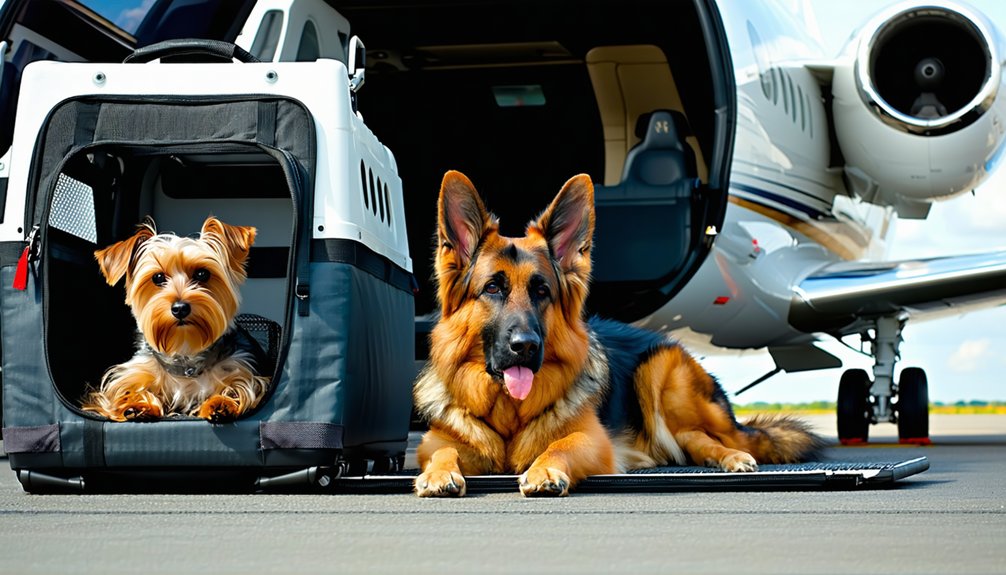
The cabin gate that stops most large dogs is the same one we just covered: the under-seat carrier. If your dog tops roughly 15–20 lb, you’re already past what fits beneath an economy seat.
From there, the rules stack against you. Safety carrier requirements demand that cabin pets stay fully contained for taxi, takeoff, landing, and turbulence—a standard large dogs can’t meet without oversized enclosures the cabin simply can’t hold.
Cabin layouts allocate no floor space for big crates, and blocking aisles or exits isn’t allowed.
What Cargo Travel Really Demands
Because cargo travel runs on confirmed space rather than goodwill, you’ll need to lock in a reservation before you book your own seat—airlines cap how many animals each flight can carry, and they’ll refuse late requests.
Airline capacity isn’t the only hurdle. You’ll favor direct flights over multi-segment routing, plan months ahead for international moves, and coordinate with brokers, destination rules, and seasonal temperature embargoes that protect dogs in the hold.
- An airline-approved kennel sized so your dog stands, turns, and lies down
- Crate ventilation on every side, with secure metal hardware and a proper door
- “Live Animal” and “This way up” labels facing outward
- Early-morning flights dodging summer heat
- Destination contacts and a current photo zip-tied on
You’re building a system, not booking a ticket.
Breeds That Get Restricted From Cargo
Before you map out a cargo plan, check whether your dog’s breed even qualifies—airlines bar a long list, and a denial at the counter strands you.
Brachycephalic dogs—Bulldogs, Pugs, Boston Terriers, Boxers, Pekingese, Shih Tzus, Chow Chows, Mastiffs—top the no-cargo lists, alongside strong-jawed breeds like Pit Bulls, Staffordshire Terriers, and Bull Terriers.
Even small companions like Lhasa Apsos, Tibetan Spaniels, and Shar-Peis get flagged.
The rationale’s solid: brachycephalic airway syndrome raises breathing, heat, and stress risks, driving higher mortality in cargo holds.
Airline policy varies, so read breed list caveats carefully—Alaska, Lufthansa, and United each name different breeds.
Watch crossbreed resemblance, too; if your dog’s snub nose or build matches a listed breed, you’ll face restrictions.
Keep documentation consistency across booking and check-in to avoid surprises.
When Charter Beats Cabin and Cargo
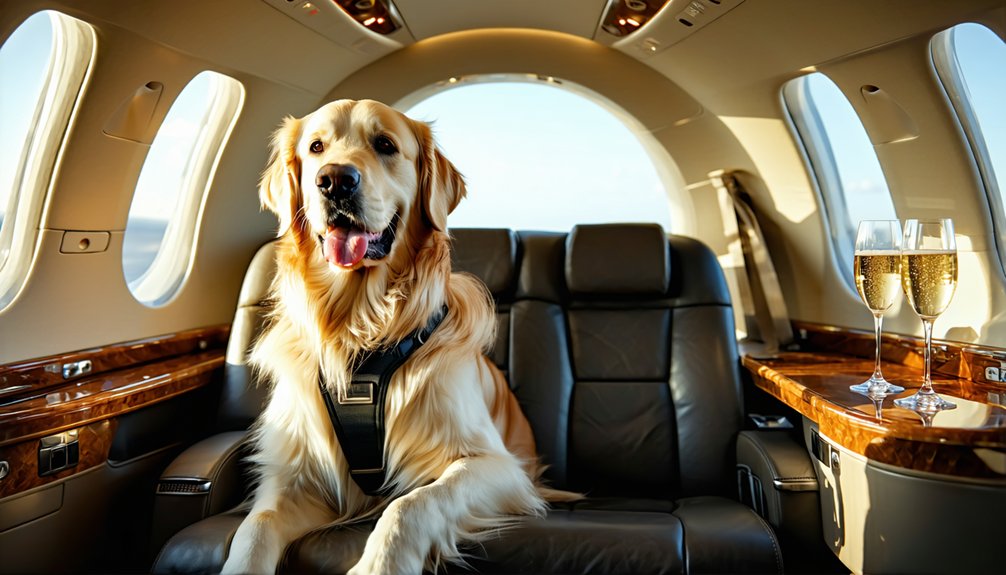
When your dog can’t fit under the seat and can’t safely ride in cargo, charter stops being a luxury and becomes the only practical way to fly. Once your dog clears 20 pounds and faces health, age, or breed-based cargo bans, the risk thresholds tip decisively toward charter.
You keep your dog in a climate-controlled cabin beside you, where welfare monitoring happens in real time.
- A large-breed dog stretched out at your feet, not sealed in a dark hold
- A brachycephalic pup breathing easily in cool cabin air
- A nonstop route cutting hours of stress
- Crew watching your senior dog’s every breath
- Pre-flight acclimation to engine sounds, customized to your dog
That’s where charter wins, and you both belong onboard.
What Does Flying Your Dog Cost?
Although charter sits at the premium end of the range, most dog owners face far smaller numbers when flying commercial. When you compare pet airline surcharges, in-cabin fees typically run $75–$200 each way, with major carriers clustering around $95–$150 per segment and averaging roughly $118.
Checked-as-baggage travel usually costs $150–$350 per segment, while domestic cargo spans $200–$700+ one way.
International itineraries climb higher: in-cabin fees reach $150–$200, and cargo for a mid-size dog often lands at $500–$1,000 each way.
Budget for unexpected fees beyond the airline charge. Add a health certificate ($50–$150), a carrier or crate ($30–$300), arrival handling (£177–£500+), and ground transport.
Use this formula: pet fee × segments, plus crate, vet, handling, transport, and a 10% buffer.
How Flight Length Changes Your Choice
Because time aloft shapes your dog’s cumulative stress exposure, flight length is one of the most practical variables you can weigh when choosing between in-cabin, cargo, and charter.
Short flights under three hours usually fall within your dog’s normal coping capacity, so in-cabin often wins for small dogs.
As you climb into the 3–6 hour range, size and Comfort Acclimation start to matter, making crate readiness a real threshold.
Long-haul flights raise the stakes, especially in cargo.
- A small dog dozing quietly beneath your seat
- A crate-trained companion settling after 60 calm minutes
- Reduced Noise Exposure in a temperature-controlled cabin
- A brachycephalic pup struggling in a long cargo hold
- A direct route trimming handling and recovery time
Choose accordingly.
Does International Travel Shift the Decision?
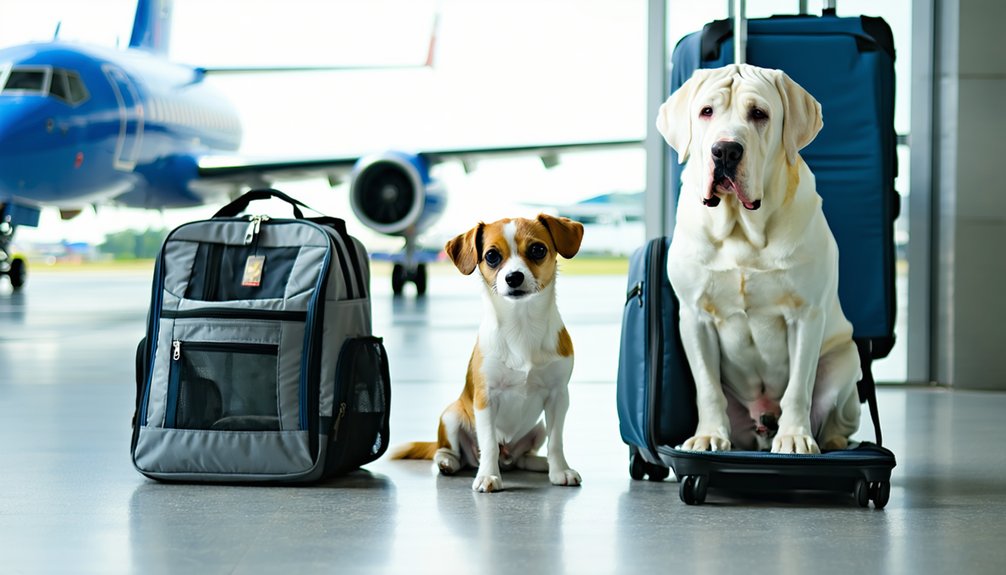
Crossing borders rewrites the rulebook, so international travel can override choices that’d make perfect sense on a domestic route. You’re not just mapping airline policy anymore; you’re answering to destination authorities and, in places like the EU and UK, supra-national rules too.
Route specific restrictions often suspend pet cargo or bar in-cabin pets on long-haul sectors, narrowing your options fast.
Many countries demand pets arrive as manifest cargo for customs clearance delays and veterinary processing, while quarantine port requirements force animals through designated ports of entry.
That’s where charter shines—private destination entry handling moves faster than commercial channels.
Before you commit, call the airline live animal desk early.
Documentation approval timing makes or breaks your plan, so confirm permits, vaccinations, and approved transport modes well ahead.
Vet Paperwork and Health Certificate Timing
When you’re booking a dog’s flight, the health certificate is the document that can ground you at check-in—no matter how perfect your seat or cargo arrangement.
Whether your dog flies in-cabin, as cargo, or by charter, airlines generally demand the same core certificate, though cargo routes may tighten timing.
For international travel, a USDA-accredited vet must complete it, then USDA APHIS must endorse it before departure.
- A microchip implanted before the travel rabies vaccine
- Rabies date sequencing locked at least 21 days out
- USDA endorsement timing anchoring your 10-day window
- A vet consult booked 3–6 months ahead
- Layovers and date-line crossings quietly shrinking validity
Plan early, sequence correctly, and you’ll arrive together—papers in hand, doors open.
Your Pre-Booking Checklist for Any Option
With your paperwork sequenced and your vet timeline locked, you’re ready to confirm the logistics that actually determine whether your dog boards. Call the airline directly to verify the pet policy, carrier dimensions for your exact aircraft, and the combined pet-plus-carrier weight limit. Measure your dog standing, turning, and lying down, then start kennel acclimation practice at home so fit issues surface early. Reserve the pet spot alongside your ticket, and confirm whether you must finalize by phone. Build emergency contact planning into your route, since delays and reroutes happen.
| Verify Before Booking | Common Standard |
|---|---|
| Carrier dimensions | 18″×11″×11″ |
| Pet + carrier weight | 15–20 lbs |
| Health certificate timing | Within 10 days |
| Cargo lead time | 2–4 weeks |
You belong wherever your dog travels safely.
Frequently Asked Questions
Can I Sedate My Dog Before a Flight?
You shouldn’t sedate your dog routinely—experts agree the risks outweigh benefits. Instead, seek veterinarian guidance for safer anxiolytics and timing strategies. Like fellow responsible owners, you’ll prioritize your dog’s safety with vet-managed, tested options before flying.
How Do I Help My Dog Stay Calm Onboard?
Place familiar-scented items inside the carrier and apply DAP spray—these carrier comfort tips ease anxiety. Watch routine anxiety cues like panting or whining, and use your practiced “settle” cue so your dog feels secure alongside you.
What Happens if My Dog Has an Emergency Mid-Flight?
You’ll alert crew immediately for airline notification, requesting in-flight accommodations and medical meet-and-assist. Carry a documented medical plan so emergency vet coordination happens fast on arrival. We’re all keeping our companions safe together.
Can Two Small Dogs Share One In-Cabin Carrier?
Sometimes, yes. You can fit two small dogs together, but carrier-sharing rules and airline policies vary widely. Check your airline’s in-cabin limits—typically same-species puppies under 20 lb. When you’re unsure, you’ll want separate carriers.
Should I Feed My Dog Before Flying?
Yes, feed your dog a normal meal 4–6 hours before departure. Balance water needs without overfilling, plan arrival timing accordingly, prioritize crate comfort with absorbent bedding, and use anxiety training beforehand. You’re giving them their best trip.
Conclusion
You’ve got the tools now to make this call with confidence. Match your dog’s size and temperament to the option that fits, not the one that’s cheapest or fastest. Small dogs belong in-cabin when carrier limits allow; large dogs usually fly cargo or charter. Confirm airline rules, time your health certificate correctly, and work through your pre-booking checklist. Do that, and you’ll cut the risk and travel smarter every time.
References
- https://www.sniffspot.com/blog/dog-enrichment/the-ultimate-guide-to-flying-with-large-dogs-airline-policies-tips
- https://pawsporttoadventure.com/cabin-vs-cargo/
- https://www.pawsabroad.co/blog/airlines-that-allow-large-dogs-in-cabin-2026-complete-guide
- https://info.pawgo.fr/guides/how-to-fly-with-a-dog
- https://www.ionajets.com/post/flying-private-with-your-dog-or-pet-in-cabin-charter-travel-guide
- https://urbanpoochs.com/2024/09/22/from-cabin-to-cargo-how-to-get-your-dog-jet-set-ready/
- https://www.zoomroom.com/tips/flying-with-dog/
- https://www.explorewithlora.com/airlines-that-allow-large-dogs-in-cabin/
- https://www.facebook.com/groups/1180884898968404/posts/2872944519762425/
- https://www.aircharterservice.com/about-us/news-features/blog/pets-on-jets-a-complete-guide-to-flying-with-your-furry-friends