Start by verifying credentials, not promises. Check the official IPATA directory for active pet shippers, then confirm the company’s USDA license against APHIS records. Run a WHOIS lookup to flag domains younger than six months, and validate business registration. Watch for red flags: below-market pricing, urgency tactics, and Western Union or crypto requests. Insist on a live phone or video call to confirm real operations. The details below show you exactly what to demand.
TLDR Key Takeaways
- Spot red flags early: Avoid too-good-to-be-true pricing, urgency tactics, and untraceable payment demands like Western Union, MoneyGram, gift cards, or crypto.
- Verify credentials separately: Confirm IPATA membership through the official directory and validate the company’s USDA license against APHIS records.
- Scrutinize reviews and operations: Beware perfect 5.0 ratings with few reviews, non-delivery reports, and confirm real staffing via live phone or video calls.
- Check website and contract quality: Use WHOIS to assess domain age, validate business registration, and require written terms covering itinerary, liability, and crate standards.
- Confirm care standards and reporting steps: Verify emergency plans, vet contacts, and custody updates; report scams to the FTC, FBI IC3, and PetScams.com.
What a Pet Shipping Scam Actually Looks Like

Before you can protect yourself, you need to know what a pet shipping scam actually looks like. It usually starts with pricing that’s too good to be true—shipping rates far below market, “free shipping,” or 90% discounts if you pay fast.
Watch for red flag language emphasizing urgency and exclusivity, like “last available spot today” or “final seat for this flight.” These immediate payment tactics pressure you into wiring money, sending gift cards, or paying personal accounts before you can think.
You’ll often see free webmail addresses, recently created websites, stolen pet photos, and fake “official” documents.
After your first payment, scammers demand surprise fees for “quarantine bonds” or “emergency insurance,” then threaten seizure.
Recognizing these patterns keeps you, and your future pet, safe.
Verify IPATA Membership and USDA Licensing
Once you know the warning signs, you can shift from spotting scams to actively verifying credentials—and that starts with two checks: IPATA membership and USDA licensing.
Start at the official IPATA directory, searching the “Active Members – Pet Shippers” section by country or airport. Confirm the company’s name, location, and contact details match its website. Remember, IPATA is an association—it never ships pets, and no legitimate shipper uses “IPATA” in its name. Absence from the active member list is a major red flag.
Next, request the company’s USDA license or registration number and check it against APHIS records. These credentials are separate, so verify both. Membership and licensing won’t replace airline approvals or destination permits, but together they confirm you’re joining clients who chose proven, professional partners.
Check Reviews That Expose Pet Transport Scams
| Red Flag | Why It Matters |
|---|---|
| Perfect 5.0 with few reviews | Suggests fabricated ratings |
| Demands for extra fees | Classic scam after payment |
| Non-delivery reports | High-confidence fraud signal |
| Cookie-cutter 5-star praise | Often paid or self-written |
| Western Union or crypto requests | Untraceable payment hallmark |
Look for concrete trip details—routes, dates, airlines. Vague praise without specifics rarely comes from real customers like you.
Spot a Fake Pet Transport Website Fast
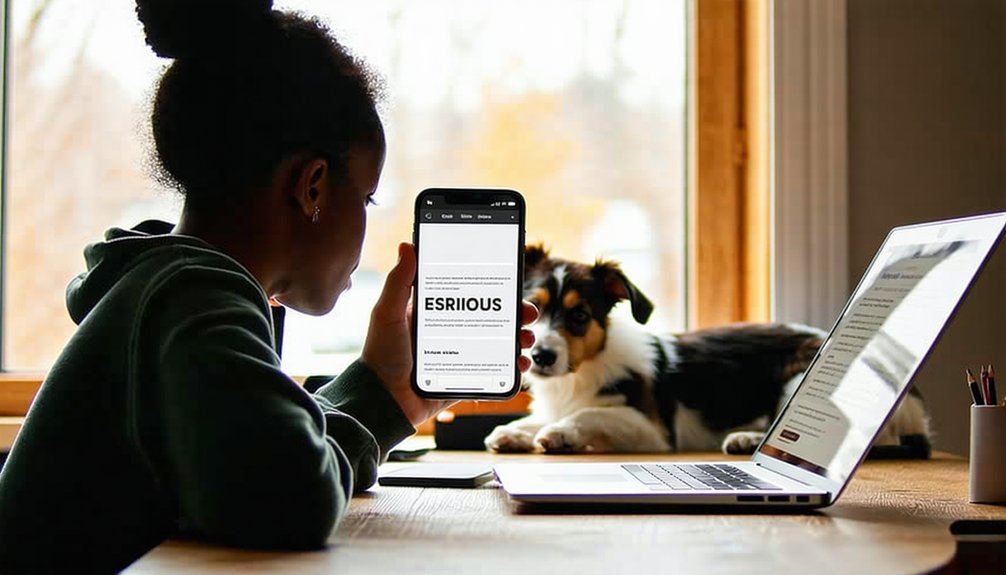
How can you tell a fraudulent pet transport site from a real one before you wire a deposit?
Start with a quick verification routine that people in our community rely on. Verify domain age with a WHOIS lookup—anything younger than six months deserves extra caution, especially when ownership stays hidden.
Then validate business registration through the relevant registry or Secretary of State, and confirm any IPATA membership in the official directory.
Watch for these telltale signs:
- Free email addresses like Gmail, Yahoo, or Outlook instead of a professional domain-based address
- Poor grammar, misspellings, and copied content that suggests stolen design or reused images
- Pressure to pay immediately via Western Union or MoneyGram before any contract
Trust accuracy over polish.
Why a Real Phone or Video Call Matters
Pick up the phone before you wire a deposit. A live phone or video call gives you human confirmation that real staff, offices, and operations exist—not a ghost company hiding behind email.
Speaking with an agent lets you verify business name, physical address, and licensing in real time.
Use a video call to verify video isn’t stock photos or AI-generated images of vehicles, facilities, and animals.
Legitimate shippers never dodge calls; avoidance is a red flag.
On the line, you’ll hear genuine knowledge about airline rules, crate sizing, and USDA or IPATA credentials.
Real companies communicate clearly, explaining timelines and contingency plans without scripted vagueness.
That first call also sets expectations for real updates—texts, photos, calls—so you’ll belong to a process you can trust.
Red Flags in Pricing That Scream Scam
Every pricing red flag tells you something, and the loudest one is a quote that’s far below the market average. When you do a quick price comparison against typical breed or transport costs, a suspiciously cheap quote often signals a scam, not a bargain. Scammers lure you with unrealistic savings, then escalate costs once you’re hooked—classic bait and switch.
Watch for these warning signs:
- “Free” pets where you only pay shipping, creating false savings
- Low quotes that omit normal professional services like documentation and insurance
- Refusal to provide a stable, itemized estimate tied to written terms
You deserve a company that welcomes you with transparent, explainable pricing. If a quote can’t be justified clearly in advance, walk away.
Surprise Fees Pet Shipping Scammers Invent

Once you’ve paid the initial deposit, that’s often when the real extraction begins. Scammers rely on fee inflation tactics, stacking charge after charge to drain you dry.
Watch for “mandatory” pet insurance surcharges—flight risk, climate, even life insurance—none recognized by airlines or regulators.
You’ll face invented crate upgrades like “anti-stress” or “shockproof” kennels priced hundreds above standard.
Then come the bogus quarantine clearance fees, phantom customs duties on domestic shipments, and fake compliance paperwork demanding urgent vaccination or “FAVN fast-track” payments with no verifiable receipts.
Fabricated airline rebooking, “VIP cargo lane” handling, and courier release fees follow, often with threats your pet will be impounded.
Legitimate shippers don’t operate this way.
If charges multiply unexpectedly, you’re being scammed—walk away.
Which Payment Methods Are Actually Safe?
Your payment method is your single best line of defense against pet shipping fraud, so choose it deliberately. Like the savvy pet owners you’re joining, you want chargeback eligibility on your side. Credit cards (Visa, Mastercard, AmEx) give you dispute rights for fraud or non-delivery, plus a traceable paper trail that becomes scam payment proof for banks and investigators.
Watch for these signals when deciding:
- Safe: Credit cards through SSL-secured pages and recognized processors, never plain email.
- Conditional: ACH transfers to a verified corporate account at a known bank—after confirming registration and licensing.
- Dangerous: Western Union, MoneyGram, crypto, or gift cards, which offer no buyer protection.
If a company “only accepts” untraceable methods, walk away. You deserve protection.
What Belongs in a Legit Transport Contract
Because a legitimate transport contract protects both you and your pet, you shouldn’t sign anything that leaves the essentials vague.
A trustworthy agreement names every party clearly—transport company, sender, and receiver—with legal names, addresses, phone numbers, emails, and Emergency Contact authorization.
It describes your animal precisely: species, breed, sex, age, markings, and microchip number.
You’ll find a full itinerary with pickup and delivery addresses, dates, and transport method.
Insist on Health Paperwork requirements, including a valid health certificate dated within the stated window, current rabies vaccination, and pre-existing condition disclosure.
Look for emergency veterinary care authorization, a clear scope-of-services clause, and defined owner and transporter responsibilities.
Finally, confirm risk-of-loss, limitation-of-liability, and indemnity terms.
When these details appear, you’re joining clients who travel confidently.
Confirm Animal Welfare and IATA Crate Rules
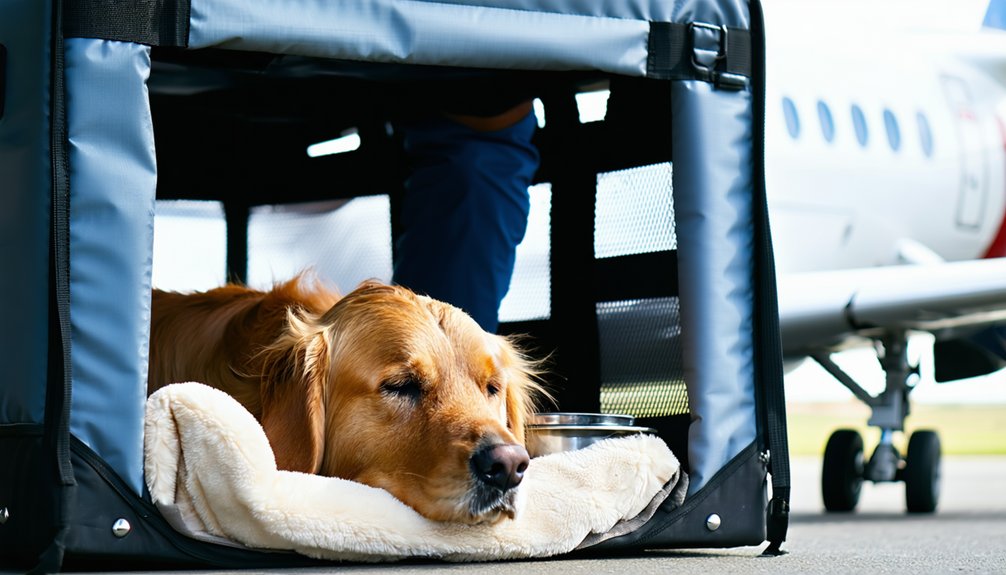
Animal welfare isn’t a checkbox—it’s the core measure of a transport company worth your trust. Ask how they meet standards like the Animal Welfare Act and IATA Live Animal Regulations, then demand proof.
A legitimate company screens fitness-to-travel, plans routes around extreme heat and cold, and documents in-transit monitoring.
Confirm their staff training covers low-stress handling and recognizing stress signs—panting, drooling, collapse.
Verify these essentials:
- Crate compliance: precise crate measurements by IATA formula, escape-proof construction, and ventilation control on at least three sides.
- Comfort provisions: secured anti-spill water access, feeding policy, and scheduled elimination breaks.
- Safety readiness: written emergency plans for heat stress, injury, escape, and breakdowns, with vet contacts en route.
You belong with operators who prove this.
Who Handles Your Pet at Every Step?
When you hand off your pet, you’re trusting a chain of people—not a single company. Cargo staff, ground handlers, independent drivers, and destination animal-care teams may each take custody during your pet’s trip. You deserve to know exactly who’s responsible at every stage—check-in, transfers, layovers, and handoff.
Ask who removes your pet from the kennel and how kennel handling stays secure during breaks.
If your route includes overnights, confirm the overnight lodging arrangements.
Request custody updates with photos, and set communication expectations before pickup.
Always get an emergency contact who monitors delays and meets the flight.
A reputable provider names every handler and explains the plan clearly.
Vague answers signal disconnected subcontractors—a risk you and your pet can’t afford to take.
How to Report a Pet Shipping Scam
How do you stop a pet shipping scam from costing you more? You act fast and you don’t go it alone.
Cut off communication immediately, stop sending payments, and preserve every digital trace before scammers delete it.
File digital evidence in a dedicated folder, capturing screenshots, payment receipts, and seller profiles.
Then, report the fraud through trusted channels:
- File an FTC complaint to flag the pet purchase and shipping scam affecting U.S. consumers.
- Submit an FBI IC3 report for scams involving email, websites, or online payments.
- Alert platforms and watchdogs like PetScams.com, IPATA, and BBB Scam Tracker to warn others.
Contact your bank promptly to dispute charges.
Frequently Asked Questions
How Long Does International Pet Shipping Usually Take?
You’ll typically need 2–6 weeks for most destinations, but high-regulation countries like Australia demand 4–6 months. Your document readiness and the customs timeline drive everything, so start early and you’ll join thousands of successful pet relocations.
Can I Travel on the Same Flight as My Pet?
Yes, you can! Most airlines accept pets in-cabin or cargo on your flight. Confirm airline cargo compatibility, follow booking confirmation tips, verify pet pickup, and arrange same day delivery so you’re traveling together, right where you belong.
Are Sedatives Recommended for Pets During Air Transport?
No, sedatives aren’t recommended unless your vet deems them medically necessary. They impair temperature control and your pet’s stress response. Instead, you’ll want crate habituation and proper crating requirements—joining countless owners who prioritize safe, sedation-free travel.
What Is the Best Age to Ship a Puppy or Kitten?
You’ll want to ship puppies and kittens at 12–16 weeks. Like responsible pet families do, prioritize vaccination readiness and pet health checks first. This window guarantees stronger immunity, better stress tolerance, and safer, healthier travel for your beloved companion.
Do All Airlines Accept Pets in Cargo or Cabin?
No, they don’t all accept pets. You’ll find some airlines welcome cargo and cabin pets with temperature controls, while others, like Southwest, skip cargo entirely. Expect in cabin fees around $95–$200 wherever you’re flying together.
Conclusion
You’ve now got the tools to separate legitimate carriers from criminals. Verify IPATA membership, confirm USDA licensing, scrutinize reviews, and demand a real phone or video call. Insist on a detailed contract, IATA-compliant crates, and a clear handling chain at every step. If something feels off, walk away and report it. Your pet’s safety depends on the diligence you apply now, not the regret you’ll feel later. Trust verification, not promises.
References
- https://tailwindglobalpet.com/blog/pet-travel-scams/
- https://www.starwoodpet.com/blog/how-to-choose-a-pet-shipping-company/
- https://www.jamescargo.com/blog/pet-shipping-scams-fake-pet-travel-agencies.php
- https://www.petchauffeur.com/how-to-choose-the-best-pet-transportation-company-for-your-furry-friend/
- https://www.petcargo.com/en/blog/how-to-choose-a-pet-transport-company
- https://www.petairuk.com/blog/how-to-check-if-your-pet-shipping-company-is-properly-accredited/
- https://citizenshipper.com/blog/avoid-fake-pet-shipping-companies/
- https://worldwidepettransport.com/pet-health-safety/
- https://delifurry.com/pet-transport-blog/how-to-avoid-a-pet-transporter-scam
- https://www.consumeraffairs.com/movers/best-pet-shipping-companies.html