Keep your dog entertained on a 10-hour drive by tiring them out beforehand, then stocking up on chews and puzzle toys that reward focus. Bully sticks, Himalayan chews, and durable toys like Goughnut cover different chewing styles, while a frozen Kong stuffed with peanut butter or broth adds hours of engagement. Rotate items at each stop to keep things fresh. There’s more to setting up the ride right, though, starting with how you structure your breaks.
TLDR Key Takeaways
- Rotate chews like bully sticks, yak chews, and durable toys such as Goughnut or Benebone at each rest stop for novelty.
- Freeze a KONG stuffed with high-protein filler for 2-3 hours to create a long-lasting, engaging treat.
- Seal the KONG’s small hole with peanut butter or cream cheese to add complexity and extend licking time.
- Use frozen Kongs made with broth, kefir, or fruit-yogurt blends for added hydration and cooling relief.
- Play calming music or travel videos paired with a familiar home scent to ease anxiety and encourage settling.
Start With a Tired, Well-Fed Dog Before Your Road Trip
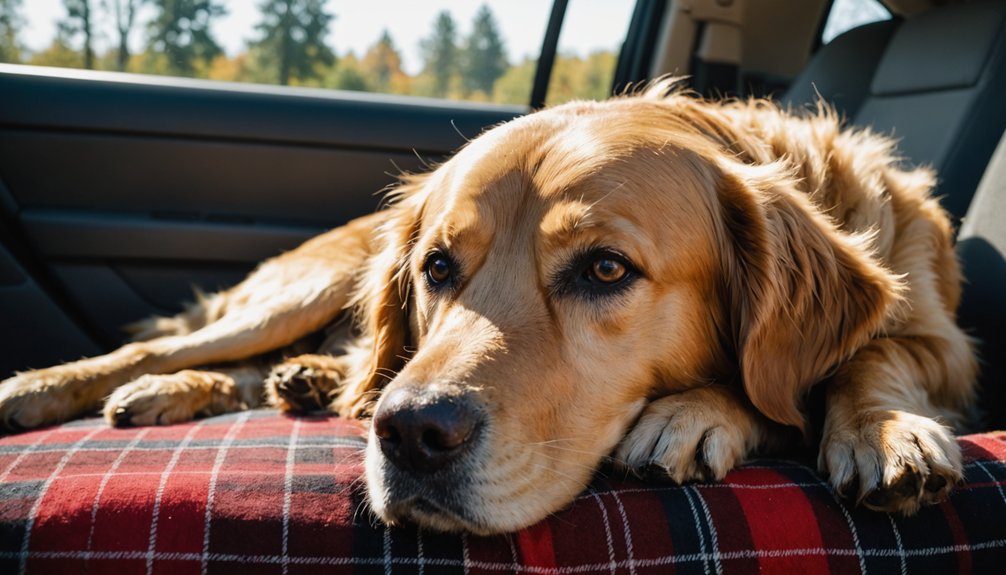
A tired dog is a settled dog, and that’s exactly what you want before hitting the road. Before you load up for a 10-hour stretch, give your dog 20-30 minutes of pre trip exercise—a run, a game of fetch, or a dog park visit works well.
Match intensity to your dog’s age and fitness; puppies and seniors need gentler activity. Don’t skip mental stimulation. Sniffing walks, puzzle toys, and a frozen lick mat drain energy differently than physical exercise alone, and combining both creates the kind of pleasant fatigue that keeps dogs calm for hours, not just minutes.
Feed several hours before departure, not right before. This timing prevents car sickness while keeping your dog satisfied for the miles ahead. This feeding schedule also allows enough time for proper digestion and relief before settling in for the drive. It’s also wise to stick to your dog’s usual food and eating schedule during the trip to avoid unnecessary stomach upset. Even with a solid routine, some dogs may still whine or grow restless, so planning for a rest stop along the way can make the long drive much smoother.
Set Up a Cozy, Secure Car Space
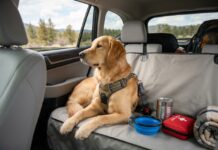
Safety comes before comfort when you’re setting up your dog’s space for a 10-hour drive. Choose a crash-tested restraint, crate, or car seat, and secure it to your vehicle’s anchor points so it won’t shift during lane changes or sudden stops. Look for products certified by the Center for Pet Safety, since the pet industry isn’t regulated for crash safety and many restraints claim protection without independent proof.
Position it in the back seat or cargo area, away from front airbags, with enough room for your dog to stand, turn, and lie down.
Layer in comfort with cushioned dog beds or crate mats that support joints on long stretches.
Reinforced edges create a den-like feel that eases anxiety, and a non-slip base keeps everything stable through turns. Padded surfaces also help distribute pressure evenly across the chest and shoulders during abrupt stops.
Check buckles, straps, and tethers before you roll out—worn hardware fails exactly when you need it most. Also make sure any rear air vents can reach your dog’s setup, since proper climate control airflow helps prevent overheating during long stretches on the interstate.
Choose Chew Toys That Keep Dogs Busy for Hours
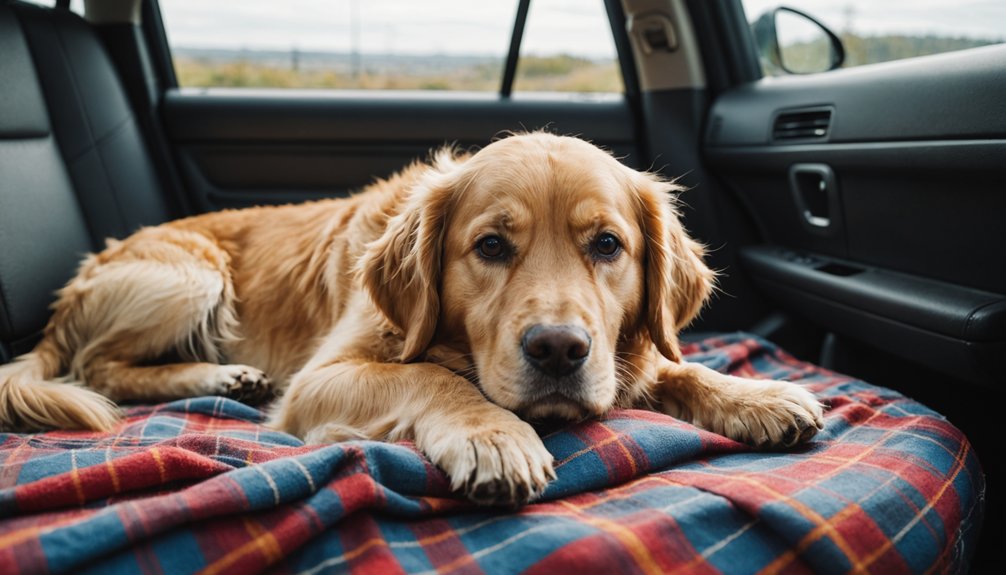
Bully sticks earn their reputation as road-trip MVPs, giving many dogs hours of focused gnawing from a single 6- to 12-inch stick.
For a full day on the interstate, pack a rotation of natural chews and durable toys so boredom never gets the wheel.
- Bully sticks & braided cheek rolls: hours-long chewing, ideal for moderate chewers.
- Himalayan yak cheese chews: light chewers can stretch these up to 10 hours; these chews are made from yak milk and are high in protein and fats, so they double as a nutritious snack.
- Goughnut or Benebone: built for aggressive chewers, lasting days, not minutes—pass the fingernail test before buying. For extra peace of mind on long drives, the Goughnut Maxx 50 Ring even floats in water and features a red inner core that signals when it’s time for a replacement.
- KONG Classic stuffed with frozen peanut butter: combines chewing with mental work, extending engagement mile after mile. If peanut butter feels routine, try freezing the KONG with canned pumpkin instead for a change of flavor and texture.
Rotate chews each rest stop to keep novelty—and freedom-loving tails—wagging.
Freeze These Kong Stuffing Ideas Before You Leave
Freezer prep turns a plain Kong into your dog’s best road-trip companion.
Pack high-protein Kong fillers—canned dog food, ground meat, soaked kibble—into a dense, cement-like core that resists fast extraction.
Freeze for 2-3 hours to lock in a solid center that survives hours of licking.
Layer smart: seal the small hole with peanut butter or cream cheese, add a soft filler (yogurt, pumpkin, mashed banana), then solids like kibble or veggie chunks, and finish with a high-value treat buried at the bottom.
That structure forces your dog to work through changing textures instead of finishing in minutes. For inspiration, KONG stuffing recipes combine ingredients like peanut butter, yogurt, and pumpkin into satisfying, nutrient-rich treats.
Frozen Kongs made with broth, kefir, or fruit-yogurt blends add hydration and cooling relief—perfect for long stretches on the interstate with no rest stop in sight.
Split Your 10-Hour Drive Into Easy Chunks
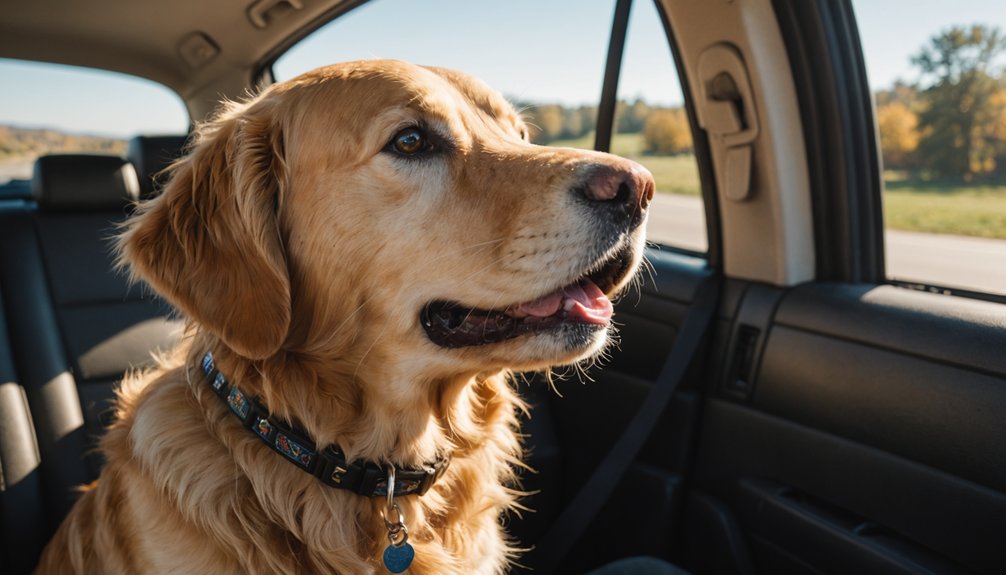
Ten hours behind the wheel feels endless to a dog stuck in the back seat, so break the day into four or five driving blocks of 2-3 hours each instead of pushing straight through.
This chunking strategy keeps your travel rhythm predictable and your dog’s comfort front and center. Set a timer to lock in break timing, so road breaks happen on schedule rather than whenever restlessness forces your hand.
Build your itinerary around these essentials:
- Route planning — map drive segments in advance around fuel, food, and daylight.
- Rest stops — pick pet-friendly parks or legal pull-offs, not just gas stations. Much like truckers who split long hauls into two rest periods, you can divide your dog’s downtime into a longer break and a shorter one to keep the ride from feeling monotonous.
- Motion tolerance — shorten the next leg if your dog seems fidgety or panting. Many drivers favor an 8/2 split, reserving eight hours for driving and two for rest, a ratio that maps well onto a dog’s own tolerance for continuous motion.
- Travel schedule — match blocks to nap and potty rhythms for smoother, safer stops. Just as drivers must avoid using their split break if they’re already in violation of their hourly limits, you should avoid pushing your dog into another leg of the trip if it’s already showing signs of fatigue or stress.
Plan Rest Stops Every 2–3 Hours
A stiff, dehydrated, anxious dog makes for a miserable travel companion, so build your route around stops every 2-3 hours rather than waiting for signs of distress.
Smart route planning means pre-marking pet-friendly rest areas, parks, and green spaces every 100-150 miles before you hit the road.
Since you’re cruising at 45-60 mph, that translates to stop timing of roughly every two hours—set an alarm so you don’t blow through it during a monotonous stretch.
Each break should run 15-30 minutes and cover the essentials: potty breaks, a leash-secured stretch, and hydration management with fresh water.
Puppies, seniors, small breeds, and motion-sickness-prone dogs need tighter intervals—closer to hourly.
Cap your driving at 7-8 hours total, leaving room for every stop your dog actually needs, since driving more than 6 hours a day can be tiring for both humans and dogs.
Turn Stops Into Sniff-and-Stretch Sessions
Don’t just let your dog out to pee and hop back in—use those precious minutes to work their brain, not just their bladder.
Sniff breaks aren’t wasted time; they’re mental workouts that tire your dog out faster than a straight walk ever could.
Scent exploration on grass and trees lowers arousal, meaning a calmer ride once you’re back on the road. Since these are ten-hour driving days, planning to stop every 2 to 3 hours gives your dog regular chances for these calming sniff sessions.
Structure each stop for maximum payoff:
- Let your dog sniff freely for a few minutes before walking.
- Walk on-leash for at least 10 minutes to loosen joints.
- Offer water in a travel bowl to keep hydration steady.
- Reward calm re-entry into the car with a treat or chew.
One rich sniff stop can make the next stretch of highway easier for everyone.
Prevent Carsickness on Long Drives
Because a queasy dog can turn a road trip into a nightmare, tackle the problem before the wheels even start rolling.
Nail your food timing—withhold meals 2-12 hours beforehand, depending on your dog’s sensitivity.
Vehicle motion matters most: secure your dog forward-facing, middle-back, in a stable crate or restraint to steady their vestibular system.
Keep air ventilation flowing with cracked windows and a cool cabin.
Travel preparation means using training methods and desensitization techniques—short practice drives, gradual increases, positive reinforcement.
Pack comfort aids like home-scented blankets or calming sprays to reduce stress.
For safety precautions, never leave your dog parked and unattended.
If sickness persists despite these efforts, seek veterinary support—anti-nausea medication exists for a reason.
Health monitoring throughout the trip keeps freedom on the road stress-free.
Keep Your Dog Hydrated Without Overdoing It
Hydration is a balancing act, not a free-for-all.
On a 10-hour drive, your dog needs consistent water intake without the risk of overdoing it.
Skip the free-access bowl in the car—it invites sloshing, bloating, and urgent bathroom breaks that eat into your schedule.
Instead, treat hydration management as a planned routine, not a reaction to thirst.
- Offer small sips every 60-90 minutes, especially in warm weather or during long stretches of driving.
- Use a spill-proof, non-metal bowl to control portions and keep water cooler.
- Skip large volumes before departure—big gulps right before hitting the road can trigger discomfort.
- Watch for restlessness or a distended belly—both signal it’s time to reassess intake.
Stick with familiar water sources to avoid GI surprises on the road.
Use Music, Videos, and Scents to Calm Your Dog
Sound and scent can do a lot of the calming work for you on a 10-hour drive.
Calming music playlists built for car trips use sound sweep technology and gentle sleep frequencies to ease anxiety and encourage quiet behavior.
Look for no-ads tracks with 12-hour or 20-hour runtimes, so you’re not fumbling with playback on the interstate.
Travel videos work as a visual backup—soothing audio-visual content marketed for long drives helps settle dogs who whimper or won’t stop shifting around.
Pair either option with a familiar scent from home, like a blanket or worn t-shirt, to reinforce a sense of normalcy.
Keep stimulation low: soft music, steady visuals, and one familiar smell beat any combination of strong, novel inputs.
Spot Stress and Overheating Symptoms Fast
Even with calming music and a familiar scent working in your favor, you still need to watch your dog for signs that comfort measures aren’t enough.
On a 10-hour drive, you’re the first line of defense for pet health, so catch these stress signals before they escalate.
- Panting or drooling without exercise – a red flag for stress or overheating prevention gone wrong.
- Restlessness or refusal to settle – pacing, shifting, or rejecting the mat signals rising anxiety.
- Whining, barking, or sudden vocalization – especially after quiet behavior, it means a threshold’s been crossed.
- Trembling, tucked tail, or dilated pupils – body language that demands immediate travel safety action.
If you spot these, pull over, cool your dog down, and prioritize canine comfort and dog wellness over mileage.
Check Harness and Collar Fit at Every Stop
A quick fit check at every fuel break can prevent a lot of trouble down the road. Loose straps let a dog slip a shoulder or head through openings; tight ones choke airflow and strain joints. Use the two-finger rule—slide two fingers under the collar or restraint system at multiple points. It should be snug, not gripping.
Run these safety checks each stop: confirm strap alignment, test fit while your dog stands, sits, and turns, then gently simulate backward pressure and leash tension to catch sliding or rotation.
Long fur can hide a fit problem, so judge against body size, not coat thickness.
Recheck after your dog shakes or lies down.
Long drives cause strap creep, so make restraint system adjustments part of your routine—freedom on the road means keeping your dog secure at every mile.
Frequently Asked Questions
What if My Dog Refuses to Eat or Drink During the Trip?
Don’t panic—you’re seeing normal dog behavior tied to travel stress, not disaster. Offer water every 1-2 hours, keep familiar food handy, and trust pet psychology: most dogs bounce back within 24-48 hours once you’re rolling free again.
Can I Use Sedatives or Calming Medications for Anxious Dogs on Road Trips?
Yes, but start mild: try natural sedatives like L-theanine or melatonin, plus canine pheromones, before reaching for prescriptions. If your dog’s anxiety is severe, ask your vet about trazodone or gabapentin—never medicate without professional guidance.
How Do I Handle Multi-Day Trips With Overnight Hotel Stays?
Confirm hotel bookings are truly pet friendly stops before you arrive—check size limits, fees, and crate rules. Choose ground-floor rooms, walk your dog immediately, and keep routines consistent. You’ll travel freely while avoiding surprises or complaints.
What Should I Pack in a Dog Road Trip Emergency Kit?
Pack a pet first-aid kit with gauze, antiseptic wipes, and meds, plus food, water, leash, ID tags, and dog treats. You’re covered for emergencies without sacrificing spontaneity—grab your gear and hit the road confidently.
Is It Safe to Leave My Dog Alone in the Car During Quick Stops?
No—don’t leave your dog alone, even briefly. Car safety means temps spike fast, risking heatstroke or hypothermia. Bring your dog with you, or have someone stay for pet monitoring. Quick stops still carry real risk—skip the gamble, keep freedom safe.
Conclusion
Ten hours on the interstate doesn’t have to wreck your dog’s day—or yours. Tire them out first, secure their space, pack frozen Kongs and tough chews, and break the drive into manageable chunks. Offer water at every stop, use calming music or scents, and watch for stress or overheating signs. Check that restraint fit each time you pause. Handle these basics, and you’ll both roll into your destination relaxed and ready.
References
- https://www.reddit.com/r/dogs/comments/1f2nmbm/tips_for_a_12_hour_drive_with_my_dog/
- https://wearwagrepeat.com/dog-road-trip-enrichment/
- https://www.chewy.com/education/dog/general/road-trips-with-a-dog
- https://www.reddit.com/r/dogs/comments/52lmfk/discussion_how_do_you_keep_your_dog_busy_on_a/
- https://www.reddit.com/r/DogAdvice/comments/nvld81/going_for_a_looong_car_drive_favorite_dog_toys/
- https://gladdogsnation.com/blogs/blog/10-dog-activities-to-keep-them-entertained-on-the-road-trip
- https://animals.howstuffworks.com/pets/pet-travel/5-ways-to-keep-your-pet-entertained-on-a-long-car-trip.htm
- https://www.reddit.com/r/OpenDogTraining/comments/1k3no3s/how_to_tired_a_dog_out_before_a_long_car_ride/
- https://www.facebook.com/groups/lifewithbordercollie/posts/1486749295705191/
- https://www.animalhumanesociety.org/resource/ten-tips-successful-road-trip-your-pets