To take your dog on a car ferry, you’ll choose between a pet-friendly cabin, an onboard kennel, or leaving them in your vehicle, depending on the operator’s rules. Book early since space fills fast, bring your own bedding and documentation, and expect fees around £50 each way. Car decks are off-limits during sailing, so plan accordingly. The right choice depends on crossing length and your dog’s needs—details ahead will help you decide.
TLDR Key Takeaways
- Choose pet-friendly cabins, onboard kennels, or vehicle stays based on route length and operator rules, booking early.
- Pack food, water, bedding, toys, wipes, and medical records to keep dogs comfortable throughout the crossing.
- Use non-retractable 1-metre leashes outside vehicles, with muzzles required for restricted breeds or bite history.
- Remember car decks are off-limits during sailing, so prepare vehicles with ventilation, water, and bedding beforehand.
- Use designated pet relief areas onboard and at terminals, cleaning up promptly to avoid behavioral restrictions.
Choose the Right Pet Travel Option for Your Ferry Trip
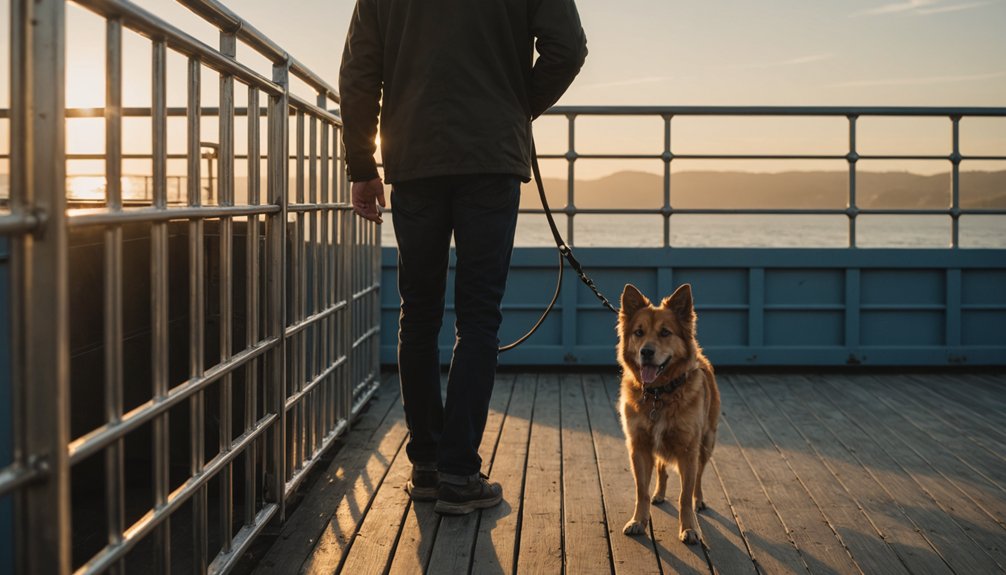
Choosing where your dog rides on a ferry isn’t a one-size-fits-all decision. Your route length, crossing time, and your pet’s stress tolerance all shape the right call.
Short daytime hops often work fine with a kennel or vehicle stay, while overnight or long crossings favor cabins or monitored pet areas. Every operator sets its own rules, weight limits, and available accommodations—kennels, lounges, decks, or cabins—so travel planning starts with checking specifics before you book. Some ferries even offer camarotes aptos for pets, fitted with linoleum floors and anti-odor carpets for easier cleanup.
Leash and muzzle requirements affect comfort in shared spaces, especially for anxious or reactive dogs. During embarkation and disembarkation, dogs must be leashed and muzzled regardless of which onboard option you choose. Pet considerations don’t stop at comfort, either: sailings cap pet numbers, so securing your preferred option means reserving early. Before booking, it’s worth remembering that pets should be healthy and fit for travel, with up-to-date vaccinations and health certificates on hand. Match the setup to your dog’s temperament, not just convenience, and you’ll travel with far less stress on both ends.
Book a Pet-Friendly Cabin: What to Expect Onboard
If your dog needs more than a kennel or a spot in the car, a pet-friendly cabin gives you the closest thing to a normal crossing. Cabin booking fills fast, so lock in your spot early, especially in peak season. Not all ferry operators offer pet cabins, and availability shifts across ferry routes, so check before you commit. Brittany Ferries, for example, offers pet-friendly cabins on its economie service to Le Havre.
| Factor | What to Expect | Why It Matters |
|---|---|---|
| Cabin layout | En-suite, vinyl flooring | Easier cleanup |
| Pet capacity | 1-2 pets per cabin | Book accordingly |
| Pet fees | ~£50 per pet, each way | Budget ahead |
| Pet documentation | Passport, vaccinations | Avoid boarding issues |
Onboard rules limit movement to your cabin and designated areas, with pet restrictions and cabin cleanliness standards strictly enforced. On many crossings, pets must stay in the cabin the entire time, though some routes allow supervised breaks in a dedicated outside deck area. Keep in mind that pet-friendly cabins can cost twice as much as standard cabins of the same size, so budget accordingly.
Onboard Kennels: What to Expect and What to Bring
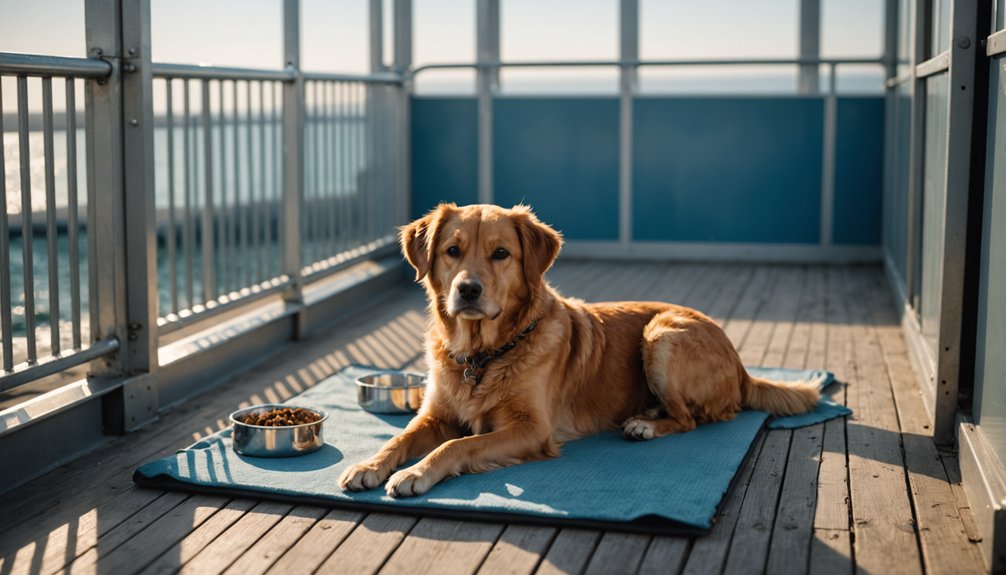
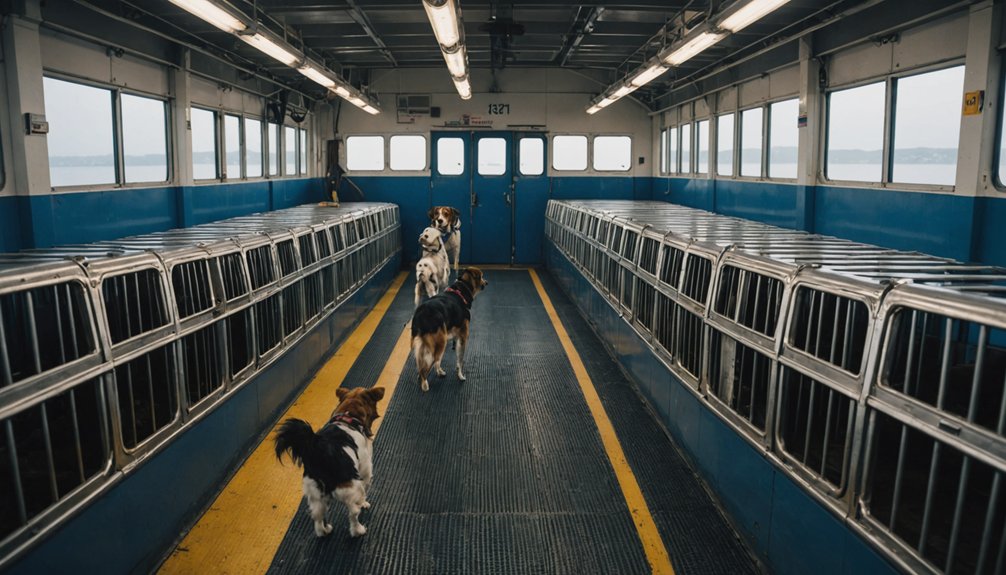
Kennels remain the standard option for dogs traveling without a cabin, and you’ll find them in small, medium, large, and XL sizes—DFDS models, for instance, range roughly 51–76 cm high and 56–101 cm wide and deep.
Kennel locations vary by ship: some sit on the vehicle deck, others on upper decks near dog-friendly outdoor space, and a few move to open decks seasonally. Space is limited, so book early. Some travelers on the Alaska Marine Highway actually prefer keeping dogs in their own vehicles rather than using the designated car deck area, since it can feel noisy and chaotic compared to a familiar car.
Bring your own gear and expect these conditions:
- Bedding and comfort items: bring a familiar blanket, water bowl, food, and toys—none are supplied.
- Carrier requirements: hard-sided carriers with a padlock are often mandatory; soft or collapsible ones aren’t allowed. Many operators also provide a relief area with water, a scoop tool, disposable bags, and a garbage receptacle near the kennel space.
- Access rules: visits may run on set schedules, sometimes with a swipe card for entry.
- Monitoring: many kennels offer air-conditioning and webcam access for peace of mind.
Should Your Dog Ride in the Car During the Crossing?
Not every dog needs a kennel booking, though—some owners opt to leave their pet in the car for the crossing instead. On short sailings, this is often the default and simplest choice. On routes like Dover–Calais, dogs normally remain in the vehicle during the short crossing.
But dog safety comes first: check your operator’s rules before assuming you can do this, since some ferries explicitly ban leaving pets in vehicles. Leaving dogs in vehicles during warm weather can lead to heat stroke and be fatal.
If allowed, prioritize ventilation, shade, and secure confinement—your dog needs room to sit, stand, and turn comfortably.
Bring water and familiar bedding to ease stress.
Remember, once the ship sails, you won’t have access to the car deck, so prepare for full separation during the crossing. Customers are not allowed to remain on car decks during crossings with pets, so plan ahead for full separation from your dog.
For longer or hotter routes, pet transport in cabins or kennels offers better environmental control than a parked car.
Why Are Car Decks Off-Limits During Sailing?
Because car decks are classified as cargo spaces rather than passenger areas, international maritime law and national regulators—including Transport Canada under the Canada Shipping Act 2001—prohibit passengers from staying there once the ship gets underway.
These safety regulations exist for good reason: your presence, and your dog’s, on the deck creates real fire hazards and complicates emergency response. You’re free to move about the ship, just not there. Just as routine checks are essential for maintaining safety in other contexts, vehicle decks require similar diligence to prevent hazards from going unnoticed.
- Vehicle decks store fuel, batteries, and combustible cargo, creating high fire risk
- Crew can’t activate suppression systems until decks are confirmed clear of people
- Passengers wandering among vehicles block firefighting access and hose routes
- Unaccounted people on car decks delay evacuation and endanger the entire vessel
- Vehicles themselves can add to this risk, since car components like tires account for roughly 20% of a vehicle’s fuel consumption and their condition can affect onboard safety margins
- Just as distracted behavior behind the wheel carries strict penalties, with mobile phone use while driving fined 200 euros and 6 points deducted from the license, unsafe conduct on vehicle decks is treated with similar seriousness by maritime authorities
Where Are the Designated Pet Relief Areas on the Ferry?
Where can your dog actually relieve itself on a car ferry? You’ve got options before boarding and while underway. Ferry terminals like Cape May, Lewes, Yarmouth, and Bar Harbor offer signed outdoor pet relief spots—use these before you board. Marine Atlantic terminals go further, with off-leash dog parks at Argentia, Port aux Basques, and North Sydney.
Once you’re sailing, relief areas shift onboard. On BC Ferries, pet owners must clean up after their pets using waste bags and disposal bins provided near the marked zones.
| Location | Access | Tools Provided |
|---|---|---|
| Kennel relief spaces | Designated pet routes only | Water, scoop, bags, bin |
| Outer decks (BC Ferries) | Yellow-lined zones | Owner-supplied cleanup |
| Exterior decks (CalMac, WSF) | Ticketed pet areas | Owner-supplied cleanup |
Your dog’s freedom depends on knowing these zones—always clean up and stick to marked pet-only routes.
Leash, Muzzle, and Carrier Rules for Ferry Travel
Knowing where your dog can relieve itself only solves half the equation—you’ll also need to keep it properly restrained the moment it steps outside the vehicle.
Ferry rules typically demand a non-retractable leash of about 1 metre, keeping your dog close in terminals, boarding areas, and on deck. Restricted breeds or dogs with a bite history often require muzzles, while guide dogs are usually exempt with proper documentation. Cats and small pets stay in secure carriers at all times outside vehicles.
- Leash mandatory whenever your dog isn’t crated
- Muzzles required for high-risk or flagged breeds
- Carriers must allow standing and turning room
- Pet policies vary by operator—check before boarding
Freedom on board comes from following these ferry rules, not fighting them.
What to Pack for Your Dog’s Ferry Trip
A well-packed bag turns a stressful crossing into a manageable one. Your travel preparations should cover four core areas: food, comfort, hygiene, and health. Skimping on any one category limits your freedom to handle surprises on the water.
Packing essentials go beyond kibble and a leash. Pack extra food for delays, a familiar bed or blanket, and a favorite toy to ease boredom. Bring wipes and absorbent mats for quick clean-ups, plus a first-aid kit and medical records for emergencies.
| Category | Must-Haves |
|---|---|
| Food & Water | Regular food, fresh water, bowls, treats |
| Comfort | Bed, blanket, toy, snuffle mat |
| Hygiene | Poo bags, wipes, towels, paw cleaner |
| Health | Medication, first-aid kit, vet records |
Pack smart, and you travel free.
Checking In With Pets at the Vehicle Booth
The vehicle booth is where your pet’s trip officially begins, and it’s not the place to wing it.
Arrive 60–120 minutes early, head straight to the dedicated vehicle lane, and declare your animal at check-in—don’t wait to be asked.
Staff will confirm pet documentation, possibly scanning microchips against your paperwork, so keep everything accessible before you pull up.
- Have pet passports, health certificates, or tapeworm treatment records ready for inspection
- Confirm whether your dog stays in the vehicle, uses a kennel, or accesses pet-friendly decks
- Expect a mirror hanger or sticker marking your vehicle for crew awareness
- Complete vehicle preparation now—ventilation, water, bedding—since decks may be off-limits later
Get this right, and boarding runs smooth.
What Happens If Your Dog Misbehaves Onboard?
Ferry crews won’t tolerate bad behavior just because you’re mid-voyage.
Disruptive behavior in shared pet areas gets you relocated fast—expect an order to move your dog to the car deck, your vehicle, or an isolated outside deck.
Aggressive actions escalate things further: crews can restrict your dog from cabins, lounges, or pet zones for the rest of the trip, and isolation orders typically stick until you disembark.
You’re fully responsible for your dog’s conduct, and repeat incidents can follow you home—some operators deny future pet-area access or refuse carriage altogether.
Clean up accidents immediately, too; ignoring waste counts as non-compliance.
Bottom line: control your dog, or the crew will control the situation for you.
Short Crossings vs Overnight Ferry Sailings: What Changes?
Good behavior expectations don’t change based on how long you’re at sea, but nearly everything else does.
Ferry comparisons reveal stark sailing differences once you move from a quick hop to an overnight crossing. Short routes give you freedom—your dog often stays with you, in the car or nearby, with minimal red tape. Overnight sailings flip that script entirely, trading flexibility for structure.
- Duration: Short trips run minutes to hours; overnight routes stretch 12-16 hours.
- Accommodation: Short crossings need none; overnight sailings require cabins or kennels.
- Car access: You can often stay in your vehicle short-term; closed car decks eliminate that option overnight.
- Booking: Short routes need no reservations; overnight pet spaces fill fast and require advance planning.
What Happens If Your Vessel or Kennel Space Changes?
Because pet cabins and kennel slots count as limited inventory rather than guaranteed entitlements, swapping vessels can upend your carefully planned crossing.
Vessel changes often mean different kennel layouts, fewer pet cabins, or none at all. If your operator can’t replicate your booking on the new ship, expect one of two fallbacks: rebooking onto a sailing with confirmed kennel space, or having your dog ride in your vehicle on the car deck instead.
Kennel switches hit hardest on routes with limited advance booking, since last-minute vessel swaps leave little room to secure equivalent space.
Service animals face fewer disruptions, since their access rights extend across most vessels.
Always confirm your pet’s arrangement directly with the operator once you’re notified of a vessel change.
Frequently Asked Questions
Can Dogs With a History of Aggression Be Refused Boarding Entirely?
Yes, you can be refused entirely. Operators enforce strict pet restrictions, and if your dog shows aggressive behavior, they’ll deny boarding outright. You won’t get exceptions—crew prioritize safety over convenience, so control your dog’s temperament beforehand.
Are Service Dogs Allowed in Restaurants and Passenger Lounges?
Yes, you’re free to bring service animals into restaurants and passenger lounges. They’re providing disability support, so staff can’t deny you entry, charge extra fees, or segregate your seating—you belong wherever other customers go.
Do Ferry Operators Partner With Animal Welfare Groups Like the RSPCA?
Yes, you’ll find real ferry partnerships with animal charities like the RSPCA. Wightlink sponsors kennels; Irish Ferries gets welfare advice. You benefit directly—better kennels, cleaner facilities, and travel guidance that respects your dog’s freedom and comfort.
Can You Get a Refund if Pet-Friendly Cabins Are Unavailable?
No, you generally won’t get a refund. Cabin availability issues fall under standard pet policy terms, not service failure. If other passage exists, you’re bound by normal cancellation rules—so book early and know your options.
Are There Age or Breed Restrictions for Dogs Traveling on Ferries?
Yes—you’ll face both. Pet policies typically require dogs be at least 12–16 weeks old, fully vaccinated, and documented. Travel restrictions ban UK-prohibited breeds outright. Check your operator’s specific rules before booking to avoid boarding refusals.
Conclusion
You’ve got options, so pick the one that actually fits your dog’s temperament, not just what’s cheapest. Book pet-friendly cabins early, pack proper kennel gear if that’s your route, and never assume you can stay with your dog on the car deck during sailing. Check in at the booth with all documents ready, and confirm your booking again close to departure. Ferry rules shift, so stay flexible and always have a backup plan.
References
- https://wsdot.wa.gov/travel/washington-state-ferries/rider-information/what-you-can-bring-aboard/pets
- https://www.cmlf.com/can-i-bring-my-pet-aboard-ferry/
- https://www.ferries.ca/nb-ns-ferry/pet-carriage-policy
- https://www.facebook.com/AlaskaMarineHighway/posts/-traveling-with-pets-heres-the-scoop-to-keep-all-passengers-crew-and-pets-safe-h/1460411369448164/
- https://ferrygogo.co.uk/travelling-with-pet-dog-on-ferries/
- https://www.bcferries.com/travel-boarding/travel-with-pets
- https://www.dfds.com/en/passenger-ferries/passenger-information/pet-travel
- https://www.marineatlantic.ca/sailing-information/travel-information/travelling-pets
- https://www.irishferries.com/nl/frequently-asked-questions/pet-travel-all-routes/pets-ireland-britain-routes/AdvicefromtheRSPCA/
- https://www.condorferries.co.uk/ferry-routes-ports/plan-your-journey/travel-advice/travelling-with-pets