Thailand grants quarantine authority over every dog you import, but you’ll typically skip facility quarantine if your pet’s healthy and your paperwork’s complete. You’ll need an ISO microchip, a DLD import permit (R1/1), a rabies vaccination given 21–30 days before departure, and a dog that’s at least 4 months old. Banned breeds include Pit Bulls and Tosa Inu. Most owners clear Phuket inspection in 20–40 minutes. The details below make all the difference.
TLDR Key Takeaways
- Your dog must be at least 4 months old with a rabies vaccination given after 3 months and 21–30 days before departure.
- An ISO 11784/11785-compliant 15-digit microchip is required and must exactly match the number across all English-language documents.
- Obtain a DLD import permit (R1/1) issued 7–60 days before departure, plus a USDA-endorsed health certificate valid for 10 days.
- Banned breeds include Pit Bull Terriers, American Staffordshire Terriers, Tosa Inu, and similar crossbreeds.
- Healthy dogs with correct paperwork typically clear AQS inspection same-day, but mismatched documents or risk symptoms can trigger up to 30 days quarantine.
Does Thailand Quarantine Dogs on Arrival?
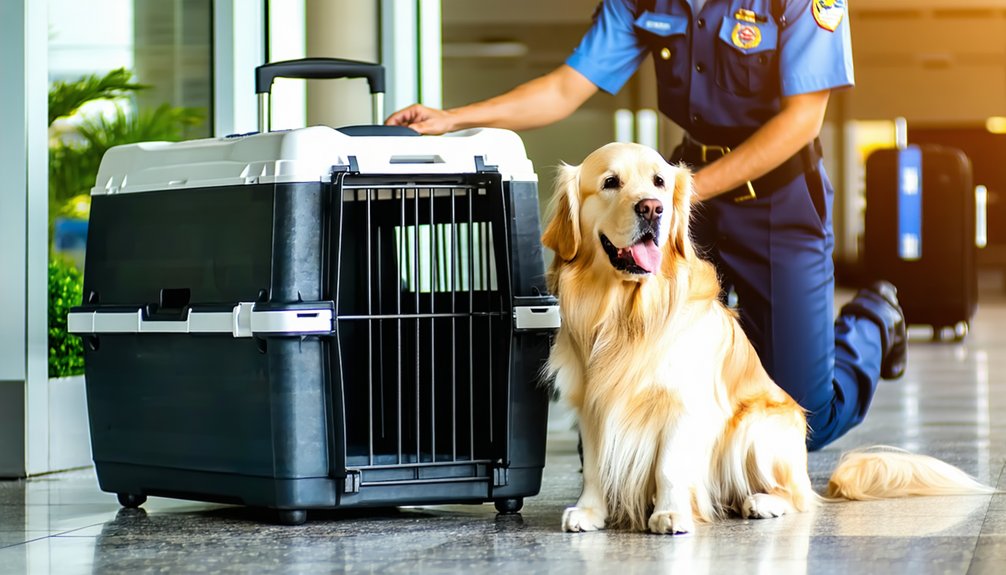
While Thailand’s official rules technically grant quarantine power over every imported dog, the practical reality is far less intimidating: if your dog arrives healthy with complete, correct paperwork, it won’t face facility quarantine.
You’ll go through a mandatory inspection at the Animal Quarantine Station at ports like Suvarnabhumi or Phuket, but most owners report same day clearance—often within 20–40 minutes in Phuket.
Thailand’s risk based inspection approach means officers reserve quarantine for non‑compliant or high‑risk cases, not routine arrivals from low‑rabies‑risk countries.
The Department of Livestock Development’s 30‑day clause exists as a discretionary power, not an automatic sentence.
Recent embassy guidance, including the Thai Embassy in Canberra, confirms healthy pets “would not be quarantined.”
Prepare correctly, and you’ll join countless owners who’ve cleared smoothly.
Which Dogs Can Legally Enter Thailand in 2026
Before you book a single flight, you need to confirm your dog actually qualifies for legal entry, because Thailand’s Department of Livestock Development (DLD) sets clear, non-negotiable criteria for which dogs can cross its borders in 2026.
To join the community of pet owners who’ve successfully relocated, your dog must meet these core standards:
- Age and vaccination: Your dog must be at least 4 months old, with rabies vaccination given after 3 months of age and 21–30 days before departure.
- Breed eligibility checks: Pit Bull Terriers, American Staffordshire Terriers, and Tosa Inu are banned, along with similar crossbreeds.
- Documentation: You’ll need a DLD import permit (R1/1) and English health certificate.
Don’t overlook airline acceptance policies—carriers can refuse brachycephalic breeds outright.
Microchip Rules for Importing a Dog to Thailand
Every dog entering Thailand needs an ISO-compliant microchip, and getting this single detail right protects you from costly delays at the border.
Your chip must conform to ISO 11784/11785 standards, typically a 15-digit ISO transponder that Thai Animal Quarantine Station scanners read on arrival.
While some guidance accepts AVID chips, ISO remains your safest choice.
Implant the chip before rabies and core vaccinations, so every record ties legally to that number.
Only implanted chips count—collars and external tags won’t qualify.
Make sure your microchip number matches exactly across your vaccination record, health certificate, import permit, and microchip certificate, all in English.
Ask your vet for chip scanning before departure to confirm readability and correct transcription.
Once implanted, your microchip stays valid for life.
Rabies and Core Vaccines Before You Fly
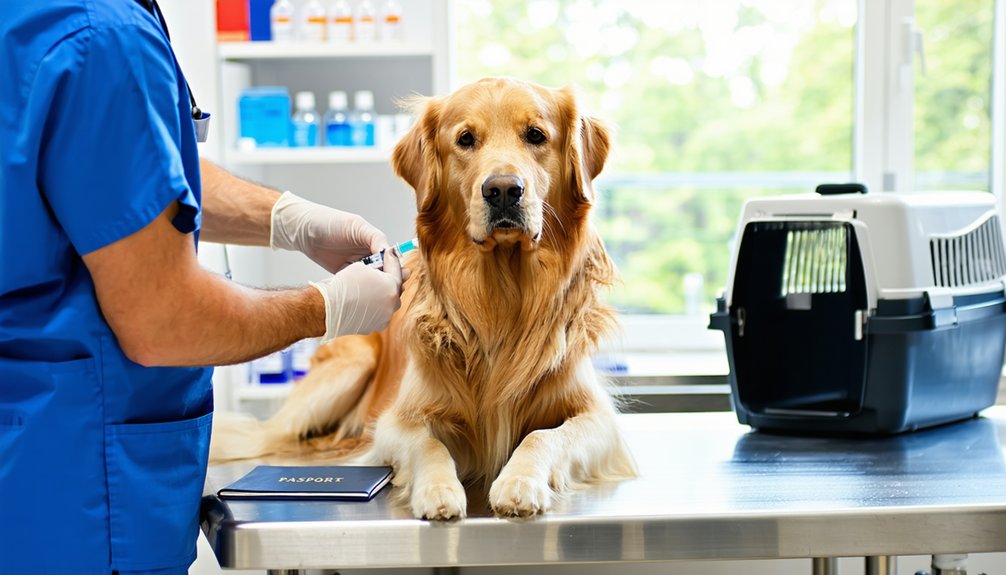
Once your dog’s microchip is in place, vaccinations become your next priority—and rabies leads the list.
Puppies get the rabies vaccine at 3 months, then wait 30 days before departure, so your dog must be at least 4 months old to import.
Your rabies proof should display the microchip number alongside the vaccine entry.
Smart travel clearance planning means completing the rabies shot early enough to clear both the waiting period and import inspection.
Beyond rabies, Thailand requires core vaccines on your official record:
- Distemper and hepatitis
- Parvovirus
- Leptospirosis
These shots support the public-health and animal-health screening at entry.
Complete, consistent records often earn a short inspection rather than quarantine of up to 30 days at the Animal Quarantine Station.
Deworming and Flea Treatment Timing Before Travel
While vaccines protect your dog from disease, parasite treatment is what clears the final hurdle at Thailand’s border. Thai authorities require both internal deworming and external flea/tick treatment within 7 days before departure, recorded in your dog’s health certificate with product name, date, and your vet’s signature.
Tapeworm treatments must contain praziquantel or an approved equivalent. Practical vet scheduling matters here: book the parasite appointment alongside your final pre-flight exam so everything lands inside that window.
Because tapeworm windows are measured from arrival, not departure, time zone arrival planning becomes critical on long-haul routes.
Miss the timing or skip documentation, and you risk quarantine, refused entry, or re-treatment on arrival.
Confirm your airline’s and export country’s rules too—they’re sometimes stricter than Thailand’s.
How to Get Your Thailand Import Permit
Because Thailand requires an import permit before your dog arrives, you’ll need to apply through the Department of Livestock Development (DLD), which issues permits via its Animal Quarantine Station (AQS) offices at international airports like Suvarnabhumi, Don Mueang, and Chiang Mai.
Submit your application by email to the AQS at your chosen port of entry, using the Port specific AQS contacts published by Thai embassies and consulates.
Apply no less than 7 days and no more than 60 days before departure.
Your permit stays valid for roughly 45–60 days.
Your Email application checklist should include:
- Completed Form R1/1 with your Thai and origin addresses
- Passport biodata copy and your dog’s recent color photo
- English vaccination certificate plus proof of compliant microchip
Use the subject line “Pet import permit application.”
The Health Certificate and Its 10-Day Window
For U.S. exports, your Official Health Certificate must be USDA-endorsed, and that 10-day clock runs from the endorsement date, not the exam. Factor in certificate endorsement delays, since APHIS submission can add several days.
Watch rabies timing details too: your certificate must list rabies and core vaccines with accurate dates, in English, matching your microchip and import records exactly.
Documents to Pack for AQS Inspection
When you reach the Animal Quarantine Station (AQS) at your port of entry, inspectors will cross-check every detail against your import permit, so a well-organized document folder isn’t optional.
Pack originals and copies together, keeping one complete set per animal so you fit right in with prepared importers who clear inspection smoothly.
Carry these essentials:
- Identity & permit: your original passport, printed import permit (R1/1 approval), pet passport or vaccination book, flight itinerary, and a clear pet photo.
- Health & ID: English vaccination records (core vaccines, microchip number), microchip implantation certificate, and your health certificate.
- Forms & backups: completed R1/1, printed AQS email approval, and an AQS Emergency contact.
Build document redundancy with paper folders plus device scans, guarding against loss before review.
What Happens at Thailand’s Quarantine Station
Once you’ve collected your dog from the oversize baggage or special handling area, head straight to the AQS counter—located in front of Baggage Claim carousel 8 at Suvarnabhumi Airport—and declare your live animal. Since AQS operates 24 hours, your arrival inspection timeline won’t depend on flight time.
A veterinarian checks your dog’s alertness, breathing, mobility, coat, and skin for wounds, parasites, or discharge. They’ll verify rabies and DHPPi vaccinations and validate your import permit, health certificate, and microchip number against your passport and flight details.
Everything gets recorded into border-control systems for national surveillance. If your dog shows no clinical signs and your documents check out, you’ll receive your AQS clearance documents—inspection stamps and release notes—needed for customs exit. Then you’re free to go.
Import Fees at AQS and How to Pay
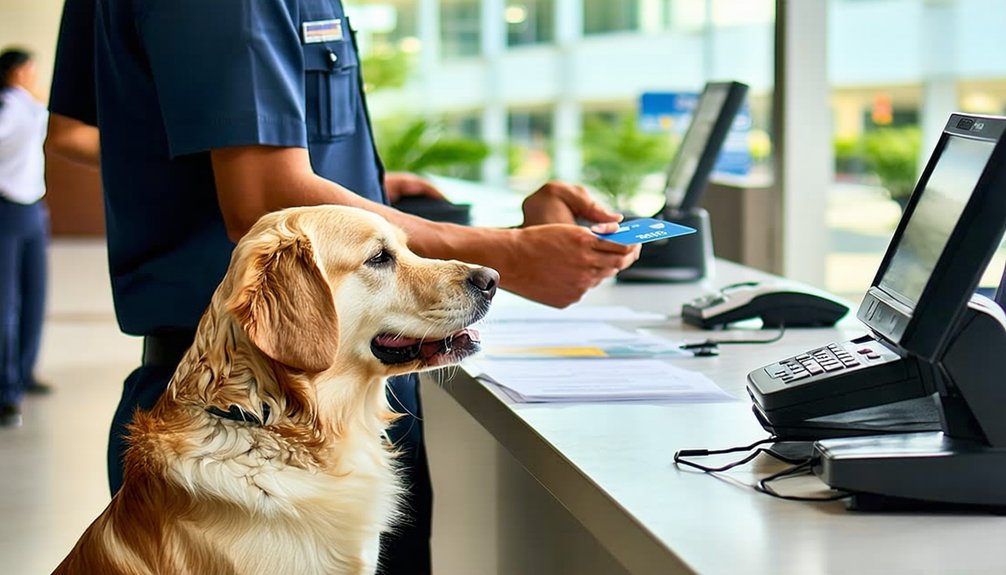
At AQS, you’ll pay a standard import fee of 500 THB per animal—officially described as either a “pet entry fee” or “import license fee” in DLD/AQS guidance. This license fee per animal applies linearly, so bringing multiple dogs increases your total accordingly.
You’ll pay this after arrival, during the final veterinary inspection when your original documents and import permit are presented and your R-7 import license is issued.
Plan for AQS cash payment in Thai baht—it’s the expected default:
- Hand-carried pets: AQS office near baggage carousel No. 8, open 24 hours daily.
- Air-cargo pets: Cargo terminal, Free Zone Area, CE-1 Building, open 08:30–16:30, Monday–Friday.
- Payment method: cash only; no online or pre-payment option exists.
You’re joining countless owners who’ve managed this smoothly.
When AQS Can Detain Your Dog for 30 Days
Although most well-prepared pets clear inspection without issue, AQS holds the legal authority to detain your dog for up to 30 days under Thailand’s Animal Epidemics Act.
You’ll most often face document mismatch detention when your import permit is expired, doesn’t match your dog’s details, or your health certificate is incomplete, unofficial, or untranslated.
Microchip verification issues—where the implanted chip can’t be read or doesn’t match your paperwork—trigger holds too.
Even with perfect documents, an AQS veterinarian can order quarantine after spotting risk symptom signs like respiratory illness, gastrointestinal distress, or ectoparasites.
Rabies suspicion quarantine applies when your dog arrives from a high-risk country or shows concerning signs, letting officers observe and complete laboratory testing.
Incomplete or recently administered vaccines can also justify precautionary detention.
Flying Your Dog to Thailand as Cargo
Clearing AQS inspection is the final step, but how your dog actually reaches Thailand often determines whether that inspection goes smoothly.
If you’re flying Thai Airways, you’ll need to know their policy: pets travel as manifested cargo only, never as passenger baggage.
This means coordinating directly with the airline’s cargo process well before departure.
Don’t assume every carrier serving Thailand works this way—confirm directly.
Before you finalize export paperwork, secure the airline’s acceptance, which depends on:
- Cargo kennel standards: kennel size and weight must match the rules for your specific aircraft and route
- Written airline confirmation: documenting accepted carriage conditions protects you
- Early booking: cargo space and pet acceptance can be limited
Acclimate your dog to the crate beforehand to reduce stress.
Frequently Asked Questions
Can I Take My Dog on Public Transport From the Airport?
Yes, you can! For your airport transfer, you’ll use the Airport Rail Link or SRT Red Line, meeting carrier requirements (caged, size-limited). Pet taxis offer immigration assistance too. Avoid BTS and MRT—they’re off-limits for dogs.
Are There Pet Relocation Companies That Handle Thailand Imports for Me?
Yes, you’ll find licensed, verified agents like PetRelocation and Boonma handling Thailand imports. Consider hiring a customs broker and researching the quarantine timeline together, so you’re confident your paperwork, permits, and vaccinations align perfectly before arrival.
How Much Does It Cost to Fly a Dog to Thailand?
You’ll pay $100–$500 in airline pet fees alone, or $2,800–$6,000+ using full-service relocators. Your budget airfare planning depends on dog size and route. Don’t forget airline crate requirements—we’ve all faced these costs together.
Can I Bring More Than Two Dogs Into Thailand at Once?
You can, but most travelers like you cap it at two dogs since border import permits and group health checks scale per animal. Bringing three or more usually triggers commercial classification, complicating your permits and airline arrangements.
What Pet-Friendly Accommodation Options Are Available After Arrival in Thailand?
You’ll find pet friendly hotels like Kimpton Maa-Lai Bangkok, serviced apartments, villas, and glamping nationwide. Join fellow dog-owners choosing verified pet policies—check weight limits, breed restrictions, and nightly fees so you and your pup belong everywhere together.
Conclusion
You’ve now got the full roadmap for bringing your dog to Thailand in 2026. Microchip first, vaccinate against rabies at least 21 days out, schedule deworming and flea treatment within the required window, and prepare your import fees for AQS. Book cargo carefully and keep every certificate organized. Do this right, and you’ll skip the 30-day detention entirely. Start your paperwork early, confirm requirements with Thailand’s Department of Livestock Development, and travel confidently.
References
- https://pettravelrules.com/blog/bring-pet-to-thailand-2026
- https://www.thaiembassy.com/thailand/how-to-take-your-family-pets-with-you-to-live-in-thailand
- https://thaiconsulatela.thaiembassy.org/en/publicservice/bringing-pets-to-thailand?cate=61946819dd15fb11740c1f62
- https://www.aphis.usda.gov/pet-travel/us-to-another-country-export/pet-travel-us-thailand
- https://phnompenh.thaiembassy.org/en/page/bringing-pets-to-thailand?menu=5d73b14415e39c46f40076b8
- https://thairanked.com/ru/blogs/bringing-pets-to-thailand-import-guide-2026/
- https://thaiconsulatela.thaiembassy.org/en/publicservice/bringing-pets-to-thailand
- https://www.pawsabroad.co/blog/can-i-take-my-dog-to-thailand-in-2026-what-it-actually-takes-how-to-do-it-safely
- https://www.bringfido.co.uk/travel/international/thailand
- https://pretoria.thaiembassy.org/en/page/29701-importation-of-live-animals-into-thailand?menu=5d66366f15e39c2ad0003ae7