Freeze part of your dog’s water before a cargo flight to stop spills and deliver steady hydration as the ice melts. A frozen block won’t slosh or soak bedding, and meltwater stays cool for hours. For half-day trips, freeze 35–50% of daily water in rigid, secured, stainless steel bowls. Keep ventilation clear and never block airflow. Time water access carefully and watch for dehydration signs. Below, you’ll find the full step-by-step strategy.
TLDR Key Takeaways
- Freeze water in the bowl so it melts gradually, providing steady hydration while preventing the sloshing and spills of liquid water.
- Size the frozen portion to the trip: 25–35% of daily water for 4 hours, up to 50–70% for full-day travel.
- Use rigid, non-toxic, chew-resistant stainless steel containers, secured with crate-mounted hardware so they can’t tip or be pawed.
- Fill containers about 2 cm from the top for expansion headspace, then freeze fully solid overnight to stop mid-transit sloshing.
- Recognize limits: warm holds melt ice fast, long routes outlast one fill, and frozen water alone cannot guarantee adequate intake.
How the Frozen-Water Trick Actually Works
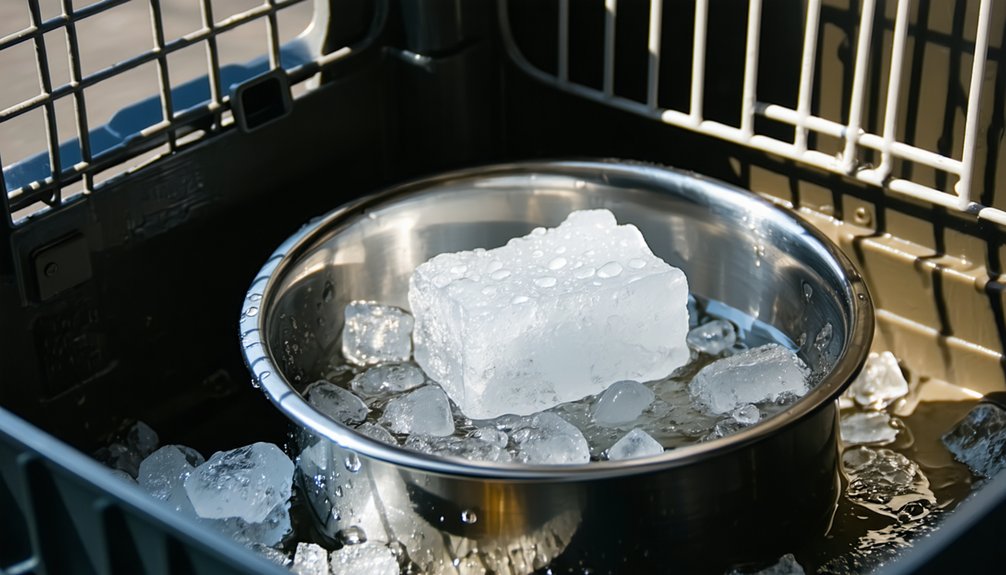
When you freeze your dog’s water before a trip, you’re putting basic phase-change physics to work. As ice melts, each gram at 0 °C absorbs about 334 J of heat without warming—creating thermal lag that keeps the remaining water cool for hours. This meltwater release happens gradually, so drinking water forms progressively instead of sloshing as a full bowl.
You’ll notice surface wetting first: melting starts where ice meets warmer air, leaving a thin licking layer your dog can reach without a deep pool. That partially solid mass also delivers slosh suppression—it occupies bowl volume, dampens water motion, and resists the surges that braking and turbulence cause. Together, these effects keep your traveling companion hydrated, cool, and comfortable throughout the trip.
Why Frozen Water Beats a Full Water Bowl
Although a full water bowl seems like the obvious choice, it fails the moment your dog’s crate starts moving. Turbulence and ramp handling create multidirectional forces that send liquid sloshing over low rims, while a frozen block stays put.
That stability matters for Temperature Regulation: wet bedding pulls heat from your dog’s body, raising hypothermia risk in cool cargo holds and triggering Dehydration Warning Signs you can’t monitor mid-flight.
Frozen water melts gradually, giving you Safe Backup Hydration that aligns with multi-hour flights instead of emptying in one tipping event.
The slow surface film keeps bedding dry, supporting Crate Stress Management when noise and motion already increase cortisol.
You’re not just preventing spills—you’re protecting the comfort and welfare your dog deserves.
How Much Frozen Water Does Your Dog Need?
Now that you’ve committed to a frozen block, you need to size it correctly. Start with your dog’s daily requirement—roughly 1 oz per pound of body weight—then match the frozen volume to your travel timing.
Most of us caring for traveling dogs follow these proven ranges:
- Short window (4 hours): Freeze 25–35% of daily water for a pre-hydrated, resting dog.
- Half-day (6–8 hours): Freeze 35–50% to reduce hydration risk without overfilling.
- Full-day (10–12 hours): Freeze 50–70% to cover stress and prolonged restriction.
For a 50 lb dog, that’s about 20 oz for half-day windows. Make temperature adjustments toward the higher end in heat, and never block crate airflow with oversized bottles.
Choose the Right Crate Bowls and Cups
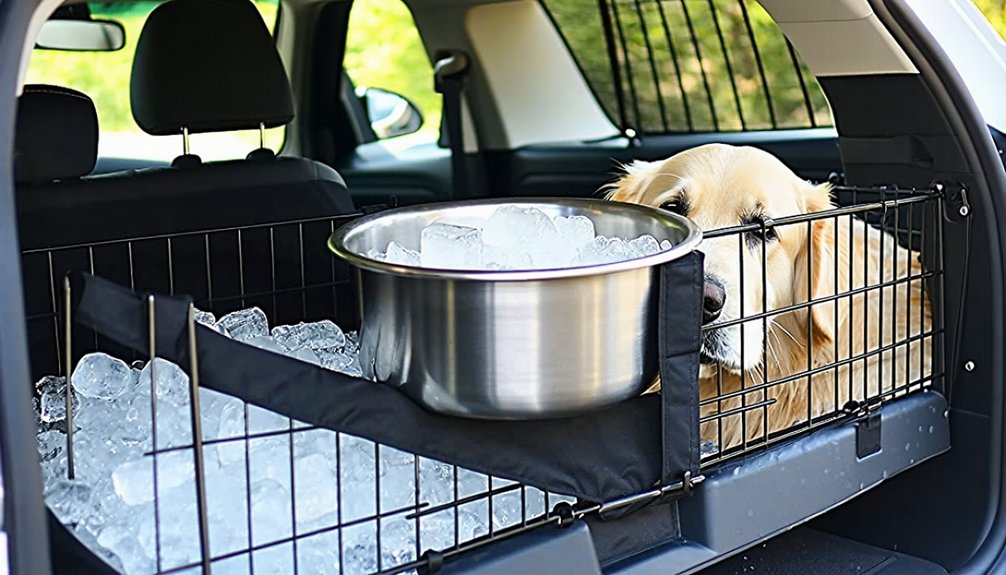
The bowl you choose makes or breaks your hydration strategy long before the cargo door closes. You’ll want crate-mounted hardware—clamp-on rings, snap-fit designs, or three-screw brackets—that locks bowls tight so your dog can’t paw, lift, or tip them mid-flight.
When it comes to durability materials, stainless steel wins: it resists chewing, rust, and bacteria far better than plastic, and rounded edges with smooth welds protect your dog’s mouth during turbulence.
Consult bowl size charts to match capacity to your dog—8–16 oz for small breeds, 40–60 oz for medium and large dogs needing a full supply between refills.
Confirm diameter, height, and crate bar spacing allow comfortable muzzle access and secure anchoring. Choose dishwasher-safe, quick-release inserts, and you’ll travel confident your companion stays hydrated.
Fill and Freeze Cargo Containers the Right Way
Because frozen water won’t slosh or spill the way liquid does, freezing your dog’s water before transport solves the tipping problem at its source. The trick lies in headspace expansion: fill containers only partway—about 2 cm from the top—so the ice has room to grow without cracking. This simple step is your best leak prevention strategy.
- Mold choice: Pick shallow, wide molds or upright bottles; they freeze faster and release cleaner than deep, narrow shapes.
- Freeze solid: Freeze overnight (or at least an hour for small volumes) until fully solid to stop mid-transit sloshing.
- Safe release: Run warm water over the mold’s outside, then turn it onto a towel—never pry forcefully.
You’ll keep your dog hydrated and your cargo dry.
Secure Dishes So They Won’t Spill
A spill-proof dish starts with the right hardware and the right placement. Choose airline-approved bowls that clamp or hook to the crate door, and pick deep, narrow designs that fight sloshing during turbulence.
Use screw-on brackets or built-in clips, and reinforce them with zip ties if your airline allows it.
Position dishes at shoulder height on the front half of the crate, keeping clear space around them so toys can’t wedge in.
Like seasoned travelers who share these safety checklists, you’ll want to run a shake test—lift and rock the crate to confirm crate stability and verify nothing detaches.
Mount water on the door, not above thick bedding, so ground staff can refill easily without chilling your dog.
You’ve got this.
When to Water Your Dog Before the Flight
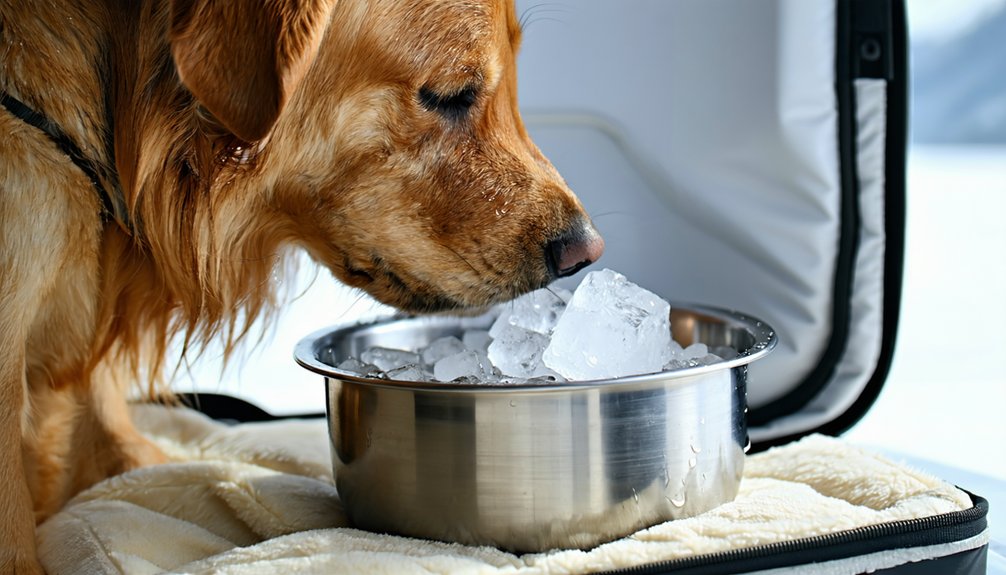
Once your spill-proof dish is locked in, timing the water becomes your next priority. Like many caring owners, you’ll want to keep your dog hydrated without risking an in-crate accident. Keep normal water access until about three hours before the flight, then switch to small controlled sips. This respects your dog’s bladder timing limits—healthy adults hold 6–8 hours, while puppies under six months manage just 1–3.
- Maintain a pre flight feeding gap: last full meal 4–6 hours before departure.
- Offer about ¼ cup two hours out, then remove the free-access bowl.
- Give motion sickness sips just before crating, especially for short travel windows.
This balanced approach keeps your companion comfortable, hydrated, and dry throughout the trip.
Keep the Crate Cool With Frozen Water
While timing your dog’s water keeps them comfortable, controlling crate temperature keeps them safe—and frozen water does both.
Place frozen 1–2 L bottles along the crate’s sides and corners, where they act as cold thermal mass, absorbing heat as the ice melts.
Distribute several medium bottles around the perimeter for even cooling, and secure them with zip ties or hooks so they can’t roll.
Inspecting airflow balance matters too—keep bottles clear of front vents so cool air still circulates.
Add a partially filled, crate-mounted bowl of frozen water at muzzle height for gradual melt and hydration.
Pre-chill the interior and shield it from direct sunlight to slow melting.
Keep monitoring melt rate changes, since cargo temperature, airflow, and insulation all affect how long your cooling lasts.
What to Do in Very Cold Weather
Just as summer heat threatens your dog, winter cold poses its own hydration risks—and they’re easy to miss. Cold weather doesn’t lower your dog’s water needs, yet dogs drink less in winter thanks to reduced thirst. Dry air humidity in heated cargo spaces increases respiratory water loss, worsening dehydration.
Don’t let your dog rely on snow—it won’t hydrate and may expose them to road chemicals. Keep safe drinking options accessible and unfrozen so your traveling companion stays healthy.
- Use heated, pet-safe bowls or insulated buckets to prevent freezing in very cold environments.
- Offer room-temperature or slightly warmed water to encourage better intake.
- Add wet food or low-sodium broth (no onion/garlic) to enhance moisture.
Watch for lethargy and tacky gums.
Meeting Airline and IATA Dish Rules
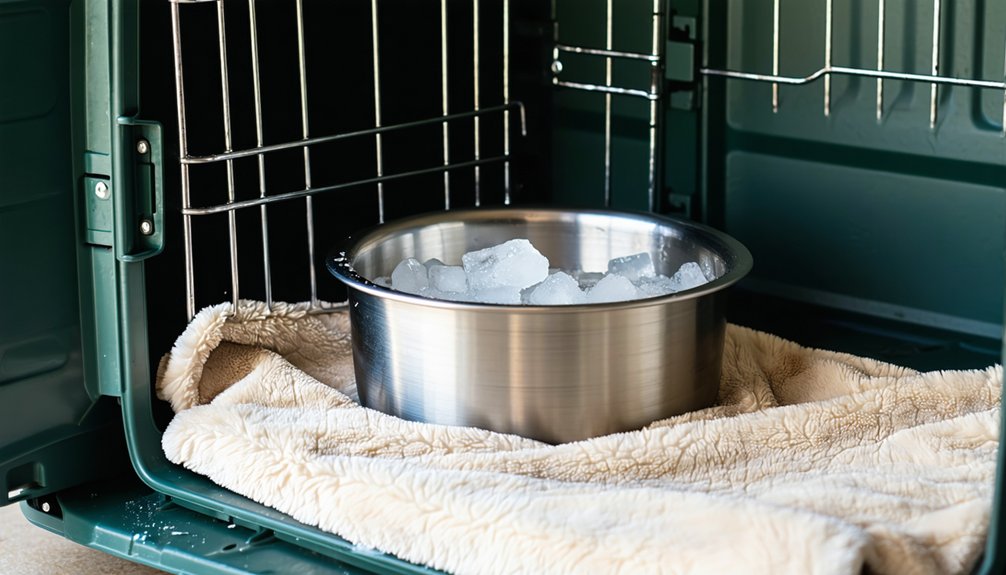
Managing temperature is only half the battle—your hydration setup also has to clear airline inspection before your dog ever boards. IATA Live Animals Regulations set the baseline most carriers follow, so you’ll want your dishes accessible from outside the crate, refillable without opening the door.
Acceptable dish attachment types include clip-on, bolt-on, or molded-in bowls; detachable versions must lock firmly and survive rough handling and vibration.
Choose rigid, non-toxic, chew-resistant containers with no sharp edges.
For no spill placement, secure dishes to the door or inside so they can’t tip, and never block ventilation—keep three ventilated sides clear for small dogs, four for larger ones.
Avoid flexible bags or protruding bottles, which cargo staff routinely refuse.
Get this right, and you’ll pass inspection confidently.
Spotting Dehydration Before and After Travel
Because cargo travel taxes a dog’s body in ways you can’t monitor mid-flight, you’ll need to catch dehydration early—at its first subtle signs, before it escalates.
Start with a baseline comparison 24 hours before departure: note gum moisture, skin tenting recovery, eye appearance, and urine color so you’ll recognize deviations afterward.
Watch for these early warning signs:
- Tacky gums and slow capillary refill: Press the gum—color should return within two seconds.
- Slowed skin tenting: Lifted skin over the shoulders should snap back promptly, not linger.
- Eye dullness and darker urine: Sunken, tired eyes paired with concentrated urine signal fluid loss.
When you spot these together, act quickly—escalating dehydration demands veterinary evaluation, and your attentiveness protects the companion who depends on you.
When the Frozen-Water Trick Isn’t Enough
Recognizing dehydration is only half the battle—you also have to prevent it, and the popular frozen-bowl method has real limits in cargo. Warm holds melt ice fast, tilting crates slosh meltwater onto bedding, and long multi-leg flights outlast a single frozen fill. Don’t fall for cargo water myths: a frozen bowl alone can’t guarantee intake, especially when stress drinking suppression kicks in.
| Hydration Risk Factor | Why It Matters | What You Can Do |
|---|---|---|
| Warm holds | Rapid melting, spills | Add a sipper bottle |
| Crate tilting | Soaked bedding, chill | Use no-spill bowls |
| Long routes | Water runs out | Dual-system setup |
| Cold intake | Reduced drinking | Offer lukewarm options |
Pair frozen bowls with bottles, and use safe meal timing—moisture-rich meals beforehand—to build a stronger buffer.
Frequently Asked Questions
Can I Add Toys or Treats Inside My Dog’s Travel Crate?
No, skip toys and treats—airlines prohibit loose items that risk choking or blockage. You’ll want non spilling toys avoided entirely; instead, prioritize safe hydration and familiar-scented bedding. Join fellow pet parents choosing comfort, security, and compliance every flight.
What Documents Do I Need for My Dog’s Cargo Flight?
You’ll need a current health certificate, proof of rabies vaccination, microchip records, and airline health forms. Check pet import rules for your destination, plus your cargo booking confirmation and endorsed government certificates. We’re here helping you travel confidently together.
How Early Should I Arrive at the Airport for Cargo?
Arrive 3–4 hours early, joining fellow pet parents who plan ahead. You’ll need extra time for cargo check in, document verification, and kennel inspection. Coordinate hydration timing with that window, freezing water beforehand so it won’t spill.
Can Puppies Travel Safely in Cargo Using This Method?
You can enhance cargo safety with the frozen-water trick for puppy hydration, but it’s not enough alone. Most experts in our community recommend waiting until 16 weeks, securing vet clearance, and avoiding temperature extremes first.
Should I Sedate My Dog Before a Cargo Flight?
No, you shouldn’t sedate your dog. Like caring owners everywhere, you’ll want to avoid breathing sedation risks at altitude. Instead, choose alternatives: hydration methods like the frozen-water trick, anxiety-reducing training, and a vet-approved pre-flight evaluation for safety.
Conclusion
You’ve got a simple, proven tool to keep your dog hydrated in cargo without the mess. Freeze water ahead, size it to your dog’s weight, choose IATA-compliant bowls, and adjust for cold-weather risks. Watch for dehydration signs before and after every flight, and don’t hesitate to consult your vet when the frozen-water trick falls short. Plan carefully, follow airline rules, and you’ll give your dog a safer, more comfortable trip every time.
References
- https://wgme.com/features/for-pets-sake/tips-offered-to-keep-pets-hydrated-during-long-trips-including-cargo-travel
- https://www.youtube.com/watch?v=riyhzpxzxWU
- https://www.jetpets.co.nz/blog/2020/01/10/keeping-your-dog-cool-during-summer/
- https://blog.pettravel.com/index.php/how-to-keep-your-pet-hydrated-when-traveling/
- https://encompassrl.com/blogs/travel-gear-shop-kb/how-do-i-give-my-dog-water-in-the-car
- https://www.oreateai.com/blog/beyond-the-bowl-keeping-your-canine-companion-hydrated-on-every-adventure/fc72745500ce8a19ea3683f78d5f6f9c
- https://www.facebook.com/groups/1180884898968404/posts/2940714036318806/
- https://www.youtube.com/watch?v=fRNZMeNJTgE
- https://www.petaircarrier.com/pet-travel-tips/food-water-pet-travel/
- https://dogtrotting.net/archives/8086