To survive your USDA endorsement appointment, verify your destination’s entry rules first, since requirements vary and change. Use a USDA-accredited vet, and time the exam within the country’s window—often 10 days, but 2–3 for rabies-free destinations. Match your microchip number, vaccine dates, and titer results exactly across every document. Bring originals, signed certificates, payment, and prepaid return shipping. Below, you’ll find each step broken down to keep your form approved.
TLDR Key Takeaways
- Verify the microchip number matches exactly across every record, since even a one-digit mismatch triggers rejection.
- Use a USDA-accredited veterinarian to sign the certificate, because APHIS won’t endorse documents signed outside the accreditation program.
- Confirm destination entry rules first, then schedule the exam and endorsement within the country’s validity window (commonly ~10 days).
- Follow the strict sequence: implant the ISO 15-digit chip before the rabies shot, then draw the titer 21–30 days later.
- Use current APHIS Form 7001 and the correct country template, submitting via VEHCS for the fastest, most reliable processing.
What Gets a Pet Health Certificate Rejected
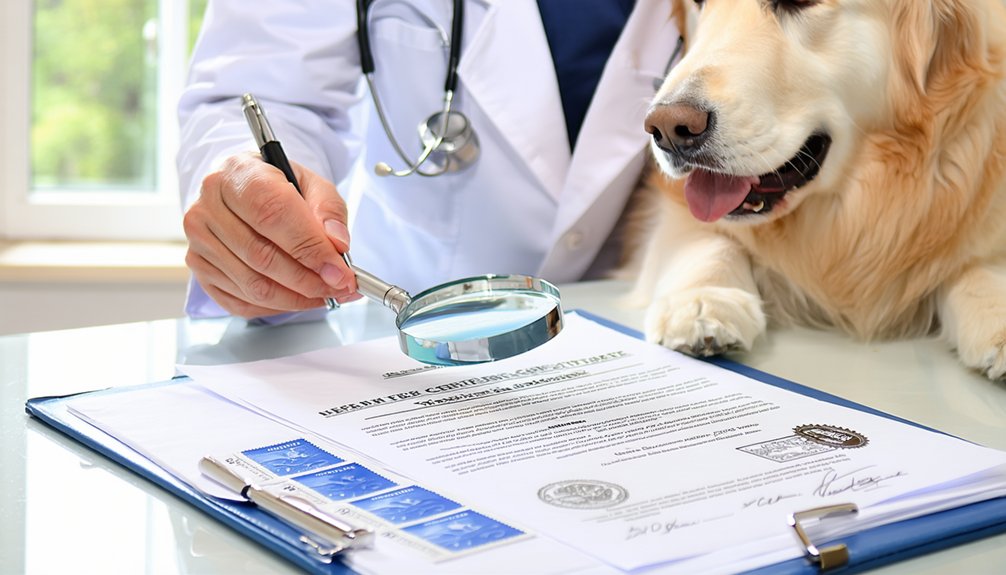
Before you submit a pet health certificate for endorsement, you need to know what triggers a rejection at the USDA or border review.
Start with common record accuracy issues: the microchip number on your certificate must match every supporting record exactly, because even a one-digit mismatch can get you returned.
Watch incomplete field requirements too—you can’t leave breed, microchip, or other core descriptors blank, since endorsable condition depends on a fully completed form.
For date mismatch prevention, issue your documents within the destination’s validity window, often around 10 days from endorsement.
Finally, veterinary signature compliance matters: international certificates usually require a USDA-accredited veterinarian, not a non-accredited one.
Match every name, ID, and date across records, and you’ll belong among approved travelers.
Check Your Destination’s Pet Entry Rules First
Because entry rules vary by country and can change at any time, you’ve got to verify your destination’s requirements before you finalize a single piece of pet paperwork. USDA APHIS directs travelers to look up the destination country’s rules first, since the destination sets the requirements.
Make your US Entry research the foundation of every appointment, and watch for the latest rule updates that can shift requirements overnight.
- Microchip or tattoo identification, recorded on the passport or certificate, with microchipping mandatory for pets identified after 3 July 2011.
- Rabies vaccination, generally given at least 21 days before an EU border crossing.
- Rabies antibody blood test, when required, sampled at least 30 days after vaccination.
- Tapeworm treatment for dogs entering certain countries.
You belong here.
Why You Need a USDA-Accredited Vet
When you’re moving a pet across borders, you’ll need a USDA-accredited veterinarian because most foreign countries require health certificates that only an accredited vet can issue. Through the USDA’s National Veterinary Accreditation Program, these vets earn the federal authority to complete and sign your export health certificate—something a non-accredited vet simply can’t do. APHIS won’t endorse a certificate signed by anyone outside this program.
Accredited vets train specifically to complete APHIS forms in the required format, language, and detail. That specialized knowledge helps you reduce rejection rates and avoid last minute corrections, re-exams, or missed flights.
They know country-specific declarations, vaccination statements, and endorsement standards inside out. By choosing one, you’re joining countless pet owners who’ve moved their companions abroad successfully.
Time the Exam Within the Country’s Window

Once you’ve found an accredited vet, you’ll need to nail the timing, because most countries define an entry window—the span between your pet’s health exam and arrival—that your paperwork must fall within.
Most windows run 10 days, though rabies-free destinations tighten to 2–3.
The clock typically starts at exam issuance, and your USDA endorsement must land inside that same span.
Here’s how to stay aligned:
- Back timed scheduling: Subtract the country’s allowed days from your arrival date to find the earliest acceptable exam.
- Inclusive day counting: Confirm whether “within X days” means day 0–10 or a stricter count.
- Time zone planning: Use your landing date, not departure.
- Last night arrival: Watch red-eyes landing past midnight—they can quietly push you outside the window.
Get Microchip, Vaccine, and Titer Details Right
The microchip, rabies vaccine, and titer form a sequence that countries verify in strict order, so getting any one wrong unwinds the rest.
Implant the ISO 11784/11785 15-digit chip before the rabies shot, and scan it beforehand to confirm readability.
Record the number, date, and site identically across every certificate—endorsement staff cross-check them all.
Use an inactivated vaccine that’s current on entry, and list the chip number, manufacturer, lot, date, and duration of immunity.
For the titer, schedule the Blood Draw no sooner than 21–30 days after primary vaccination, then honor any 90-day wait before entry.
Lab Accuracy matters: an OIE/WHO-approved lab must report ≥0.5 IU/mL with matching identification data.
Keep backup registration handy, because you belong on that plane—discrepancy-free.
Build Your USDA Document Packet Right
Because endorsement staff reject packets over a single obsolete form, you’ll want to start with the right templates and build outward from there. Confirm your destination country’s certificate, download the current APHIS Form 7001 from the official forms library, and verify each footer’s edition and OMB approval dates. Once your forms pass muster, careful document ordering and consistent page numbering keep your packet reviewer-friendly.
- Place the primary health certificate on top, followed by lab and vaccine records, then identity documents.
- Group translations and certified copies behind the originals they support.
- Number every page as “Page X of Y” to prove completeness.
- Exclude unrelated paperwork unless USDA requests it.
Follow APHIS packet checklists, and your submission accuracy earns you a smooth endorsement.
Should You Use VEHCS or Mail It In?

With your packet assembled correctly, you now face a delivery decision that directly affects your endorsement timeline: submit through VEHCS or mail it in.
If you’re a USDA-accredited veterinarian, VEHCS is your fastest, most reliable path. USDA identifies it as the quickest processing option, eliminating shipping costs, overnight courier fees, and pre-paid return labels.
It centralizes attachments—rabies certificates, lab reports, permits—improving document readiness and lowering your risk of rejection through typed forms and digital signatures.
Mailing introduces delivery time risk and courier reliability concerns, adding 1–4 days of transit each way.
Since May 1, 2024, mailed certificates route to Raleigh, NC, with legacy offices causing significant delays.
For time-critical exports with narrow validity windows, choose VEHCS whenever your clinic’s onboarding allows it.
Find the Correct APHIS Endorsement Office
- Select your state or U.S. territory to view its assigned Endorsement Office.
- Verify live exports versus animal product menus, since each maps states differently.
- For pet travel, start at the APHIS Pet Travel site and follow links to service centers.
- When routing’s unclear, contact VETS or the Customer Service Center directly.
Book Your USDA Endorsement Appointment Early
Once you’ve located the correct APHIS Endorsement Office, lock in your appointment as soon as your travel timeline takes shape. Appointment slots fill weeks ahead, especially during holiday demand and summer travel peaks, so early booking keeps you among those who make their flights.
Build a schedule buffer that accounts for microchips, rabies titers, waiting periods, and vet exams—steps that take weeks to months.
Remember, many countries require endorsement within 10 days of entry, so timing matters.
Booking early gives you appointment flexibility: if your plans shift, you can pivot to mail-in or drop-off options.
Keep a backup contingency ready, since walk-ins aren’t guaranteed and offices close on weekends and federal holidays.
Secure your spot now, and you’ll travel with confidence alongside fellow prepared pet owners.
What to Bring to the APHIS Office

At the APHIS office, your paperwork makes or breaks the appointment. You’re joining countless pet owners who’ve cleared this hurdle, and a solid document checklist puts you among them. Bring originals, not just photocopies, and align your appointment timing with certificate validity windows so endorsement and travel dates match.
- Signed veterinary documents: the USDA-endorsable health certificate, original rabies certificates, complete vaccination records, and lab test reports tied to microchip data.
- Identification items: microchip documentation and consistent pet description data across every form.
- Payment and shipping: an accepted payment method, completed fee forms, and a pre-paid return shipping label.
- Backup copies: a separate duplicate set for fast office communication if originals are misfiled.
Walk in prepared, and you’ll belong among the approved.
Inspect Your Endorsed Certificate Before You Leave
Before you walk out of the APHIS office, inspect every page of your endorsed certificate while you still have time to fix errors.
Confirm the official USDA VS stamp or raised seal appears on every health-information page, and check that the Veterinary Medical Officer’s ink signature matches the printed name and title.
These last minute checks protect you from rejection at the border.
Verify the microchip number, species, breed, sex, color, and date of birth against your veterinary records.
Confirm the endorsement date falls within your destination’s validity window.
Review page numbering for completeness, and make sure borderline corrections carry initials, since un-initialed changes get refused.
For airline alignment, match pet and owner names across your tickets.
Careful document handling now keeps your whole group certificate valid.
Finish Legalization, Translation, and Airline Steps
Because a USDA endorsement rarely ends the process, you’ll need to push your certificate through legalization, translation, and airline checks before it’s truly travel-ready. For UAE-bound documents, your endorsed certificate moves through a defined chain, and translation must match what the receiving authority expects.
- Authenticate first: Submit your APHIS-issued certificate to the U.S. Department of State Office of Authentications to verify the officer’s signature and seal.
- Legalize next: Take it to the UAE Embassy for legalization or UAE MOFA attestation.
- Translate carefully: Preserve all names, dates, seals, and endorsement wording so nothing conflicts with your import permit.
- Assemble the file: Confirm airline packet readiness with the certificate, vaccination records, and import permits for inspection.
Frequently Asked Questions
How Much Does a USDA Endorsement Appointment Typically Cost?
You’ll typically pay $101 per certificate with no lab tests, rising to $160–$275 when tests apply. Add veterinary appointment expenses around $350–$395 and VEHCS paperwork fees of $148–$338. These cost estimates help you budget confidently together.
Can I Bring Multiple Pets on One Health Certificate?
Yes, you can list multiple animals on one certificate—but only sometimes. Many countries and airlines require separate forms per pet, so always check your destination’s paperwork guidance first. We’re here helping you get it right.
What Happens if My Pet Fails Entry Inspection Abroad?
You’ll face post entry quarantine, treatment, or re-export at your expense. Like fellow pet owners, you’ve options: follow reinspection protocols, request an appeal procedure, and maintain records retention. We’re here helping you manage these challenging requirements together successfully.
Are Emotional Support or Service Animals Exempt From These Requirements?
No, you’re not exempt. Emotional support policies and service animal documentation won’t waive USDA or destination-country health rules. You’ll still need rabies vaccinations, microchips, and endorsements like everyone else traveling with pets. We’ve all been there.
How Long Is an Endorsed Health Certificate Valid After Issuance?
You’ll typically get 10 days for EU entry, though your post issuance timeline varies—30 days for many destinations, longer for U.S. re-entry with rabies vaccines. Always confirm destination rules to guarantee boarding inspection readiness.
Conclusion
You’ve got the roadmap now, so work it in order: confirm the destination’s rules, book an accredited vet, time the exam precisely, and nail the microchip, vaccine, and titer details. Schedule your USDA endorsement early, bring complete paperwork, and inspect every signature before you leave. Then finish legalization, translation, and airline steps. Follow these checks, and you’ll dodge the rejected form that derails travel. Start early, double-check everything, and your pet flies cleared.
References
- https://boogiethepug.com/how-to-get-a-usda-endorsement/
- https://www.usda.gov/sites/default/files/documents/usda-contracting-deskbook.pdf
- https://www.aphis.usda.gov/working-aphis-endorsement-office
- https://boogiethepug.com/getting-a-pet-health-certificate-endorsed-at-the-aphis-office-at-jkf/
- https://vehcs-training.aphis.usda.gov/VEHCSHelp/Frequently_Asked_Questions_(FAQ).pdf
- https://www.starwoodpet.com/blog/everything-you-need-to-know-about-your-pets-usda-endorsed-health-certificate
- https://passpaw.com/insights/how-to-get-usda-endorsed-pet-health-certificate
- https://www.reddit.com/r/usajobs/comments/r4cr45/i_got_an_email_from_someone_at_the_usda_asking_to/
- https://www.whvetclinic.com/services/international-and-domestic-travel-certificates-houston
- https://www.reddit.com/r/TravelWithPets/comments/1m3qb5l/usda_endorsement_help_needed/