Book nonstop whenever you can—it removes the transfer points where most mishandling happens. If you must connect, call the airline’s cargo desk before paying to verify your route, aircraft, and date accept live animals on both segments. Choose an IATA-compliant crate, get a USDA-accredited vet’s health certificate, and build a 2–3 hour layover buffer. Arrive early, confirm cargo check-in, and locate your dog immediately after landing. Here’s exactly how to do each step.
TLDR Key Takeaways
- Prefer nonstop routing to remove intermediate loading cycles, treating cost and convenience as secondary to your dog’s safety.
- Call the airline cargo desk before booking to verify live-animal acceptance, capacity, and service on both segments.
- Build a 2–3 hour connection buffer, avoiding layovers under 90 minutes that risk missed transfers at congested hubs.
- Confirm cargo department oversight and the handoff protocol between segments, since teams need 30–60 minutes for re-transfer.
- If your dog misses the connection, locate it using the air waybill and request emergency welfare checks in climate-controlled facilities.
Why Connecting Flights Are Risky for Dogs
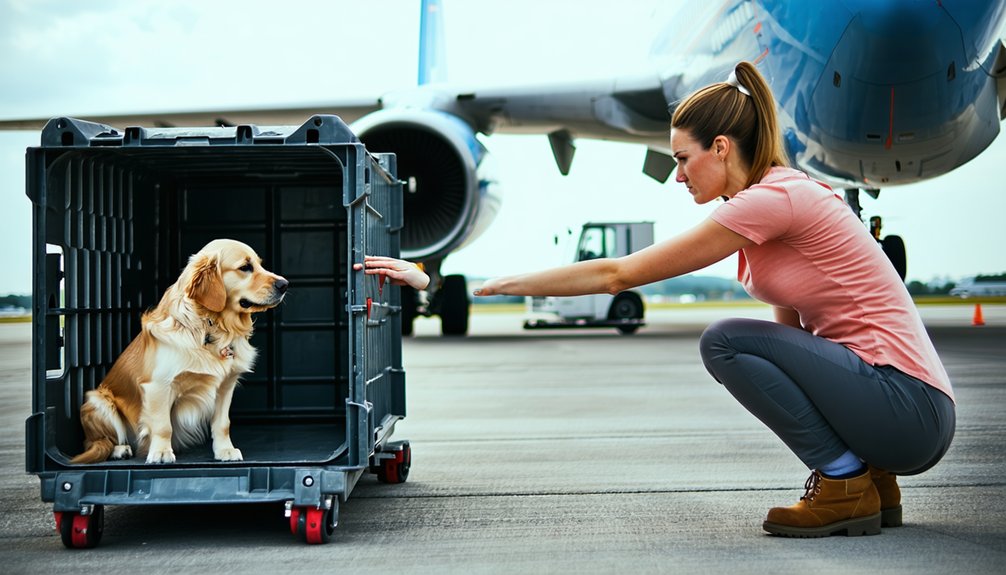
Because every connection adds another transfer point, multi-leg itineraries multiply the cumulative risk your dog faces in cargo. Each additional takeoff and landing cycle increases the chance of misrouting, mishandling, or pet–owner separation, since most loading errors happen during Ground Handling Procedures between flights. US DOT complaints confirm these incidents aren’t rare.
Layovers also expose your dog to unconditioned spaces outside Temperature Control Zones—transfer carts, staging areas, and tarmacs—where heat and cold stress intensify. Brachycephalic and medically compromised dogs face heightened danger here.
Beyond environmental risk, every leg compounds stress through noise, vibration, and pressure changes. Longer door-to-door times mean extended confinement without water, food, or elimination. Understanding these risks helps you protect the companion who depends on you.
Book Nonstop First, Connections as a Last Resort
Whenever your route allows it, book a nonstop flight—it’s the single most effective way to protect a dog traveling in cargo.
Direct routing eliminates the intermediate loading and unloading cycles that increase stress, mishandling risk, and exposure to extreme tarmac temperatures.
Fewer takeoffs and landings also mean fewer pressure changes, which matters especially for brachycephalic breeds and dogs with respiratory issues.
Make direct routing priority your primary filter, treating cost and personal convenience as secondary concerns.
Nonstop availability planning means booking early, since many airlines cap how many animals they accept per flight.
Choose a longer nonstop over multiple shorter segments—it lowers your dog’s overall stress load.
Reserve connections only when no nonstop exists, and you’ll keep your companion safer throughout the travel.
Call the Airline’s Cargo Desk Before You Pay
Before you enter a credit card number, pick up the phone and call the airline’s cargo desk directly. This prepay verification step protects you from booking an itinerary your dog can’t legally fly.
Confirm the airline still accepts live animals in cargo on your exact route, aircraft, and date—and that service runs on both segments, not just the long-haul leg.
Ask about embargo dates tied to heat, cold, or holidays, and whether interline or codeshare connections are allowed.
Verify kennel slot availability, since holds carry fewer animal slots than kennel spaces.
Confirm your dog’s breed, plus combined weight and crate dimensions, meet each aircraft’s limits.
Smart travelers like you call 2–4 weeks ahead, avoiding heartbreaking last-minute denials at check-in.
Choose an IATA-Compliant Crate for Cargo Travel
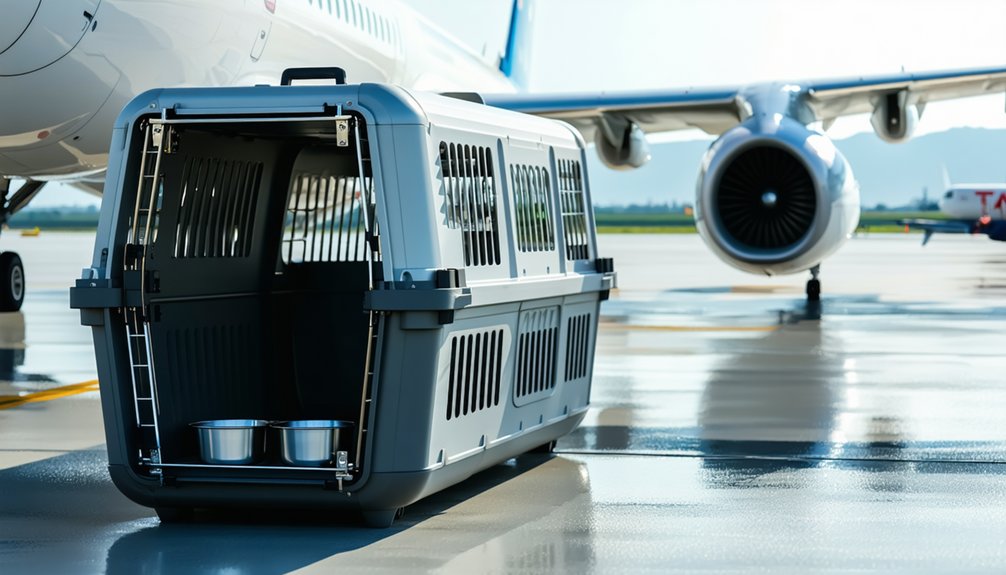
The crate is the single most important piece of equipment you’ll buy for cargo travel, and airlines will reject a non-compliant one at check-in. Choose rigid, weatherproof materials like fiberglass, metal, rigid plastic, or plywood, with a solid roof and leak-proof floor.
Join the top and bottom with metal bolts, never plastic clips.
Your door reinforcement criteria matter: insist on a single metal or reinforced mesh door with openings under 1 inch and pins extending 5/8 inch above and below the frame.
Size it so your dog stands, turns, and lies down naturally.
Add crate padding and absorbent bedding to limit sliding.
Make sure ventilation covers 16% of the surface across at least three sides.
Pass your own airline approval checks before you arrive—you belong in that line, prepared.
Get the Vet Exam and Health Certificate Done
Because cargo travel demands proof that your dog’s fit to fly, you’ll need a veterinary exam and an official health certificate before you reach the airport.
Schedule veterinary timeline carefully: book your pre-travel exam at least a month out, allowing time for vaccines, titers, and any waiting periods.
Most airlines require certificates issued 10 days or fewer before departure, so timing matters.
Use a USDA-accredited veterinarian, since official travel certificates and endorsements depend on it.
Your vet will confirm vaccine compliance—especially rabies—and attest your dog shows no fever, vomiting, diarrhea, or respiratory distress.
For connecting flights, make sure every leg falls within the certificate’s validity window, or you may need additional documentation.
Cross-check airline, USDA, and destination rules so you and your dog travel together, confidently.
Feed and Water Your Dog Before Check-In
With your dog’s paperwork in order, you’ll turn your attention to feeding and hydration timing—two factors that directly affect comfort and safety in cargo.
Offer a light, familiar meal about 2 to 4 hours before dispatch, never at the airport. A full stomach raises the risk of nausea, vomiting, or crate accidents during transit, so keep portions small and easy to digest.
Skip heavy, spicy, salty, or high-fat foods that increase thirst and discomfort.
For hydration timing, keep fresh water available right up to departure, then empty the bowl before check-in to reduce spills. A spill-resistant bowl supports crate comfort on longer connections.
Walk your dog and allow toileting before check-in. If your vet’s plan differs because of age, size, or health, follow it instead.
Pick Connections With Enough Layover Time
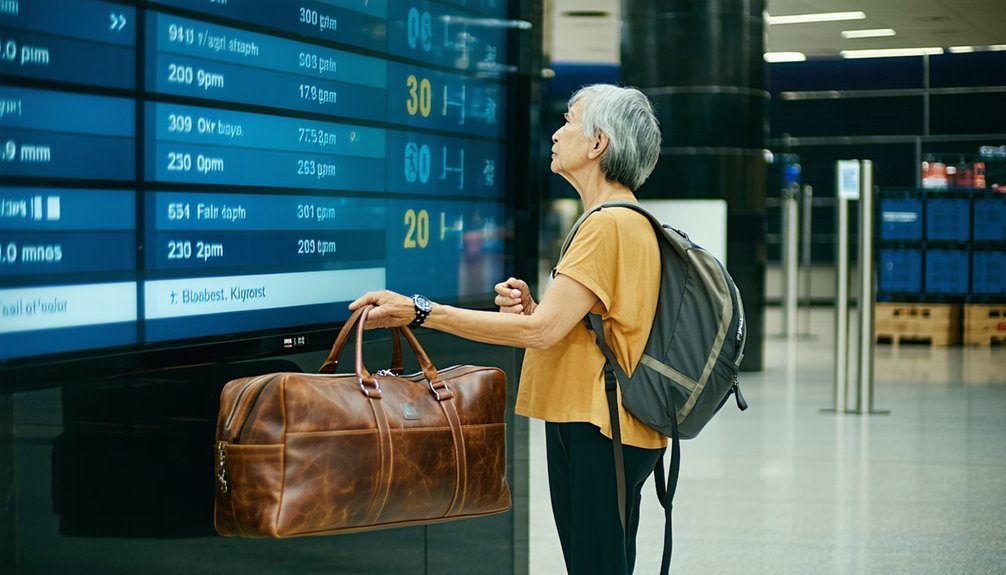
Layover length is the variable that makes or breaks a connecting flight with your dog in cargo. Aim for a layover buffer of 2.5–4 hours, which gives handlers time for unloading, security transfer, and contingency planning when minor delays hit. Avoid anything under 90–120 minutes, especially at congested hubs where rushed handling and tarmac exposure spike risk.
| Layover Scenario | Recommended Buffer |
|---|---|
| Same airline, domestic | 2.5–4 hours |
| Alaska/inter-island Hawaiian | 2 hours minimum |
| International segments | 4+ hours |
| Maximum (Alaska Pet Connect) | 6 hours |
Don’t exceed 6 hours without pre-arranged kenneling, and treat 12–24 hour gaps as stopovers that trigger re-check, fees, and fresh documentation. Pick connections that protect your dog and keep you both moving safely together.
Ask Who Moves Your Dog Between Planes
Once you’ve locked in a layover with enough buffer, find out exactly who’s responsible for moving your dog between planes.
At most airports, ground handling staff—not flight attendants—manage these transfers, so confirm cargo department oversight at each connection point.
Ask whether the airline uses its own ramp crew or a third-party contractor, since procedures vary.
Verify handoff protocol between segments: responsibility shifts to the operating carrier of your onward flight once your dog’s offloaded and scanned into its system.
Ask ramp team how they document chain of custody, typically through air waybills tagged “AVI” for live animals.
Request live animal training confirmation, ensuring the crew knows careful loading, climate-controlled transport, and orientation labels.
You belong asking these questions—they protect your dog throughout.
Arrive Early and Confirm Cargo Check-In
In the hours before departure, you’ll want to reach the cargo facility early enough to clear check-in without rushing. Most airlines accept cargo pets 2–4 hours before departure, so aim for about three hours for domestic flights and up to five for international ones—early, but never beyond the maximum window.
Reconfirm your reservation with the cargo division 48 hours ahead, since pet spaces are limited and embargoes can shift acceptance.
- Confirm your drop-off time and exact cargo location directly
- Bring document originals, not copies, including the endorsed health certificate
- Verify crate labeling shows your name, contact, and destination
- Empty the crate water dish before handing it over
- Organize microchip and vaccination records for quick review
You belong here—prepared, calm, and ready together.
Build Buffer Time for the Connection
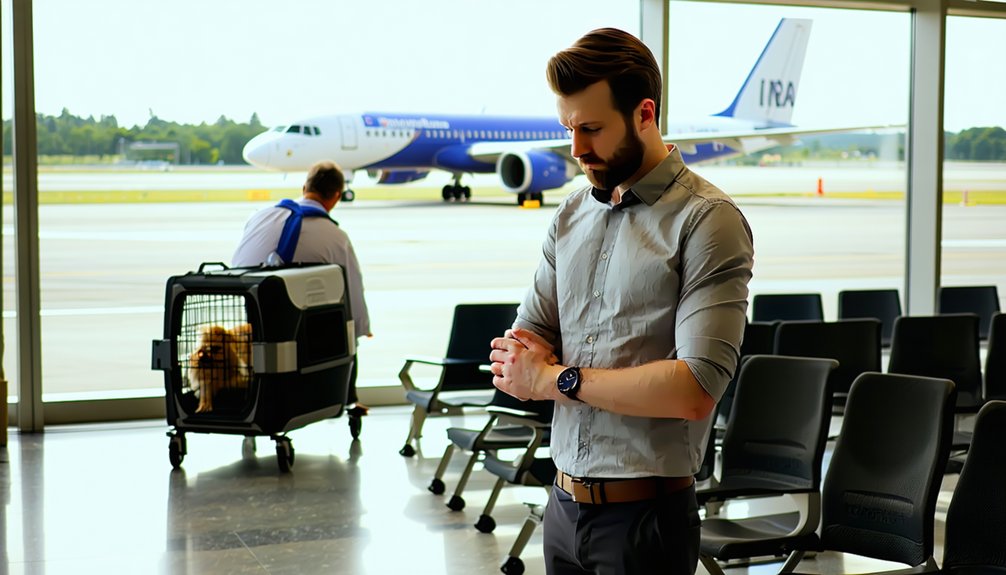
Now that you’ve confirmed cargo check-in, turn your attention to the gap between flights. You’ll want a minimum connection time of 2–3 hours when your dog travels as manifest cargo.
Connections under 90 minutes raise the risk of missed transfers, especially at major hubs like DFW, ATL, FRA, AMS, and LHR, where ramp congestion and longer kennel transfers eat up precious minutes.
Cargo teams typically need 30–60 minutes just to unload, document, and re-transfer your dog.
A longer layover also protects against holding delays during disruptions and lets staff reschedule within safe temperature windows if ground temps spike.
Like the many pet owners who’ve learned this firsthand, you’ll find that choosing the longest practical legal connection keeps your dog safe and on schedule.
What if Your Dog Misses the Connection?
If your dog misses a connection, the airline’s cargo or live-animal desk usually rebooks the animal on the next suitable flight—often before you’ve even reached a staff member. Your dog stays in a secure, climate-controlled facility, never on the ramp or carousel.
Because pet records live in separate systems, you’ll want to contact both customer service and the cargo desk to confirm your dog’s status and location.
- Locate your dog via the air waybill or record locator
- Confirm rebooking limits tied to breed, species, and temperature
- Request emergency welfare checks for distress, heat, or cold
- Verify crate integrity verification during every handling step
- Ask about overnight kenneling if same-day routing isn’t possible
You’re not alone—trained handlers and 24/7 hotlines support you throughout.
Check Your Dog the Moment You Land
The moment your plane touches down, your priority shifts to locating and verifying your dog. Head directly to the oversize baggage or live animal collection area—most airlines won’t deliver animals to standard carousels.
Confirm the flight number, airway bill or tag number, and the name on the kennel tags before staff release your dog. Inspect the kennel for “Live Animal” markings, upright arrows, and intact latches.
Once you’ve got your dog, perform an immediate health check: confirm alertness, the ability to stand, and normal responsiveness. Watch for heat stress, respiratory distress, trembling, or pale gums.
Conduct a hydration assessment, since holds can cause mild dehydration, and offer fresh water in small amounts. If you spot serious signs, request airport veterinary contact before leaving.
Frequently Asked Questions
Are Certain Dog Breeds Banned From Flying in Cargo?
Yes, certain breeds are banned. You’ll find breed restrictions targeting brachycephalic dogs—Bulldogs, Pugs, Boxers—plus strong-jawed types like Pit Bulls. Many airlines enforce cargo only rules covering dogs and cats, so check your carrier’s policy before booking.
How Much Does Shipping a Dog in Cargo Cost?
You’ll typically pay $300–$1,500 domestically and $1,500–$6,000+ internationally. Like fellow pet parents, you’ll factor airline fees, crate costs, vet certificates, and seasonal pricing into your budget—large dogs and complex routes push costs higher.
Can I Track My Dog’s Location During the Flight?
You can’t rely on GPS tracking options mid-flight—signals can’t escape metal cargo holds. Instead, you’ll follow your pup’s trip through flight status updates using your AWB number on the airline’s cargo site, just like fellow pet parents do.
Is Pet Travel Insurance Worth Buying for Cargo Flights?
You’ll find it’s worth it for long-haul connections. Pair clear carrier selection, a documentation checklist for cargo, and contingency planning. Insurance offsets arrival delays mitigation costs, protecting fellow pet parents from vet bills exceeding airline liability caps.
What Temperature Embargoes Apply to Pets Traveling in Cargo?
You’ll face embargoes when temperatures exceed 85°F or drop below 45°F at any airport. Below 20°F, carriers refuse pets entirely. Follow crate labeling standards and research emergency veterinary options at connections, joining travelers who plan ahead confidently.
Conclusion
Handling a connecting flight with your dog in cargo isn’t impossible—it just demands planning. Book nonstop when you can, but when you can’t, call the cargo desk, choose an IATA-compliant crate, and secure your health certificate early. Arrive ahead of schedule, build in a generous buffer, and know your options if your dog misses the connection. Check on them the moment you land. Do this right, and you’ll both arrive safe.
References
- https://www.youtube.com/watch?v=G3q3IfmYGWA
- https://www.transportation.gov/airconsumer/plane-talk-traveling-animals
- https://www.aa.com/i18n/travel-info/special-assistance/pets.jsp
- https://dogtripguide.com/blog/flying-dog-in-cargo-guide/
- https://www.transportation.gov/airconsumer/flying_with_pet
- https://www.alaskacargo.com/petconnect/how-to-transport
- https://www.aacargo.com/learn/animals.html
- https://www.youtube.com/watch?v=79tZMJU-HB4
- https://www.petrelocation.com/blog/post/dog-air-travel-cargo-or-checked-baggage
- https://www.iata.org/en/programs/cargo/live-animals/pets/