Picture this: you’re standing at the gate, boarding pass in hand, and your dog can’t hear the flight attendant’s voice or see the crowd shifting around her. She can’t rely on the two senses most dogs use to read a room, so she’s reading you instead—your grip on the leash, the tension in your shoulders, the rhythm of your breathing.
For deaf and blind dogs, air travel isn’t just stressful. It’s a sensory puzzle that most travel guides never bother to solve because they’re written for dogs who can hear the boarding announcement or see you walking toward the carrier.
If you’re prepping for a flight with a dog who’s deaf, blind, or both, you already know the standard checklists fall short. This guide fills in the gaps: the communication systems, gear adjustments, and airport-day details that make the difference between a dog who copes and a dog who genuinely feels safe.
- Deaf and blind dogs need touch-based cues instead of verbal commands—build this system weeks before travel day, not at the gate.
- A vet visit, updated microchip info, and clear ID tags stating your dog’s sensory status are non-negotiable before flying.
- Cabin travel is almost always safer than cargo for sensory-impaired dogs; choose airlines and flights with this in mind.
- Pack scent-familiar bedding and use a snug, well-padded carrier to reduce disorientation during takeoff and turbulence.
- Run practice sessions that mimic airport noise, vibration, and stranger contact—this is the step most guides skip entirely.
- Plan for a longer decompression window after landing, since sensory-impaired dogs tire faster from processing an unfamiliar environment.
Why Flying Hits Deaf and Blind Dogs Differently
Hearing and sighted dogs pick up dozens of small environmental cues during travel—the overhead announcement, the flight attendant’s approaching footsteps, the shift in light as the cabin door opens. Those cues, even when they’re a little scary, give a dog information. Information reduces panic.
A deaf or blind dog doesn’t get that early warning system. Instead, they lean heavily on touch, vibration, and scent. That means the airport experience—vibrating floors, sudden hands from TSA agents, unfamiliar surfaces underfoot—lands differently. It’s not that these dogs are more fragile. It’s that they’re processing the same chaotic environment with fewer inputs, so your job is to become their missing sense.
This is also why cookie-cutter pet travel advice (“just talk to your dog in a soothing voice” or “let them see you’re calm”) doesn’t fully apply. A deaf dog can’t hear soothing tones. A blind dog can’t see your calm face. You need a different toolkit, and that toolkit works best when it’s built well before you ever get to security.
Step One: The Vet Visit You Can’t Skip
Every pet travel guide tells you to see a vet before flying. Fewer explain what’s specifically worth discussing when your dog is deaf or blind.
- Confirm airline-required health documentation. Most airlines want a health certificate issued within 10 days of travel. Ask your vet to note any relevant sensory condition on the paperwork in case ground staff have questions.
- Discuss breed-related risk factors. Many congenitally deaf dogs are from breeds with piebald or merle coloring—Australian Shepherds, Dalmatians, and some herding breeds—and may have other health considerations worth flagging before a flight. Many blind dogs are seniors or have progressive eye conditions, so ask whether their general health supports the stress of travel.
- Talk through anxiety support honestly. Some dogs benefit from vet-approved calming approaches for travel days; this is a conversation to have directly with your veterinarian rather than guessing, since not every product or approach is appropriate for every dog.
- Update the microchip and get travel-specific tags. This matters more for sensory-impaired dogs because if they slip a leash in an unfamiliar airport, they can’t hear you calling or see you waving. A tag that says “I’m deaf, please don’t chase—call this number” or “I’m blind, approach slowly” can prevent a stranger from making the situation worse.
Choosing the Right Flight and Airline
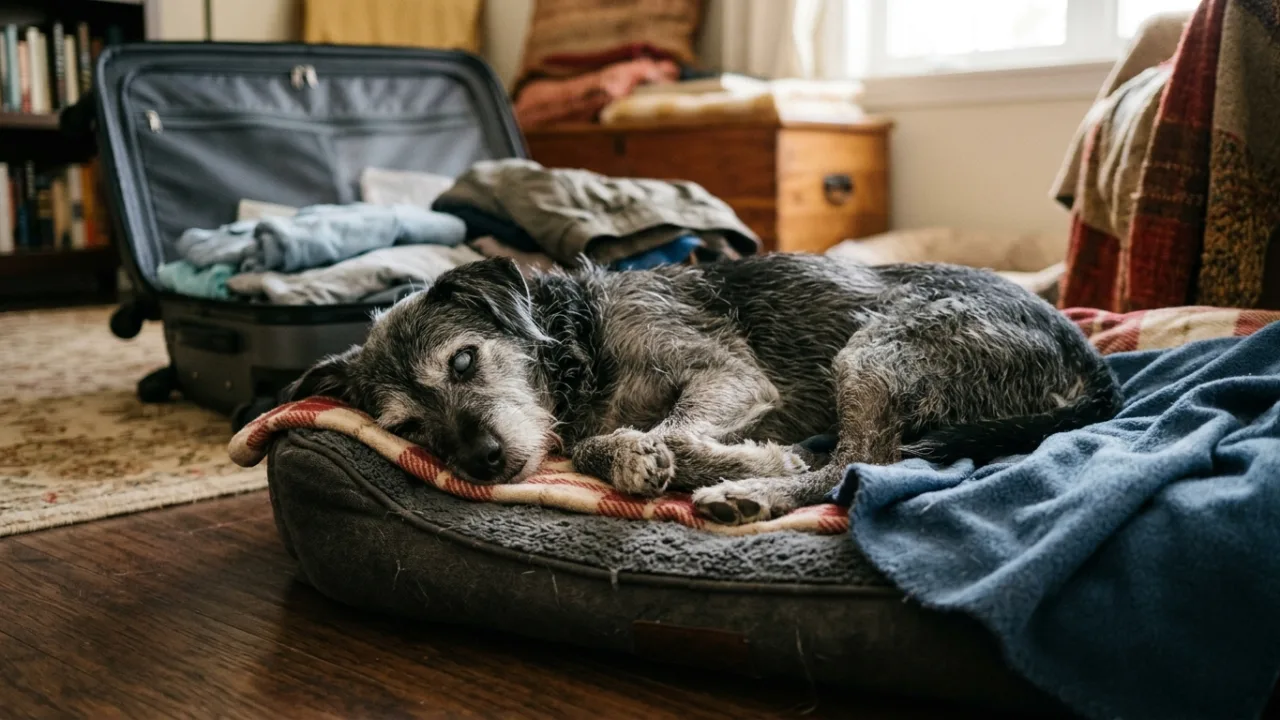
Not all flights are created equal for a dog who can’t hear or see what’s coming. Here’s how the major considerations stack up when you’re booking specifically for a sensory-impaired dog.
| Factor | Why It Matters More for Deaf/Blind Dogs | What to Look For |
|---|---|---|
| Cabin vs. cargo | Cargo removes your dog from the one source of reassurance they have left—your presence | Cabin travel whenever your dog’s size allows it |
| Direct vs. connecting | Layovers mean repeated unfamiliar environments and re-orientation each time | Direct flights, even if slightly more expensive |
| Time of day | Crowded, loud terminals increase vibration and foot traffic that a deaf or blind dog can’t anticipate | Early morning or late evening flights with lighter terminal traffic |
| Airline pet policy flexibility | Some airlines allow pre-boarding or extra settling time, which matters when a dog needs longer to adjust | Airlines that allow early boarding or advance notice for special needs pets |
| Seat location (cabin) | Aisle and window seats have more foot traffic and light changes than a bulkhead or window seat away from the aisle | Window seat, away from the aisle and galley |
Cabin vs. Cargo: A Quick Pros and Cons Look
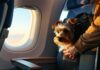
- Cabin travel pros: Your dog stays with you, can feel your touch, and avoids the loudest, most vibration-heavy part of the aircraft. This is almost always the better choice for sensory-impaired dogs when size limits allow it.
- Cabin travel cons: Limited to smaller dogs under most airline weight and carrier-size rules; still involves noise and unfamiliar smells in a confined space.
- Cargo travel pros: Sometimes the only legal option for larger dogs.
- Cargo travel cons: No physical reassurance, more extreme temperature and pressure swings, and total sensory isolation from the one source of comfort your dog has. For a dog who already can’t hear or see, this is a significant added stressor that most guides underplay.
If your dog’s size means cargo is the only legal option, talk to your vet and the airline well in advance about what accommodations exist, and weigh whether driving or a pet relocation service might be a gentler alternative for that specific dog.
Crate and Carrier Prep for Sensory-Impaired Dogs
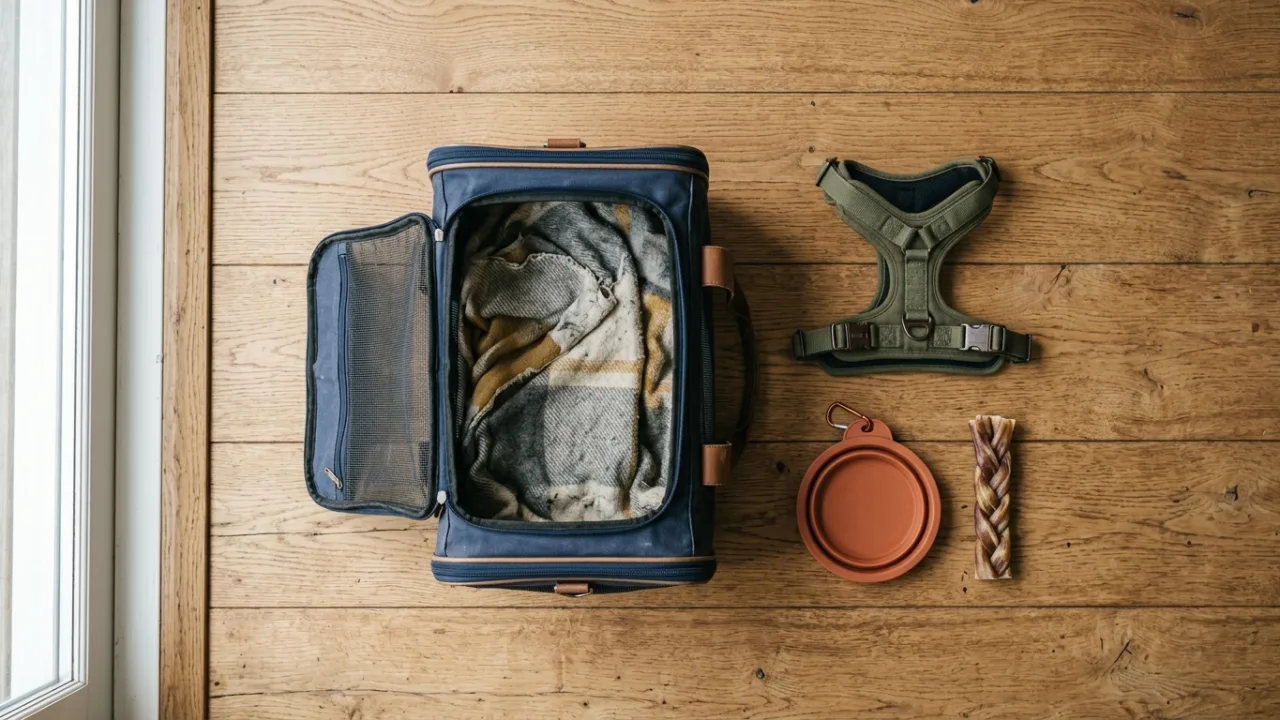
The carrier becomes your dog’s entire world for the duration of the flight, so it needs to do more than meet size requirements.
- Choose snug over spacious. A carrier that’s slightly form-fitting (while still allowing your dog to turn around and lie down comfortably) provides gentle pressure on all sides, which many dogs—especially those missing a sensory input—find calming. Too much empty space can feel disorienting rather than freeing.
- Add scent-familiar bedding. An unwashed shirt you’ve worn or a blanket from your dog’s usual sleeping spot carries your scent and home scent, which becomes a major grounding tool for a dog who can’t see or hear familiar surroundings.
- Skip anything brand new. Never introduce a new carrier, harness, or bedding on travel day. Every piece of gear should already smell familiar and feel familiar under your dog’s paws.
- Line the bottom with a non-slip mat. Turbulence and taxiing create small jolts a blind dog can’t brace for visually, and a deaf dog can’t anticipate audibly. A grippy surface reduces sliding, which reduces panic.
Building a Non-Verbal Communication System
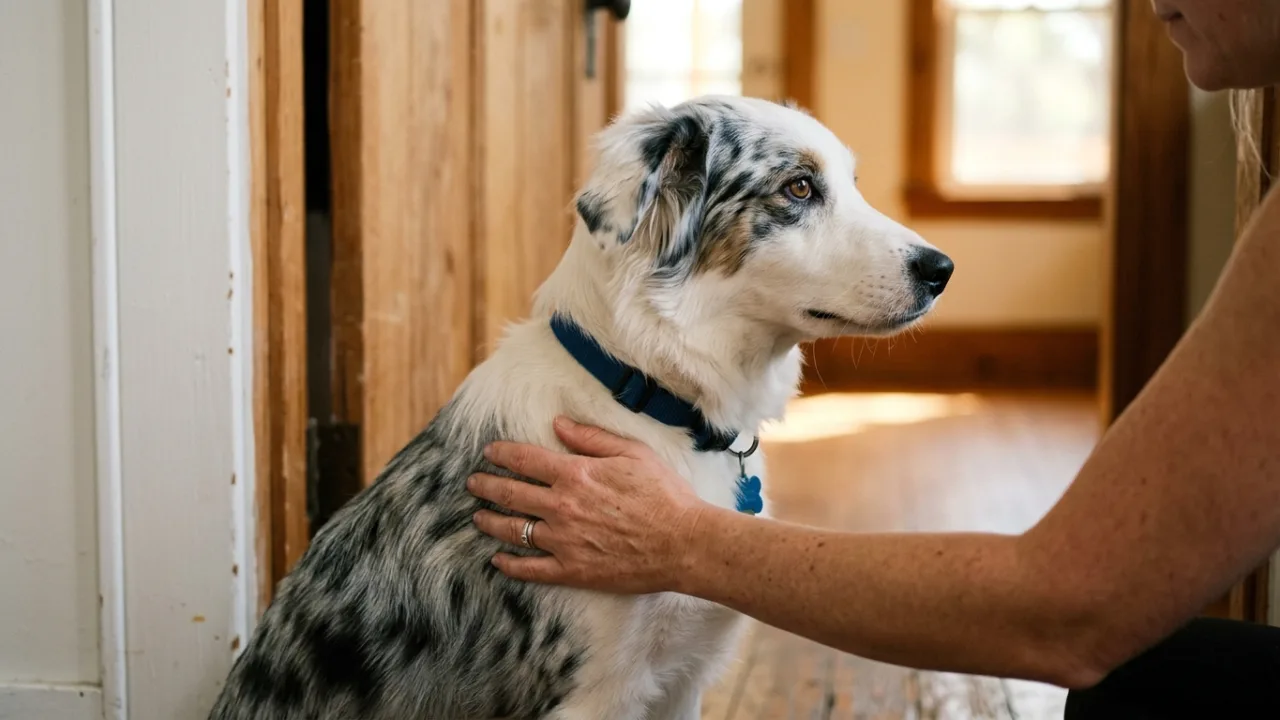
This is the section most flying guides skip entirely, and it’s arguably the most important. If your dog already has an established touch-based communication system at home, travel day is simply an extension of it. If not, start building one immediately.
For Deaf Dogs
- Consistent tap patterns. A light double-tap on the shoulder before you touch or move your dog prevents startling. Startling a deaf dog who’s already anxious can escalate fear quickly.
- Vibration collars used only as an alert, never a correction. Some deaf dog owners use a vibration collar to get attention from a distance in daily life. If your dog is already trained to this, it can be a useful cue during travel to redirect focus—just make sure it’s never paired with anything punishing, since travel is stressful enough already.
- Hand signals for basic commands. If your dog knows a hand signal for “sit” or “stay,” rehearse it in dim lighting and while your dog is inside the carrier, since airport lighting and carrier visibility differ from home.
For Blind Dogs
- A verbal cue before touch. Even though your dog can’t see you approach, a consistent word said just before contact (“touch” or their name) prevents the startle of an unexpected hand.
- Textured cues on the harness or leash. Some owners attach a small textured tag near the handle so the dog associates a light tug pattern with “we’re moving now” versus “we’re stopping.”
- Keep the same handler for the whole trip. Blind dogs often build strong associations with a specific person’s gait, scent, and hand pressure. Switching handlers mid-trip removes a major point of stability.
The Weeks Before: Practice Runs Most Guides Skip
Standard pet travel advice says “get your dog used to the carrier.” That’s true but incomplete (see: airline rules and travel options) for a dog who can’t hear or see what’s coming. Here’s what a fuller practice routine looks like.
- Simulate vibration and motion. Car rides help, but also try rolling the carrier over different surfaces—tile, carpet, gravel—so your dog experiences varied vibration patterns similar to airport flooring and jet bridges.
- Practice extended carrier time. Work up to two or three hours of calm carrier time at home, since that’s roughly what many domestic flights require door-to-door once boarding, taxiing, and deplaning are factored in.
- Desensitize to unfamiliar hands. Ask friends or neighbors to gently touch your dog’s carrier or, if appropriate, your dog directly, using the same tap-before-touch or verbal-cue-before-touch system you’ll use at security. TSA agents and airline staff are strangers your dog can’t see or hear coming, so this rehearsal matters.
- Rehearse the exact gear you’ll use. Harness, leash, carrier, and any collar accessories should all be the same items your dog practices with—not upgraded or swapped right before the trip.
Airport Day: A Detailed Walkthrough
Check-In and Security
Arrive earlier than you think you need to. Rushing transmits tension through the leash and your body language, which is one of the few signals your dog can still pick up.
At security, most airlines and screening protocols require you to remove your dog from the carrier briefly. Because your dog can’t hear the agent’s instructions or see the scanner, stay in physical contact as much as regulations allow (see: clear a TSA checkpoint smoothly), and use your established touch cue before handing your dog over for any required pat-down or additional screening.
Boarding
Ask the gate agent about early or family boarding if your dog is flying in the cabin. Extra time to settle into the carrier before the aisle fills with passengers reduces the number of unexpected leg-bumps and rolling suitcase vibrations your dog has to process at once.
In-Flight: Keeping Calm Without Sight or Sound
- Keep a hand resting on or near the carrier during takeoff and landing, the two most vibration-heavy phases of flight.
- Avoid opening the carrier mid-flight unless necessary. The temptation to comfort your dog by letting them out is understandable, but a startled dog loose in a cabin is a bigger risk for a dog who can’t reliably see or hear your recall cue.
- Offer a small chew or lick mat treat during pressure changes. Chewing and swallowing help regulate ear pressure the way yawning does for people, and it gives your dog something to focus on since they can’t anticipate the pressure shift by watching other passengers’ reactions.
- Keep the scent-familiar item in place throughout the flight rather than removing it for cleanliness reasons mid-trip. Consistency matters more than a fresh-smelling blanket right now.
Common Mistakes to Avoid
- Assuming verbal reassurance works. Talking softly to a deaf dog does nothing; talking to a blind dog while out of touch range does nothing either. Reassurance has to be physical or scent-based for these dogs.
- Skipping practice runs. The airport is not the place for your dog’s first experience with strangers touching their carrier or with hours of confinement.
- Introducing new gear on travel day. New harnesses, new carriers, and new bedding all smell and feel unfamiliar—exactly what you’re trying to avoid.
- Underestimating layovers. Every connection is a new environment your dog has to re-orient to without the benefit of seeing or hearing what’s happening around them.
- Forgetting sensory-specific ID. Standard tags don’t tell a stranger your dog is deaf or blind, which matters enormously if your dog ever gets separated from you in a crowded terminal.
- Rushing the post-flight transition. Expecting your dog to be immediately fine after landing ignores how much sensory processing they just did with limited input.
After Landing: The Recovery Window
Sensory-impaired dogs often need more decompression time after travel than dogs who could see or hear their way through the experience and mentally “file it away” as it happened.
Once you’re through baggage claim, find a quiet corner before heading into a crowded pickup area or rideshare line. Let your dog sniff the ground, reorient with their nose, and settle before the next transition.
Keep the first few hours at your destination low-key: familiar bedding, familiar food, and minimal new introductions. A dog who seems unusually tired or clingy the day after a flight isn’t being dramatic—they’ve just done a lot of extra sensory work to stay oriented.
Expert Insight
Trainers who specialize in deaf and blind dogs consistently emphasize one theme: consistency of touch and scent does more heavy lifting than any single piece of gear.
A well-fitted harness matters, but a dog who trusts your hand signals and recognizes your scent under stress will generally cope better than a dog with premium gear but no rehearsed communication system.
If you only have time to prepare one thing before a flight, prioritize the touch-and-scent routine over the shopping list.
Quick-Reference Packing List
- Health certificate and any sensory-condition documentation
- Updated ID tags noting deaf or blind status, plus a working microchip registration
- Familiar carrier, harness, and leash (nothing new)
- Scent-familiar bedding or an unwashed worn shirt
- Long-lasting chew or lick mat treat for pressure changes
- Non-slip mat for the carrier bottom
- Any vet-approved calming support, only if discussed in advance
- Water and a collapsible bowl for post-flight rehydration
Conclusion
Flying with a deaf or blind dog isn’t harder because your dog is somehow more fragile—it’s harder because most travel advice assumes a dog who can hear the announcements and see you coming.
Once you build a touch-and-scent-based communication system, choose your flight with sensory load in mind, and rehearse the actual experience well before departure, you’re not improvising at the gate.
You’re running a plan your dog already understands. That’s the real difference between a stressful flight and one your dog handles with quiet confidence.
If you’re gearing up for your first flight with a sensory-impaired dog, start the touch-cue and carrier practice this week, not the week of your trip. Small, repeated rehearsals now save both of you a lot of stress later—and if you found this guide helpful, explore more of All Happy Pets’ air travel resources before you book.
Frequently Asked Questions
Can a deaf or blind dog fly in the cabin like any other dog?
Yes, as long as your dog meets the airline’s size and carrier requirements, sensory status alone doesn’t disqualify them from cabin travel. In fact, cabin travel is generally the better choice for deaf or blind dogs because it keeps them close to you, their main source of comfort and orientation during an unfamiliar experience.
How do I calm a deaf dog during turbulence if I can’t talk to them?
Rely on touch instead of voice. Keep a steady hand resting on the carrier or your dog’s body, use whatever tap or pressure cue you’ve already established at home, and offer a chew or lick treat to give them something physical to focus on. Consistent physical contact does the reassurance work that your voice can’t.
Should I use a calming aid or medication for my blind or deaf dog’s flight?
Only after discussing it directly with your veterinarian. Every dog’s health history is different, and what works safely for one dog may not be appropriate for another. Your vet can help you weigh options based on your dog’s specific condition and travel length.
What should I put on my dog’s ID tag if they’re deaf or blind?
Include a short phrase like ‘I’m deaf, please don’t chase, call this number’ or ‘I’m blind, approach slowly’ along with your phone number. This helps a stranger respond appropriately if your dog is ever separated from you in a busy airport, since standard commands like calling their name won’t work the way they would with a hearing or sighted dog.
Is cargo travel ever a reasonable option for a deaf or blind dog?
It can be the only legal option for larger dogs, but it removes the physical reassurance that sensory-impaired dogs rely on most. If cargo is unavoidable, talk to your vet and the airline about available accommodations well in advance, and consider whether driving or a pet relocation service might be gentler for that specific dog.
How early should I start practicing travel routines with a deaf or blind dog?
Ideally several weeks before the flight. Sensory-impaired dogs benefit from repeated, low-stress exposure to the carrier, handling by unfamiliar people, and extended confinement time, since the airport shouldn’t be their first experience with any of these elements.
Will my dog need extra recovery time after landing?
Many sensory-impaired dogs do need more decompression time than dogs who could see or hear their way through the trip. Plan for a quiet transition period after landing, with familiar bedding and minimal new introductions, rather than heading straight into another busy environment.
Do vibration collars help deaf dogs during air travel?
They can, if your dog is already trained to respond to one in daily life, since it offers a way to get their attention across a distance without touch. It should only ever be used as a neutral attention cue, never as a correction, especially during an already stressful travel day.