TLDR: Neither red-eye nor daytime flights are automatically “less stressful” for every dog — it depends on your dog’s temperament, whether they’re flying in-cabin or in cargo, and how well you prepare them. Red-eye flights tend to have quieter airports, cooler cargo hold temperatures, and calmer cabins, which can help anxious or heat-sensitive dogs. Daytime flights offer better visibility for staff, easier bathroom breaks around the trip, and more available help if something goes wrong — but come with crowds, noise, and heat exposure on the tarmac. For most dogs, how you prepare (crate training, exercise, direct routing, and choosing the right cabin vs. cargo setup) matters more than the clock.
Why “What Time Should I Fly My Dog?” Doesn’t Have One Right Answer
If you’ve been scrolling through forums trying to decide between a red-eye and a daytime flight for your dog, you’ve probably noticed everyone has a strong opinion — and most of them contradict each other.
That’s because the honest answer is: it depends on your specific dog, your specific airline, and whether your pet is riding in the cabin under the seat in front of you or in the cargo hold below.
This isn’t a cop-out answer. Flight timing genuinely does change the stress equation for dogs, but it changes it in different directions depending on the situation. A senior dog with mild anxiety who’s flying in-cabin might do best on a quiet red-eye.
A brachycephalic breed flying in cargo during summer might need a red-eye purely for temperature safety. A confident young dog with no travel anxiety might not notice the difference at all. Let’s break down exactly where the stress comes from, then match that to the right flight time for your situation.
What Actually Stresses Out a Dog on a Plane (It’s Rarely the Flying Itself)
Before comparing red-eye vs daytime flights for dogs, it helps to know what’s actually causing the stress response in the first place. Dogs aren’t afraid of altitude the way some humans are. Their stress usually comes from a cluster of sensory and environmental triggers:
- Unfamiliar, loud noise — jet engines, overhead announcements, crying babies, rolling luggage carts
- Temperature swings — hot tarmacs, cold cargo holds, stuffy terminals
- Confinement in a small crate for hours without the ability to stretch, circle, or fully stand
- Separation from their owner if flying in cargo, or being surrounded by strangers if flying in-cabin
- Crowds and foot traffic brushing past the crate in security lines and boarding gates
- Changes in cabin pressure during takeoff and landing, which some dogs feel more than others
- Disrupted routine — missed meals, skipped potty breaks, unfamiliar smells
Every one of these factors is affected by time of day in some way. That’s the real reason the red-eye vs daytime debate exists — it’s not about the flight itself, it’s about everything surrounding it.
Red-Eye Flights: The Case For and Against Your Dog
Red-eye flights (typically departing late night and landing early morning) have a loyal following among pet owners, and for some good reasons.
Potential Benefits of Red-Eye Flights for Dogs
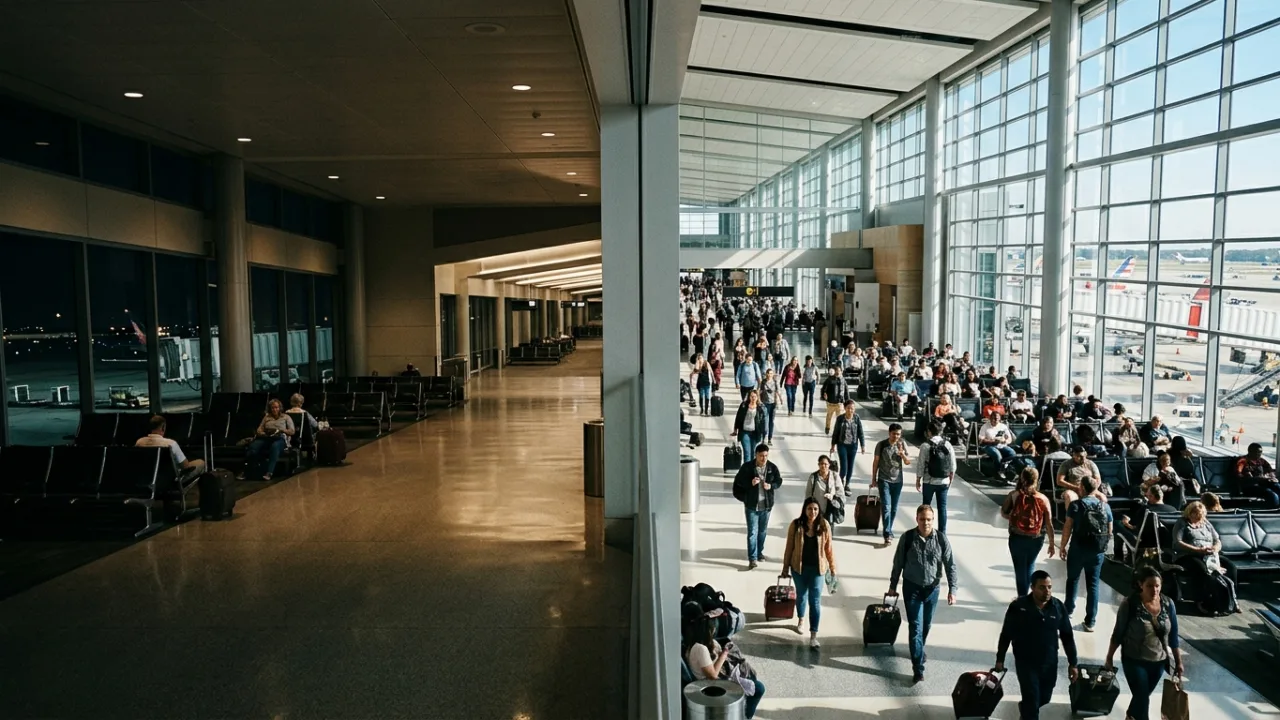
- Quieter airports. Fewer people means less foot traffic near the crate, shorter security lines, and less overall commotion for an anxious dog to process.
- Cooler temperatures on the tarmac. This matters enormously for dogs flying in cargo. Airlines often have summer heat embargoes that block daytime cargo travel entirely, making red-eye or early morning flights the only cargo option in hot months.
- Aligns with a dog’s natural rest cycle. Many dogs are more inclined to sleep at night, and a dim, quiet cabin can encourage them to doze through the flight instead of pacing or whining.
- Calmer cabin energy. Passengers on red-eyes tend to be quieter, dim the cabin lights, and settle in fast — less commotion for an in-cabin dog carrier tucked under the seat.
Potential Downsides of Red-Eye Flights for Dogs
- Disrupted sleep schedule for you both. An overtired, groggy owner is less equipped to notice early signs of stress in their dog.
- Fewer staff and slower response times. If something goes wrong with a cargo shipment overnight, fewer ground staff are on duty to help quickly.
- Cold cargo holds in winter. The same overnight timing that helps in summer can be a problem in cold-weather months, especially for short-haired or small breeds.
- Layover logistics get harder. Overnight layovers can mean longer total confinement time if your dog can’t be let out to potty during a connection.
Daytime Flights: The Case For and Against Your Dog
Daytime flights are the default choice for most travelers, and they come with their own set of trade-offs for a traveling dog.
Potential Benefits of Daytime Flights for Dogs
- More staff and resources available. If a delay, gate change, or cargo issue happens, there are more ground crew and customer service reps on duty to help.
- Easier to schedule around meals and potty breaks. You can plan a walk right before departure and after landing without odd overnight timing.
- Better visibility for handlers. Cargo crews loading and unloading during daylight can more easily spot a distressed animal or a crate issue.
- You’re more alert. Flying during your normal waking hours means you’re sharper and more likely to notice subtle signs of anxiety in your dog.
Potential Downsides of Daytime Flights for Dogs
- Crowded airports and long lines. More foot traffic, more strangers reaching toward the carrier, more overall noise.
- Higher tarmac temperatures. Midday heat on the tarmac is a real risk for cargo-hold dogs, especially in summer, and many airlines restrict cargo pet travel during peak heat hours.
- Busier cabins. More passengers moving around, more overhead bin noise, more announcements — all of which can spike stress for a dog under the seat.
- Fights your dog’s natural rest window. A midday flight can leave a dog wide awake and restless instead of settling in to sleep.
Red-Eye vs Daytime Flights for Dogs: Side-by-Side Comparison
| Factor | Red-Eye Flight | Daytime Flight |
|---|---|---|
| Airport crowd levels | Lower — quieter terminals and shorter lines | Higher — especially mid-morning to early evening |
| Tarmac/cargo hold temperature | Cooler in summer, colder in winter | Hottest in summer midday, milder in winter |
| Staff availability for issues | Reduced overnight staffing | Full staffing, faster response to problems |
| Owner alertness | Lower — fatigue affects your ability to notice stress | Higher — you’re operating on your normal schedule |
| Cabin noise (in-cabin dogs) | Generally quieter, dimmer cabin | Louder, more movement and announcements |
| Alignment with dog’s rest cycle | Often better — encourages sleep | Can leave dog restless and alert |
| Layover complexity | Overnight connections can extend confinement time | Easier to time potty breaks around layovers |
| Best suited for | Anxious dogs, heat-sensitive breeds in summer, calm sleepers | Nervous flyers who need visible support, cold-weather cargo travel, dogs with strict routines |
It Depends on Your Dog: Matching Flight Time to Temperament
Rather than asking “which flight time is less stressful for dogs in general,” the more useful question is which flight time is less stressful for *your* dog. Here’s how that breaks down by type.
Anxious or Noise-Sensitive Dogs
A red-eye is usually the gentler choice. Quieter terminals, shorter security lines, and a dimmer cabin all reduce the sensory overload that triggers panting, pacing, or whining in a nervous dog.
Brachycephalic Breeds (Pugs, Bulldogs, Boxers)
Heat and stress are a dangerous combination for flat-faced breeds because they can’t regulate body temperature as efficiently. Many airlines already restrict these breeds from cargo travel entirely.
If your brachycephalic dog is flying in-cabin, avoid the hottest part of the day for tarmac waits, which usually points toward an early morning or evening flight rather than a peak midday one.
Senior Dogs
Older dogs often do better with predictable routines and may struggle more with disrupted sleep. If your senior dog naturally sleeps through the night, a red-eye can work in your favor. If they’re an early riser who’s groggy overnight, a mid-morning daytime flight might suit them better.
Puppies
Puppies have less bladder control and shorter attention spans. Daytime flights make it far easier to schedule potty breaks and short walks before and after the flight without disrupting their (and your) sleep.
Confident, Well-Traveled Dogs
If your dog has flown before without issue and shows no signs of anxiety around travel, timing matters far less. Choose whatever’s most convenient for your schedule and prioritize a direct flight over a specific departure time.
Cargo Hold Travel: Here, Time of Day Matters More Than Almost Anything Else
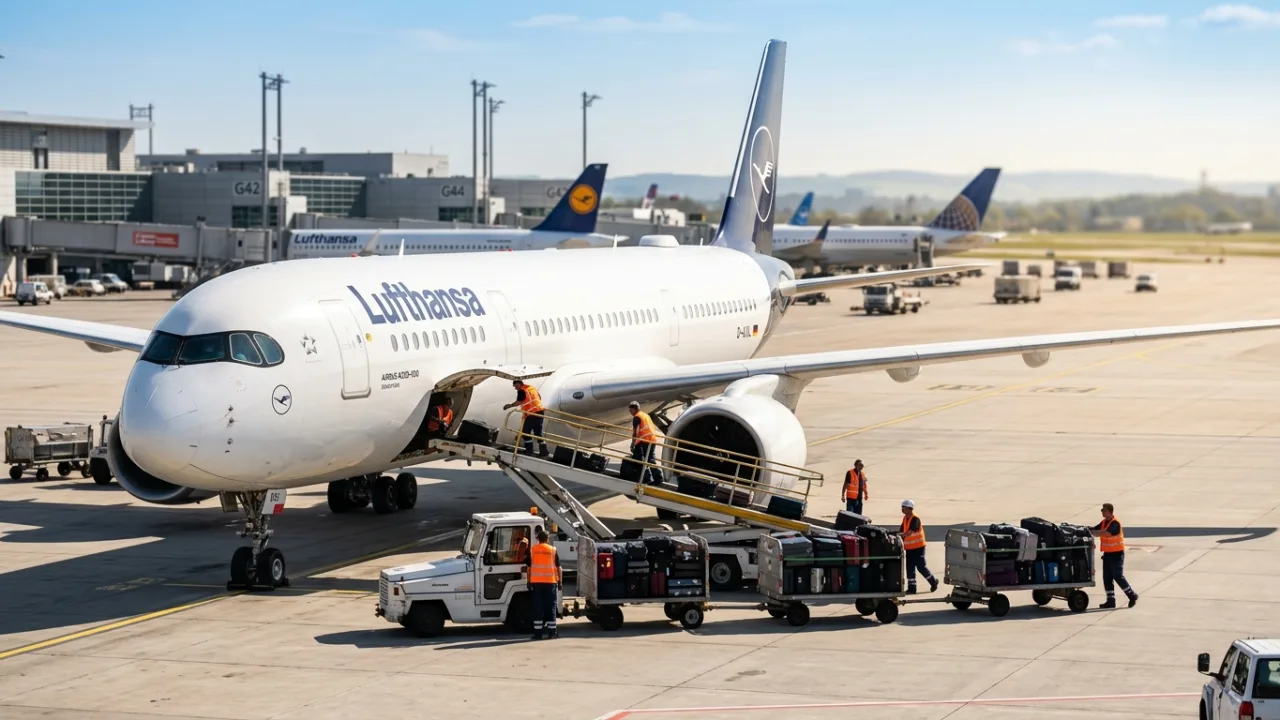
If your dog is flying in the cargo hold rather than in-cabin, the red-eye vs daytime question becomes less about comfort preference and more about physical safety.
Airlines enforce seasonal temperature restrictions for cargo pet travel because the hold and tarmac can reach dangerous temperatures for animals. (see: how cargo holds affect temperature) This is why many airlines shift pet cargo bookings to early morning or overnight departures during summer, and to midday departures during winter, regardless of what’s convenient for passengers.
If your dog must fly in cargo, always check your specific airline’s seasonal pet embargo policy before booking, and let the safest ground temperature — not your personal sleep schedule — dictate the flight time.
Common Mistakes Pet Parents Make When Choosing a Flight Time
- Booking a red-eye purely for a quieter cabin, without checking cargo hold temperature restrictions for the season. A red-eye that’s great for cabin noise in summer might be too cold for cargo travel in winter.
- Assuming a tired dog will sleep through a red-eye. Some dogs actually become more agitated when overtired, not less.
- Choosing a flight time based only on ticket price without factoring in layover length, connection times, or how crowded that route typically gets.
- Skipping a practice run. Owners often pick the “perfect” flight time but never test the crate, carrier, or airport routine beforehand, so the dog is stressed by novelty regardless of timing.
- Overlooking layover time zones. A red-eye that lands at a reasonable hour at home might mean your dog is wide awake and confined during an overnight layover somewhere else.
- Forgetting that airport stress starts before boarding. Security screening, TSA pet policies, and terminal walking distances affect your dog long before the plane doors even close.
Practical Tips to Reduce Stress Regardless of Flight Time
Whichever flight time you choose, these habits do more to lower your dog’s stress than the clock ever will:
- Choose direct flights over connections whenever possible. Every layover adds crowd exposure, noise, and confinement time.
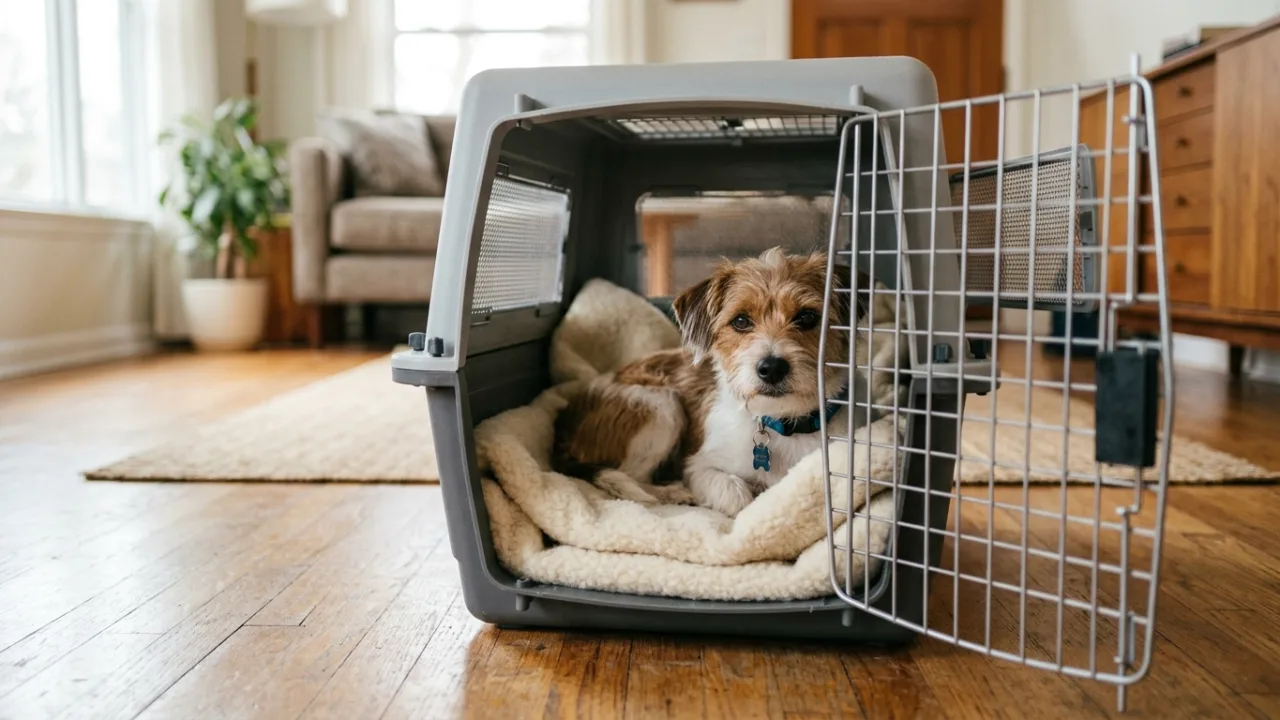
- Crate-train well before travel day. A dog who already sees their crate as a safe, familiar space will handle any flight time better than one experiencing it for the first time at the airport.
- Exercise your dog before heading to the airport. A dog who’s had a good walk or play session is more likely to settle and rest, day or night.
- Skip a heavy meal right before departure to reduce the chance of an upset stomach, but don’t fly on a completely empty stomach either — a light meal a few hours prior is usually the sweet spot.
- Bring something that smells like home — a worn t-shirt or their usual blanket — to line the crate.
- Talk to your veterinarian about calming options if your dog has a history of travel anxiety. Never use sedatives without professional guidance, since some can affect breathing and temperature regulation at altitude.
- Arrive with buffer time, but not excessive time. Too little time creates rushed panic; too much time means extra hours of confinement or overstimulation in a busy terminal.
- Check airline-specific pet policies for your exact route and season rather than relying on general advice, since embargo dates and cabin rules vary by carrier.
Expert Insight: What Experienced Pet Travelers and Vets Generally Recommend
Veterinarians who regularly counsel pet owners before flights tend to emphasize the same theme: the flight time is a secondary factor compared to preparation, temperament matching, and choosing in-cabin travel whenever a dog’s size allows it.
A calm, well-prepared dog on a daytime flight will often do better than an anxious, unprepared dog on a “perfectly timed” red-eye.
Experienced pet-traveling owners also frequently point out that airport behavior — not the flight itself — is where most visible stress shows up, which is why reducing crowd exposure (via red-eye) or having more support staff on hand (via daytime) are the two competing advantages worth weighing against your dog’s specific triggers.
Trade-Offs and Limitations: There’s No Universally “Best” Time
It’s worth being honest about the limits of this comparison. Airline policies vary widely, airport layouts differ, seasonal weather changes the calculation, and every dog has a unique stress profile.
A red-eye that’s ideal for a calm, heat-sensitive Bulldog in July could be a poor choice for the same dog in January. A daytime flight that feels overwhelming at a major international hub might be completely manageable at a small regional airport with light foot traffic.
Use the comparisons in this article as a decision-making framework, not a fixed rule, and always cross-check your specific airline’s current pet travel policy before booking.
Conclusion: So Which Is Actually Less Stressful?
If you need a single takeaway: red-eye flights tend to reduce stress from noise and crowds, while daytime flights tend to reduce stress from heat, staffing gaps, and disrupted routines.
Neither one wins outright — the right choice depends on your dog’s temperament, breed-specific risks, whether they’re flying in-cabin or cargo, and the season you’re traveling in.
The single biggest stress reducer isn’t the departure time at all — it’s how well-prepared, crate-trained, and exercised your dog is before you ever reach the gate.
Before you book, walk through your dog’s specific triggers, check your airline’s seasonal pet policies, and choose the flight time that lines up best with those two things. Your dog will thank you with a calmer trip either way.
Ready to prep for takeoff? Browse more of All Happy Pets’ air travel guides for crate-training checklists, airline pet policy breakdowns, and packing lists to make your dog’s next flight as smooth as possible.
Frequently Asked Questions
Is a red-eye flight less stressful for a dog than a daytime flight?
It depends on your dog. Red-eye flights usually mean quieter airports, shorter lines, and calmer cabins, which helps anxious or noise-sensitive dogs. But daytime flights offer more staff support and better temperature conditions for cargo travel in winter. Neither is universally less stressful — match the flight time to your dog’s specific triggers and travel method.
What time of day is safest for dogs flying in cargo?
Safety depends on the season. In summer, early morning or overnight (red-eye) flights are usually safer because tarmac and cargo hold temperatures are cooler. In winter, midday flights are often safer since overnight cargo holds can get too cold. Always check your airline’s seasonal pet embargo policy before booking.
Do dogs sleep during red-eye flights?
Many dogs are more likely to rest during a red-eye because the cabin is dimmer, quieter, and aligns with a natural nighttime rest cycle. However, some dogs become more agitated when overtired instead of settling down, so results vary by individual temperament.
Are daytime flights better for anxious dogs?
Not usually. Daytime flights tend to have busier airports, longer security lines, and louder cabins, which can increase stress for anxious dogs. A quieter red-eye or off-peak flight is generally gentler for dogs with noise or crowd sensitivity.
Should I sedate my dog for a red-eye or daytime flight?
Sedation isn’t recommended without direct veterinary guidance, since some sedatives can affect breathing and temperature regulation at altitude. If your dog has significant travel anxiety, talk to your vet about safe calming options well before your trip, regardless of which flight time you choose.
Does flight time matter more for in-cabin dogs or cargo dogs?
It matters more for cargo dogs. In-cabin dogs are affected mainly by cabin noise and crowd levels, which change modestly between red-eye and daytime flights. Cargo dogs are directly affected by tarmac and hold temperatures, which shift dramatically by season and time of day, making flight timing a safety issue rather than just a comfort preference.
What matters more than flight time for reducing dog travel stress?
Crate training, pre-flight exercise, choosing direct flights over layovers, and familiarizing your dog with their carrier beforehand generally reduce stress more than the specific departure time. A well-prepared dog on a daytime flight often does better than an unprepared dog on a ‘perfectly timed’ red-eye.
Can weather season change whether a red-eye or daytime flight is better for my dog?
Yes. In summer, red-eye or early morning flights are usually safer and cooler, especially for cargo travel. In winter, daytime flights are often warmer and safer for cargo holds. Always factor in the season alongside your dog’s temperament when choosing a flight time.