Your dog’s cargo hold is pressurized and temperature-controlled, tied into the same system that keeps you comfortable up front. But it won’t match sea-level conditions. Cabin altitude stays around 8,000 feet, so your dog’s blood oxygen can drop roughly 4 percentage points. Temperatures hold near 18–23°C, well within the regulated 7–29°C band. Freezing a healthy dog mid-flight is effectively impossible. The real risks, though, hide somewhere you might not expect.
TLDR Key Takeaways
- Pet cargo holds are pressurized and temperature-controlled, tying into the same environmental system as the passenger cabin for safe breathing conditions.
- Cabin altitude stays around 8,000 feet, lowering alveolar oxygen to about 75 mmHg and reducing blood oxygen saturation by roughly 4 points.
- Compartment temperatures target 7–29°C (45–84°F), making freezing a healthy dog during a properly operated flight effectively impossible.
- Ground handling is the biggest risk, exposing dogs to extreme tarmac heat or cold that can stretch far beyond actual flight time.
- Older or sick dogs with heart or respiratory disease have less reserve to tolerate oxygen, pressure, and temperature shifts during transport.
Are Cargo Holds Pressurized for Dogs?
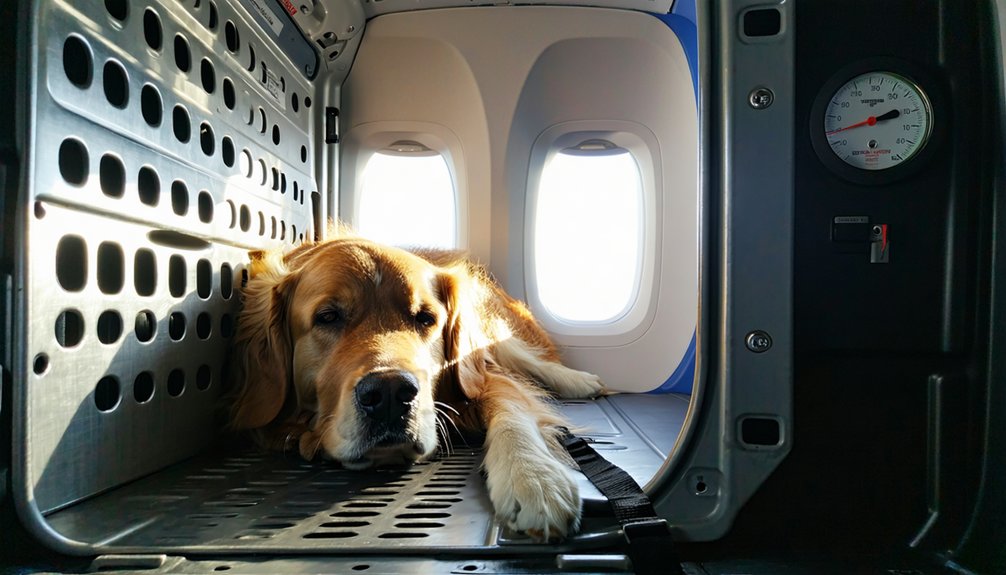
Every cargo hold designated for pets on a modern commercial aircraft is pressurized—not left in a vacuum or open to thin, high-altitude air. These pressurized compartments tie directly into the same environmental control system that keeps you comfortable in the passenger cabin, so your dog breathes the same safe, regulated air you do.
You’re not alone in worrying about this. Regulatory requirements back you up: USDA APHIS rules mandate pressurization whenever the aircraft climbs above 8,000 feet, and live animal standards require adequate airflow and environmental control throughout the flight.
While some cargo areas stay unpressurized, airlines specifically select pet-approved holds because they maintain proper cargo cabin pressure. When you book your dog’s travel, you’re trusting a system designed to protect them.
How Cabin Altitude Affects Your Dog’s Oxygen
Even though that cargo hold stays pressurized, it doesn’t hold sea-level conditions—airlines maintain a cabin altitude of roughly 7,900 to 8,200 feet (about 2,400–2,500 m).
At that height, total pressure drops to around 565 mmHg, and your dog’s alveolar oxygen falls to about 75 mmHg, down from 100 at sea level.
This reduced Cabin Oxygen typically lowers blood oxygen saturation by roughly 4 percentage points.
Thankfully, the oxyhemoglobin dissociation curve means your dog retains substantial saturation despite that dip.
Since dogs share your basic cardiovascular and respiratory physiology, their Hypoxia Tolerance generally handles this mild change well—just like you’d expect from a healthy traveling companion.
Experimental studies confirm dogs compensate by increasing cardiac output, maintaining tissue oxygen delivery even when arterial oxygen content drops.
What Temperature Is Your Dog’s Cargo Hold?
Most modern airliners carry your dog in a pressurized, temperature-controlled compartment that’s heated and managed separately from the unheated baggage holds. You can expect setpoint temperature ranges around 18–23°C (64–73°F)—roughly similar to the passenger cabin you’re sitting in.
Regulations push that comfort zone further, with IATA and US APHIS rules targeting 7–29°C (45–84°F) and prohibiting exposure outside that band for more than four hours.
In flight, freezing a healthy dog in a properly operated hold is effectively impossible. Your real concern is ramp heat exposure during loading, unloading, and tarmac delays, where ambient extremes replace controlled temperatures.
That’s why airlines enforce hot and cold cutoffs—often refusing transport above 29°C or below 7°C—keeping your companion safely within the family.
Which Cargo Hold Carries Your Dog?
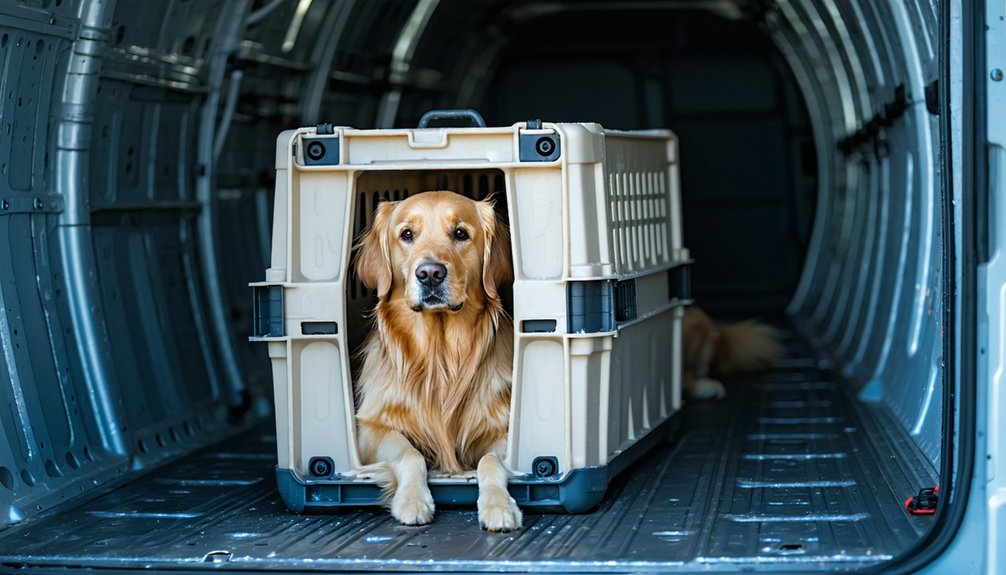
Now that you know the hold stays pressurized and climate-controlled, let’s pin down exactly where your dog rides. On narrow-body aircraft like the Boeing 737, your dog travels in the belly of the plane—the lower fuselage.
The wings and engine housing split this space into forward and rear sections, and your dog’s crate rides alongside checked luggage and freight.
Here’s what you need to know about placement:
- Location varies by aircraft type, but the lower belly is standard.
- Crates load with checked baggage and other freight.
- The hold stays operationally separate from the cabin.
- Belief vs policy matters—don’t assume; verify.
Always get booking confirmation in writing, since acceptance remains carrier-specific. Some airlines won’t accept pets as cargo at all.
The Rules That Protect Dogs in Cargo
Because your dog can’t speak up for itself in the hold, regulators have written the rules that do.
U.S. animal welfare rules cap cargo temperatures at 85 °F and 45 °F, with no more than four hours at either extreme, guarding against heat stress.
Cargo areas must stay pressurized above 8,000 feet and supply enough air for normal breathing, while engine exhaust stays out.
To meet your dog’s hydration needs, longer trips require secured, refillable water containers.
IATA advises against sedation, trusting quiet handling and stress free routines over medication.
Your enclosure must let your dog stand, sit, lie down, and turn around easily, with absorbent bedding and a chance to relieve itself beforehand.
These standards exist so every traveling dog belongs and stays safe.
Why Ground Time Is the Biggest Cargo Risk
When you see the risks of flying your dog in cargo, you probably imagine the airborne hours at altitude—but the real danger sits on the ground. Veterinary and aviation experts agree: the most dangerous moments happen before takeoff and after landing, when your dog waits exposed without your oversight.
- Ground handling delays at check-in, transfer, and reclaim stretch exposure far beyond the flight itself.
- Tarmac waiting times expose your dog to extreme heat or cold that holds and cabins don’t reach.
- Ramp exposure risks include noise, wind, wet surfaces, and mishandling during open-bay transfers.
- Weather embargo effects exist precisely because summer and winter ground conditions can cause heat stress, dehydration, or temperature shock.
Connecting flights compound every one of these risks.
How Cold Stress Hits Small and Short-Haired Dogs

Ground exposure threatens every dog, but it punishes small and short-haired breeds hardest—and the physics explain why.
Your small dog loses heat faster because a higher surface-area-to-volume ratio accelerates radiant and convective loss. Shorter limbs and lower body mass mean less heat production and thinner thermal reserves.
If your dog has a thin or short coat, it lacks the dense undercoat that protects cold-adapted breeds, leaving it vulnerable to Insulation Loss in drafty or cool settings.
Damp fur—or contact with Cold Water—strips away what little insulation remains, speeding core temperature drop.
Prolonged crate immobility reduces muscle-generated heat too.
That’s why veterinary guidance flags toy breeds, sight hounds, and thin, low-fat dogs as needing extra protection.
Know your dog’s limits, and prepare accordingly.
When Heat Becomes Dangerous in Cargo
Although pressurized cargo holds typically run a comfortable 50–70°F (10–21°C) during cruise, that stability vanishes the moment your dog hits the tarmac. During any Ground Delay, Solar Loading can push ambient temperatures past 85–100°F (29–38°C), and your dog’s confined crate limits the Dog Ventilation needed to cope.
That’s why most carriers refuse live animals above an 85°F (29°C) Thermal Threshold.
Here’s what threatens your dog when heat builds:
- Heat Hotspots form near the fuselage skin, even when average hold temps seem moderate.
- Evaporation Failure occurs as panting can’t cool air in tight spaces.
- Core temps above 104°F (40°C) signal heat stress; 106°F (41.1°C) risks heatstroke.
- Dark coats, obesity, and dehydration lower your dog’s tolerance dramatically.
Why Brachycephalic Breeds Face Higher Cargo Risk
Because their skull shape physically compresses the airway, brachycephalic breeds like Bulldogs, Pugs, and Boxers start every flight at a disadvantage.
Their shortened nasal passages, elongated soft palates, and narrowed tracheas reduce airflow even at rest, leaving little respiratory reserve when cargo stressors hit.
While BOAS severity varies from dog to dog, any obstruction worsens when stress-induced panting intensifies in noisy, vibrating holds.
You also can’t ignore thermoregulation: with less mucosal surface for evaporative cooling, your dog overheats faster in warm, humid conditions.
Add dehydration worsening risk by thickening secretions and impairing cooling, and the danger compounds quickly.
If you share your life with one of these breeds, you already know they need extra protection—because their anatomy simply can’t accommodate cargo’s demands.
How Risky Is Cargo for Older or Sick Dogs?
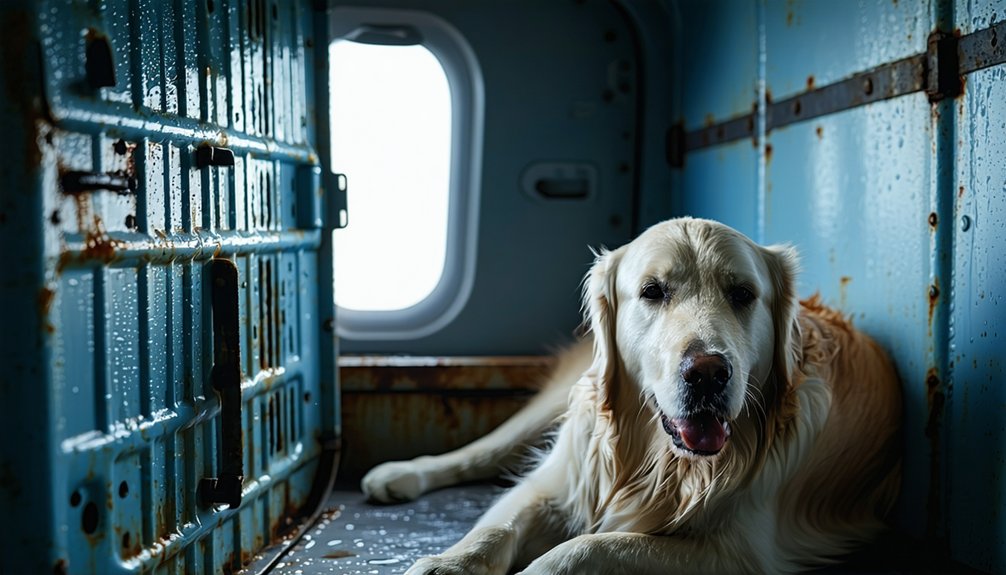
The aging or chronically ill dog enters cargo with less margin for error than a healthy adult. Senior dogs carry reduced physiologic reserve, so they tolerate heat, stress, and oxygen shifts less well.
Cornell flags heart and respiratory disease as conditions that raise cargo risk, since these dogs struggle to compensate for temperature and pressure changes. Don’t rely on a certificate alone; proper medical screening protects your companion.
Before you book, confirm true safety clearance through:
- Cardiac and respiratory assessment, not just a travel certificate, to expose hidden instability.
- Honest age tolerance evaluation, recognizing frailty reduces stamina for confinement.
- Physiologic limits review, considering chronic pain, renal, or endocrine disease.
- Direct flights, cutting handling, layovers, and recovery delays for vulnerable dogs.
What the Cargo Safety Statistics Actually Show
Statistics often reassure more than headlines do. When you look at the actual numbers, the scene shifts.
DOT data shows fewer than one incident per 10,000 animals transported, and in 2017, just 24 deaths occurred among 506,994 animals—about 0.005%. Incidence trends keep improving: 2023 reported roughly 9 deaths out of 500,000, and 2024 only 7 out of 530,000.
Compare those figures against the worry you’ve been carrying, and you’ll feel steadier.
When you weigh dog vs cat outcomes, dogs dominate both transported pets and fatalities simply because they fly more often. Brachycephalic breeds skew the data, making up about half of dog deaths over five years.
You’re not alone in checking seasonal effects—heat and cold genuinely raise risk, which is why airlines impose embargoes.
How to Prep Your Dog for Cargo Travel
Knowing the odds favor your dog doesn’t replace the work you’ll put in before departure. Every prepared owner joins a community that takes this responsibility seriously, and the prep work matters as much as the statistics.
- Crate safety checks & airline booking timelines: Confirm your IATA-compliant crate’s metal bolts, secure latch, and ventilation, then book early since cargo slots fill fast and seasonal embargoes apply.
- Vet paperwork prep: Schedule your fitness-to-fly exam 10–14 days out; verify rabies vaccinations, titers, and required health certificates.
- Hydration planning & kennel labeling tips: Attach spill-proof water access, “Live Animal” labels, upright arrows, and your contact details.
- Stress-free loading: Build relaxation cue training, handling desensitization, and positive crate associations over weeks—lifting, carrying, and settling your dog calmly.
Frequently Asked Questions
How Much Does Shipping a Dog in Cargo Typically Cost?
You’ll typically pay $100–$500+ in airline fees for domestic cargo, while international routes run $1,500–$6,000+. Add destination surcharges, health certificates ($45–$300), and IATA crates ($50–$200). Larger dogs and complex routes push your total even higher.
What Food and Water Rules Apply During Cargo Travel?
You’ll attach food and water dishes to the crate, offering both within 4 hours of check-in. Like fellow pet parents, you’ll tape feeding instructions on, ensuring airflow circulation and emergency procedures keep your dog safe.
Can I Track My Dog’s Location During the Flight?
No, you can’t use GPS tracking inside cargo holds—signals fail and airlines ban active devices. Instead, you’ll get in flight updates through your airline’s pet portal using the AWB number, joining countless owners monitoring milestones together.
What Crate Size and Type Does My Dog Need?
You’ll want a hard-sided crate sized so your dog stands, turns, and lies fully—adding 2–4 inches around. Match length to weight, meeting ventilation requirements on multiple sides. Skip safety straps; secure latches keep your companion protected together.
What Documents Are Required to Fly a Dog in Cargo?
You’ll need veterinary authorization, including airline health certificates issued within 10 days, current rabies vaccination, an ISO microchip, and any destination import permits. Like fellow pet travelers, you’ll also carry endorsed forms and airline cargo booking confirmations.
Conclusion
You’ve got the facts now, so use them. Cargo holds carrying live animals are pressurized and temperature-controlled, but they’re not risk-free. If your dog’s brachycephalic, elderly, or unwell, talk to your vet before booking. For everyone else, choose direct flights, follow airline crate rules, and prep thoroughly. The statistics show incidents are rare, but preparation’s what keeps your dog in that low-risk category. Don’t gamble—plan ahead, ask questions, and travel smart.
References
- https://ia902906.us.archive.org/28/items/hello-pdf-08/hello-pdf-27.pdf
- https://flyingbynumbers.com/safe-to-take-dogs-as-cargo/
- https://www.petrelocation.com/blog/post/pet-travel-myth-2-the-cargo-hold-is-not-pressurized
- https://community.infiniteflight.com/t/out-of-curiousity-how-are-the-conditions-in-the-cargo-hold/90898
- https://www.petcargo.com/en/blog/what-happens-to-pet-in-cargo-hold
- https://ia902806.us.archive.org/3/items/ok40_20260510/ok16.pdf
- https://www.facebook.com/groups/1180884898968404/posts/3060735177650024/
- https://tailwindglobalpet.com/blog/pet-cargo-temperature-restrictions/
- https://ffexpresspets.com/how-safe-is-air-travel-for-pets/
- https://citizenshipper.com/blog/flying-your-dog-in-cargo-is-it-safe/