TLDR: Airline elite status almost never waives the actual pet fee — that charge (typically somewhere between $95 and $200 one-way for in-cabin pets, depending on the airline) is a separate, non-negotiable service fee that applies regardless of your frequent flyer tier. What elite status can influence is the experience around your pet’s trip: priority boarding so you can settle your carrier before the cabin fills up, better access to a human being when something goes wrong, occasional seat-selection flexibility, and smoother rebooking if your flight is delayed or canceled. Below, we break down exactly where status helps, where it doesn’t, and how to use the perks you do have to make flying with a pet less stressful.
The Short Answer: Elite Status Rarely Waives Pet Fees
Let’s clear up the biggest misconception first, because it’s the question most pet owners are actually asking: no, having Gold, Platinum, or even top-tier status with an airline will not make your pet fee disappear.
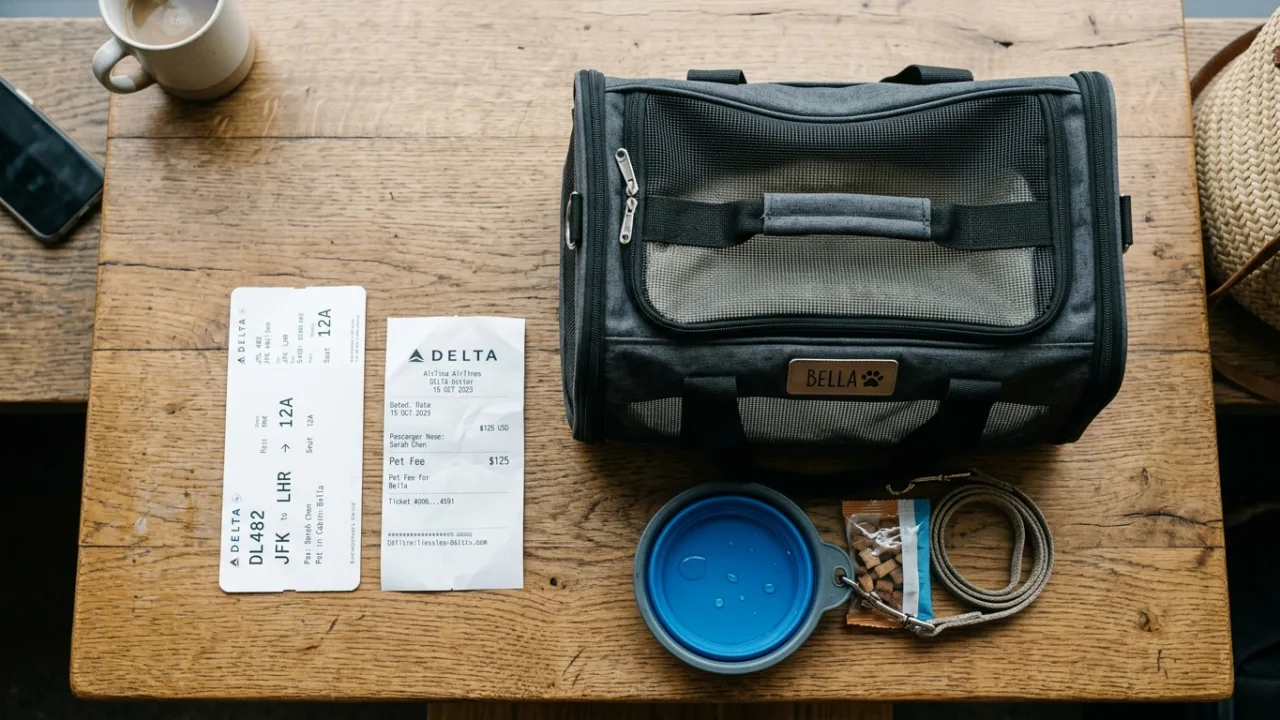
Pet fees are structured as a separate service charge tied to the animal occupying space in the cabin (or, on some airlines, traveling as checked cargo), not to your ticket class or loyalty tier.
Airlines treat it similarly to an oversized baggage fee — it’s assessed per pet, per direction, and it shows up regardless of whether you’re flying on a $99 basic economy fare or a first-class ticket purchased with elite-qualifying miles.
This surprises a lot of loyal flyers because status unlocks so many other perks — free checked bags, seat upgrades, waived change fees — that it seems logical it should extend to pet fees too.
It doesn’t, at least not with any major U.S. or international carrier at the time of writing. If you’ve read otherwise on a forum or an outdated blog post, it’s worth calling the airline directly to confirm current policy before you book, because pet fee structures do get revised periodically (see: airline rules and travel options).
What Airline Elite Status Actually Changes for Pet Travelers
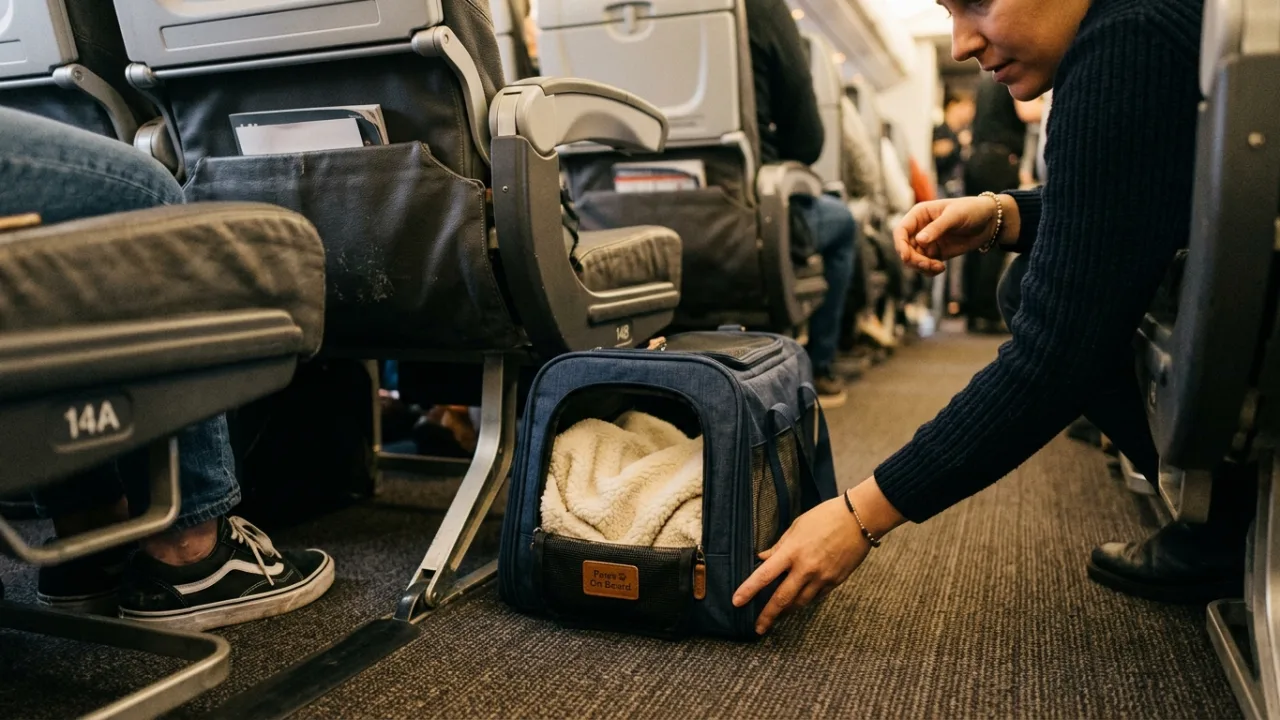
While the fee itself stays fixed, status is not useless when you’re traveling with an animal. Here’s where it genuinely helps.
Priority Boarding and Cabin Space
This is the single most practical benefit for pet owners with status. Most airlines only allow a limited number of in-cabin pets per flight — often somewhere between two and six, depending on aircraft type.
Priority boarding means you get on the plane earlier, which matters enormously when you’re traveling with a pet carrier that needs to fit under the seat in front of you.
Boarding early gives you first pick of overhead bin space for your other bags, more time to settle your pet calmly before the aisle gets crowded, and a much lower chance of a rushed, stressful stow.
Customer Service Leverage During Disruptions
If your flight gets delayed, canceled, or you need to be rebooked, elite status routes you to a dedicated phone line or a shorter line at the airport desk.
When you’re traveling with a pet, disruptions are far more stressful than usual — you’re managing a nervous animal, potential overnight boarding logistics, and sometimes tight connection windows for pet relief breaks.
Status doesn’t guarantee your pet a seat on the next flight (remember, cabin pet limits still apply), but getting a faster, more experienced agent on the phone can make the difference between a smooth rebooking and hours of stress (see: direct vs. connecting flights for dogs).
Seat Selection Flexibility
Higher-tier elite members often get free access to preferred or extra-legroom seats, and sometimes bulkhead seating. This matters for pet travel because bulkhead rows on many aircraft don’t have underseat storage, meaning pets technically can’t be stowed there — so status might actually steer you away from certain seats, not toward them.
On the flip side, status can help you snag an aisle or window seat with slightly more underseat room, or avoid getting stuck in a middle seat where a carrier is harder to manage.
Lounge Access (With Caveats)
Top-tier elite status frequently comes with lounge access, and many lounges do allow small pets in carriers. This can be a genuinely nice perk — a quieter space to let your pet decompress before a flight instead of a crowded gate area.
That said, lounge pet policies vary widely and some restrict animals entirely, so it’s worth checking the specific lounge’s rules rather than assuming your pass guarantees entry with a pet.
What Elite Status Does NOT Change
- The pet fee itself — this is charged per direction, per pet, no matter your status.
- Cabin pet caps — even top-tier elites can be turned away if the flight’s pet quota is already full, so status doesn’t reserve you a spot; calling ahead does.
- Breed, size, and carrier restrictions — these are federal, airline, or aircraft-based rules and apply universally.
- Health and documentation requirements — international pet travel paperwork, health certificates, and quarantine rules are unaffected by loyalty tier.
- Cargo pet fees — on airlines that still allow pets in cargo, those charges and restrictions are separate from in-cabin fees and are not waived by status either.
- Guaranteed accommodation on oversold or weight-restricted flights — pets are typically the first thing bumped when a flight needs to shed weight or space, regardless of the owner’s tier.
Airline-by-Airline: How Pet Fees and Status Perks Actually Interact
Policies change, so always confirm current numbers directly with the airline before booking — but here’s a general comparison of how major U.S. carriers structure the relationship between pet fees and elite status as of this writing.
| Airline | Typical In-Cabin Pet Fee | Fee Waived by Elite Status? | Priority Boarding for Pet Owners with Status? | Notes |
|---|---|---|---|---|
| Delta | ~$95–$150 one-way | No | Yes, standard status boarding perks apply | Medallion members board earlier, helpful for carrier stowage |
| American Airlines | ~$125–$150 one-way | No | Yes, via AAdvantage priority boarding | Pet count per flight is capped regardless of status |
| United | ~$125 one-way | No | Yes, via Premier boarding groups | PetSafe cargo program fees also unaffected by status |
| Southwest | ~$95 one-way | No | Limited — Southwest uses open seating with A-List boarding position perks | Getting an early boarding position matters more here since seating is unassigned |
| Alaska Airlines | ~$100 one-way | No | Yes, MVP tiers board earlier | Known for being relatively pet-friendly with policy clarity |
| JetBlue | ~$125 one-way | No | Yes, Mosaic status includes early boarding | JetBlue’s pet program (JetPaws) fee structure is separate from status |
Notice the pattern: the fee column stays essentially untouched by status across every carrier, while the boarding and service columns are where loyalty tier earns its keep.
Elite Status Tiers Compared for Pet Travel
Not all elite tiers deliver the same practical value for pet owners. Here’s a general breakdown of how tiers tend to differ, using a typical three-to-four-tier program as a model (tier names vary by airline).
| Tier Level | Boarding Position | Pet Fee Impact | Rebooking Priority | Practical Value for Pet Travel |
|---|---|---|---|---|
| Entry-level status | Slightly earlier than general boarding | None | Minor priority over non-status flyers | Modest — mainly helps secure underseat space |
| Mid-tier status | Early boarding group | None | Access to a shorter service line | Noticeable improvement in stress reduction during disruptions |
| Top-tier status | Among the first to board | None | Dedicated phone line, faster rebooking | Best real-world benefit — more control over seat and cabin timing |
The takeaway here is simple: as you climb tiers, the fee never moves, but your ability to control timing, seating, and problem resolution improves steadily.
Credit Card “Status” vs. True Airline Elite Status
It’s worth separating two things that often get confused. Airline co-branded credit cards frequently advertise perks like a free checked bag, priority boarding, or even companion passes — but these are card benefits, not elite status earned through flying.
A handful of premium travel credit cards also grant a form of “status match” or automatic lower-tier elite status as a cardholder perk.
These card-based perks behave the same way as earned elite status when it comes to pets: they can get you into an earlier boarding group, and occasionally waive a checked-bag fee, but they do not touch pet fees.
If you’re choosing a credit card specifically hoping it will offset the cost of flying with your pet, be clear-eyed that the pet fee is a separate line item that essentially no airline credit card perk erases.
How to Use Your Status Strategically When Flying With a Pet

Since status won’t shrink the bill, the smart move is squeezing every bit of value out of the perks that do apply. Here’s how experienced pet-traveling flyers make it work.
- Call ahead, every time. Cabin pet limits are first-come, first-served regardless of status. Book your pet’s spot the moment you book your flight, and confirm it again 24–48 hours before departure.
- Use your priority boarding fully. Don’t wait until the last boarding group even if you technically could board with a companion who has a lower tier — board as early as your status allows so you have calm, uncrowded time to settle your pet.
- Pick seats with underseat clearance. Use any seat-selection perk your status grants to avoid bulkhead rows, which usually don’t allow pet carriers due to lack of underseat storage.
- Call the elite service line for disruptions, not the general line. If your flight is affected, your priority phone access can get you rebooked onto a flight that still has pet capacity before the general public floods the same flights.
- Check lounge pet policies in advance. If you have lounge access, confirm the specific lounge allows pets before you plan on using it as a pre-flight decompression spot.
- Don’t assume upgrades include pet accommodation. An upgrade to a premium cabin can sometimes come with different underseat space, seat pitch, or even a different pet-allowance rule — verify rather than assume.
Common Mistakes Pet Owners Make With Status and Pet Travel
- Assuming status equals a fee waiver. This is the number one misunderstanding, and it can lead to an unpleasant surprise at check-in when the pet fee is charged in full.
- strong>Booking the pet reservation late. Elite status doesn’t reserve you a pet slot automatically — cabin pet caps fill up fast, sometimes faster on routes popular with families and remote workers relocating with animals.
- Choosing an upgraded seat without checking pet rules for that row. Bulkhead and some emergency-adjacent rows commonly prohibit pet carriers entirely.
- Not confirming lounge pet policy before arriving with a carrier in tow. Some lounges turn pets away at the door, which is an awkward surprise with limited time before boarding.
- Assuming higher fare classes reduce the fee. Pet fees are typically flat regardless of cabin class, so there’s no cost benefit to upgrading purely to save on the pet charge.
- Forgetting international documentation because domestic elite status “handles everything.” Status has zero bearing on customs, health certificates, or country-specific pet entry requirements.
Trade-offs and Limitations Worth Knowing
Even the best elite-status perks have real limits when a pet is involved. Priority boarding helps you get settled, but it doesn’t guarantee comfort if your pet is anxious in tight cabin spaces.
Faster rebooking access is valuable, but if a flight’s pet quota is already full, no amount of status reshuffles that cap (see: file a claim if an airline mishandles your dog) — you may be offered a later flight instead.
And while some airlines will make reasonable accommodations for elite members during irregular operations, none are obligated to prioritize a pet’s comfort over safety or capacity rules, which are typically set by aviation regulations rather than airline discretion.
It’s also worth noting that pursuing elite status purely for pet-travel benefits is rarely cost-effective unless you already fly frequently for other reasons.
The perks that matter most for pets — boarding order and service-line access — are usually achievable at mid-tier status, so chasing the very top tier specifically for pet travel benefits offers diminishing returns.
Expert Insight: What Frequent Flyers With Pets Have Learned
Pet owners who fly often with animals tend to converge on the same practical wisdom: treat elite status as a comfort and convenience tool, not a discount tool. The fee is the fee.
What separates a smooth pet-travel day from a stressful one is almost always logistics — early boarding to settle the carrier, a confirmed reservation made well in advance, and knowing exactly which seats and lounges are pet-friendly before you arrive at the airport.
Status simply makes those logistics easier to execute consistently, which matters a lot when you’re also managing a nervous animal in an unfamiliar environment.
Quick Reference: Elite Status Pet Travel Pros and Cons
- Pros of status for pet travel: earlier boarding for calmer carrier setup, faster access to service agents during disruptions, occasional seat flexibility, possible lounge access pre-flight.
- Cons / limitations: no fee waiver, no guaranteed pet slot on full flights, bulkhead/seat restrictions still apply, lounge pet rules vary and aren’t guaranteed by tier alone.
Conclusion
If you’re chasing elite status hoping it will make flying with your pet cheaper, it’s time to reset expectations: the fee is fixed, full stop. But if you already have status — or are close to earning it — it genuinely does make the experience around your pet’s trip smoother, from boarding order to how quickly you get help when plans change.
The real key to stress-free pet travel isn’t your loyalty tier; it’s booking your pet’s spot early, confirming seat and lounge pet policies before you go, and using whatever priority perks you have to buy yourself calm, uncrowded time at every stage of the trip.
Ready to Book Your Next Trip With Your Pet?
Before your next flight, call the airline directly to confirm your pet’s reservation, current fee, and any seat restrictions tied to your specific aircraft. A five-minute phone call now saves a stressful surprise at the gate later — and that’s true whether you’re a first-time flyer or a top-tier elite.
Frequently Asked Questions
Does airline elite status waive pet fees?
No. Pet fees are a separate service charge applied per pet, per direction, and they apply regardless of your elite tier or fare class. Elite status can improve boarding order and service access, but it does not reduce or waive the pet fee itself on any major airline.
Do elite status members get priority for limited in-cabin pet spots?
Not automatically. Most airlines cap the number of pets allowed in the cabin per flight on a first-come, first-served basis when you book, not by loyalty tier. Elite status helps you board earlier, but it doesn’t reserve a pet slot — you still need to book and confirm your pet’s spot as early as possible.
Can I use lounge access with my pet if I have elite status?
It depends on the specific lounge. Many lounges allow small pets in carriers, but policies vary by location and airline, and elite status alone doesn’t guarantee entry with an animal. Always check the individual lounge’s pet policy before planning to bring your pet inside.
Does a higher fare class or upgrade reduce pet fees?
Generally no. Pet fees are typically flat regardless of whether you’re flying basic economy, main cabin, or a premium cabin. Upgrading your seat won’t lower the pet charge, and some upgraded seats — like bulkhead rows — may actually restrict pets due to lack of underseat storage.
Is it worth earning elite status specifically for pet travel benefits?
Usually not on its own. The perks that matter most for pet travel — earlier boarding and faster service access — are typically available at mid-tier status levels. Pursuing top-tier status purely for pet-related perks offers limited additional benefit compared to the effort required to earn it.
Do credit card travel perks affect pet fees the same way elite status does?
Yes, in the sense that both typically leave pet fees untouched. Airline credit cards may offer priority boarding or free checked bags, but pet fees remain a separate charge that isn’t waived by card-based perks any more than by earned airline elite status.
Does elite status help if my flight is delayed and I’m traveling with a pet?
It can help indirectly. Elite status usually grants access to a dedicated service line or faster rebooking assistance, which is valuable when managing a pet during disruptions. However, it doesn’t guarantee a seat with pet accommodation on the next available flight if that flight’s pet capacity is already full.
Are pet fees the same for domestic and international flights regardless of status?
Pet fees are set independently for domestic versus international routes and are unaffected by elite status either way. International trips also require additional documentation and health requirements that status has no bearing on, so it’s important to research those separately.