The first time you book a flight with a dog, cat, or other companion animal, the excitement usually comes with a wave of questions. Which paperwork do you actually need? When should you start carrier training? Is 30 days even enough time? If you’ve never flown with a pet before, the process can feel like assembling furniture without instructions — technically doable, but stressful and easy to get wrong.
This timeline breaks the entire pre-flight process into manageable stages, starting a full month before departure and ending the moment your pet’s carrier slides under the seat in front of you (or gets checked, if you’re flying with a larger dog).
It’s built for first-time flyers specifically, which means we’re not assuming you already know airline jargon, vet requirements, or what an “acclimation period” even is.
TLDR: The 30-Day Pre-Flight Timeline at a Glance
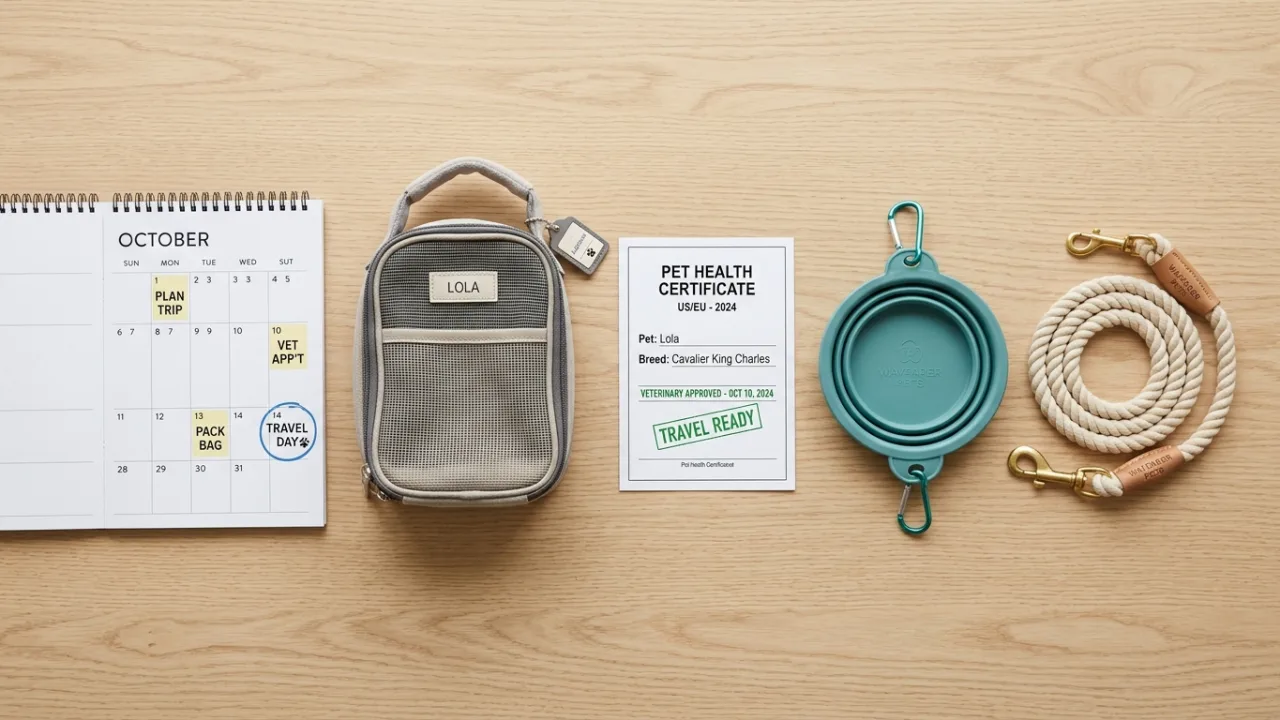
- 30-21 days out: Confirm airline pet policy, book your pet’s spot, and schedule a vet visit.
- 21-14 days out: Get health certificates started, order or fit the carrier, and begin acclimation training.
- 14-7 days out: Practice short trial runs, confirm paperwork deadlines, and pack a travel kit.
- 7-3 days out: Finalize the health certificate (many are only valid 10 days), reconfirm reservations, and do a full carrier-in-car dress rehearsal.
- 3-1 days out: Pack, print documents, freeze water bowls, and do a final carrier fit check.
- Day of flight: Feed lightly, arrive early, and keep your pet calm through security and boarding.
Now let’s walk through each stage in detail, including the mistakes that trip up most first-time flyers and how to avoid them.
Why a Timeline Matters More Than a Checklist
Most pet travel guides hand you a checklist and call it a day. The problem is that pet air travel isn’t just about what you need — it’s about when you need it. Health certificates expire.
Airlines cap the number of pets per flight. Carriers need to be broken in, not bought the night before. A checklist tells you what to pack; a timeline tells you when each piece falls apart if you wait too long.
If you’re a first-time flyer with a pet, the single biggest risk isn’t forgetting an item — it’s discovering a deadline has already passed. That’s why this guide is organized by countdown, not by category.
30 to 21 Days Before Takeoff: Lock In the Logistics
Confirm the airline’s actual pet policy
Every airline treats pet travel differently, and policies can change without much notice. Before you do anything else, pull up the specific airline’s pet travel page and check:
- Whether your pet qualifies for in-cabin travel (usually a combined weight-and-carrier size limit, roughly 15-20 lbs including the carrier on most carriers, though this varies)
- Whether cargo or checked-pet programs are available if your pet is too large for the cabin
- Breed restrictions, especially for snub-nosed (brachycephalic) breeds like bulldogs, pugs, or Persian cats
- The maximum number of pets allowed per cabin — this fills up fast and is first-come, first-served
- Pet travel fees, which are charged per direction, not per trip
Call the airline directly if the website is vague. A five-minute phone call now can save you from a gate-side surprise later.
Book your pet’s spot — don’t assume it’s automatic
Adding a pet to a reservation is almost always a separate step from booking your own seat. Many airlines require you to call reservations or add the pet through a specific portal, and cabin pet slots are limited per flight.
Waiting until a week before departure is one of the most common first-time flyer mistakes — by then, the pet quota may already be full.
Schedule the vet visit
Book an appointment with your veterinarian now, even though the actual health certificate often can’t be issued until closer to departure. Use this visit to:
- Confirm your pet is fit to fly (older pets, pets with heart or respiratory conditions, and very young animals may need extra caution)
- Update any vaccinations that are close to expiring
- Ask about anxiety management options if your pet is a nervous traveler
- Get a copy of your pet’s vaccination and medical history for your records
21 to 14 Days Before Takeoff: Paperwork and Carrier Prep
Start the health certificate process
Most airlines and destinations require a Certificate of Veterinary Inspection (sometimes called a USDA health certificate for interstate or international travel).
The catch: these certificates are typically only valid for a limited window — often 10 days from the date of travel — so getting one issued 21 days out usually won’t work for the actual flight.
Use this window to ask your vet’s office exactly when the certificate can be signed and how long the appointment takes, so you can book the real certificate appointment at the right time later.
Choose and fit the carrier
Carrier selection is where a lot of first-time flyers go wrong. An airline-approved carrier needs to:
- Fit under the seat in front of you (dimensions vary by aircraft and airline, so check the exact measurements, not just “small” or “medium”)
- Be soft-sided if you want maximum flexibility for tight underseat spaces
- Have secure zippers and adequate ventilation on at least three sides
- Allow your pet to stand, turn around, and lie down comfortably
Order the carrier now so you have two full weeks to let your pet get used to it before departure. (see: measure your dog for a carrier)
Begin acclimation training
Never introduce a brand-new carrier the day before a flight. Start with short, positive sessions: (see: 6-week crate acclimation schedule)
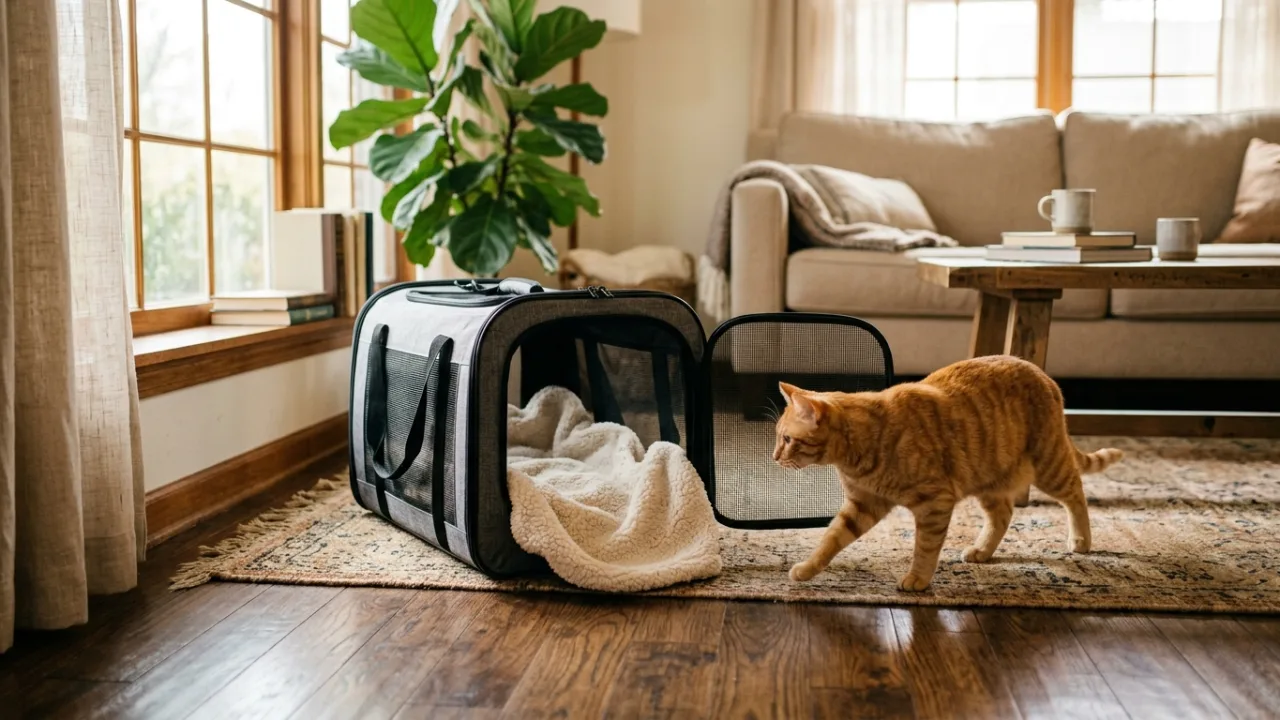
- Leave the carrier open in a familiar room with soft bedding inside
- Feed treats or meals near, then inside, the carrier
- Practice closing the door for a few minutes while you stay nearby
- Gradually increase the time your pet spends zipped inside, rewarding calm behavior
14 to 7 Days Before Takeoff: Trial Runs and Confirmations
Do a short practice outing
Take your pet on a car ride in the carrier — to a nearby park, a pet store, or even just around the block. This isn’t about the destination; it’s about letting your pet experience motion, unfamiliar sounds, and confinement together before the real thing.
Reconfirm every deadline
At this point, call the airline again to confirm your pet’s reservation is still active and double-check the exact health certificate timing window based on your specific departure date. Write down the earliest and latest days your vet can legally sign the certificate.
Pack a travel kit — but don’t seal it yet
Start gathering these items so you’re not scrambling later: (see: what to pack in a carry-on)
- Collapsible travel bowl
- A small bag of your pet’s regular food (sudden diet changes cause stomach upset)
- Absorbent pads or puppy pads for the carrier base
- A familiar-smelling blanket or piece of clothing
- Waste bags and wipes
- A recent photo of your pet on your phone, in case of an emergency
- Any current medications, clearly labeled
7 to 3 Days Before Takeoff: Finalize the Paperwork
Get the official health certificate now
This is usually the window where the actual, flight-valid Certificate of Veterinary Inspection needs to be issued, since most are only good for 10 days.
Bring the certificate paperwork requirements straight from the airline’s website to the appointment so your vet’s office can fill it out correctly the first time. (see: airline’s live animal acceptance checklist)
Reconfirm your flight and pet reservation one more time
Schedules shift. Equipment changes on an aircraft can sometimes mean different underseat dimensions or a different pet policy for that specific flight. A quick reconfirmation call prevents a stressful surprise at check-in.
Full dress rehearsal
Put your pet in the carrier, load it into the car exactly as you would for the airport, and run a longer errand — 30 to 45 minutes round trip.
Watch for signs of stress: excessive panting, whining, or attempts to escape. If you notice serious anxiety, this is the time to talk to your vet about calming strategies, not the night before the flight.
3 to 1 Days Before Takeoff: Final Prep
Print and organize documents
Create a small folder (physical, not just digital) containing:
- The signed health certificate
- Proof of rabies and other required vaccinations
- Your pet’s reservation confirmation
- A printed copy of the airline’s pet policy, in case a gate agent needs clarification
Freeze a water bowl or ice cube tray
A frozen, collapsible bowl melts slowly during travel, giving your pet access to water without a full bowl sloshing around and soaking the carrier.
Do a final carrier fit check
Weigh your pet and the loaded carrier together one more time. Airlines are strict about combined weight limits at check-in, and this is the last moment to make adjustments if you’re borderline.
Feeding plan for the night before
Feed your pet’s normal dinner at the usual time. Don’t introduce new treats or foods this close to travel — an upset stomach on a flight is something you want to avoid entirely.
Day of the Flight: Hour-by-Hour
3-4 hours before departure
Give your pet a light meal (a smaller portion than usual, especially for anxious flyers) and a bathroom break. Skip large meals right before travel.
2-3 hours before departure
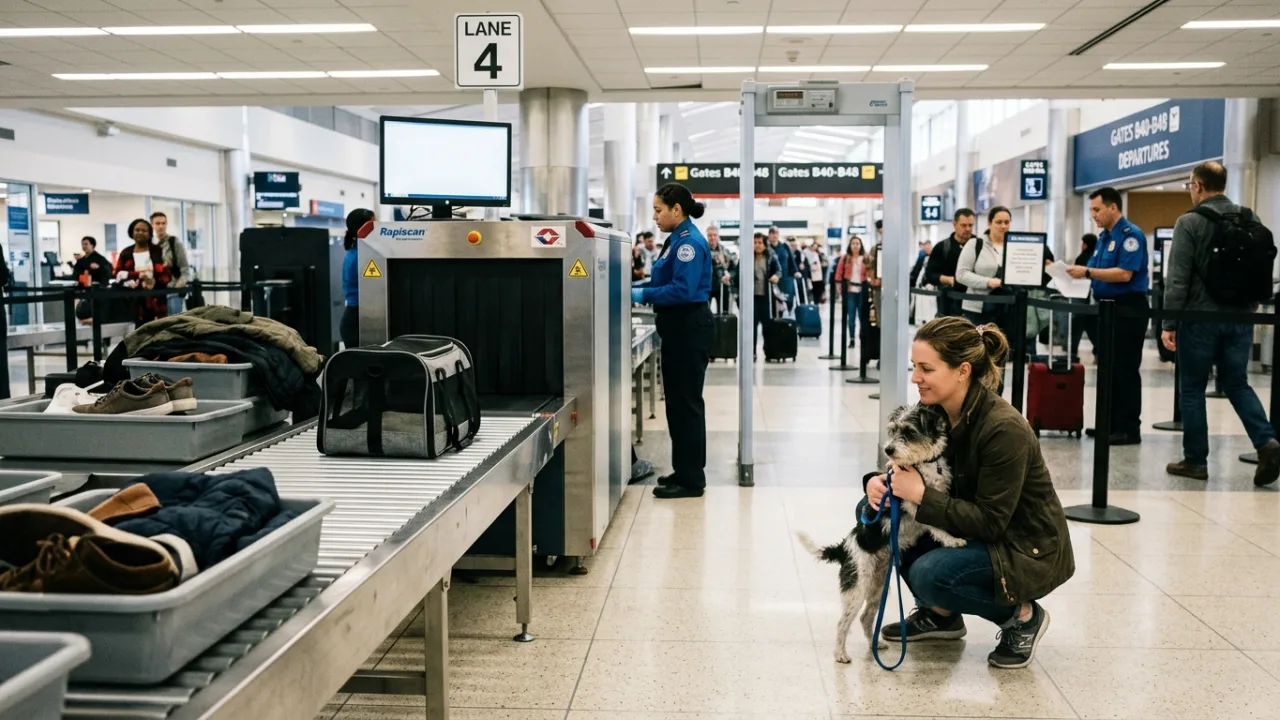
Arrive at the airport with extra buffer time. First-time flyers with pets should plan for at least 30-45 minutes more than they normally would, since security screening for pets in carriers takes longer — most airports require you to remove your pet from the carrier and carry them through the metal detector by hand while the carrier goes through the X-ray belt.
At security
- Have your pet’s leash or harness on under the carrier, so you can quickly secure them if needed
- Keep your documents folder easily accessible, not buried in checked luggage
- Stay calm — your pet reads your body language, and a tense handler often means a tense pet
At the gate and boarding
Find a quiet corner away from heavy foot traffic if your pet seems anxious. Board when your zone is called; there’s no advantage to being first unless the airline specifies early boarding for pet owners.
During the flight
Keep the carrier fully under the seat in front of you for the entire flight — this is a safety requirement, not a suggestion. Avoid opening the carrier mid-flight unless a flight attendant clears it, and resist the urge to constantly peek in and out, which can actually increase your pet’s stress.
In-Cabin vs. Cargo vs. Private Charter: A Quick Comparison
If your pet doesn’t meet in-cabin size requirements, you’ll need to weigh other options. Here’s how the main choices stack up for a first-time flyer.
| Travel Option | Best For | Pros | Cons |
|---|---|---|---|
| In-Cabin (under the seat) | Small dogs and cats under the airline’s combined weight limit | Pet stays with you; lowest stress for most animals; easiest to monitor | Strict size limits; limited slots per flight; carrier must stay closed and stowed |
| Checked Cargo (climate-controlled hold) | Larger dogs that don’t fit in-cabin | No size restriction beyond crate/aircraft limits; pet travels on the same flight | Higher stress for the animal; temperature and delay policies vary by airline; not recommended for brachycephalic breeds |
| Private Pet Charter Service | Anxious pets, medical needs, or owners wanting door-to-door service | Ground transport door-to-door; no cargo hold; specialized handling | Significantly more expensive; fewer routes and availability; longer booking lead time |
Common Mistakes First-Time Flyers Make
- Booking the pet’s spot too late. Cabin pet slots fill up independently of human seats, sometimes weeks before a flight is full for people.
- Getting the health certificate too early or too late. Because certificates are typically only valid for about 10 days, timing this appointment wrong means starting over.
- Buying a carrier the week of the flight. Pets need time to associate the carrier with safety, not sudden confinement.
- Assuming all airlines have the same rules. Weight limits, carrier dimensions, and fees vary significantly, even between two flights on the same day.
- Overfeeding right before the flight. A queasy stomach combined with cabin pressure changes is a rough combination for any animal.
- Sedating a pet without veterinary guidance. Many vets caution against sedatives for air travel because they can affect breathing and balance at altitude; always ask your vet first rather than guessing with over-the-counter options.
- Forgetting printed paperwork. A phone screenshot isn’t always accepted, and dead batteries happen at the worst times.
Expert Insight: What Seasoned Pet Travelers Do Differently
Frequent pet travelers tend to treat the health certificate and carrier acclimation as the two non-negotiables on this timeline. Everything else — snacks, comfort items, extra padding — is helpful but flexible.
The certificate has a hard expiration window, and a pet who hasn’t practiced time in the carrier is far more likely to panic in an unfamiliar, loud environment like a jet bridge or cabin. If you only have time to do two things well from this entire guide, prioritize those two.
It’s also worth building in a buffer day wherever possible. Vet offices get booked up, printers run out of ink, and flights get rescheduled. A pre-flight timeline that assumes everything goes perfectly is a timeline that breaks under the first small delay.
Trade-Offs to Consider Before You Book
- Direct flights vs. connections: Direct flights mean less total time in the carrier and fewer chances for a missed connection to strand your pet, but they can be pricier or less convenient timing-wise.
- Morning vs. evening flights: Earlier flights tend to have fewer weather-related delays and cooler tarmac temperatures for any time spent outside climate-controlled areas.
- Nonstop cost vs. peace of mind: Paying more for a direct route often reduces stress for both you and your pet, which may be worth the price difference for a first flight.
Your Pre-Flight Packing List
| Category | Items |
|---|---|
| Documents | Health certificate, vaccination records, reservation confirmation, printed airline pet policy |
| Comfort | Familiar blanket, favorite small toy, collapsible bowl |
| Practical | Waste bags, wipes, absorbent pads, leash/harness |
| Food & Water | Regular food in a sealed bag, frozen water bowl or ice cubes |
| Just in Case | Recent photo of your pet, vet’s phone number, backup collar tag with your contact info |
Conclusion: Give Yourself the Gift of Time
Flying with a pet for the first time doesn’t have to feel like a race against unclear deadlines. When you break the process into a 30-day countdown — confirming policies early, timing the health certificate precisely, and giving your pet real time to get comfortable with the carrier — the whole experience becomes far less stressful for both of you.
The pets who travel best aren’t necessarily the calmest by nature; they’re usually the ones whose owners planned ahead.
Start today, even if your flight is still weeks away. Every day earlier you begin this timeline is one less thing to worry about at the gate.
Ready to make your pet’s first flight a smooth one? Browse the Air Travel section of All Happy Pets for airline-specific carrier guides, anxiety management tips, and destination-specific pet entry requirements to round out your travel plan.
Frequently Asked Questions
How far in advance should I book a flight with my pet?
Book your pet’s spot as soon as you book your own ticket, ideally 30 days or more before departure. Airlines limit the number of pets allowed in the cabin per flight, and those slots fill independently of regular seats. Waiting until the week of travel often means the pet quota is already full, even if your own seat is confirmed.
What vet paperwork do I need before flying with a pet?
Most airlines and destinations require a Certificate of Veterinary Inspection, sometimes called a health certificate, confirming your pet is fit to travel and up to date on vaccinations. These certificates are typically valid for only about 10 days from the date of travel, so timing the vet appointment correctly matters as much as getting the paperwork itself.
How do I get my pet used to a carrier before a flight?
Start at least two weeks before departure by leaving the carrier open at home with familiar bedding inside, feeding treats near and inside it, then gradually practicing closed-door sessions. Follow up with a short car ride in the carrier a week or so before the flight so your pet experiences motion and confinement together in a low-stakes setting.
Can I fly with my pet in the cabin or does it have to go as cargo?
It depends on your pet’s size and the specific airline’s weight and carrier dimension limits, usually around 15-20 pounds including the carrier. Pets under that threshold can typically travel in-cabin under the seat, while larger dogs may need to travel via a checked cargo program or a private pet charter service.
What should I feed my pet before a flight?
Stick to your pet’s regular food and feeding schedule leading up to the flight to avoid stomach upset. On travel day, offer a lighter-than-usual meal three to four hours before departure rather than a full portion right beforehand, since motion and cabin pressure changes can unsettle a full stomach.
What items should be in my pet’s carry-on travel kit?
Pack a collapsible water bowl, a small sealed bag of your pet’s regular food, absorbent pads for the carrier base, waste bags, wipes, a familiar-smelling blanket, and a printed folder with the health certificate, vaccination records, and reservation confirmation. Frozen water in a collapsible bowl also helps prevent spills during travel.
How early should I arrive at the airport with a pet?
Plan for 30 to 45 minutes more than your usual arrival buffer. Security screening takes longer with a pet, since most airports require removing your pet from the carrier and carrying them through the metal detector by hand while the empty carrier passes through the X-ray belt separately.
Is it safe to sedate my pet for a flight?
Many veterinarians caution against sedating pets for air travel because sedatives can affect breathing and balance at cabin altitude, which carries real risks. If your pet has significant travel anxiety, talk to your vet well before the flight about safer calming options rather than using an over-the-counter sedative on your own.