When your microchip doesn’t meet the 15-digit ISO 11784/11785 standard, you’ll face real problems. Scanners may fail to read it, especially if it’s a 9- or 10-digit non-FDX-B chip running on a non-134.2 kHz frequency. Compliant databases can reject it on length and structure rules. At borders, officials may not get a response, triggering rescanning delays, quarantine costs, or refused entry. The good news? You’ve got practical solutions worth exploring below.
TLDR Key Takeaways
- Universal scanners may fail to read non-ISO chips, causing rescanning delays, invalid document matches, or failed identification at borders.
- Compliant databases often reject non-ISO chips because their length and structure violate the 15-digit numeric validation rules.
- Travel paperwork mismatches can trigger customs delays, quarantine holding costs, or refused entry until a valid match is confirmed.
- A second ISO microchip can be safely added, since two passive RFID chips don’t interfere and old chip removal isn’t usually needed.
- Rabies vaccination must follow re-chipping, or the pet may be treated as unvaccinated, restarting the 21-to-30-day waiting period.
What the 15-Digit ISO Standard Requires
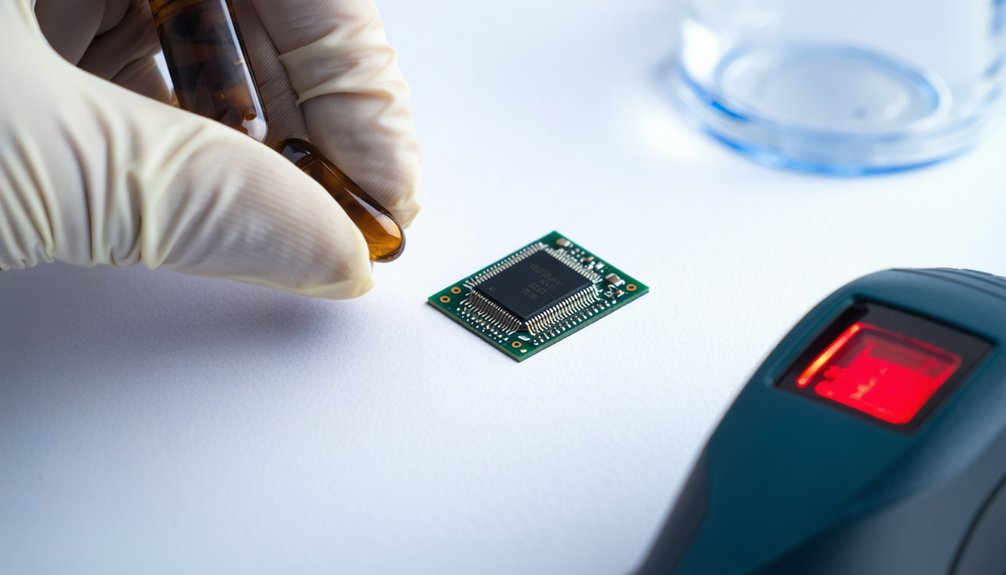
When you’re dealing with a truly ISO-compliant microchip, it carries a 15-digit numeric identification code—nothing more, nothing less.
You’ll find digits 0–9 exclusively, with no letters or symbols allowed.
The first 3 digits represent your country or manufacturer code, allocated only after ICAR conformance testing.
The last 12 digits give your animal a unique ID, ensuring world-unique coding that won’t duplicate over at least 30 years.
This structure isn’t arbitrary.
ISO 11784 defines the data content, while ISO 11785 governs the 134.2 kHz FDX-B communication protocol that guarantees scanner compatibility worldwide.
Microchip certification through ICAR confirms your chip belongs to this trusted global system.
When you choose an ISO-compliant chip, you’re joining a network that veterinarians and border authorities everywhere recognize and reliably read.
How to Tell If Your Microchip Is Non-ISO
Wondering whether your pet’s microchip meets the ISO standard? You’re not alone, and a few practical checks can give you clear answers. Work through these steps to confirm where your chip stands:
- Test scanning: Have a vet or shelter scan your pet with a universal ISO scanner that detects 11784/11785 chips at 134.2 kHz.
- Watch for scanner mismatch: If the reader misses the chip, non-ISO status is likely, though a mismatched reader stays possible.
- Check chip number length: ISO chips use 15 numeric digits; 9- or 10-digit or alphanumeric IDs signal non-ISO.
- Complete paperwork verification: Look for explicit ISO 11784/11785 and 134.2 kHz references in records.
When doubt remains, re-scan and confirm through the registry or manufacturer.
The Problem With 8, 9, and 10-Digit Chips
Short-digit microchips create a cascade of problems that start the moment a scanner can’t read them.
When your pet carries an 8, 9, or 10-digit chip, you’re holding legacy technology that fails the ISO 11784/11785 15-digit standard.
These non-ISO chips make up less than 1% of microchips in use, leaving you outside the community of compliant pet owners.
Compatibility challenges with universal readers undermine reader assurance, since short-digit formats are often non-FDX-B.
You’ll face travel paperwork mismatch when international schemes assume a 15-digit structure, and border scanning failures can trigger customs delays or refused entry.
You might even need re-microchipping before you travel, adding cost, an extra implant, and duplicate numbers that muddle your pet’s permanent records.
Why Standard Scanners May Not Read Your Microchip
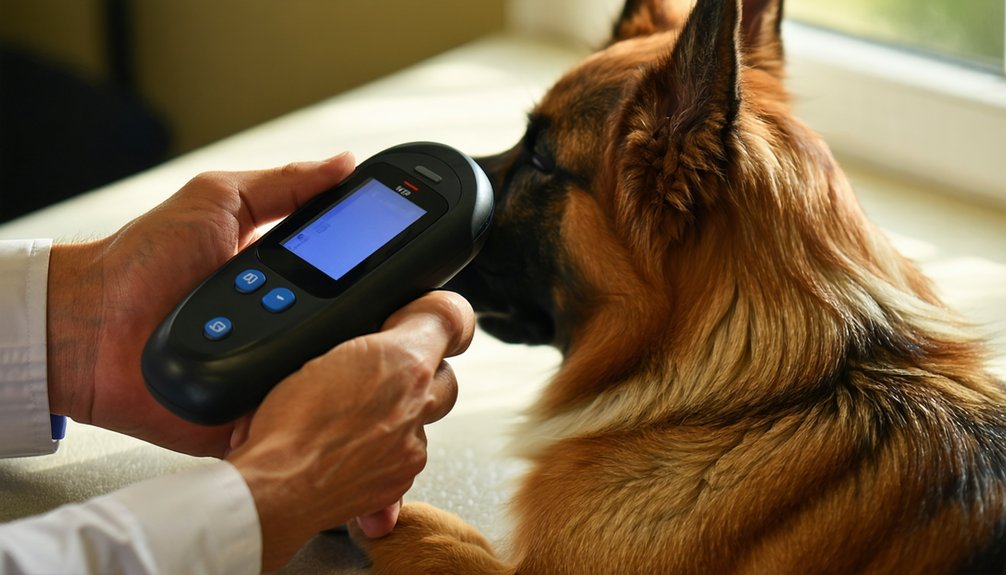
A scanner’s failure to read your pet’s microchip usually comes down to a frequency mismatch. Many North American readers detect only 125 kHz and miss ISO‑standard 134.2 kHz implants, returning a false “no chip found.” But frequency isn’t the only culprit. Here’s what stands between your pet’s chip and a successful read:
- Frequency mismatch: Single‑standard readers can’t detect chips outside their design band.
- Protocol incompatibility: Scanners programmed to ignore non‑ISO data formats won’t display a valid ID.
- Scanner range limits: Older equipment shows reduced sensitivity and shorter read distances.
- User scanning technique: Rapid passes or holding the reader too far prevents the chip from energizing.
Understanding these factors helps you assure your companion stays reliably identifiable everywhere.
The Risk of Duplicate and Counterfeit Chip IDs
Because a microchip’s entire value rests on the uniqueness of its identifier, duplicate and counterfeit IDs strike at the foundation of any system that trusts them.
When a chip skips the 15-digit ISO standard, you’re far more likely to encounter duplicate IDs, letting two animals or devices share one number.
That collision undermines the trust your registry, clinic, or community depends on.
Don’t fall for Chip Cloning Myths that claim static IDs can’t be copied.
Research on implantable chips proves attackers can read an ID and program it into another tag, spoofing identity in compatible readers.
Without cryptographic authentication, Fake Tag Detection becomes nearly impossible, and counterfeit chips slip into your records, corrupting histories and complicating forensics when you can’t tell which physical chip is genuine.
How Non-Standard Chips Break Database Registration
When your microchip skips the 15-digit ISO 11784/11785 format, compliant databases simply can’t accept it. Standard schemas validate against length and structure, so your chip gets rejected before it’s even logged. That leaves you outside the network where vets, shelters, and authorities expect to find you.
Here’s what breaks when your chip doesn’t comply:
- Database rejection: Validation rules block entry, so your record never registers.
- Failed scanner lookups: Mismatched IDs prevent automatic routing, recording your pet as “no registration found.”
- Missing keeper verification: Mandatory fields won’t attach, leaving incomplete or rejected records.
- Stalled transitional paperwork: Cross-database indexing fails, orphaning your data.
You’ll find yourself excluded from the traceability community that reunites lost pets with their families.
What Happens at International Borders and Customs
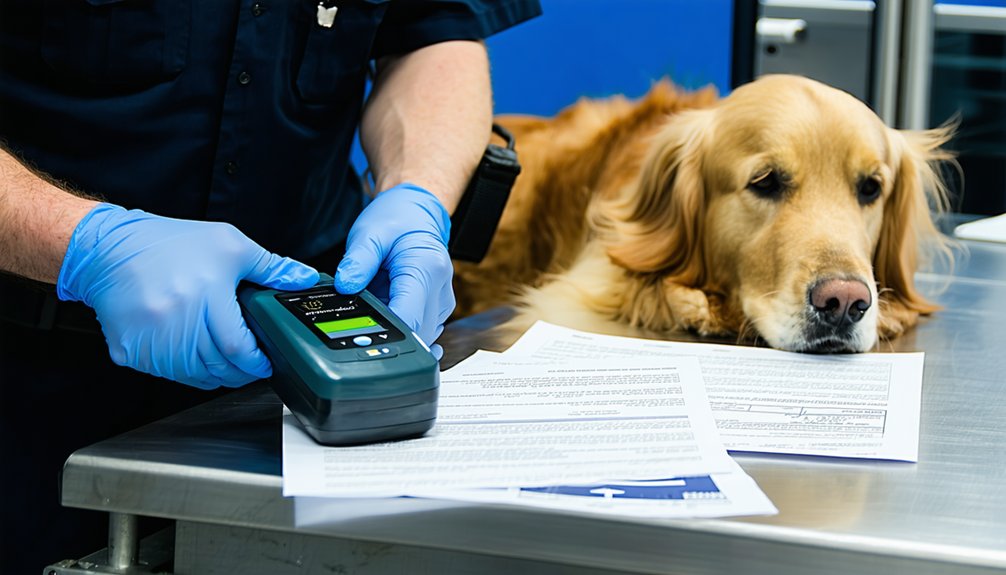
As soon as your pet arrives at a border, agencies scan its microchip to verify identity before they even glance at your paperwork. Those primary scanners read ISO 11784/11785, 134.2 kHz, 15-digit chips, so a non-standard chip may not respond at all.
When that happens, you’ll face border rescanning delays while officers attempt universal scanners or seek supervisor review—a step left entirely to inspection officer discretion.
Verification document matching requires your scanned ID to match every certificate digit for digit; any mismatch invalidates otherwise-correct paperwork.
Expect quarantine holding costs billed directly to you, plus customs compliance consequences like refusal or re-export.
Until customs confirms a valid match, airline bonded area release stays blocked, compounding storage fees and keeping you from your companion.
Countries That Demand a 15-Digit ISO Microchip
Knowing which countries demand a 15-digit ISO microchip lets you prepare before you ever reach those border scanners. You’re joining millions of pet owners who meet ISO 11784/11785 standards to avoid border screening delays and travel permit denials.
These jurisdictions enforce strict compliance:
- European Union & UK: All 27 EU member states plus the UK require 15-digit ISO chips operating at 134.2 kHz for dogs, cats, and ferrets.
- Japan: Mandates ISO-compliant chips or a compatible reader for imported dogs and cats.
- Australia & New Zealand: Demand ISO chips integrated into quarantine clearance issues and biosecurity protocols.
- Singapore, South Korea & Israel: Require ISO chips for rabies control and importer compliance checkups.
Meeting these standards keeps you confidently on track.
When Your Chip Number Won’t Match Documents
Even if your paperwork looks flawless, a single mismatch between your pet’s microchip number and any health certificate, rabies record, or movement document invalidates the animal’s identification at border inspection.
Authorities treat that mismatch exactly like a missing chip, so you risk denial of entry, quarantine, or starting import procedures over again.
Worse, an unreadable or non-matching number can invalidate linked rabies vaccinations and blood tests, forcing repeat shots and new waiting periods.
Protect yourself by booking veterinary scanning before travel to confirm the implanted number matches every form precisely.
If you’ve added a chip, prioritize document updating after reimplantation, recording all implanted IDs.
Joining the community of well-prepared travelers means catching these conflicts early, before officials ever record your pet as unidentifiable.
Should You Add a Second ISO Microchip?
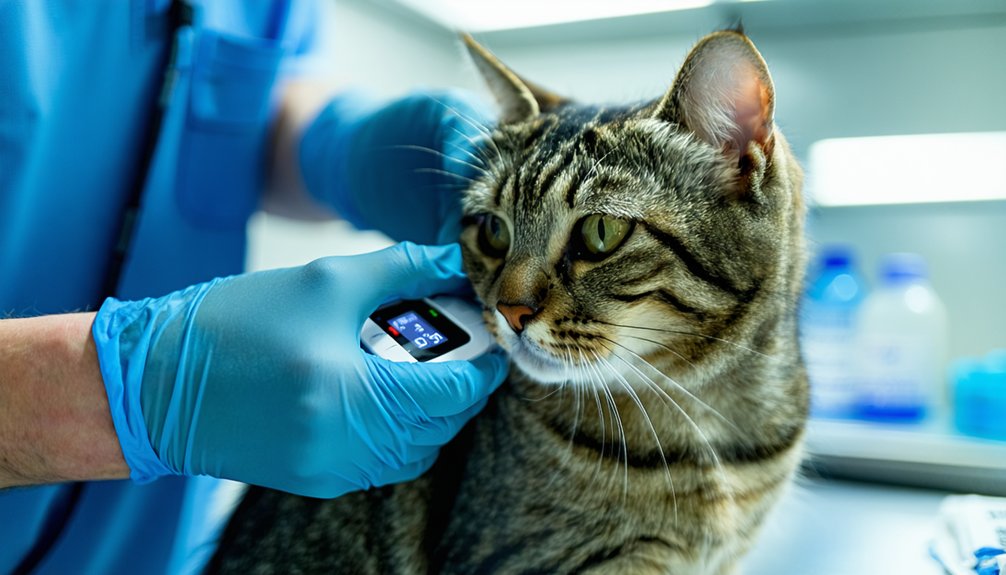
If your pet’s existing microchip has fewer than 15 digits or operates at anything other than 134.2 kHz, it isn’t ISO 11784/11785-compliant, and you’ll likely need to add a second chip before traveling. You’re not alone—many pet owners face this, and the solution’s straightforward and safe.
- Medical compatibility: Two passive RFID chips don’t interfere with each other, and implantation’s a quick, minor procedure.
- Border compliance: An ISO chip helps you avoid denial of entry, quarantine, or extra handling abroad.
- Airline requirements: Many carriers mandate ISO-compliant chips for import.
- Scan documentation: List both numbers on all forms to prevent scanning ambiguity.
You generally won’t remove the old chip unless complications arise—simple re-chipping’s less invasive.
Why Rabies Shot Timing Matters After Re-Chipping
Once you’ve added an ISO-compliant chip, the timing of your pet’s next rabies shot becomes critical—because in the EU and many other jurisdictions, only a vaccination given *after* microchip implantation counts as valid.
If you vaccinate before re-chipping, authorities may treat your pet as unvaccinated, restarting the 21-to-30-day waiting period and risking cross border quarantine.
Smart revaccination logistics mean scheduling the shot promptly after the new chip’s implanted, ensuring travel document alignment between chip ID and vaccine date.
This sequencing also supports antibody gap prevention, since rabies vaccines need 7–14 days to induce protective immunity.
Like every responsible owner in our community, you’ll want your records flawless—because proper timing keeps your companion protected, your paperwork accepted, and your trips together uninterrupted by costly delays.
How the Right Microchip Brings Lost Pets Home
When your pet goes missing, the right microchip becomes its ticket home. That rice-sized RFID carries a permanent ID number that connects your pet back to you. Microchipped pets are roughly 2.5–3 times more likely to return home than those without one. Here’s how the right chip works for you:
- Shelter intake: Staff scan every incoming stray, so your pet’s chip gets read.
- Microchip scanning: Universal scanners detect the unique ID number instantly.
- Registry update: Current contact info lets staff reach you fast, preventing reunification delays.
- Reunion: You answer the call and bring your companion home.
Keep your registry data accurate, and your microchip becomes the dependable link that reunites you with the pet you love.
Frequently Asked Questions
How Much Does It Cost to Implant a Second Microchip?
You’ll typically pay $40–$100 for a second microchip, covering device, implantation, and registration. When considering ISO compliance, you’ll find replacement options worth discussing with your vet—they’ll help you choose the standard chip that keeps your pet protected.
Is Microchip Implantation Painful or Risky for My Pet?
You’re making a caring choice. Implantation discomfort levels stay minimal—it’s like a quick injection your pet barely notices. Microchip safety concerns are negligible, with serious complications around one in a million. You’re protecting your beloved companion confidently.
Can a Microchip Be Removed Instead of Adding Another?
Technically yes, but you shouldn’t. Microchip removal requires surgery, risking infection and scarring—something our community of responsible pet owners avoids. Instead, add an ISO chip and handle registration updates, keeping your companion safe and compliant.
How Long Does a Microchip Last Inside My Pet?
Your pet’s microchip lasts 25+ years—truly a lifetime implant. Since it’s passive with no battery, you’ll enjoy reliable accuracy over time. This proven microchip lifespan means you’re joining millions who trust permanent, worry-free identification.
Who Should I Contact to Update My Microchip Registration?
Contact your microchip database or registry provider first—they’re your go-to for the update registration process. You’ll need your chip number and current details. Many registries let you update online through your member dashboard quickly and easily.
Conclusion
Your microchip’s compliance isn’t a technicality—it’s your pet’s lifeline. If you’re holding an 8, 9, or 10-digit chip, you’ve got a real risk: failed scans, duplicate IDs, and mismatched documents that can keep you from your lost pet. Don’t gamble on outdated technology. Add a second ISO-compliant chip, time your rabies vaccination correctly, and verify your records. When the right microchip’s in place, you’re giving your pet the best chance home.
References
- https://peeva.co/blog/iso-compliant-microchip/
- https://www.petrelocation.com/stories/post/iso-compatible-microchips-for-pet-travel-to-the-european-union
- https://wsava.org/wp-content/uploads/2020/01/Microchip-FAQs_0.pdf
- https://wsava.org/wp-content/uploads/2020/01/Microchipping-The-Importance-of-ISO.pdf
- https://www.petrelocation.com/blog/post/are-avid-microchips-iso-compatible-for-international-pet-air-travel
- https://files.usef.org/assets/WU5vkmldZDg/microchipping-faqs.pdf
- https://patifyapp.com/en/content/detail/pet-iso-microchip-international-travel-requirements-2026
- https://help.globalvetlink.com/hc/en-us/articles/4413143325979-Do-I-have-to-use-an-ISO-compliant-11784-or-11785-microchip
- https://www.maine.gov/dacf/ahw/animal_welfare/documents/microchip-cheat-sheet.pdf
- https://intercom.help/animal-id-corporation/en/articles/10498528-microchip-numbering-rules-standards-and-counterfeits