Airlines ban snub-nosed breeds from cargo because their compressed airways can’t handle the heat, vibration, and pressure changes down there. Flat-faced dogs like pugs, French bulldogs, and Boston terriers rely on panting to cool down, but BOAS narrows their nostrils, palate, and trachea—so even mild stress can trigger fatal respiratory failure. You’ve got safer options: in-cabin travel, USDA-registered ground transport, and smart booking strategies. Here’s exactly how each one protects your pet.
TLDR Key Takeaways
- Snub-nosed breeds have compressed airways and rely on panting, which cargo heat, humidity, and poor ventilation dangerously compromise.
- BOAS (elongated soft palate, stenotic nostrils, hypoplastic trachea) raises the risk of respiratory crisis and death in flight.
- Major carriers like American, Delta, Alaska, Air France, and British Airways ban brachycephalic breeds, including mixes, from cargo.
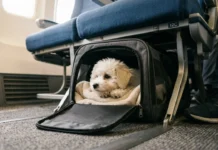
- In-cabin travel is often allowed when pets fit a compliant, soft-sided under-seat carrier within 7–8 kg/15–18 lb limits.
- USDA-registered ground transporters offer door-to-door relocation with climate control, water breaks, and continuous human supervision.
What Counts as a Snub-Nosed Breed?

Before you can understand why airlines restrict certain pets, you need to know what makes a breed “snub-nosed” in the first place. The term means brachycephalic: a shortened skull and muzzle relative to overall head length, creating that flat-faced look you recognize in Pugs, French Bulldogs, and Boston Terriers.
Airway anatomy basics explain the risk—compressed facial bones crowd soft tissues like the tongue and soft palate, narrowing nostrils and windpipes. Breed-specific standards from veterinary and airline sources commonly include Boxers, Shih Tzus, Pekingese, Bullmastiffs, and Chow Chows.
Because muzzle length variability exists even within breeds, and brachycephalic traits appear in mixed-breeds too, airlines rely on veterinary risk scoring and fixed lists. If your dog’s on that list, you’re affected—regardless of individual variation.
Why Airlines Ban Snub-Nosed Breeds From Cargo
Now that you know which breeds qualify as snub-nosed, here’s why airlines keep them out of cargo holds.
Your brachycephalic dog or cat can’t cool efficiently by panting, so cargo environments—with their heat, noise, vibration, and inconsistent ventilation—dramatically raise the risk of respiratory crisis and death.
Their compromised airways and reduced oxygen reserve mean even mild stress can trigger acute failure, especially during tarmac delays or altitude pressure changes.
Mortality data backs this up: brachycephalic breeds suffer disproportionate in-flight deaths, prompting carriers like Lufthansa and American Airlines to enforce strict bans.
No temperament evaluation or vet preclearance overrides anatomy.
Airlines face real legal and reputational risk when pets die, so they’ve standardized these restrictions to protect your companion—and join responsible owners doing the same.
The Breathing Problem Behind BOAS
Behind every snub-nosed face lies a structural problem called BOAS—Brachycephalic Obstructive Airway Syndrome. When you understand it, you’ll see why your dog struggles.
BOAS stems from a shortened skull crowding soft tissues that haven’t shortened to match. Elongated soft palates, stenotic nostrils, hypoplastic tracheas, and everted laryngeal saccules all narrow the airway. The result? Air forces through tiny openings, creating high negative pressure, turbulence, and that familiar noisy breathing.
Over time, chronic strain worsens these lesions, turning mild signs into life-threatening distress. Your dog’s panting—their primary cooling mechanism—gets compromised, raising overheating risk during travel. That’s where medical assessment matters.
A proper veterinary evaluation, including the Respiratory Function Grading Scheme, identifies severity. Non surgical management, like weight control, can ease symptoms before crisis strikes.
How Heat and Humidity Threaten Flat-Faced Pets
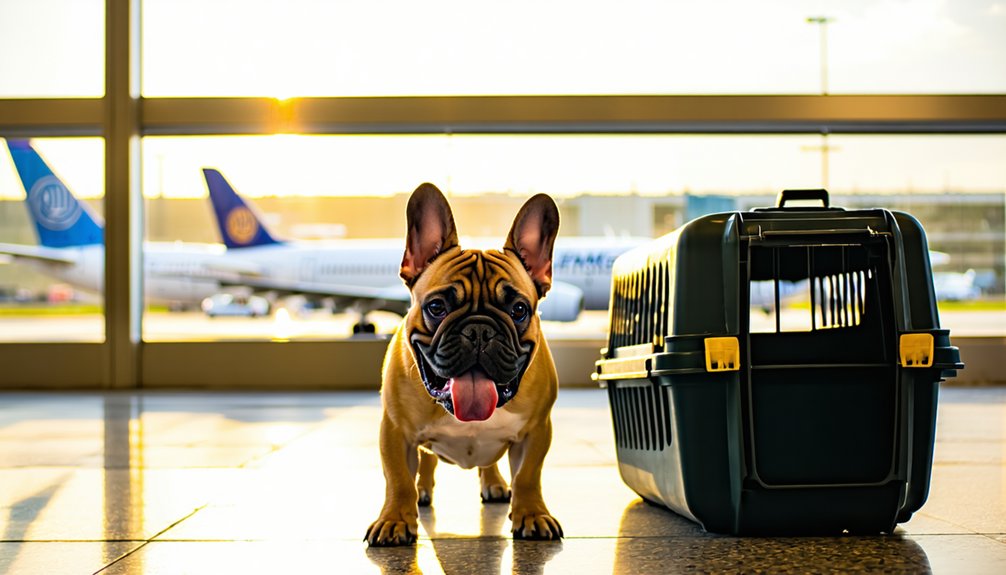
Because your flat-faced dog relies on panting to cool down, heat hits them harder than it does other breeds. Their narrow nostrils, elongated soft palate, and crowded airway tissues restrict airflow, so they generate more heat just trying to breathe.
High humidity makes this worse by reducing evaporation from the tongue and respiratory tract, sharply cutting panting’s effectiveness.
Watch for Humid Indoor Risks, too—poorly ventilated bathrooms, laundry areas, and rooms with dryers or space heaters can trigger heat stress even without extreme outdoor temperatures.
Don’t fall for Emergency Cooling Myths; ice water and frozen surfaces can constrict vessels and trap core heat.
Like every responsible owner in our community, you’ll avoid exercise and travel during hot, humid conditions to protect your companion.
What Cargo Holds Do to Snub-Nosed Pets
When you place a snub-nosed dog or cat in a cargo hold, you’re stacking stressors against an airway that’s already compromised. Even pressurized, ventilated live-animal sections aren’t enough. Small deviations in crate airflow, temperature, or humidity hit brachycephalic breeds harder than other pets. Rising CO₂ and humidity force heavier panting—something flat faces can’t sustain. Stress triggers like vibration, noise, and pressure changes provoke hyperventilation these breeds can’t manage.
| Cargo Condition | Effect on Flat-Faced Pets |
|---|---|
| Limited crate airflow | Heavier, ineffective panting |
| Rising CO₂/humidity | Respiratory obstruction risk |
| Vibration and noise | Stress-induced hyperventilation |
| Pressure changes | Airway distress |
| Tarmac delays | Compounded breathing difficulty |
Carriers tested larger crates and stricter limits, yet breathing problems persisted—which is why you’ll find breed-specific bans protecting your pet.
Health Factors That Raise Your Pet’s Risk
Cargo bans address the breed, but your pet’s individual health profile determines just how dangerous air travel can be.
When you’re part of a community that prioritizes your pet’s safety, you understand that certain conditions compound the inherent risks snub-nosed breeds already face.
Several factors dramatically raise your pet’s vulnerability:
- Pre-existing cardiac or respiratory disease, which impairs gas exchange and risks decompensation under altitude and stress
- Age extremes, since puppies lack mature thermoregulation and seniors have reduced cardiovascular reserves
- Obesity, which worsens airway obstruction and predisposes your pet to heat stress
You’ll also need to recognize that endocrine and metabolic diseases complicate monitoring hydration status during transit.
Identifying emergency signs becomes nearly impossible when your pet’s confined and inaccessible in cargo.
Which Airlines Ban Snub-Nosed Breeds
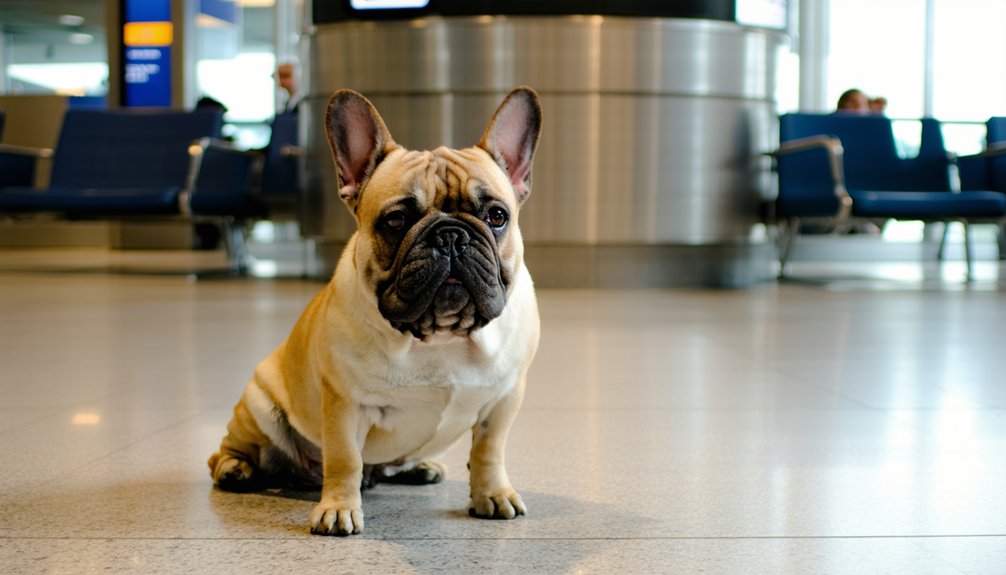
Sorting through airline policies, you’ll find that most major carriers have drawn a hard line on snub-nosed breeds in cargo.
American Airlines refuses all brachycephalic dogs and cats, including mixes, as checked pets or cargo.
United suspended its PetSafe program, while Delta and Alaska bar these breeds from standard cargo.
Internationally, Air France prohibits snub-nosed pets in the hold entirely, and British Airways won’t accept pugs, bulldogs, or Pekingese in cargo.
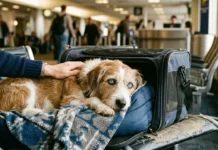
Here’s where you’ll find relief: American, Delta, JetBlue, United, and Lufthansa welcome bulldogs, pugs, and French bulldogs in-cabin, provided your pet fits an under-seat compliant In Cabin Carrier.
Confirm your crate measurement carefully—dogs above roughly 20–25 pounds, including crate, won’t qualify.
You’re not alone maneuvering these rules; thousands of owners adapt successfully.
When Cargo Exceptions Actually Apply
Bans aren’t always absolute. You’ll find that some carriers carve out exceptions when conditions let them tightly manage respiratory and heat-stress risk for snub-nosed breeds. These exceptions hinge on controlled circumstances, and knowing them helps you plan with confidence alongside other pet owners who’ve steered the same path.
Exceptions typically apply when:
- Temperature windows stay within safe ranges, often 45–85°F at origin, destination, and any transfer points, sometimes paired with early-morning or late-evening departures.
- Aircraft limitations are addressed, meaning only planes with monitored cargo-hold temperature and pressure qualify, excluding smaller regional jets.
- Route-specific rules allow it, like Alaska Air Cargo’s Hawaiʻi exception for non-connecting segments only.
You’ll also need IATA-compliant crates and prior acclimation to qualify.
Flying Snub-Nosed Pets In-Cabin Instead
When cargo’s off the table, the cabin becomes your best route for flying a snub-nosed pet. You’ll join countless owners who keep their pugs, bulldogs, and Boston terriers close and safe up front. Most U.S. legacy carriers—Delta, American, JetBlue, Alaska—welcome flat-faced breeds in-cabin when they fit compliant under-seat carriers.
Success hinges on two factors: In Cabin Weight Limits and Carrier Size Compliance.
| Requirement | Standard |
|---|---|
| Weight (with carrier) | 7–8 kg / 15–18 lb |
| Carrier sides with mesh | 3–4 for ventilation |
| Movement inside | Stand and turn comfortably |
| Bedding | Minimal, to reduce heat |
Choose a soft-sided carrier matched to your aircraft’s under-seat dimensions, since limits vary by route. Get there early, stay cool, and you’ll fly together confidently.
Ground Transport and Pet Relocation Options
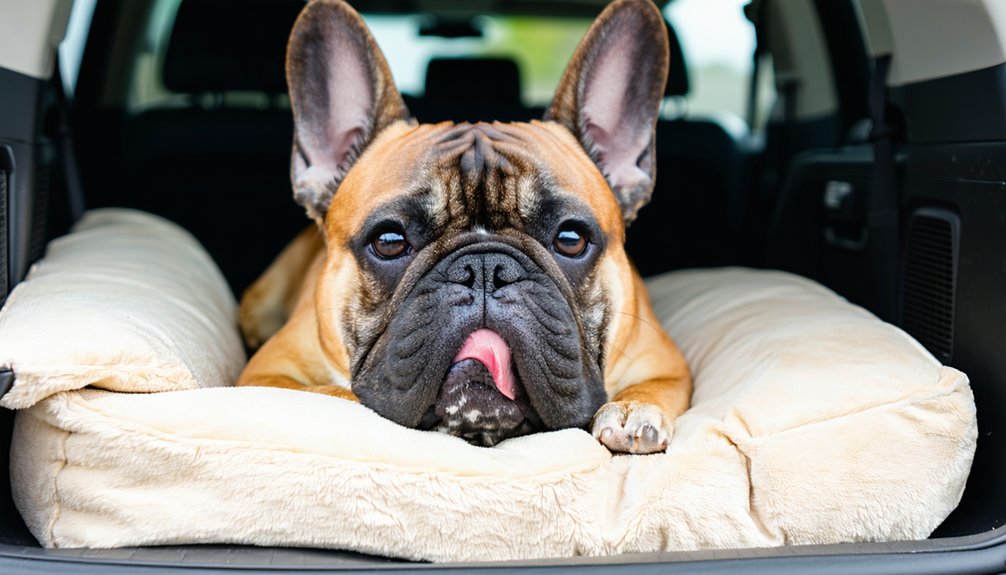
Because cargo holds pose real risks for flat-faced breeds, ground transport has become the go-to alternative for owners who refuse to gamble on temperature and pressure extremes. You’ll find door to door logistics minimize stress by eliminating airport transfers, while continuous human presence guarantees frequent water breaks and climate adjustments.
Whether you choose private solo transport or a shared route, USDA-registered transporters follow strict safety protocols under the Animal Welfare Act.
Consider these options when planning your move:
- Private/solo transport for maximum control, often $4,000–$9,500+ cross-country
- Group/shared transport for lower per-mile costs with longer routes
- Specialized services for high-anxiety or elderly pets needing extra monitoring
Expect 3–7 days for cross-country drives, plus current vaccinations and a recent health certificate before departure.
Smart Ways to Plan Around the Cargo Ban
Ground transport isn’t your only workaround. When you book smart, you can keep your snub-nosed companion safely beside you. Prioritize direct flights on airlines that welcome pets in the cabin, and verify each carrier’s brachycephalic list before paying. Travel Timing matters too—choose cooler months and early-morning or late-evening departures to dodge heat embargoes. Because Booking Limits cap in-cabin pets per flight, add your dog or cat to your reservation early. Confirm your Cabin Carrier meets dimension and ventilation rules to avoid denial at check-in.
| Strategy | Action | Why It Works |
|---|---|---|
| Route | Book direct | Less transit stress |
| Timing | Fly cool hours | Avoids embargoes |
| Aircraft | Larger planes | Better climate control |
| Booking | Reserve early | Beats pet caps |
You belong in the cabin together.
Lowering the Risk When Flying Is Unavoidable
Sometimes flying is the only option, and your job is to stack the odds in your pet’s favor. Start with a thorough pre-flight veterinary evaluation to assess airway function, heart health, and heat sensitivity, and secure a health certificate within the required timeframe.
Never accept sedatives—they impair thermoregulation and worsen breathing.
Choose flight times that dodge temperature extremes, book direct routes, and pick airlines with climate-controlled holding areas and clear snub-nosed policies.
- Use a roomy, airline-approved crate ventilated on all four sides
- Attach a spill-resistant or frozen water source for hydration monitoring
- Label the crate clearly with “live animals” and contact details
While no trip offers risk free alternatives, these evidence-based steps give your companion the safest possible flight.
Frequently Asked Questions
How Much Does Ground Transport for Snub-Nosed Pets Typically Cost?
You’ll typically pay $150–$1,600 for ground transport, depending on distance and service level. For ground transport planning, expect carrier pricing around $0.50–$2.00 per mile, plus a brachycephalic surcharge. You’re not alone—many owners budget similarly for safe trips.
Do Pet Insurance Policies Cover Air Travel Injuries or Deaths?
Yes, certain pet travel policies cover air-travel injuries or deaths, but you’ll face insurance coverage limits and policy exclusions. You’ll need claim documentation, and you’ll appreciate travel injury assistance—just confirm your wording covers your specific trip.
Can I Get a Refund if My Pet Is Denied Boarding?
It depends on why you faced denied boarding. If the airline’s at fault, you’ll likely win your refund request; if you didn’t meet pet policy requirements, fees are typically non-refundable. We’ve all managed these frustrating rules together.
Are Emotional Support or Service Animals Exempt From Cargo Bans?
No, you’re not exempt. Your emotional support animal or service animal faces the same brachycephalic cargo bans. Focus on cabin eligibility instead—meet documentation requirements and size limits, since cabin access remains your safest, most reliable option here.
What Documents Are Required for International Snub-Nosed Pet Relocation?
You’ll need Health Certificate Verification, Rabies Vaccination Records, an ISO microchip, import permits, government endorsements, and breed verification. Like fellow pet parents, you’ll also gather titer tests and airline waivers—ensuring your snub-nosed companion travels safely and welcome everywhere.
Conclusion
Your snub-nosed pet’s anatomy makes cargo travel a genuine danger, not just an inconvenience. You’ve now got the facts on BOAS, heat stress, and why airlines enforce these bans. Use them. Book in-cabin when you can, choose ground transport when you can’t, and plan early to avoid last-minute compromises. If flying’s unavoidable, minimize the risk at every step. Your dog’s safety depends on the decisions you make before you ever leave home.
References
- https://www.lufthansa.com/us/en/dangerous-dogs
- https://cargo.koreanair.com/en/cargo-news/restrictions-transporting-brachycephalicsnub-nosed-breeds
- https://tailwindglobalpet.com/blog/dogs-not-allowed-on-planes/
- https://citizenshipper.com/blog/dog-breeds-restricted-from-flying/
- https://www.petrelocation.com/blog/post/flying-with-pugs-other-snub-nosed-breeds-2021
- https://www.facebook.com/groups/1180884898968404/posts/3067459493644259/
- https://www.avma.org/resources-tools/pet-owners/petcare/air-travel-and-short-nosed-dogs-faq
- https://www.alaskacargo.com/petconnect/restrictions
- https://www.aa.com/i18n/travel-info/special-assistance/pets.jsp
- https://www.deltacargo.com/Cargo/catalog/restricted-animals