For high-output trail days, you’ll need 700-1,200 mg of sodium per hour in hot or technical terrain, plus 0.5-1 liter of fluid hourly depending on heat and effort. Carb-load with 8-12g/kg body weight beforehand, then fuel every 3-4 hours to stay ahead of glycogen depletion. Match electrolytes to your actual sweat rate, not maximums—overdoing sodium backfires. Get these ratios wrong, and you’ll see exactly why performance crashes hit harder than expected.
TLDR Key Takeaways
- Carb-load with 8-12g carbs per kg body weight, favoring high-glycaemic, low-fibre foods like rice and bananas.
- On hot, humid, or technical terrain, target 700-1,200mg sodium per hour to offset heavy sweat losses.
- Start fueling early: consume 20-30g carbs within 15-45 minutes of beginning your hike.
- Match sodium intake to your sweat rate, not maximum levels, to avoid disrupting fluid balance.
- After hiking, rehydrate with 500-1000mg sodium per liter and refuel using a 3:1-4:1 carb-to-protein ratio.
Why Sweat Loss Wrecks Your Trail Performance

Sweat is the silent thief on any hot trail—you lose it steadily, often without noticing, until your performance craters.
Dehydration effects hit fast: cross the 2% body mass threshold, and endurance drops 10-20%, with time-trial pace slowing roughly 6% over 3 km. Hot-weather hiking studies show performance falling 11% and aerobic capacity dropping 7%, even at moderate fluid loss.
These aren’t abstract numbers—they’re performance thresholds your body enforces whether you like it or not.
Your heart rate climbs 3-5 beats per minute for every 1% of body mass lost, straining cardiac output right when you need it most.
Skip fluid replacement, and you’re not just tired—you’re physiologically compromised, running on a system that’s actively working against you. Just as proof-of-work schemes make excessive automated demands costly to deter abuse, your body imposes real physiological costs when you push past safe hydration limits. Beyond water alone, sweat also carries away sodium, the key mineral your body needs to maintain proper hydration and muscle function.
How Much Sodium Do You Actually Need Per Hour?
Losing fluid isn’t the only problem—you’re also bleeding sodium, and replacing it correctly changes how your body handles everything else.
Your sodium intake shouldn’t be guesswork; it should match conditions and your own sweat profile.
Baseline research points to a clear structure:
- Cool or easy efforts: 300–500 mg sodium per hour covers most needs without overdoing it.
- Standard trail days: 300–600 mg/h is the go-to range for most runners logging hours on varied terrain.
- Hot, humid, or technical terrain: 700–1,200 mg/h keeps salty sweaters and high-output athletes from bonking. For efforts pushing past an hour, athletes may need to plan for 1 gram of sodium per hour to offset heavy sweat losses.
Dial in your electrolyte balance by tracking sweat rate and adjusting upward as heat, humidity, or intensity climb. Sweat sodium concentrations vary widely between athletes, ranging from roughly 300 to over 2300 mg per liter, which is why individual testing matters so much. Drinking excessive plain water without enough sodium can dilute your blood sodium levels and lead to exercise-associated hyponatremia.
Your number isn’t fixed—it moves with the day.
Matching Fluid Intake to Trail Temperature and Effort
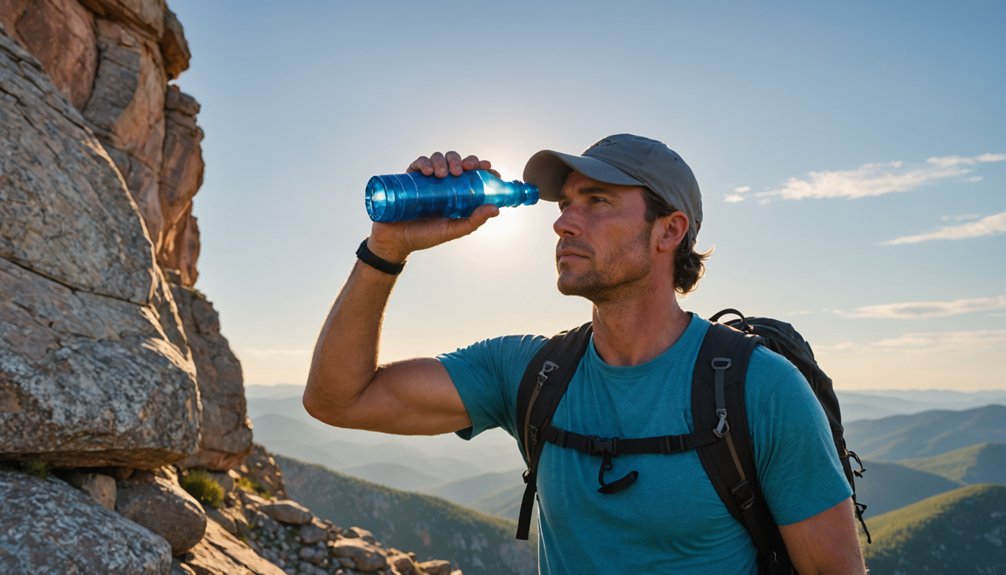
Because heat and effort drive sweat rate more than anything else, your fluid targets should shift with both. Moderate hiking in moderate temps runs about 0.5 liters per hour. Strenuous effort in high heat pushes that to 1 liter per hour or more, since sweat losses can reach 3 to 4 liters per hour in extreme conditions.
Trail planning starts with duration: outings under 60 to 90 minutes in cool weather often work fine with drink-to-thirst.
Past 90 minutes, especially in heat, structured fluid management matters more. Snacking on foods with sodium and potassium can help replace electrolytes lost through heavy sweating.
Adjust upward for elevation, pack weight, and personal sweat rate.
Watch body mass loss—staying below 2% body mass loss protects thermoregulation, heart rate, and performance on demanding days.
When Water Alone Stops Being Enough
When you sweat for more than 90 minutes, you’re not just losing water—you’re losing sodium, potassium, magnesium, and calcium, and plain water can’t replace any of that.
Chug water alone past that point, and you risk hyponatremia, especially in heat or at altitude.
Your body sends warnings before things go wrong. Watch for:
- Muscle cramping, headache, or nausea despite steady water intake
- Bloating or swelling in your fingers and ankles
- Declining pace, dizziness, or “heavy legs” signaling fuel and electrolyte gaps, not dehydration
These aren’t random glitches—they’re your body demanding electrolyte balance, not just more fluid intake.
Push through with water alone, and you’re setting yourself up for a bigger crash later.
Recognize the signs early, and you stay in control of your effort. In fact, dehydration of just 2% body weight can reduce performance by 5-10%, making early correction essential. For efforts over 90 minutes, electrolytes are essential to replace what’s lost through sweat, making electrolyte replacement just as critical as calorie intake. Since hyponatremia can be deadly, cramping should be treated as an early warning sign rather than something to push through.
Building an Isotonic Drink That Actually Works

Forget the neon-colored bottles at the gas station—an isotonic drink that actually works comes down to hitting a specific window: 4-8 grams of sugar per 100ml, matched with 500-700mg of sodium per liter. That’s it. That’s the formula.
This isn’t guesswork—it’s physiology.
Sodium drives glucose-sodium co-transport in your small intestine, pulling water and carbs into your bloodstream faster than plain water ever could.
Skip the sugar, and you lose that mechanism entirely.
Mix glucose, sucrose, or maltodextrin for energy.
Add a pinch of salt—about 1g per liter gets you close to 400mg sodium, though pushing toward 700mg replaces sweat losses better on brutal days. For best absorption, aim to keep your drink chilled to 10 to 15°C before heading out.
Nail this isotonic formulation, and your electrolyte balance stays dialed in—no bloating, no cramping, just steady fuel for the miles ahead. This balance matters because an isotonic drink’s osmotic pressure should match that of blood to ensure optimal fluid absorption. Staying within this range also helps you avoid the headaches, stomach issues, or tooth decay that come from overdoing sugary hydration products.
How Many Calories and Carbs Fuel a High-Output Day?
Numbers don’t lie: a big trail day can torch 2,800 to 6,000+ calories, and the biggest days—30-35 miles of moderate terrain or 20-25 miles of rugged climbing over 10-12 hours—push a trained 70-80 kg hiker with a light pack toward 6,000-7,000 kcal.
You don’t need a lab to estimate your burn—just math you can run on the trail:
- Body weight rule: 40-55 kcal/kg on average days, 60-70 kcal/kg on brutal ones.
- MET math: 7-8 kcal/kg/hr while moving, plus camp activity at 80-120 kcal/hr.
- Carb target: 6-12 g/kg/day, scaling with intensity.
Your calorie intake rarely matches this burn. Most backpackers still find that roughly 3,000 calories per day is a workable baseline before scaling up for high-output demands.
That gap in energy balance is fine short-term—but stack it too long, and performance crashes. Some thru-hikers report burning around 5,000 calories a day once fully immersed in long-distance trail conditions.
Carb-Loading the Day Before Your Big Hike
Glycogen is your trail fuel tank, and topping it off starts the day before you hit the trailhead.
Smart carb strategies call for 8–12 g of carbohydrate per kg bodyweight—roughly 560–840 g for a 70 kg hiker.
That glycogen binds water at about 3 g per gram stored, adding pre-hike mass but banking real endurance.
Effective hike preparation means eating every 3–4 hours instead of one massive meal.
Add extra rice, pasta, potatoes, or bread to each plate, and pull back on fat to make room.
Stick to high-glycaemic, low-fibre choices—white rice, potatoes, bananas, bagels, juices—and skip legumes or cruciferous veggies for 24–48 hours pre-hike.
Pair this with reduced training load, and you’re set to hit the trail with a full tank and total freedom to move.
Timing Your Fuel: The First Hour and Beyond
The clock starts ticking the moment you hit the trail, not when your legs start feeling heavy.
Fuel timing isn’t about waiting for hunger—it’s about staying ahead of the deficit your carb loading created the night before.
Your body’s still riding on stored glycogen, but that runway is shorter than you think.
Here’s your first-hour game plan:
- Start early: Take in 20-30g of carbs within 15-45 minutes of starting, even if you feel fine.
- Stay consistent: Hit 150-300 kcal/hour and 30-70g carbs/hour once you’re rolling.
- Feed small, feed often: Every 20-30 minutes, take a gel or chew—don’t wait for one big dose.
Skip the early window, and you’re gambling with a crash later.
Why Less Electrolyte Replacement Is Sometimes Better
While you’re loading up on carbs and calories, don’t assume electrolytes need the same aggressive treatment—they don’t.
More sodium isn’t better—it’s just more weight and more risk.
Excess salt drives thirst, forces extra water intake, and disrupts fluid mechanics by promoting temporary retention that can make climbs feel harder.
Overloading also invites GI distress and, paradoxically, can push you toward dehydration-driven hypernatremia if fluid intake doesn’t keep pace.
The wildfire suppression trial proves the point: supplemented water beat plain water using 3.3 liters less over 15 hours—that’s 7+ pounds you don’t have to carry.
The goal isn’t maximum sodium; it’s matching intake to sweat rate.
Proper electrolyte balance keeps nerve and muscle function steady without the extra baggage.
Spotting Hyponatremia Before It Ruins Your Hike
Malaise creeps in quietly, and that’s exactly what makes exercise-associated hyponatremia (EAH) so dangerous—it doesn’t announce itself.
You’re out there chasing miles and freedom, but your body’s sodium levels can drop fast, hiding behind symptoms you’d normally shrug off. Watch for these hyponatremia signs on trail:
- Nonspecific fatigue: unusual weakness, dizziness, or headache despite decent pace and fueling.
- GI red flags: nausea, bloating, or vomiting that shows up without clear cause.
- Mental shifts: irritability, restlessness, or feeling mentally “off.”
Don’t wait for thirst—EAH often skips it. Check for normal thirst, moist mucous membranes, or swelling in hands and ankles. These clues separate true hyponatremia from simple dehydration, keeping your hike—and your head—clear.
What Cramping and GI Distress Are Telling You
Cramping up mid-descent isn’t just bad luck—it’s your body flagging a fluid and sodium deficit you can’t ignore. That tightening calf or hamstring signals reduced plasma volume and neuromuscular excitability from sweat losses you haven’t replaced. Ignore it, and muscle recovery afterward gets harder, not easier.
Stomach issues tell a related story. Gut blood flow drops when you’re dehydrated and pushing hard, triggering nausea, cramps, or urgency—especially if you’re hammering concentrated carbs without enough water.
| Signal | Likely Cause | Action |
|---|---|---|
| Late-race cramping | Sodium/fluid deficit | Add electrolytes, slow intake pace |
| Nausea, bloating | Gut ischemia, high osmolality | Dilute fuel, reduce fat/fiber |
| Diarrhea | Fermentable carbs, heat stress | Try low-FODMAP fueling |
| Severe pain/vomiting | Gut injury | Stop, seek medical care |
Your gut’s feedback is data—use it.
Refueling and Rehydrating After You Reach the Trailhead
Once you cross that trailhead, your body’s signals shift from warning mode to recovery mode—and what you do in the next 30 minutes matters as much as anything you did on the trail.
Skip plain water alone—it dilutes sodium and stalls true rehydration. Your post trailhead window calls for strategic action:
- Rehydrate smart: Drink electrolyte fluid with 500–1000 mg sodium per liter, replacing roughly 1 L per kg lost.
- Refuel fast: Hit a 3:1–4:1 carb-to-protein ratio, targeting 1.0–1.2 g carbs per kg bodyweight hourly plus 20–30 g protein.
- Move lightly: Walk 10–15 minutes to enhance circulation and lactate clearance.
Smart trail nutrition now sets up your next 6 hours—and your next excursion—for full recovery.
Freedom on the trail starts with discipline off it.
Frequently Asked Questions
Can I Use Electrolyte Tablets Instead of Homemade Isotonic Drinks?
Yes, you can. In this electrolyte comparison, tablets give you compact, high-density sodium and potassium without sugar. Tablet effectiveness depends on dissolving fully in your stomach, so pair them with water and get your calories from food.
Are Commercial Sports Drinks Safe for People With High Blood Pressure?
Not always. If you’re managing hypertension risks, you’ll want to skip sugary, high-sodium sports drinks for daily use—they’re fine during heavy trail exertion, but check labels and prioritize blood pressure management with low-sodium choices otherwise.
Does Caffeine Intake Affect My Hydration or Sodium Needs on Trail?
No—moderate caffeine won’t derail your hydration strategies. Caffeine impact on fluid loss stays minimal at typical trail doses. You don’t need extra sodium or water because of coffee; just track sweat losses and drink freely.
Should I Adjust Electrolyte Intake for High-Altitude Trail Hikes?
Yes—boost sodium as altitude climbs. Aim for 500-1,000mg per liter, front-load before departure, and sip 400-800mL hourly. You’re free to fine-tune electrolyte balance based on sweat rate, supporting faster altitude acclimation and steadier energy on demanding climbs.
How Do I Train My Gut to Handle More Carbs During Hikes?
Start low, add 5-10g carbs/hour weekly during long training hikes to build gut adaptation. You’ll enhance carb tolerance to 60-90g/hour, ditch GI distress, and fuel freely—training your gut just like you train your legs.
Conclusion
You don’t need a lab to get this right—just attention. Match your sodium (300-700mg/hour) and fluids to heat, effort, and sweat rate, not generic rules. Watch for cramping, GI distress, or swelling; they’re signals, not setbacks. Build your isotonic mix before you hit the trail, and refuel with real food and electrolytes once you’re done. Get this dialed in, and you’ll finish stronger, recover faster, and actually enjoy those long, high-output days.
References
- https://www.youtube.com/watch?v=pcowqiG-E2A
- https://www.trailrunnermag.com/nutrition/race-day-nutrition-nutrition/the-runners-complete-guide-to-electrolytes/
- https://www.reddit.com/r/Mountaineering/comments/14ita8d/hydration_electrolytes_calories/
- https://www.rei.com/learn/expert-advice/energy-foods.html
- https://www.puresportsnutrition.com/blogs/pure-sports-nutrition/fuel-for-the-trail-a-practical-guide-to-nutrition-for-hikers
- https://nduranz.com/blogs/blogs/ultra-trail-nutrition
- https://www.correrjuntos.com/blog/en/trail-running-nutrition
- https://www.kelvinism.com/2020/08/ultralight-backpacking-food.html
- https://www.racedaylab.com/en/blog/trail-running-nutrition-complete-guide
- https://www.racedaylab.com/en/blog/trail-running-nutrition-before-during-after