You clip a little disc onto your dog’s collar before a road trip, feel a wave of relief, and then a strange thought hits you: is this actually legal everywhere you’re driving? It sounds like an overreaction until you learn that tracking devices — even tiny, harmless-looking ones meant for luggage — have triggered stalking investigations, airline confiscations, and confused police reports in cities across the country. The device isn’t the problem. How, where, and on whom you use it is.
- Tracking your own pet is legal almost everywhere, but the laws that govern tracking devices were written with people, not pets, in mind — so the fine print still matters.
- AirTags and Tile trackers rely on crowd-sourced Bluetooth networks and can trigger “unknown tracker” alerts on nearby phones, which has led to awkward encounters even for innocent pet-tracking use.
- Dedicated GPS pet trackers use cellular or satellite signals, work in more remote areas, and generally raise fewer legal red flags because they’re purpose-built and registered to you.
- Anti-stalking and electronic surveillance laws in many U.S. states and countries restrict tracking a person without consent — this rarely applies to pets, but it matters if the tracker ever ends up on a pet sitter’s bag or a shared vehicle.
- Airlines and TSA have specific rules about lithium coin-cell batteries in trackers, which can affect whether you can pack them in checked luggage.
- When in doubt, choose a tracker with clear ownership registration, keep documentation of purpose, and avoid using any tracker to monitor a person without their knowledge.
Why This Question Even Exists
A decade ago, nobody worried about the legality of a tracking device because dedicated GPS trackers were expensive, clunky, and used almost exclusively for fleet vehicles or search-and-rescue dogs. Then Apple released the AirTag in 2021 and Tile had already built a loyal following for years before that. Suddenly, tiny, affordable trackers were everywhere — clipped to keys, backpacks, wallets, and yes, pet collars.
That mainstream adoption came with a side effect nobody fully planned for: these devices are also incredibly effective tools for tracking people without their consent. Lawmakers, tech companies, and law enforcement have spent the last few years catching up, which means the legal landscape around AirTags, Tile trackers, and GPS devices has shifted quickly — and it keeps shifting. As a pet owner, you’re mostly in the clear, but understanding the rules protects you from awkward misunderstandings and helps you pick the right tool for the job.
How AirTag, Tile, and Dedicated GPS Trackers Actually Work
Before we get into legality, it helps to understand what’s under the hood, because the technology itself shapes the legal risk.
AirTag: Bluetooth + Crowd-Sourced Network
An AirTag doesn’t have its own GPS chip or cellular connection. Instead, it broadcasts a Bluetooth signal that nearby Apple devices — anyone’s iPhone, not just yours — detect and relay to Apple’s Find My network. That’s clever and battery-efficient, but it also means an AirTag’s location is only as good as the density of Apple devices around it. In a busy city, tracking is near real-time. In a rural area or on a hiking trail, it might not update for hours.
Tile: Similar Concept, Smaller Network
Tile works on the same crowd-sourced principle but relies on the Tile app’s user base rather than the full smartphone population, which means its detection network is smaller than Apple’s. Tile also partners with some Android integrations and has a “Scan and Secure” feature meant to flag unwanted trackers, mirroring Apple’s own unwanted-tracking alerts.
Dedicated GPS Pet Trackers: Cellular and Satellite
Devices built specifically for pets — the collar attachments with their own SIM card or satellite connection — work completely differently. (see: setting up geofencing alerts) They use actual GPS satellites to determine location and a cellular network (or satellite network, in remote-focused models) to send that data directly to your phone, independent of anyone else’s device being nearby. This means real-time tracking almost anywhere, but it requires a subscription plan and a larger, more visible unit.
The Legal Question: It’s About Use, Not the Gadget
Here’s the part that trips people up: there is no law in the United States, Canada, the UK, or most of the EU that specifically bans owning or using a Bluetooth tracker or GPS device. What’s regulated is the act of tracking a person without their knowledge or consent. Pets are property under the law in virtually every jurisdiction, which means tracking your own dog or cat doesn’t fall under anti-stalking statutes at all. The complications show up in a handful of specific, predictable scenarios.
1. Anti-Stalking and Electronic Surveillance Laws
Many U.S. states have passed or strengthened laws in recent years that make it a crime to place a tracking device on someone else’s property or vehicle without consent, specifically to monitor their movements. These laws were written in direct response to AirTag stalking incidents, not pet tracking. They typically require intent to track a person, so clipping an AirTag to your own dog’s collar doesn’t come close to violating them. Where it gets murky is if a tracker ends up on a shared item — say, a pet sitter’s tote bag that also holds their personal belongings, or a boarding facility’s shuttle van — where the primary purpose could be read as monitoring a person rather than a pet.
2. Consent and Disclosure
If you hire a dog walker, pet sitter, or boarding kennel and want to track your pet’s location during their care, the safest and most transparent approach is simply telling them. Most reputable pet care providers actually appreciate a heads-up tracker on a nervous or flight-prone dog. Skipping that conversation isn’t necessarily illegal, but it erodes trust fast if the sitter later discovers an unexplained tracking device and feels like they were the ones being monitored.
3. International and Cross-Border Travel
Laws around personal tracking devices vary more internationally. Some countries have stricter data privacy frameworks (the EU’s GDPR framework, for instance, governs how location data can be collected and stored, though it’s aimed at companies processing personal data rather than individual pet owners). A handful of countries restrict the import of certain radio-frequency devices, satellite communicators, or GPS units with strong transmission power, which can occasionally affect dedicated GPS trackers with satellite capability more than Bluetooth-based ones like AirTag or Tile. If you’re traveling internationally with a pet and a tracker, it’s worth a quick check of the destination country’s customs and telecommunications rules before you go, since regulations do change and vary by device type.
Comparison: AirTag vs. Tile vs. Dedicated GPS Pet Trackers
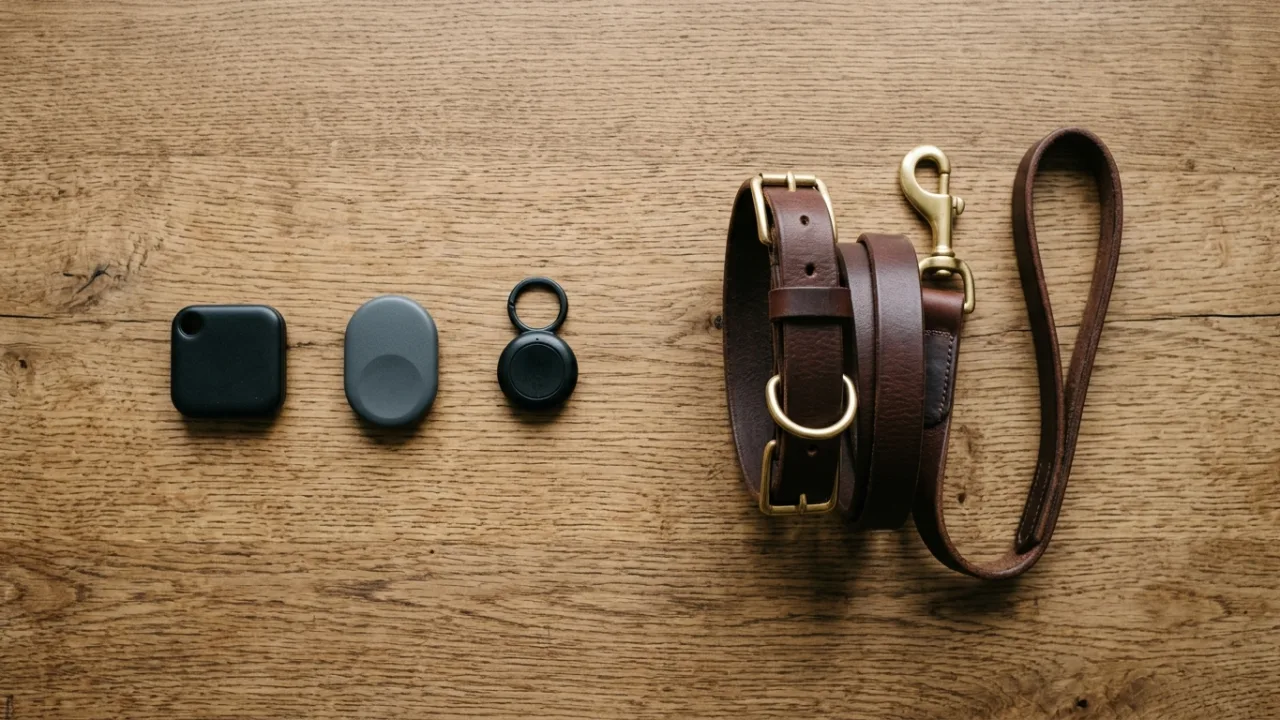
| Feature | Apple AirTag | Tile | Dedicated GPS Pet Tracker |
|---|---|---|---|
| How it tracks | Bluetooth + Apple’s crowd-sourced Find My network | Bluetooth + Tile’s smaller crowd-sourced network | Real GPS satellite positioning + cellular or satellite data |
| Works without other people’s phones nearby | No | No | Yes |
| Real-time tracking | Depends on network density | Depends on network density | Yes, typically continuous with a live subscription |
| Subscription required | No | Optional premium features | Usually yes, monthly or annual |
| Legal risk if misused on a person | Higher — flagged by anti-stalking laws in several states | Higher — same category as AirTag | Lower profile but same laws apply if misused |
| Unwanted-tracking alerts built in | Yes, for both iPhone and Android users nearby | Yes, via Scan and Secure | Rarely, since it isn’t designed to be discovered by strangers |
| Best suited for | Urban and suburban pets, indoor cats, city walks | Budget-conscious owners already using Tile ecosystem | Rural areas, hikers, escape-artist dogs, remote travel |
| Approximate cost | Low upfront, no ongoing fee | Low upfront, optional fee | Higher upfront plus recurring subscription |
Airline and Travel Rules You Need to Know
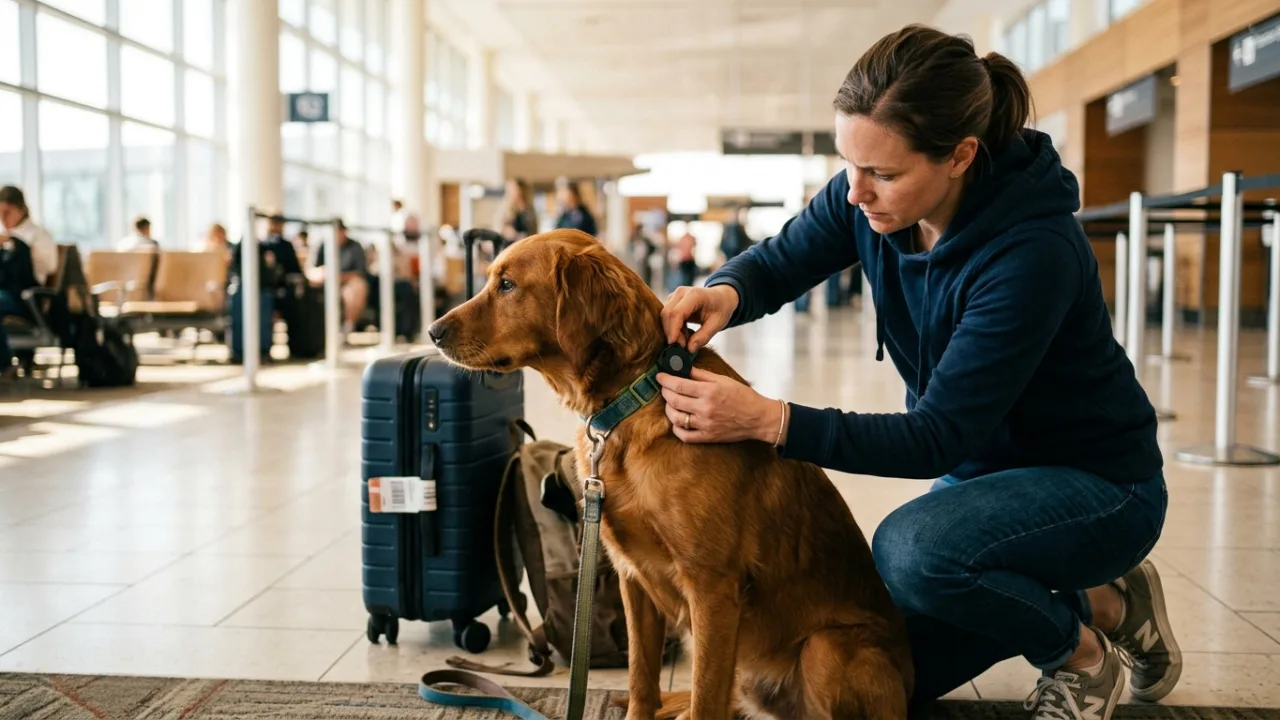
If you’re flying with your pet and want to bring a tracker along, the device itself isn’t usually the sticking point — the battery inside it is. Both AirTags and most dedicated GPS trackers use small lithium coin-cell or lithium-ion batteries, which fall under aviation lithium battery guidelines.
- Carry-on is almost always fine. Small trackers with coin-cell or low-capacity lithium batteries are generally allowed in carry-on bags and on your pet’s collar in the cabin.
- Checked luggage can be restricted. Loose spare lithium batteries are often prohibited or limited in checked bags by airline policy, so if your tracker has a removable, high-capacity battery, keep it with you rather than in checked luggage.
- Trackers on the pet’s collar during flight are typically permitted since the device stays with the animal, but always confirm with your specific airline, since pet travel and electronics rules vary by carrier and route.
- International customs rarely flag a Bluetooth tracker, but satellite communicators with stronger transmitters have occasionally required disclosure in a few countries with tighter telecom import rules.
The safest habit: check your airline’s pet travel page and battery policy a few days before departure rather than assuming last year’s rules still apply, since airlines update these policies fairly often.
Common Mistakes Pet Owners Make With Trackers
Mistake 1: Assuming Bluetooth Trackers Work Everywhere
An AirTag or Tile is only as useful as the network around it. If your dog slips out of the yard in a rural area with few smartphones nearby, you might not get an updated location for a long time. Owners who live outside dense suburbs or cities often overestimate how “real-time” these trackers really are.
Mistake 2: Not Telling Pet Sitters or Co-Owners
Placing a hidden tracker on a bag or item that a sitter, dog walker, or co-parent of the pet regularly carries can create legal and relational headaches, even if your intent was purely about the pet’s safety. Transparency avoids this entirely.
Mistake 3: Ignoring Unwanted-Tracker Alerts
If a stranger’s phone flags your pet’s AirTag as an unknown tracker moving with them at a dog park or on a walk, don’t panic — but don’t ignore it either. It’s a known quirk of the technology, not evidence of wrongdoing, but a friendly explanation (“that’s my dog’s collar tag!”) smooths things over fast.
Mistake 4: Forgetting Battery and Customs Rules Before International Trips
Packing a satellite-capable GPS tracker without checking a destination country’s import rules can occasionally lead to a confiscation or a customs delay. A five-minute search before you fly avoids this entirely.
Mistake 5: Choosing Based on Price Alone
A $30 Bluetooth tracker feels like a bargain until your dog bolts in a state park with spotty phone coverage. Matching the tracker type to your actual lifestyle — city apartment versus rural acreage versus frequent flyer — matters more than sticker price.
Which Tracker Should You Actually Choose?
There’s no single “best” answer here because the right choice depends on where you live, how you travel, and what kind of pet you have.
- Choose an AirTag if: You have an iPhone, live in a city or suburb with lots of foot traffic, and mainly want peace of mind for short outdoor excursions or as a backup to a microchip.
- Choose Tile if: You’re already invested in the Tile ecosystem for keys or luggage and want one consistent app across your belongings and your pet.
- Choose a dedicated GPS pet tracker if: You live in a rural or wooded area, have an escape-prone dog, travel frequently to remote destinations, or simply want continuous real-time tracking without relying on strangers’ phones being nearby.
Many experienced pet owners actually end up using two systems together — a lightweight Bluetooth tag for everyday walks and a subscription GPS tracker reserved for road trips, camping, or unfamiliar environments where cell tower and Wi-Fi density can’t be counted on.
A Quick Legal Checklist Before You Track
- Are you tracking your own pet, not a person? You’re almost always in the clear.
- Does the tracker ever travel with a pet sitter, walker, or shared vehicle? Tell them it’s there.
- Are you traveling internationally with a satellite-enabled device? Check the destination’s customs and telecom rules.
- Does your tracker use a lithium battery? Review your airline’s checked-baggage battery policy before packing.
- Would you be comfortable explaining the tracker’s purpose to a stranger or officer if asked? If yes, you’re using it appropriately.
Expert Perspective: Why Transparency Is the Real Legal Safeguard
Every lawyer and pet-safety advocate who’s weighed in on this topic over the past few years converges on the same practical advice: the laws around tracking devices exist to stop covert surveillance of people, not pet owners keeping tabs on their dog. The single best way to stay firmly on the right side of the law, no matter which device you choose, is transparency — disclose trackers to anyone who might carry them, keep your device registered in your name, and use the tracker for its stated purpose. That habit alone resolves the vast majority of gray areas long before they become a real problem.
Final Thoughts
Tracking your pet isn’t just legal almost everywhere — it’s become one of the smartest, most affordable ways to add a safety net to daily walks, road trips, and boarding stays. The real work isn’t picking the “most legal” device; it’s matching the right technology to your environment and being upfront about how you use it. An AirTag or Tile is a fantastic lightweight option for city dogs and everyday errands, while a dedicated GPS tracker earns its subscription fee the moment your pet needs to be found somewhere a Bluetooth signal simply can’t reach.
Before your next trip, take five minutes to check your airline’s battery policy, register your tracker properly, and have a quick conversation with anyone who’ll be caring for your pet in your absence. That small bit of preparation is what actually keeps you — and your pet — safely on the right side of the law wherever you go.
Frequently Asked Questions
Is it legal to put an AirTag on my dog or cat's collar?
Yes. Tracking your own pet is legal in the U.S. and most other countries because pets are considered property, not people, under the law. Anti-stalking and tracking laws are aimed at monitoring a person without consent, which doesn't apply to using an AirTag on your own animal's collar.
Can a Tile or AirTag get flagged as a stalking device if it's on my pet?
It's possible for a stranger's phone to flag your pet's AirTag or Tile as an unknown tracker moving near them, since the technology can't distinguish between tracking a person and tracking a pet on a leash. This is a known quirk of the crowd-sourced Bluetooth network, not evidence of wrongdoing, and a quick explanation usually resolves any confusion.
Do dedicated GPS pet trackers have different legal rules than AirTag or Tile?
The core legal principle is the same for all three: tracking your own pet is fine, tracking a person without consent is not. Dedicated GPS trackers are less likely to trigger unwanted-tracking alerts because they aren't designed to broadcast to strangers' phones, but the same anti-stalking laws would still apply if one were ever misused to monitor a person.
Can I bring a pet GPS tracker on a plane?
Generally yes, especially in carry-on luggage or attached to your pet's collar in the cabin. The main restriction involves lithium batteries in checked luggage, which many airlines limit or prohibit as loose spares. Always check your specific airline's pet travel and battery policy before your flight.
Should I tell my pet sitter or dog walker that I'm using a tracker?
Yes, it's the safest and most respectful approach. While tracking your pet isn't illegal, placing a hidden device on something a sitter carries could raise privacy concerns or feel like you're monitoring them personally. A quick heads-up avoids misunderstandings and most pet care providers appreciate knowing a nervous pet is trackable.
Are there countries where pet trackers aren't allowed?
Outright bans on Bluetooth trackers like AirTag or Tile are rare, but some countries have stricter import or telecom rules for satellite-enabled GPS devices with stronger transmitters. If you're traveling internationally with a satellite pet tracker, it's worth checking the destination country's customs and telecommunications regulations before you leave.
Which tracker is best for a dog that tends to escape or roam in rural areas?
A dedicated GPS pet tracker with cellular or satellite connectivity is the better choice for rural or remote areas, since it doesn't depend on nearby smartphones the way AirTag and Tile do. In areas with low phone density, Bluetooth-based trackers may not update location quickly enough to be useful.
Does using a pet tracker violate GDPR or similar privacy laws in Europe?
GDPR and similar privacy frameworks primarily regulate how companies collect and process personal data, not how individual pet owners use consumer trackers on their own animals. These laws generally aren't a concern for personal pet tracking, though it's still wise to review a destination country's specific rules before international travel.