To keep your dog warm overnight below freezing, you need layered shelter, insulation, and monitoring. Choose a vehicle, tent, or dog house with solid floor insulation to block conductive heat loss. Add a jacket, booties, and a reflective bed or heated pad for extra warmth. Adjust meals to increase calories, and watch for shivering or lethargy. Get these fundamentals right, and the details ahead will show you exactly how to execute them.
TLDR Key Takeaways
- Choose vehicle shelter over tents when possible, since metal bodies and sealed doors retain heat better overnight.
- Build layered thermal barriers—XPS foam, foam tiles, and an R-4+ closed-cell pad—to block conductive heat loss.
- Keep bedding and fur completely dry, since moisture collapses insulation and accelerates heat loss.
- Use reflective beds or hot water bottles wrapped in fabric to add safe, cord-free overnight warmth.
- Front-load calories earlier in the day to fuel thermogenesis and sustain warmth through the night.
How Cold Is Too Cold for Your Dog?
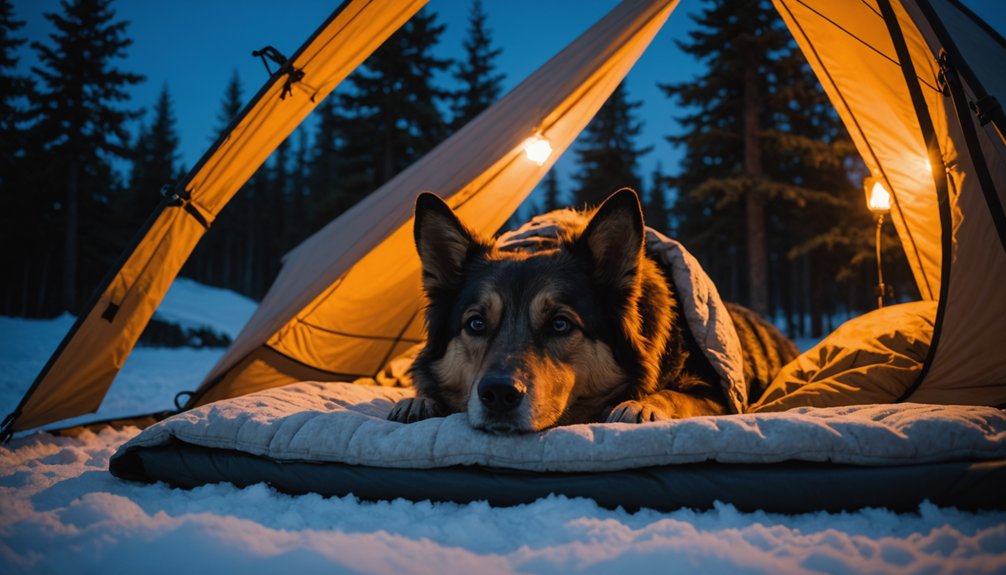
There’s no single number that tells you when it’s too cold for your dog—it’s a sliding scale.
Above 45°F, you’re fine.
Between 45-32°F, small, thin-coated, young, senior, or ill dogs start feeling it.
From 32-20°F, most dogs face real risk with prolonged exposure.
Below 20°F, danger escalates fast—hypothermia and frostbite can set in quickly.
At 0°F and below, you’re in emergency territory within minutes, especially with wind or wet fur.
Cold limits aren’t fixed—they shift with your dog’s size, coat, age, and health.
A husky bred for winter camping tolerates far more than a short-haired companion.
Know your dog’s specific limits, not just the thermometer. Exposed body parts like paw pads, ears, and noses are especially susceptible to cold-weather injury, so pay close attention to these areas during overnight stops.
Dog safety on overland trips means reading your animal, not just the forecast. Watch closely for signs of distress, such as shivering or lethargy, and warm your dog up immediately if you notice them. A warm, draft-free resting space in your camp setup can help your dog recover quickly if they do get too cold overnight.
Spot Hypothermia and Frostbite Before It’s an Emergency
Your dog can’t tell you when it’s cold—but their body will, if you know what to look for. Catching hypothermia signs and frostbite symptoms early keeps a rough night from becoming an ER run.
Watch for shivering, lethargy, and cold ears or paws first—these are your early warnings. If you see stumbling, muscle stiffness, or disorientation, hypothermia’s progressing fast. Stopped shivering, collapse, or unresponsiveness means it’s already severe. Beyond the cold itself, dilated pupils can also signal that hypothermia is setting in.
Frostbite hits the extremities—ears, paws, tail, nose. Check for pale or bluish skin, waxy texture, or swelling after rewarming. A rectal thermometer reading below 98-99 F confirms hypothermia if you’re unsure how serious the situation has become. Short-coated breeds, along with puppies, seniors, and dogs with chronic health conditions, face a higher risk of hypothermia during cold overlanding nights.
| Stage | Key Signs | Action |
|---|---|---|
| Early | Shivering, cold paws | Warm up now |
| Moderate | Stumbling, stiffness | Get to shelter |
| Severe | Collapse, no shivering | Emergency vet care |
Vehicle, Tent, or Dog House: Picking Your Overnight Shelter
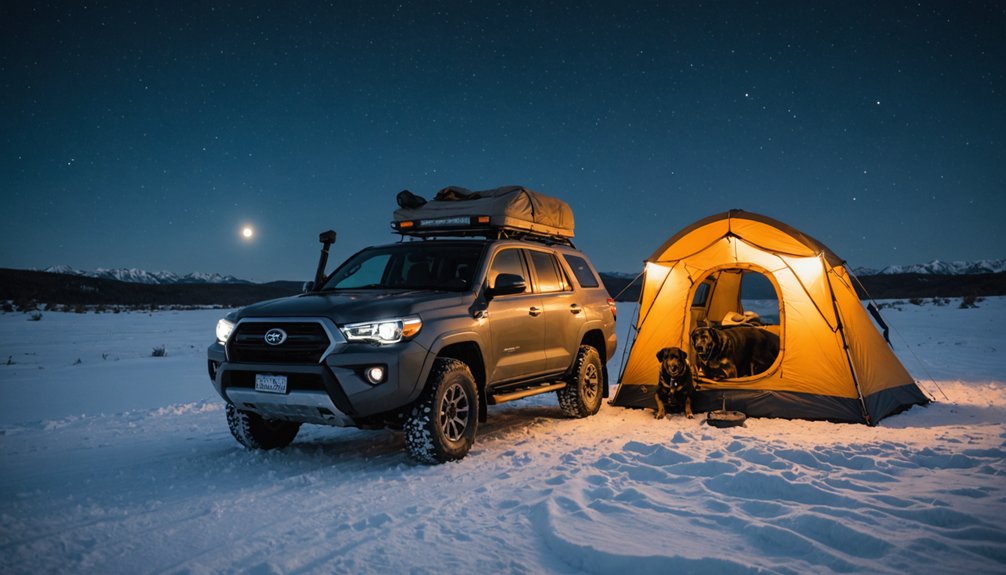
Three shelter options exist for an overnight stay, and each handles cold differently.
Your vehicle wins on thermal factors—metal body, sealed doors, and combined body heat push interior temps well above ambient.
You’ll need an insulated floor platform and a cracked window to manage condensation, but skip the engine and unrated heaters entirely.
Tents demand more from you.
A four-season shell, low mesh, insulated pad, and tight vestibule management compensate for what the fabric lacks structurally.
Pitch behind a windbreak to cut convective loss.
A well-built dog house offers rigid wind and moisture protection, but it’s harder to monitor and slower to reach if your dog’s in distress. Keep in mind that a dog’s tolerance for cold depends heavily on its size, since smaller breeds lose heat faster than larger ones. Watch for trembling as an early sign your dog needs a warmer shelter option before the temperature drops further. Regardless of shelter type, fresh water should remain available so your dog stays hydrated through the night.
Whichever you choose, size it tight—just enough room to stand, turn, and curl up retains the most warmth.
Stop Cold From Creeping Up Through the Floor
Picking the right shelter only solves half the problem—whatever you choose, the ground underneath will still pull heat straight out of your dog’s body if you don’t block it.
Floor insulation isn’t optional in sub-freezing conditions; it’s the layer that decides whether your dog sleeps warm or shivers through the night. Conductive heat loss through a floor outpaces wall loss, so treat it as priority one. Build thermal barriers in stages, not as an afterthought:
- Subfloor: XPS foam board under plywood stops cold from radiating up through metal or wood.
- Interior surface: Foam tiles or mats break the direct contact between cold flooring and your dog’s body.
- Sleeping pad: A closed-cell pad rated R-4 or higher goes under the bedding, not just under the mattress.
Stack these layers, and the cold stays where it belongs—outside.
Layer Up: Jackets, Booties, and Insulated Gear
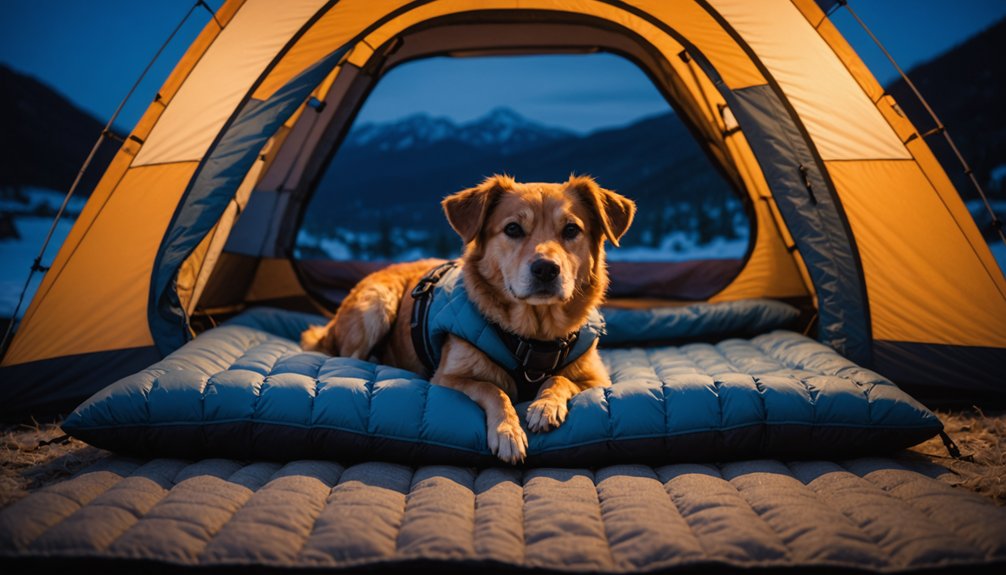
Insulation on the ground and walls won’t matter if your dog’s coat can’t hold heat once you step outside, so gear becomes the next line of defense.
Choose dog jackets built with synthetic fill or fleece, ideally a two-layer lining that traps heat and manages moisture better than single-layer designs.
For sub-freezing nights, skip lightweight raincoats and commit to fully insulated, weatherproof gear rated at least 10,000mm for water resistance, with windproof outer fabric to cut convective heat loss.
Fit matters as much as material—measure chest girth, back length, and neck circumference so the jacket sits snug, covering from shoulders to tail base with chest and belly panels. Top-rated jackets are often tested across a wide range of conditions, from as cold as -2 degrees, to ensure reliable warmth performance. Short hair breeds, older dogs, and dogs exposed to elements for extended periods benefit especially from winter coats designed for these conditions.
Add booties for paw protection, and don’t overlook reflective trim for visibility during dark, snowy walks. Many jackets, such as the Teddy Sherpa Dog Jacket, are marked down from their original price of $35.00 USD to a more affordable rate, making quality insulation more accessible for winter overlanding trips.
Heated Beds vs. Reflective Beds vs. Hot Water Bottles
Once your dog’s jacket and booties are handling the outdoor chill, what happens underneath them at rest matters just as much.
Your dog’s sleeping surface determines whether they hold heat or lose it to the ground all night.
- Heated Options: Electric beds actively generate warmth near 102°F, ideal for senior or thin-coated dogs, but they demand reliable power and supervision. Many outdoor-safe versions include automatic heaters that engage on their own once the bed is in use.
- Reflective beds: These bounce body heat back without cords, making them safer for chewers and unsupervised nights—pair them with insulated pads to stop ground-conduction heat loss. This works because reflective beds rely on insulated layers that gently return a dog’s own body heat rather than generating new warmth.
- Hot water bottles: A low-tech backup that adds temporary warmth without electrical risk. Never substitute a human heating pad for these dedicated options, since they run hotter than a dog’s body temperature and can cause injury.
Bed Safety comes down to matching the tool to the conditions—know your dog, know the terrain, and never rely on one solution alone.
Why Wet Fur and Damp Bedding Wreck Insulation
Because a dog’s coat relies on trapped air rather than hair itself to hold in heat, moisture is its worst enemy. Water collapses that air layer, turning insulation into a heat conductor. Wet fur mats and clumps, killing loft, while your dog burns precious calories just evaporating the moisture away. Damp bedding compounds the problem, conducting body heat straight into cold ground or metal.
| Condition | Effect on Heat Retention |
|---|---|
| Dry fur + dry bedding | Insulates, traps warm air |
| Wet fur or damp bedding | Conducts heat away, causes chill |
| Both wet | Rapid, compounding heat loss |
Fur maintenance and regular coat conditioning keep the coat’s loft intact, so your dog stays protected when freedom means sleeping under open sky, not indoors.
Fill a Hot Water Bottle Without Risking Burns
Dry fur and dry bedding only solve half the problem on a cold night — you still need a heat source, and a hot water bottle does the job well if you fill it right.
Bottle Safety starts with Water Temperature: use hot, not boiling water, and let it cool 15–20 minutes to a safe 50–60°C range before filling. Skip hot tap water; impurities degrade rubber over time.
- Fill smart — two-thirds to three-quarters full, never to the top, to prevent bursting under pressure.
- Expel air — lower the bottle flat until water reaches the opening, cutting pressure and improving heat spread.
- Seal and check — tighten the stopper, then tilt it over a sink to catch leaks before they reach your dog.
Adjust Meals and Water for Cold Overnight Camping
Fuel matters as much as insulation when temperatures drop overnight. Calorie adjustment isn’t optional in freezing conditions—small dogs need +15–25 kcal/hr below 45°F, medium dogs +30–50, large dogs +60–90. Skip greasy scraps; feed lean meats and cooked sweet potato instead, increasing portions gradually while you track body condition.
Meal timing matters too. Front-load calories earlier in the day to support overnight thermogenesis, then serve a balanced, lighter evening meal to avoid reflux or restlessness. Split rations into 2–3 scheduled feedings for predictable energy through cold nights.
Watch water closely—check bowls for ice, and offer fresh water more often. Consistency here isn’t fussy micromanagement; it’s what keeps your dog’s internal furnace running strong when you’re both off-grid and the mercury’s dropping.
Keep Water Bowls From Freezing Overnight
All that fine-tuning of meals and water schedules won’t matter if the bowl itself turns into a block of ice by midnight.
Your dog needs liquid water on demand, not a frozen disc he can’t touch. Solve this with layered tactics, not one fix.
- Heated Solutions: Electric or solar-powered heated bowls keep water liquid when you’ve got power access—monitor for faster evaporation and refill often.
- Insulated Bowls: Double-walled or thick plastic containers, set inside a Styrofoam cooler or tire packed with gravel, slow heat loss even off-grid.
- Placement: Position the bowl inside your shelter, off the ground, and away from wind to cut convective and radiant cooling.
Combine these, and freezing stops being a nightly gamble.
Co-Sleeping With Your Dog for Shared Body Heat
Because a dog’s core temperature runs 101–102.5°F—several degrees hotter than yours—sharing your bed turns him into a built-in furnace. It’s the old “three-dog night” principle: enough shared body heat, and you skip the extra propane heater altogether.
But don’t bury him under dog blankets or your duvet. Trapped under heavy shared bedding, he can’t self-regulate, and heat stress hits even when your rig’s freezing outside.
Let him sleep on top of the covers, not underneath them.
Watch for panting, restlessness, or him inching away—that’s your cue to pull back the layers. Keep your sleeping space around 65–68°F so you’re not compensating with excess insulation. Done right, co-sleeping cuts your heating needs without risking his safety.
What to Do If Your Dog Shows Cold Stress Overnight?
Shivering at 2 a.m. is your first alarm bell—don’t ignore it.
Cold prevention starts with reading your dog’s signals fast, before mild stress becomes an emergency response situation.
Watch for paw lifting, whining, or curling tight—these mean act now, not later.
- Move and insulate. Get your dog off cold ground, into the vehicle or tent, wrapped in dry blankets focused on the torso.
- Add gentle heat. Warm water bottles wrapped in fabric layers work—never place heat directly on skin.
- Watch for escalation. Stiffness, confusion, or stopped shivering means you’re past self-care territory—head to a vet immediately.
Your freedom to roam depends on catching cold stress early, every single night.
Frequently Asked Questions
Can I Give My Dog Melatonin or Sedatives to Help Them Sleep in Cold Weather?
No—skip dog sedatives and canine calmers for cold nights. They don’t fix heat loss, they mask discomfort. You need insulation, bedding, and shelter instead. Ask your vet before using melatonin; it’s not a cold-weather solution.
Are Certain Dog Breeds Legally Required to Have Extra Protection in Freezing Climates?
No—laws don’t set breed restrictions by name, but you’re required to protect cold-sensitive breeds based on condition and climate. Short-haired dogs need dog coats and shelter; you decide what’s appropriate, not a bureaucrat naming your breed.
Does Pet Insurance Cover Emergency Vet Visits for Frostbite During Overlanding Trips?
Yes—if you’ve got an accident-and-illness plan, frostbite coverage kicks in as an emergency condition. You’ll pay veterinary expenses upfront, then claim reimbursement. Check waiting periods, trip-length limits, and geographic restrictions before you roam freely into freezing terrain.
Can I Use a Generator or Propane Heater Safely Inside a Tent With My Dog?
No—never run a generator or unrated propane heater inside your tent. Keep the generator outside, away from tent ventilation openings, and choose proper heater placement using only indoor-certified electric heaters to protect you and your dog.
How Does Altitude Affect My Dog’s Cold Tolerance During Overlanding Trips?
High altitude cuts oxygen availability, so your dog tires faster and struggles more against cold climates. You’ll need gradual acclimatization, frequent water, and vigilant monitoring—altitude turns ordinary cold into a serious stressor on your dog’s reserves.
Conclusion
Cold-weather overlanding with your dog doesn’t have to be risky. You just need to plan ahead: choose the right shelter, insulate against ground cold, layer up your dog’s gear, and adjust food and water for the temperature drop. Watch for early signs of cold stress, and don’t hesitate to bring your dog into your sleeping space if needed. With the right prep, you’ll both stay warm, safe, and ready for the next escapade.
References
- https://www.reddit.com/r/camping/comments/17t8vpx/how_can_i_keep_my_dog_warm_in_0f_18c_temperatures/
- https://girlonahike.com/6-tips-to-keep-your-dog-warm-while.html
- https://www.reserveamerica.com/articles/camping/8-must-knows-for-winter-camping-hiking-with-your-dog/
- https://www.goldenretrieverforum.com/threads/help-advise-on-really-cold-weather-camping.518443/
- https://www.reddit.com/r/CampingandHiking/comments/180282f/cold_weather_camping_with_a_dog/
- https://www.rspca.org.uk/adviceandwelfare/seasonal/winter/pets/dogs
- https://www.petmd.com/dog/care/how-cold-too-cold-dog
- https://www.petmd.com/dog/general-health/how-to-keep-dogs-warm-in-winter
- https://www.chewy.com/education/dog/health-and-wellness/how-to-keep-dogs-warm-outside-in-winter
- https://millsmarietta.com/blog/how-cold-is-too-cold-for-a-dog/