If you’ve got an escape artist, choose Fi. It pings every 2–5 seconds in lost-dog mode, lasts up to three months per charge, and roams across 38 countries via its multi-carrier LTE-M eSIM. Want wellness findings instead? Whistle tracks scratching, drinking, eating, and sleep—but it shut down August 31, 2025, leaving US-only coverage and Tractive migration. So Fi’s your pick for international tracking. Here’s exactly how their networks, accuracy, and costs stack up.
TLDR Key Takeaways
- Whistle shut down on August 31, 2025, after Tractive’s acquisition, bricking all devices and ending it as a roaming option.
- Fi runs on AT&T’s LTE-M (Cat-M1) network, while both Fi and Whistle depended on partner roaming agreements requiring regional checks.
- The Fi Series 3 collar supports international roaming across 38 countries with built-in multi-carrier capability.
- Whistle’s embedded SIM locks to a carrier (AT&T or Verizon) at purchase, preventing later network switching.
- Fi excels at escape tracking with 2–5 second updates and 10–15 second geofence alerts, versus Whistle’s slower cadence.
Fi vs. Whistle: Which Tracker Wins?
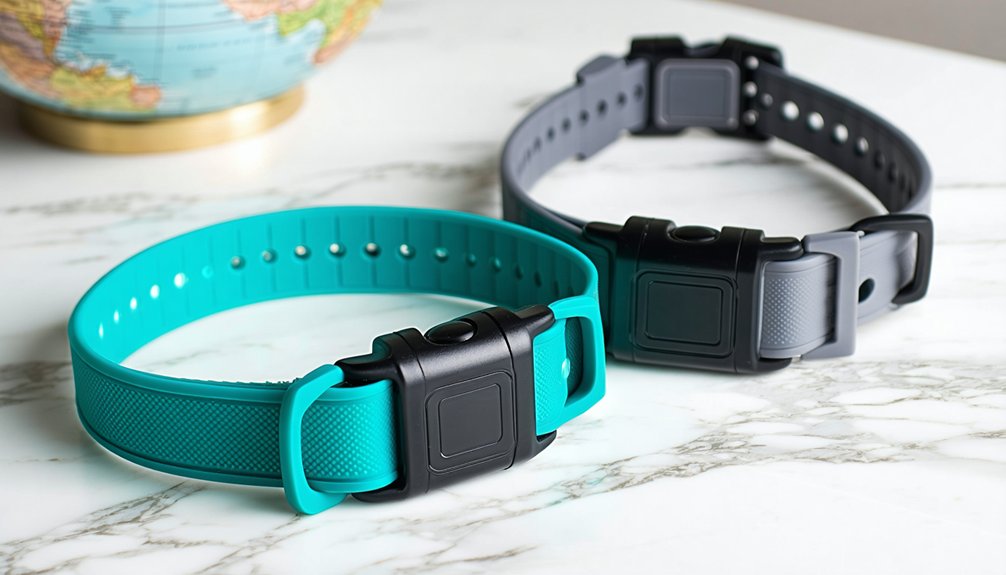
How do Fi and Whistle actually stack up? It comes down to what your pack values most. If GPS reliability tops your list, Fi pulls ahead. The Fi Series 3 earns “best GPS tracker” honors, pinging every 2–5 seconds in lost-dog mode versus Whistle’s 30–120 seconds. Fi also wins on battery, lasting up to three months, and on device formfactor, with its rugged, integrated, aerospace-grade collar.
Whistle, however, owns health. It tracks scratching, licking, sleep, eating, and drinking, building individual baselines that flag emerging issues with vet-reviewed know-how.
Think of it this way: Fi’s “a tracker with some health features,” while Whistle’s “a health system with a tracker.” Choose Fi for escape tracking; choose Whistle for long-term wellness monitoring.
How to Choose Between Fi and Whistle
Now that you’ve seen how these trackers compare head-to-head, your decision really hinges on one question: what’s your primary use case?
If you’re the parent of an off-leash *explorer* or escape artist, Fi’s your match—prioritizing reliable escape alerts, rugged outdoor tracking, app simplicity, and minimal battery downtime thanks to its multi-week charge intervals. You’ll appreciate its streamlined integrated collar and quick status checks.
If you’re focused on wellness, Whistle belongs in your toolkit. Its rich health dashboards track scratching, licking, drinking, eating, and sleep, surfacing vet-reviewed *findings* for early issue detection.
You’ll trade some battery longevity and app simplicity for deeper *findings*.
Decide first between safety-first tracking and health-first monitoring.
Then weigh secondary factors like collar style, coat type, and your tolerance for data-dense dashboards.
Fi vs. Whistle Cellular Networks and Coverage
Why does network choice matter so much for a GPS tracker? Because your tracker’s reliability depends entirely on the cellular network behind it.
Fi runs on AT&T’s LTE-M (Cat-M1) IoT network, giving you superior building penetration and rural reach in wooded areas and inside homes.
Whistle uses 4G LTE or LTE-M on either AT&T or Verizon, depending on the model you buy.
That difference creates real carrier lock in challenges.
Whistle’s embedded SIM ties you to one carrier at purchase, so you can’t switch later.
Fi’s coverage tracks AT&T’s LTE-M footprint, while Whistle’s tracks whichever carrier matches your SKU.
When you weigh international coverage comparisons, remember both depend on partner roaming agreements—so check your region’s footprint before you commit.
Why Fi Sends Faster Escape Alerts
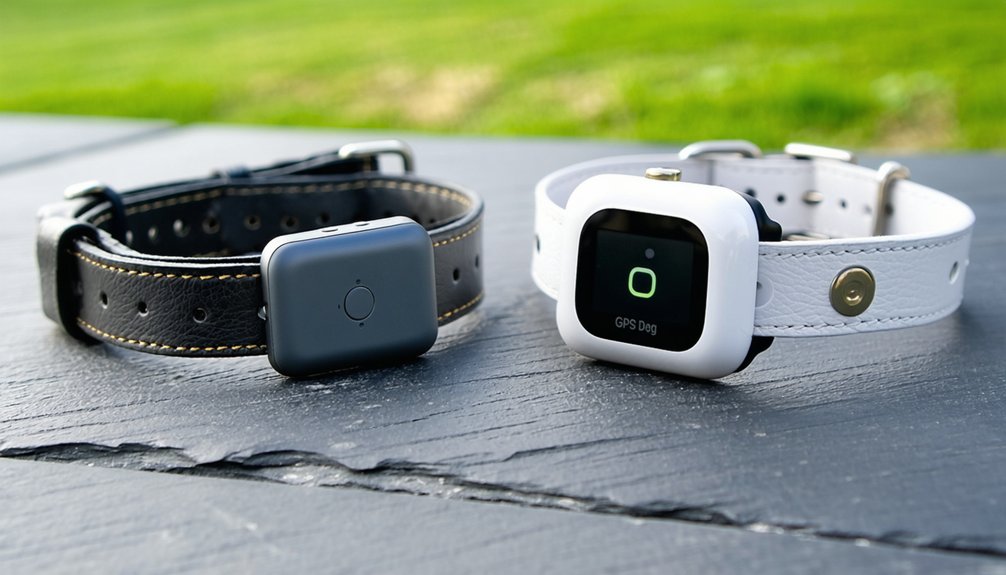
Speed defines Fi’s entire design philosophy. When your dog’s a known escape artist, you need to know the moment they cross the boundary—and that’s exactly where Fi delivers for owners like you.
Fi pairs the low-power LTE-M standard with aggressive alert logic, pushing location updates every 2–5 seconds in active mode. That faster cadence shortens the gap between an actual escape and your notification.
| Metric | Fi | Whistle |
|---|---|---|
| Geofence breach alert | 10–15 sec | ~8 min |
| Network standard | LTE-M | LTE |
| Update cadence | 2–5 sec | Slower |
Alert testing results back this up: Business Insider clocked Fi at five minutes or less versus Whistle’s eight. Combined with always-on collar wear, that edge improves owner response timing when every second counts.
GPS Accuracy: Fi vs. Whistle Tracking Tests
While speed gets your alerts out fast, accuracy determines whether you’re actually running toward your dog or chasing a phantom point on the map. When reviewers apply consistent walk test methodology—walking identical routes with both devices—Fi consistently wins on pure location accuracy.
Here’s what the data shows:
- Map matching accuracy: Fi plots straighter paths that closely follow sidewalks and trails, while Whistle occasionally places your dog on adjacent property lines or parallel streets.
- Stair step jitter: Whistle traces show slight zig-zag offsets, especially in dense neighborhoods, indicating more plotted jitter.
- Urban canyon effects: Near tall structures, Whistle’s positioning drifts more, while Fi’s LTE-M and satellite integration holds stable locks.
You’ll find Fi repeatedly described as best-in-class for GPS collar accuracy.
Battery Life: 3 Months vs. Days
Accuracy gets you to your dog, but battery life determines whether the tracker’s even running when you need it. Here’s where Fi pulls ahead.
Thanks to LTE-M and safe zone optimization, Fi lasts up to 3 months for homebody dogs, around 2 months with daily walks, and roughly 3 weeks for highly active pups living off-tether.
Whistle can’t match that—PCMag’s testing projects about 20 days per charge, with most owners facing a recharge frequency of every 1 to 3 weeks because of heavier cellular use and faster battery drain.
Just know that Lost Dog Mode changes everything: minute-by-minute GPS updates drop Fi to about 2 days or less.
Built-In Collar or Clip-On?

Once you’ve sorted out battery life, the next question is how the tracker actually attaches to your dog—and Fi and Whistle take opposite approaches.
Fi builds its GPS module into a dedicated collar band, giving you a cleaner profile and better snag prevention. Whistle clips a puck onto almost any standard collar, prioritizing flexible swapping between collars and harnesses.
Here’s what matters for your dog:
- Comfort fit: Fi spreads weight but stays rigid where electronics sit; Whistle’s puck is lighter yet can bounce on small necks.
- Collar sizing: Fi requires Fi-compatible bands; Whistle fits most widths.
- Security: Fi’s anchored hardware resists loss, while Whistle’s mount adds a failure point.
Choose based on which trade-off fits your dog best.
Health Tracking Where Whistle Pulls Ahead
The health tracking gap between these two trackers is where Whistle clearly pulls ahead.
While Fi covers activity and rest, Whistle digs deeper, monitoring scratching, licking, drinking, and sleep to give you multi-dimensional behavioral data.
Through behavioral baselines analysis built over time, it detects deviations that signal emerging health issues, then flags them with proactive alerts.
You’ll get veterinary symptom findings drawn from large-scale studies and clinical research—not arbitrary goals—translating trends into potential concerns like skin problems, joint discomfort, or anxiety.
You can generate sharable vet reports summarizing activity, scratching, licking, and sleep for more targeted appointments.
If you want a community of pet parents who catch problems early, Whistle’s evidence-based, condition-linked monitoring helps you act before things escalate.
How the Fi and Whistle Apps Differ
Beyond the data each tracker collects, the apps themselves branch sharply in how they present it. You’ll notice these distinctions shape your daily routine and how connected you feel to your dog’s whereabouts.
- Layout focus: Fi keeps you on a clean location card and map view, while Whistle surfaces health scores, activity goals, and behavior alerts up front.
- Map experience: Fi delivers seconds-level live tracking for escape scenarios; Whistle leans on post-hoc path history once your pet’s back online.
- Activity framing: Fi rewards you with streaks, badges, and community leaderboards; Whistle measures adherence to breed and age guidelines.
These user habit differences create a real split in alert review cadence—Fi’s set-and-forget rhythm versus Whistle’s frequent wellness check-ins.
What Fi and Whistle Subscriptions Really Cost
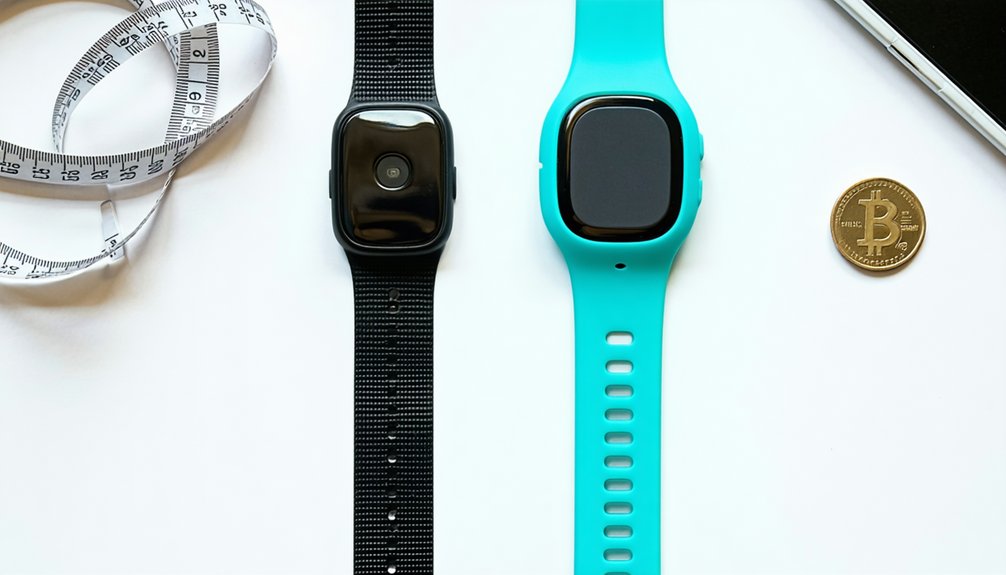
Behind every GPS tracker’s polished app sits a recurring bill, and that’s where Fi and Whistle diverge sharply. When you join the Fi community, you’ll pay roughly $99/year when billed annually, or $14–$20 monthly if you want flexibility.
Multi-year prepay drops your effective rate by 20–40%, though canceling early forfeits remaining time without a pro-rated refund. Fi subscription comparisons show core service covers GPS tracking, LTE, escape alerts, and activity metrics—no separate roaming add-on for most supported regions.
Whistle’s legacy plans ran $12.99/month, $99/year, or $192 for two years on GO-series trackers. But here’s the catch for any roaming cost analysis: Whistle shut down on August 31, 2025, so those plans no longer exist.
Only Fi keeps you connected.
Is Whistle a Dying Product Line?
Whistle isn’t dying—it’s already dead.
If you’re still counting on this brand, you need to face the facts: Tractive acquired Whistle in 2025, discontinued the product line, and bricked every device on August 31, 2025.
There’s no long term firmware support, no new hardware, and no future roadmap under the Whistle name.
Here’s what you’re really dealing with:
- Customer migration timing: You’d until September 30, 2025 to claim a complimentary Tractive device—after that, you’re locked out.
- Warranties and refunds: Remaining pre-paid subscription time transferred or credited to Tractive, with short free trials for inactive users.
- Tractive ecosystem roadmap: Your future lives entirely inside Tractive now.
You belong with trackers that’ll actually keep working tomorrow.
Do Fi or Whistle Roam Abroad? Try Tractive
Wondering whether your dog’s collar will track abroad? Here’s where the two leaders diverge.
Your Fi Series 3 collar roams across 38 countries using a built-in multi-carrier LTE-M eSIM, providing live GPS tracking, escape alerts, and activity monitoring wherever LTE-M roaming coverage exists.
You won’t need SIM swaps or your own carrier’s roaming plan—Fi manages connectivity through its own eSIM agreements.
Whistle, however, leans on US-based cellular networks, so its support content emphasizes US-only coverage.
If you’re traveling beyond Fi’s supported regions, you’ll want to assess Tractive coverage testing to confirm tracking in your destination.
Many globe-trotting pet parents appreciate Tractive subscription flexibility, which adapts to different travel patterns.
Verify coverage maps before you go, and you’ll join travelers safely navigating confidently worldwide.
Frequently Asked Questions
Can Multiple Dogs Share One Fi or Whistle Subscription Account?
Yes, you can manage multiple dogs under one account on both Fi and Whistle. With multi dog permissions, you’ll switch between profiles easily—but subscription limitations mean each dog needs its own collar and active service.
Do Fi and Whistle Work Without a Smartphone?
You’ll need a smartphone for both. While their cellular connection keeps GPS tracking running and collars store data autonomously, no smartphone required isn’t true here—neither offers offline mode support letting you view locations without the app.
Can I Transfer My Fi Collar to Another Dog?
Yes, you can transfer your Fi collar to another dog. Just swap the band, edit the dog profile, make collar fit adjustments, and redo emergency alerts setup—you’ll keep your pack tracking accurately together.
What Happens to Tracking Data if I Cancel My Subscription?
You’ll lose access to your cancelation tracking history once your membership ends. Fi’s data retention period isn’t publicly documented, so screenshot your data first—joining countless owners who’ve safeguarded their pup’s records before saying goodbye.
Are Fi and Whistle Safe for Puppies or Small Breeds?
Yes, both work safely for small breeds when properly sized. Whistle fits dogs down to 5 lb better. Confirm two-finger spacing, prioritize activity safety, and use gentle training—you’ll keep your little companion comfortable and secure.
Conclusion
You’ve now got the facts to make a smart choice. If you want faster escape alerts, superior GPS accuracy, and a polished app, Fi’s your winner. Whistle still works, but its uncertain future should give you pause. Neither, though, handles international roaming—so if you’re traveling abroad, you’ll need Tractive instead. Match the tracker to your dog’s habits and your travel plans, and you’ll never lose sight of your best friend.
References
- https://www.pixelsandpointers.com/post/the-ultimate-tracking-collar-showdown-garmin-tt25-fi-whistle-tractive-which-is-the-winner-the
- https://www.jacksonbackhome.com/fi-dog-collar-vs-whistle/
- https://www.facebook.com/groups/464355695182/posts/10168092010080183/
- https://easypettech.com/fi-vs-tractive-vs-whistle-smart-collar-comparison/
- https://petsciencereview.com/blog/tractive-vs-fi-for-ex-whistle-users/
- https://rebarkable.com/whistle-switch-vs-fi-series-2/
- https://www.youtube.com/watch?v=6PrkzNt3WhU
- https://worldanimalfoundation.org/dogs/fi-collar-vs-whistle/
- https://trytails.com/guides/dog-health-longevity/best-gps-dog-collars/
- https://www.reddit.com/r/dogs/comments/10c7bvg/2023_dog_gps_collars_tractive_vs_fi_vs_whistle_vs/