Stay calm and act fast. Keep yourself safe first—back away from the snake and photograph it from a distance. Call an antivenom-ready clinic immediately and arrange transport. Keep your dog still to slow venom spread, remove collars before swelling starts, and immobilize the bitten limb below heart level. Skip tourniquets, ice, and suction—they cause more harm. Carry your dog rather than letting it walk. The next steps could save your dog’s life.
TLDR Key Takeaways
- Call ahead to a clinic with antivenom, route first to cell coverage, then prioritize paved, high-speed roads.
- Keep the dog still and calm, since movement and exertion spread venom faster through circulation.
- Position the bitten limb below heart level, immobilize the whole limb, and remove collars before swelling starts.
- Apply pressure immobilization with an elastic bandage and splint; skip tourniquets, ice, suction, and cutting the wound.
- Note the bite time, mark the site, and photograph the snake from a safe distance for identification.
How to Spot a Venomous Snakebite Fast
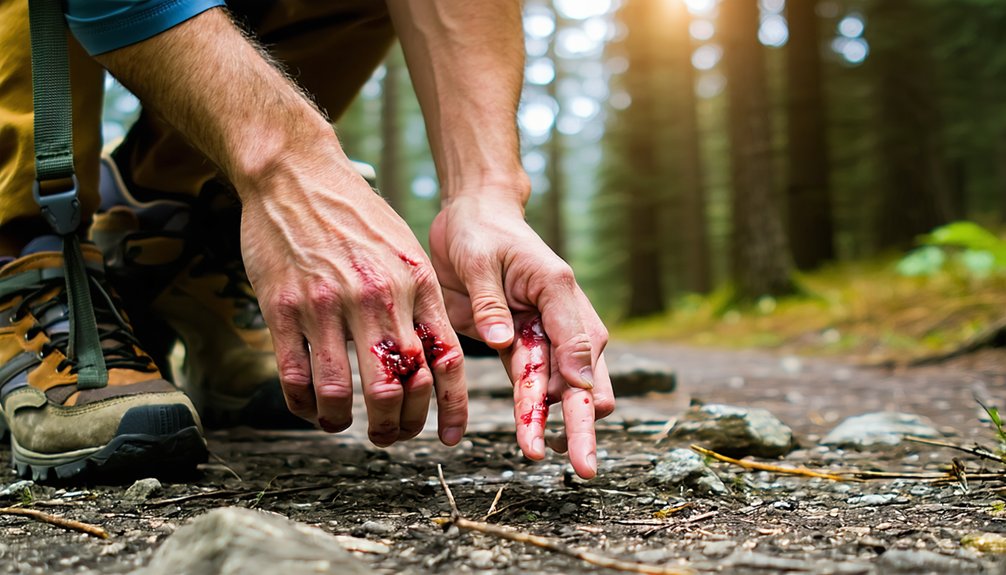
When you’re miles from a vet, your ability to read a snakebite fast can mean the difference between life and death for your animal.
Start by examining the wound closely. Identify bite punctures: venomous bites typically leave 1–2 deep, widely spaced fang marks, while non-venomous bites show a U-shaped arc of shallow teeth marks.
Next, compare swelling speed. If redness, bruising, and swelling spread from paw to leg within the first one to two hours, you’re likely facing envenomation.
Watch for pain that’s disproportionate to the wound’s size, continuous bleeding, or blood-tinged seepage.
Look for blistering, mottled or purplish skin, and a hard, tense limb.
These rapid local changes signal venom’s at work—act quickly and decisively.
Keep Yourself Safe Before Helping Your Dog
Although your instinct screams to rush to your dog’s side, you can’t help anyone if you become the second victim.
Take a breath, assess the scene, and maintain safe distance—at least several meters from the snake.
Remember, you’re part of a community that prioritizes smart action over panic.
- Don’t chase or kill the snake; 90% of encounters end safely if left alone.
- Snap a photo from a distance instead of capturing it for identification.
- Watch your hands, feet, and face when reaching toward your dog’s location.
- Use leash safety tips: control your dog with a slip lead from a short distance, never grabbing near the mouth.
- Choose open, visible paths when retreating to spot additional hidden snakes ahead.
The First 5 Minutes After a Snakebite
Once you’ve secured your own safety and gained control of your dog, the clock starts ticking. Call emergency services immediately and arrange transport to a facility with antivenom. Keep your dog still and calm—movement spreads venom faster. Remove any collar, saddle strap, or tight items before swelling starts. Position the bitten limb below heart level and immobilize it. Strong timekeeping habits matter: note the bite time and mark the site for the vet.
| Action | Why It Matters |
|---|---|
| Note bite time | Guides treatment decisions |
| Watch breathing | Reveals allergic reaction signs |
| Keep limb low | Slows venom spread |
Monitor breathing and heart rate closely. Watch for allergic reaction signs like swelling or distress. Stay beside your dog until help arrives.
Snakebite Mistakes That Make Things Worse
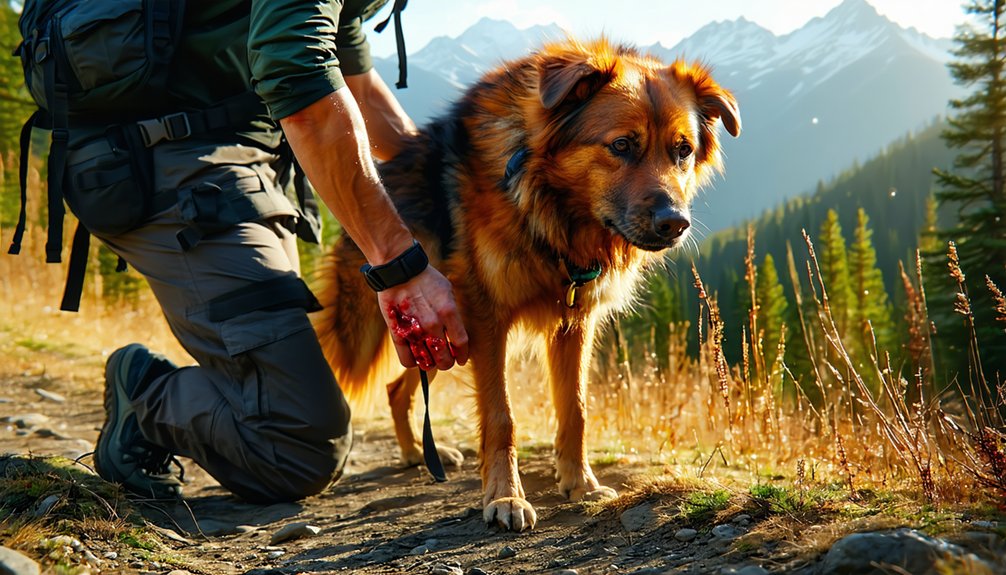
Even with the right intentions, panic and folklore push owners toward actions that worsen a snakebite far more than the venom alone would. You’re part of a community that’s learned the hard way: well-meaning instincts can cost a life. Trust evidence, not legend.
- Cutting or cauterizing the postmortem wound shreds tissue and invites necrosis without removing meaningful venom—it sabotages infection control.
- Applying soil, plants, or chemicals raises infection risk and obscures the wound for later assessment.
- Risky home remedies like snake stones and herbal “antidotes” delay real care and offer zero proven benefit.
- Alcohol, NSAIDs, and sedatives worsen bleeding and cause symptom masking that clinicians rely on for triage.
- Strenuous activity accelerates venom spread through circulation.
Why You Should Skip Tourniquets, Ice, and Suction
Three first-aid relics keep showing up in snakebite emergencies, and all three do more harm than good: tourniquets, ice, and suction.
Tourniquet harms are well-documented: tight bands concentrate venom locally, triggering severe tissue necrosis, nerve injury, and compartment syndrome that can cost the limb.
Releasing one can flood the system with a dangerous venom bolus.
They don’t even work, since venom travels through the lymphatic system, not arteries.
Ice risks are just as real—cold causes frostbite-type damage, reduces blood flow, and never neutralizes venom enzymes.
Suction devices simply don’t remove meaningful venom.
What does help is pressure immobilization instead: an elastic bandage and splint, paired with rapid transport to antivenom.
You’re not alone here—trust the evidence and skip these myths.
When a Snakebite Pressure Bandage Actually Helps
Although you’ve just learned what to skip, pressure immobilization earns its place when the threat is systemic venom spreading through your lymphatic system. Reviews show this technique delays systemic toxicity by slowing lymphatic transport—buying time until you reach antivenom, not replacing it.
It’s most important for highly neurotoxic bites, which is why Australian first-aid guidance recommends it for their regional species, including sea snakes.
- Cytotoxic exclusion: skip it for tissue-destroying venoms, since pressure worsens local damage.
- Apply it promptly after the bite for best results.
- Use it only on limb bites—not head, neck, or torso.
- Keep the limb and patient still throughout.
- Match the intervention to your local snakes.
You’re protecting your animal by acting deliberately, not universally.
How to Splint and Immobilize the Bitten Limb
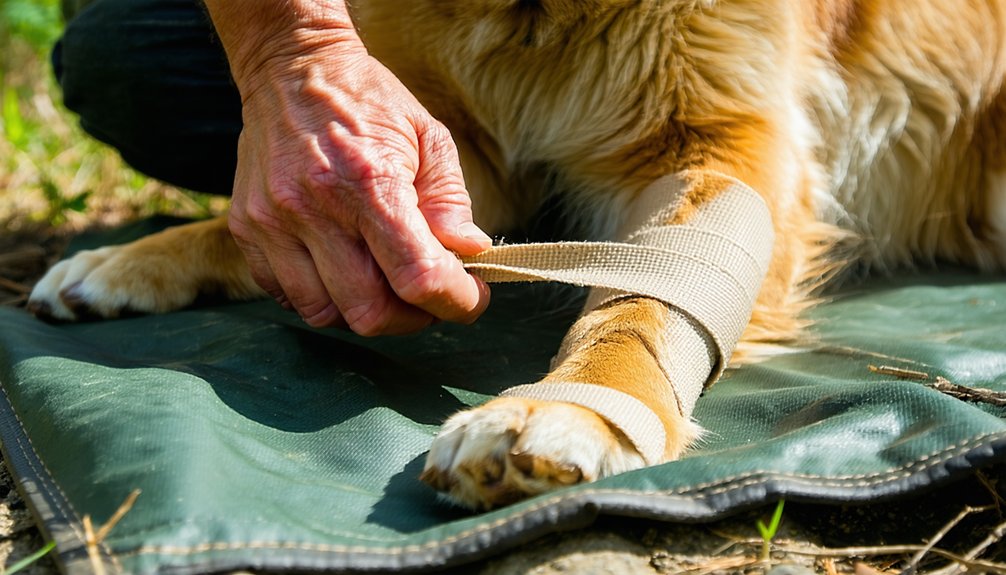
Pressure bandaging works best when you pair it with rigid immobilization, so your next move is locking down the entire limb.
Immobilize the whole limb, not just the bite, so muscle movement can’t pump venom toward the body.
Improvise splints from whatever’s rigid and close at hand—wood, a branch, a spade, or rolled newspaper.
Extend the support along the full length of the limb and secure joints above and below the bite.
Bind the splint firmly to the bandaged limb, tight enough to hold position without cutting off blood flow.
For an arm bite, an elbow-bent sling does the job.
For a leg, tie one leg to the other if needed.
Leave fingertips and toes visible, then check circulation and monitor toes regularly.
Snakebite Warning Signs to Watch Every 10 Minutes
With the limb splinted and immobilized, your job shifts to vigilance.
Every 10 minutes, you’ll perform emergency monitoring, tracking how your companion responds and whether venom is spreading.
Mark the edges of swelling and tenderness with each check so progression markers stay visible.
We’re watching for escalation beyond the bite site, because early detection saves lives.
Watch closely for these critical signs:
- Rapid swelling, color change, or expanding bruising around the bite
- Nausea, vomiting, dizziness, or collapse signaling systemic effects
- Paleness, rapid heart rate, or cold, clammy skin pointing to shock
- Excessive bleeding, persistent oozing, or blood in urine suggesting clotting problems
- Drooping eyelids, slurred speech, or trouble breathing indicating neurotoxic danger
Any worsening means immediate transport.
Why You Should Carry, Not Walk, Your Pet
Every step your pet takes after a snakebite can speed venom through its body. Muscle activity improves circulation, and walking adds exertion, heart-rate elevation, and limb motion—all of which spread venom faster. That’s why carrying tops every rescue checklist.
When you lift your pet, you reduce movement, keep the bitten limb still, and honor the immobilization priority that veterinary sources consistently recommend.
Carrying does more than slow venom. It limits collapse, panic, and pain-triggered struggling, sparing your pet’s cardiovascular system additional stress. Keep the bitten area below heart level and minimally handled during transport.
If you genuinely can’t carry your pet, still minimize movement and keep the bite low and still.
We’re in this together—carry your companion straight to emergency care.
Planning the Fastest Route to a Snakebite Vet

Carrying your pet to the car solves only half the problem—you still need to know exactly where you’re driving.
Before any high-risk hike, pre-calculate drive time from each trailhead to the nearest snakebite-ready clinic under normal conditions. Then build in redundancy, because the route you trust can fail when you need it most.
- Map emergency routes to every capable clinic, prioritizing paved, high-speed roads over shorter backroads.
- Identify at least two alternative driveways to account for traffic, closures, or weather.
- Save clinic destinations as guidance “favorites” for one-tap routing under stress.
- For remote sites, route first to cell coverage, then to care.
- Choose basecamps within a realistic 60–90 minute transport window for high-risk seasons.
What to Tell the Clinic Before You Arrive
Call ahead the moment you’re back in cell range—that single phone call can mean the difference between a clinic scrambling to react and one ready to treat the instant you pull in.
Give them call time updates: when the bite happened and when symptoms first appeared.
Share bite location specifics—which limb, side, and how many marks you see—plus how fast swelling’s spreading.
Describe the snake honestly; if you’re facing snake species uncertainty, report size, color, pattern, and region instead of guessing.
Provide your pet’s weight, age, and any chronic conditions or medications for antivenom dosing.
Offer transport ETA updates, your vehicle, and how many hands you’ve got.
Mention first aid already done.
This way, the team’s prepping antivenom while you’re still driving.
What Happens at the Vet After a Snakebite
When you pull into the clinic, the team treats your pet’s snakebite as a medical emergency, prioritizing immediate care over delayed first-aid measures. Those first hours are critical, so the staff focus on stabilization—managing the airway, breathing support, and circulation.
They’ll perform a shock assessment and watch for neurologic signs that signal serious envenomation.
- Physical exam: inspecting for puncture wounds, bleeding, bruising, pain, and redness
- Lab testing: CBC, chemistry panel, and coagulation tests to detect systemic effects
- Continuous monitoring: tracking respiratory, circulatory, and neurologic changes
- Antivenom and respiratory support: guided by suspected snake type and severity
- Supportive care: pain relief and medication to control vomiting
Before discharge, your vet recommends repeat bloodwork to reassess clotting status and kidney function.
Frequently Asked Questions
Can My Dog Die From a Snakebite Even After Treatment?
Yes, your dog can still die after treatment. About 80% survive, but immediate monitoring matters because delayed complications like shock, bleeding disorders, or organ damage can threaten life. You’re not alone—prompt veterinary care gives the best chance.
How Much Does Snakebite Antivenom Typically Cost for Dogs?
You’ll typically pay $400–$1,000 per vial, and since many dogs need several, total Emergency Costs often reach $1,000–$3,000+. Like fellow pet parents, you should request Clinic Estimates upfront—antivenom volume drives most of your bill.
Are Certain Dog Breeds More Vulnerable to Snake Venom?
Yes, your small dogs face greater Breed Susceptibility since less body mass intensifies venom’s effects. While no breed’s immune, Geographic Risk and bite location matter more. We’re here to help you protect every pup.
Can a Vaccinated Dog Skip Emergency Snakebite Treatment?
No, you can’t skip treatment. Don’t believe home vaccine myths—your dog still needs emergency care immediately. Vaccines only reduce severity, and delayed toxin effects like shock or coagulopathy can turn deadly. We’re protecting them together.
How Long Does Recovery Take After a Venomous Snakebite?
You’ll typically recover within weeks to months, depending on severity. Your monitoring timeline starts with 6–24+ hours of hospital observation, while serious bites may need long term rehab spanning 1–9 months. We’re here supporting your healing path.
Conclusion
You can’t control when a snake strikes, but you can control how you respond. Stay calm, keep your dog still, and skip the tourniquets, ice, and suction that science has long debunked. Carry your pet, call ahead, and drive fast. Antivenom works best when it’s given early, so every minute counts. Pack a plan before your next backcountry trip—because miles from a vet, your quick thinking is your dog’s best lifeline.
Disclaimer: This article is for informational purposes only. Always consult a licensed veterinarian before making medical decisions for your dog.
References
- https://www.redcross.org/take-a-class/resources/learn-first-aid/venomous-snake-bites
- https://smallanimal.vethospital.ufl.edu/clinical-services/emergency-critical-care/developing-a-plan-for-pets-preparing-for-venomous-snake-bites/
- https://www.mayoclinic.org/first-aid/first-aid-snake-bites/basics/art-20056681
- https://www.avs4pets.com/blog/snakebite-101
- https://wvumedicine.org/criticalcare/wp-content/uploads/sites/31/2024/01/adth-2023-Snake-bite-protocol-2.pdf
- https://pmc.ncbi.nlm.nih.gov/articles/PMC9278408/
- https://www.aafp.org/pubs/afp/issues/2002/0401/p1367.html
- https://pmc.ncbi.nlm.nih.gov/articles/PMC2700615/
- https://www.who.int/teams/control-of-neglected-tropical-diseases/snakebite-envenoming/treatment
- https://www.medvet.com/snakebites-and-pets/