Above the treeline, you’ll need a real three-layer sleep system for your dog, not just the setup that worked in the trees. Start with closed-cell foam (aim for R 5.0–7.3+ depending on cold), add a synthetic enclosure, and top it with wearable coverage for gusts. Plan margins 10–20°F colder than valley forecasts. Pick wind-sheltered, recessed ground over exposed crests. The details below show you exactly how to dial each layer in.
TLDR Key Takeaways
- Use a three-layer system: closed-cell foam ground layer, synthetic dog bag enclosure, and a matched insulated jacket for wind coverage.
- Choose closed-cell foam over inflatable pads since claws and talus puncture air pads, while foam insulates reliably even when wet or frozen.
- Target pad R-values of 5.0–6.0 for 10–25°F, 6.0–7.3+ below 10°F, and 7.0+ for sub-zero alpine nights.
- Plan warmth for 10–20°F colder than valley forecasts, accounting for radiational cooling, windchill, and exposed-ridge temperature drops.
- Split the sleep system between your pack and a dog pack carrying 10–25% body weight to reduce base weight without losing warmth.
Why Above-Treeline Nights Demand a Real Dog System
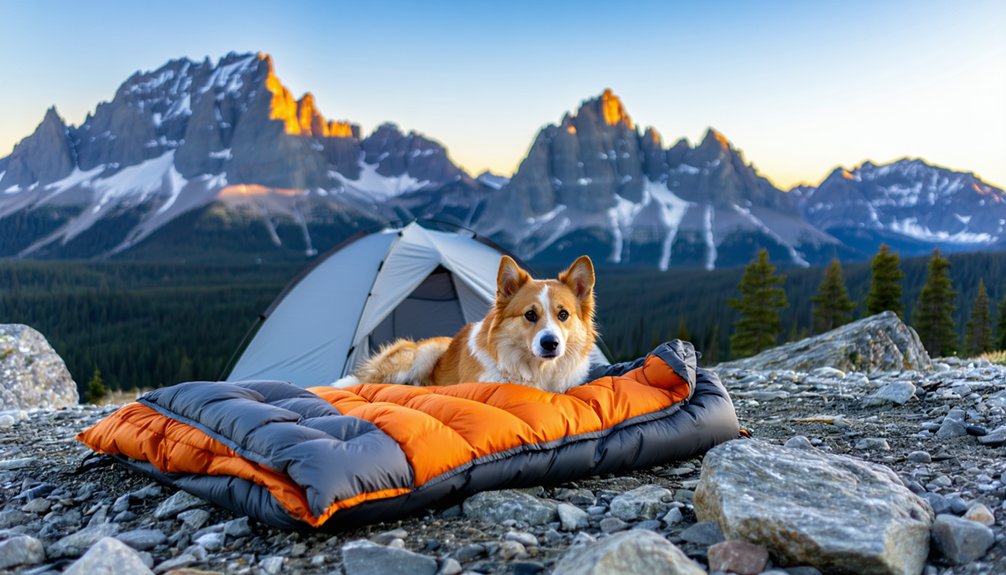
Above the treeline, your dog faces conditions that forested camps never throw at it. Wind exposure strips away the warm boundary layer around its body far faster than in sheltered sites, driving convective heat loss that a simple blanket can’t fix.
There are no trunks or roots to tuck behind, so your tent body and vestibule become the primary wind shield. That’s why shelter orientation, low-profile placement, and a dedicated sleep spot matter on exposed ridgelines.
Cold contact compounds the problem. Alpine ground often runs colder than the air suggests, pulling heat from below all night long.
An ultralight setup that works in the trees can fail up here. To keep your dog resting—and belonging beside you—you need a real, intentional system.
What Temperature Margin Should You Plan For?
Planning your temperature margin starts with a hard truth: the forecast you read in the valley won’t match what your dog sleeps in.
Above-treeline camps routinely run 5–10°F colder, and radiational cooling on clear, still nights can drop localized lows another 10°F.
Here’s how we stack the margins:
- Elevation & exposure: Add 5–10°F below valley forecasts.
- Radiational cooling: Add up to 10°F on clear, calm nights.
- Windchill impacts: Exposed ridges feel 10–20°F colder.
- Canine cold stress variability: Add 5–15°F for small, lean, or short-coated dogs.
Because of forecast uncertainty, target a total package equivalent to a human system rated 10–20°F colder than the forecast low.
Bump to 15°F margin when storms move in or models disagree.
Build the Three-Layer Dog Sleep System
Once you’ve nailed down your temperature margin, you build to hit it with three working layers, not one bulky bag. Each layer does one job, so your pack stays light and your dog stays warm through alpine swings.
| Layer | Job |
|---|---|
| Ground | Block conductive loss over rock and frozen soil |
| Mid | Enclose an insulated nest with synthetic fill |
| Top | Add adjustable, wearable coverage for gusts |
Start with cut-to-size closed-cell foam under an abrasion-resistant footprint. Add an ultralight synthetic dog bag with side zips you cinch toward dawn. Top it with a non-rustling insulated jacket matched to coat type. When clawproofing fabrics and weatherproofing seams, choose 30D-plus shells. You’re building a system your dog trusts—and joins willingly every night.
Why Closed-Cell Foam Beats Inflatable Dog Pads
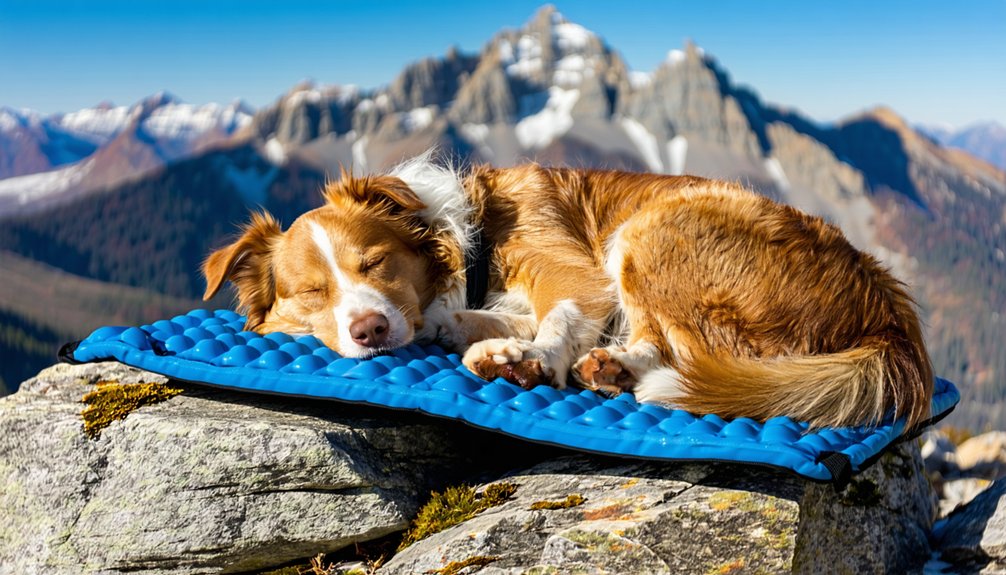
When you’re camping on granite, shale, and talus, the ground layer that survives is the one that doesn’t depend on trapped air.
Your dog’s nails concentrate pressure on tiny contact points, and that’s exactly where inflatable puncture failure starts.
One pinhole or seam leak risk above treeline can strip nearly all ground insulation overnight.
Closed-cell foam earns its place in your pack because it keeps working when conditions don’t cooperate:
- Survives claws and debris without losing function after deep scratches.
- Holds insulation when wet or frozen, no cold spots from shifting joints.
- Sets up instantly, with no pump, valve, or repair kit.
- Trims to fit your dog or tent footprint.
That’s the reliability long-distance backpackers count on.
Pick the Right R-Value for Cold Alpine Nights
A foam pad’s durability means nothing if its R-value can’t handle the cold ground beneath your dog. This subtopic comes down to matching insulation to your coldest expected lows, not the daytime highs.
Above the treeline, frozen ground pulls heat fast, so cold ground insulation matters more than loft alone.
Set your R value targets by temperature: R 5.0–6.0 handles 10–25°F, while below 10°F you’ll want R 6.0–7.3+. For sub-zero alpine nights, shift toward R 7.0+ as the safer choice.
If your dog sleeps cold, add 1.0–1.5 R-value for margin. Choose ASTM-rated pads so the numbers mean something across brands.
We’ve all underestimated a frozen alpine night once—dial in the right R-value, and your dog stays warm with the pack.
Choose Between a Dog Bag, Quilt, or Jacket
Above the treeline, your choice between a dog bag, quilt, or jacket sets the ceiling on how warm your dog stays once the wind kicks up and the ground pulls heat away.
In the Dog Bag vs Quilt debate, bags give 360° enclosure that blocks alpine wind, while quilts cut weight by dropping underside fill and snapping to a pad.
- Dog bag (12–28 oz): Full enclosure, best wind protection, watch Zipper Snag Risks and nail damage.
- Quilt (under 16–20 oz): Lighter, pairs with a pad, allows natural sleeping positions.
- Jacket (9–16 oz): Great for camp wear, but leaves the abdomen and limbs exposed.
- Layered combo: Jacket plus quilt covers shoulder-season and winterlike nights without redundant gear.
Choose synthetic fill for damp resilience.
Should Your Dog Share Your Quilt?
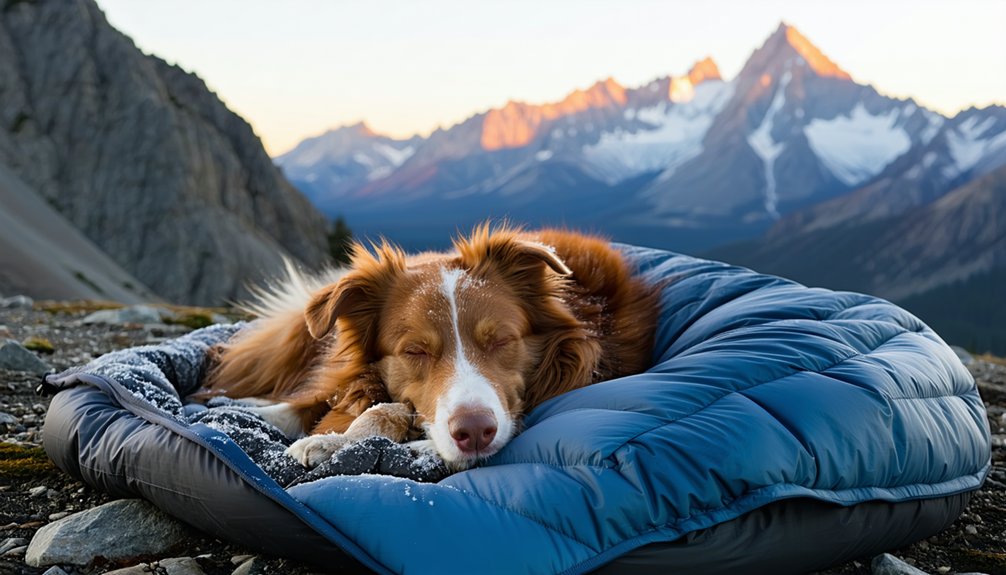
Why share your quilt at all? Because a shared quilt enhances combined thermal mass and cuts convective heat loss on windy, above-treeline camps.
Your dog runs 101–102.5°F, noticeably lifting your perceived warmth when quilt ratings turn marginal. But this works best for short-coat, low-fat, or small breeds—heavily insulated dogs risk heat stress under the same insulation.
You’ll need a wide or double quilt for full coverage, since standard widths invite drafts when your dog shifts. Mind moisture control: respiration and wet fur reduce down loft over multi-night trips unless you add vapor-resistant fabrics or synthetic overlays.
For down protection, file those nails, add a sacrificial cover or Tyvek layer, and dry your dog before entry. Calm, trained dogs make this system work.
Hit Your Dog Pad Weight and Packed-Size Targets
Nail your dog’s pad weight and you’ll shave ounces without sacrificing warmth on cold, rocky alpine nights. Like the rest of us dialing in lightweight kits, you can match your pad to your dog’s size, coat, and sleep style.
- Ultralight (~3–6 oz): Small–medium dogs on summer alpine trips.
- Moderate-light (~6–10 oz): Extra insulation or durability on rock and hard-packed ground.
- Large/shoulder-season (~8–14 oz): Higher R-value, fuller coverage.
- System budget: Keep dog sleep insulation near 0.5–1.5 lb total.
Choose CCF for reliable puncture prevention, or inflatables for compact volume—just manage claws and tarp abrasion over talus. Hybrid setups shift bulky foam to compact air. Restless diggers earn slightly heavier, tougher pads that resist cold spots.
Protect Your Dog Gear From Claws and Talus
Once you’ve dialed in pad weight and packed size, you’ve got to keep those ounces from becoming dead weight when a claw or rock point shreds them.
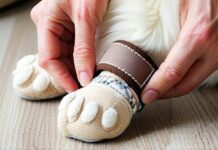
Start with nail trimming and smoothing before every trip, then add lightweight booties as a sacrificial layer on talus and inside the tent.
Choose higher-denier tent floors (30–70D) and tougher dog pads, and lean on CCF pads that claws can’t puncture.
Sandwich your gear with Tyvek, foam, or a wool blanket to buffer scratching and grit.
Clear sharp rocks, use an interior groundsheet to spread load, and park the dog pad on the smoothest micro-site.
Pack repair tape and patches for fast fabric patching in the field.
We’ve all lost gear—so protect it proactively.
Pick a Wind-Sheltered Spot for Your Dog
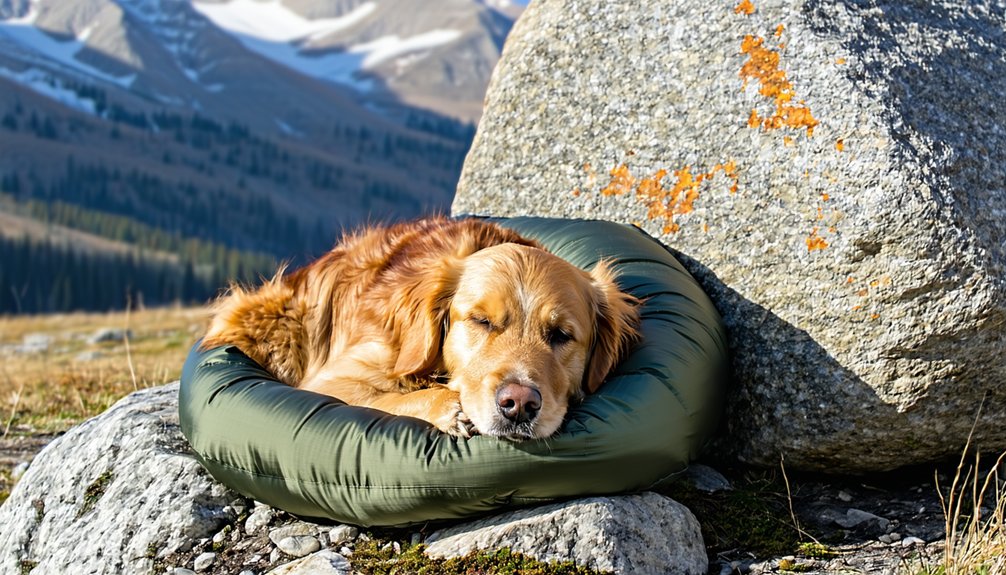
Because wind strips body heat faster than still air ever could, where you bed your dog matters as much as what you put under them.
Above treeline, smart windbreak placement often beats adding extra bedding, since shelter makes insulation work harder.
Look for natural barriers and terrain windshadows that calm the air without trapping cold or moisture.
When you scout a spot, work through this checklist:
- Pick leeward terrain behind boulders, krummholz, or terrain folds.
- Choose low, recessed ground over exposed crests and saddles.
- Confirm dry footing, avoiding hollows, drainage, and snowmelt routes.
- Check barrier stability, steering clear of loose talus and overhanging blocks.
Get these right, and you’ll share a calmer, warmer camp your dog can actually rest in.
Train Your Dog to Use Its Pad
Even the lightest, warmest pad won’t help if your dog won’t stay on it, so training comes before any gear upgrade.
Start at home by designating a single, consistent pad spot in a low-distraction area.
Introduce a verbal cue like “pad” or “place,” luring your dog on, then marking and rewarding once all four paws land.
Add a down-stay, building duration from seconds to minutes while rewarding relaxed postures.
Use ground cueing to send your dog from increasing distances and angles, simulating tent routes.
Run distraction drills with movement and mild sounds, rewarding calm staying.
Generalize across surfaces and locations—yard, porch, park—before hitting the trail.
Pair the pad with pre-sleep routines so your dog settles confidently, knowing exactly where it belongs each night.
Split the Sleep System Into a Dog Pack
When you split the sleep system between your pack and your dog’s, you cut your base weight without sacrificing total warmth or protection. Most backcountry dog packs safely carry 10–25% of body weight, so respect dog load limits and reserve them for ultralight items.
Balance both sides to prevent rubbing, fatigue, or gait changes.
Pack these proven components:
- Dog quilt or synthetic puffy coat for evening camp and sleep-layer use.
- Cut-down closed-cell foam pad—puncture-proof and feather-light.
- Ultralight bivvy for wind blocking and limited moisture defense.
- Tyvek or polycro groundsheet that doubles as floor protection.
Store everything in moisture protection sacks to block rain, snow, and wet-fur condensation.
Keep your primary quilt in your own pack, letting redundant layers ride along.
Frequently Asked Questions
How Do I Keep My Dog Hydrated and Fed Above Treeline?
Treat all water, offer frequent small drinks, and pack energy-dense freeze-dried food. Smart meal planning, consistent water monitoring, scent-free snacks, and thermoregulation checks keep your trail buddy thriving—because we hikers protect our dogs like family above treeline.
What Signs Indicate My Dog Is Becoming Hypothermic Overnight?
Watch shivering closely—it’s your first alert. Notice behavioral changes like lethargy or withdrawal, coordination loss, and abnormal breathing. Check for pale gums and a slow heart rate. Together, we’ll keep our trail dogs safe overnight.
How Do I Clean and Dry Dog Sleep Gear After Trips?
Shake out debris, then hand-wash with mild detergent for Spotless Gear. For Odor Control, pre-soak with baking soda. Practice Air Drying in indirect sun, rotating often. Follow Storage Practices—keep everything bone-dry before packing away, fellow trekkers.
Are Booties Necessary for Protecting Paws on Alpine Terrain?
They’re not always necessary, but you’ll want them for talus, ice, or sharp rock. Focus on paw pad conditioning first, then carry booties as backup—just nail your boot fit testing so they don’t chafe.
What Breeds Are Best Suited for Cold Above-Treeline Backpacking?
You’ll find Arctic breeds like Malamutes and Huskies excel, joining cold-hardy Newfoundlands and athletic Border Collies. These breeds’ alpine endurance and thick coat protection keep your trail partner thriving alongside you in harsh, above-treeline conditions.
Conclusion
You’ve now got a field-tested system that keeps your dog warm above the treeline. Build those three layers, choose closed-cell foam, and match your R-value to the coldest night you’ll face. Protect your gear from claws and talus, scout wind-sheltered spots, and train your dog before you commit. Split the load into a dog pack, and you’ll both sleep through the cold. Test it close to home first, then trust it high.
References
- https://www.treelinereview.com/gearreviews/best-camping-dog-beds
- https://www.treelinereview.com/gearreviews/best-dog-sleeping-bags
- https://www.youtube.com/watch?v=omNsIkBHcSA
- https://www.facebook.com/groups/9003421258/posts/10161331551001259/
- https://thetrek.co/dog-proof-backpacking-sleep-system/
- https://backpackingguys.com/best-dog-sleeping-pad-for-backpacking/
- https://www.reddit.com/r/CampingGear/comments/16mrtsi/lightweight_dog_pads_for_backpacking/
- https://katabaticgear.com/blogs/blog/ultralight-backpacking-with-your-dog-2
- https://www.youtube.com/watch?v=3hZjtLjDO_Y
- https://www.treelinereview.com/gear-list/camping-with-dogs