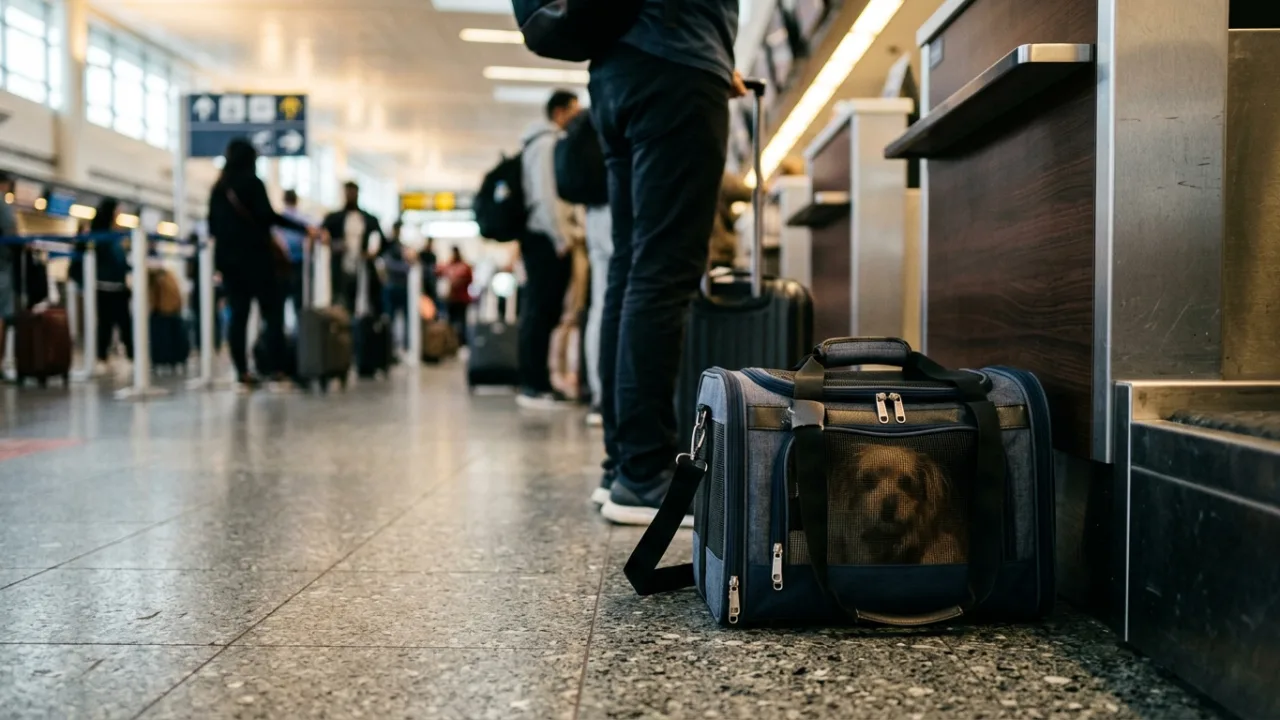
You’ve booked your flight, printed your paperwork, and you’re confident your dog is covered — until a gate agent tells you otherwise and you’re left rebooking at your own expense. This happens constantly because service dogs, emotional support animals, and therapy dogs are governed by completely different laws, and airlines, hotels, and landlords are not required to treat them the same way.
- Only service dogs trained to perform a specific task for a disability are protected under the ADA for public access, and under the Air Carrier Access Act (ACAA) for free cabin travel.
- Since January 2021, emotional support animals lost their special air travel status — airlines can legally treat them as regular pets, complete with fees and carrier requirements.
- Emotional support animals still have real legal protections, but only in housing under the Fair Housing Act, not in stores, restaurants, or on planes.
- Therapy dogs have no special legal travel or public access rights at all — their certification only applies to organized visits at facilities like hospitals and schools.
- No U.S. federal law requires service dog registration, certification, or a vest — but airlines can require a specific DOT attestation form before you fly.
- Misrepresenting a pet as a service animal is illegal in many states and can get real service dog teams turned away too.
Why This Distinction Actually Matters
These three terms get used interchangeably in everyday conversation, but they sit under entirely different legal frameworks. That gap between how people talk about assistance animals and how the law defines them is exactly where travel plans fall apart — at check-in counters, hotel front desks, and rental car pickups. Understanding which category your dog falls into, and what that category legally entitles you to, is the difference between a smooth trip and a stressful confrontation.
Let’s walk through each type clearly, then get into the specific rules that govern air travel, hotels, and rental housing.
Service Dogs: The Only Category With Strong Public Access Rights
Under the Americans with Disabilities Act (ADA), a service dog is defined narrowly: a dog individually trained to perform a specific task directly related to a person’s disability. That task could be guiding someone who is blind, alerting to an oncoming seizure, interrupting anxiety-driven behaviors, retrieving medication, or providing balance support. The key legal phrase is trained task — comfort by presence alone does not meet the ADA definition, no matter how much genuine comfort the dog provides.
Because of this, service dogs get the broadest access of any category:
- They can enter restaurants, stores, hotels, taxis, and most public businesses, even where pets are banned.
- Businesses cannot charge a pet fee or deposit for a legitimate service dog.
- Staff are legally limited to two questions: is this a service animal required because of a disability, and what task has it been trained to perform? They cannot ask for documentation, ask about your diagnosis, or demand a demonstration.
Here’s a detail that surprises a lot of people: there is no official U.S. federal registry, certificate, or ID card for service dogs. Anyone selling you a “certified service dog” registration online is selling a novelty item with no legal weight. What matters legally is training and behavior, not paperwork.
Emotional Support Animals: Real Protections, But Narrower Than People Think
An emotional support animal (ESA) provides comfort through companionship rather than a trained task. Many people qualify for an ESA with a letter from a licensed mental health professional stating that the animal helps manage a diagnosed condition such as anxiety, depression, or PTSD.
ESAs are legitimate and legally recognized, but their protection is limited to one specific area: housing. Under the Fair Housing Act (FHA), landlords and housing providers generally must make a reasonable accommodation for an ESA, even in buildings with strict “no pets” policies, and they typically cannot charge pet rent or a pet deposit once proper documentation is provided.
What ESAs do not get:
- No guaranteed access to restaurants, retail stores, or other public businesses under the ADA.
- No automatic free cabin access on flights (this changed in 2021 — more on that below).
- No exemption from hotel pet policies unless the hotel chooses to waive them.
This is the single biggest source of travel confusion. An ESA letter is powerful for apartment hunting, but it does very little at an airport gate or a restaurant host stand today.
Therapy Dogs: Trained for Others, Not Legally Protected for Their Handler’s Travel

Therapy dogs are trained and evaluated (often through organizations that certify temperament and obedience) to visit hospitals, schools, courtrooms, disaster sites, and nursing homes, where they comfort people other than their own handler. That certification is valuable and meaningful work, but it is a completely different legal category from a service dog.
A therapy dog has no ADA public access rights and no ACAA air travel protections for its own handler’s personal trips. If you want to fly or check into a hotel with your certified therapy dog for a vacation, that dog is treated exactly like any other pet — subject to pet fees, carrier rules, and breed or size restrictions. The certification only matters when the dog is actively working an approved facility visit, usually alongside the certifying organization.
Side-by-Side Comparison

| Category | Governing Law | Public Access (stores, restaurants) | Free Cabin Air Travel | Housing Protection | Training Required | Certification Required |
|---|---|---|---|---|---|---|
| Service Dog | ADA / ACAA | Yes, broadly protected | Yes, with possible DOT form | Yes (also via ADA/FHA) | Yes, task-specific | No official registry exists |
| Emotional Support Animal | Fair Housing Act (FHA) | No | No (treated as pet since 2021) | Yes, with documentation | No | No, but a professional letter is typically required |
| Therapy Dog | None (private certification only) | No | No (treated as pet) | No | Yes, temperament/obedience | Voluntary, via certifying organizations |
Air Travel: The Rule Change Every Traveler Needs to Know
Before 2021, airlines in the U.S. were required under the Air Carrier Access Act to accommodate emotional support animals in the cabin for free, alongside service dogs. That changed with a Department of Transportation rule update that redefined a “service animal” for air travel purposes as a dog individually trained to do work or perform a task for a person with a disability — deliberately excluding emotional support animals from that free-cabin category.
Practically, here’s what that means today:
- Service dogs (including psychiatric service dogs trained to perform a specific task) can still fly in the cabin at no charge (see: airline rules and travel options), but airlines are permitted to require a DOT Service Animal Air Transportation Form attesting to the dog’s training, behavior, and health, often submitted 48 hours before departure.
- Emotional support animals are no longer guaranteed free cabin access. Most major U.S. airlines now book them as pets, meaning a pet fee, size and carrier requirements, and limits on the number of pets allowed per flight.
- Therapy dogs have always flown as pets and continue to do so.
Airlines are still allowed to deny a service dog if it’s too large to fit in the space at the handler’s feet without blocking an aisle, if it displays aggressive or disruptive behavior, or if it isn’t housebroken. On flights of eight hours or longer, airlines may also request confirmation that the dog won’t need to relieve itself or has a plan to do so safely.
International Flights Add Another Layer
The ACAA governs U.S. airlines and flights to/from the U.S., but many destination countries have their own import rules regardless of a dog’s service status. Places like the United Kingdom, Australia, Japan, and Hawaii require advance permits, health certificates, or rabies titer testing — sometimes months ahead of travel. A trained service dog does not automatically bypass a country’s animal import law, so always check the destination country’s requirements (see: destination country's import rules), not just U.S. rules, well before booking.
Hotels, Rental Cars, and Ground Transportation
Hotels are places of public accommodation under the ADA, so legitimate service dogs must be allowed with no pet fee, no extra deposit, and no room restrictions based on the dog’s presence. Emotional support animals and therapy dogs, however, are subject to whatever pet policy the property has in place — some hotels are pet-friendly and will welcome them anyway, but they’re not legally required to.
Rideshares and taxis generally must accommodate service dogs under the ADA, and drivers cannot refuse a ride or charge extra because of it. ESAs and therapy dogs fall under each company’s individual pet policy, which varies by driver and platform.
Rental housing during extended travel (a monthly rental, for example) is where ESAs actually have strong legal footing, since the Fair Housing Act applies. If you’re staying somewhere long enough that it counts as a dwelling rather than transient lodging, your ESA documentation may carry real legal weight there even though it wouldn’t at a hotel.
Common Mistakes That Cause Travel Problems
- Buying an online “certification” or registry listing. These have no legal standing in the U.S. and won’t protect you if questioned.
- Assuming an ESA letter works the same as it did before 2021. Airline policy changed; the letter that got your dog a free seat a few years ago may no longer apply.
- Not contacting the airline in advance. Many carriers require the DOT service animal form submitted 48 hours before the flight — showing up without it can mean denial at the gate.
- Confusing therapy dog certification with public access rights. A vest that says “therapy dog” doesn’t grant entry anywhere your own pet couldn’t already go.
- Skipping destination-country import research. U.S. service dog status doesn’t override another country’s quarantine or permit laws.
- Misrepresenting a pet as a service animal. Beyond the ethical issue, many states have specific penalties for this, and it undermines access for people who genuinely need trained service dogs.
Tips for a Smoother Trip, Whichever Category Applies to You
- Call the airline directly at least a week before flying and ask exactly which form or documentation they require for your specific situation.
- Keep a printed and digital copy of any required forms, letters, or health records — some agents ask for both. (see: keep required forms organized)
- If you’re traveling with an ESA, budget for a pet fee and check the airline’s carrier size limits well ahead of time rather than assuming free cabin access.
- For service dogs, practice the “settle at your feet” position ahead of travel so the dog can comfortably stay in a confined space for the duration of the flight.
- Research your destination’s import laws months in advance if traveling internationally, since some rabies titer tests require a waiting period before you’re cleared to enter.
- Bring backup food and a familiar item (a blanket or toy) since travel disruptions and unfamiliar environments can be stressful for any animal, trained or not.
Trade-Offs Worth Knowing
None of these categories is “better” than another — they simply serve different purposes with different legal tools attached. A service dog offers the widest travel access but requires significant, task-specific training that not every situation calls for. An ESA can be life-changing for daily mental health support and offers real housing protection, but travelers need to plan for pet fees and carrier rules on flights now. A therapy dog does meaningful work comforting other people, but that role doesn’t extend into personal travel perks for the handler. Being honest about which category actually fits your situation — rather than which one offers the most convenience — keeps you on the right side of the law and protects access for people and animals who rely on it for genuine need.
The Bottom Line
The legal differences between service dogs, emotional support animals, and therapy dogs aren’t just technicalities — they determine whether your dog flies free, whether a hotel can charge you a fee, and whether a business can legally ask you to leave. Service dogs carry the strongest, broadest protections because they perform a trained task tied to a disability. Emotional support animals have real but narrower rights, mainly in housing, and no longer get free flights in most cases. Therapy dogs do valuable work but carry no personal travel privileges at all. Before you book anything, confirm exactly which category your animal falls into and check the current policy directly with the airline, hotel, or rental company — rules have shifted in recent years, and assuming the old rules still apply is the fastest way to get an unpleasant surprise at the gate.
If you’re planning a trip with your dog soon, start by calling your airline or hotel today to confirm their current documentation requirements — don’t wait until the week of departure to find out the rules changed.
Frequently Asked Questions
Can an emotional support animal fly for free like a service dog?
No, not anymore in most cases. Since a 2021 Department of Transportation rule change, U.S. airlines are permitted to treat emotional support animals as regular pets, which usually means a pet fee and carrier size limits. Only trained service dogs are guaranteed free cabin access under current federal air travel rules.
Do I need to register my service dog before traveling?
No. There is no official U.S. federal registry or certification for service dogs, and businesses cannot legally require one. However, airlines can require you to submit a DOT Service Animal Air Transportation Form, typically 48 hours before your flight, attesting to the dog's training and behavior.
Are therapy dogs allowed in hotels and restaurants without a pet fee?
No. Therapy dog certification only applies to organized visits at facilities like hospitals or schools. For personal travel, a therapy dog is treated the same as any other pet, meaning hotels and restaurants can apply their normal pet policies and fees.
What documentation do I need for an emotional support animal in a rental apartment?
Under the Fair Housing Act, landlords generally require a letter from a licensed mental health professional confirming the ESA helps manage a diagnosed condition. This documentation typically allows a reasonable accommodation even in buildings with no-pet policies, without extra pet fees.
Can a business ask what disability my service dog helps with?
No. Under the ADA, staff are limited to two questions: whether the dog is a service animal required because of a disability, and what task it has been trained to perform. They cannot ask about your specific diagnosis or request medical documentation.
What happens if I claim my pet is a service dog when it isn't?
Many states have laws specifically penalizing this kind of misrepresentation, sometimes with fines. Beyond legal risk, it can also make businesses more skeptical toward genuine service dog teams, so it's both risky and harmful to the broader service dog community.
Do international flights follow the same service dog rules as U.S. flights?
Not entirely. U.S. rules under the Air Carrier Access Act apply to U.S. airlines and flights connected to the U.S., but your destination country may have separate import requirements, such as permits, health certificates, or rabies titer testing, regardless of the dog's service status.
Is a psychiatric service dog treated the same as an emotional support animal?
No. A psychiatric service dog is trained to perform a specific task related to a mental health disability, such as interrupting a panic attack, which qualifies it for full ADA and air travel protections. An emotional support animal provides comfort through presence alone and doesn't meet that trained-task standard.