TL;DR: Airlines rarely flag age-specific risks for senior dogs because most policies are written around breed and size, not health status. Before flying with a dog over age 7-8 (smaller breeds) or 5-6 (giant breeds), get a vet exam within 10 days of travel, request bloodwork if your dog has any chronic condition, avoid cargo holds entirely if possible, never sedate without explicit vet approval, and build in extra buffer time at layovers for bathroom breaks and mobility. The biggest hidden risk isn’t turbulence — it’s temperature swings, pressure changes, and stress on an aging heart, joints, and kidneys that airline staff are not trained to monitor.
Why Flying Hits Senior Dogs Differently Than Young Dogs
Every airline pet policy you’ll find online talks about carrier dimensions, breed restrictions, and vaccination paperwork. What almost none of them mention is how age changes the entire risk calculation.
A healthy two-year-old Labrador and a fourteen-year-old Labrador with early kidney disease are treated identically by most airline systems — same forms, same fees, same cargo restrictions. But their bodies respond to air travel in completely different ways.
As dogs age, several things happen that make flying riskier, even on a smooth, uneventful flight: circulation slows, kidney and liver function decline, joints stiffen, temperature regulation becomes less efficient, and stress hormones take longer to return to baseline after a triggering event. None of that shows up on a pet travel checklist, but all of it matters the moment your dog is sitting in a pressurized cabin or, worse, a cargo hold for several hours.
This isn’t a reason to never fly with an older dog. Plenty of senior dogs travel safely every year. It’s a reason to go in with eyes open about what the airline paperwork doesn’t cover.
What Airlines Actually Tell You (And What They Leave Out)
Age Limits and Vet Certificate Requirements
Most major airlines require a health certificate signed by a veterinarian within 10 days of departure (sometimes less for international flights). What they don’t emphasize is that this certificate confirms your dog is fit to fly on that specific day — it is not a guarantee of safety, and it does not require the vet to screen for age-related conditions unless you ask.
Very few airlines list an upper age limit outright. Instead, they bury age-related risk inside vague language like “animals must be in good health” or “airline reserves the right to refuse transport of animals that appear unfit to travel.” That decision is often made by a gate agent or cargo handler with zero veterinary training, at the exact moment you’re trying to board.
Cargo vs. Cabin: The Real Risk Breakdown
If your senior dog is small enough to fly in-cabin under the seat in front of you, the risk profile changes dramatically compared to cargo. Cabin travel means climate-controlled air, no loading/unloading on tarmacs, and you’re physically present to notice distress. Cargo travel means your dog is in the hold with checked luggage, subject to loading delays, temperature swings during ground handling, and no one watching for signs of a health event.
For a healthy young dog, cargo carries manageable risk when airlines follow their own temperature protocols. For a senior dog with any cardiac, respiratory, or kidney concern, that risk multiplies. Airlines will confirm cargo is “pet-safe temperature controlled” — they will not tell you that temperature control on the tarmac during boarding and taxi delays is far less reliable than once airborne. (see: temperature swings in cargo holds)
Airline Senior Pet Policy Comparison
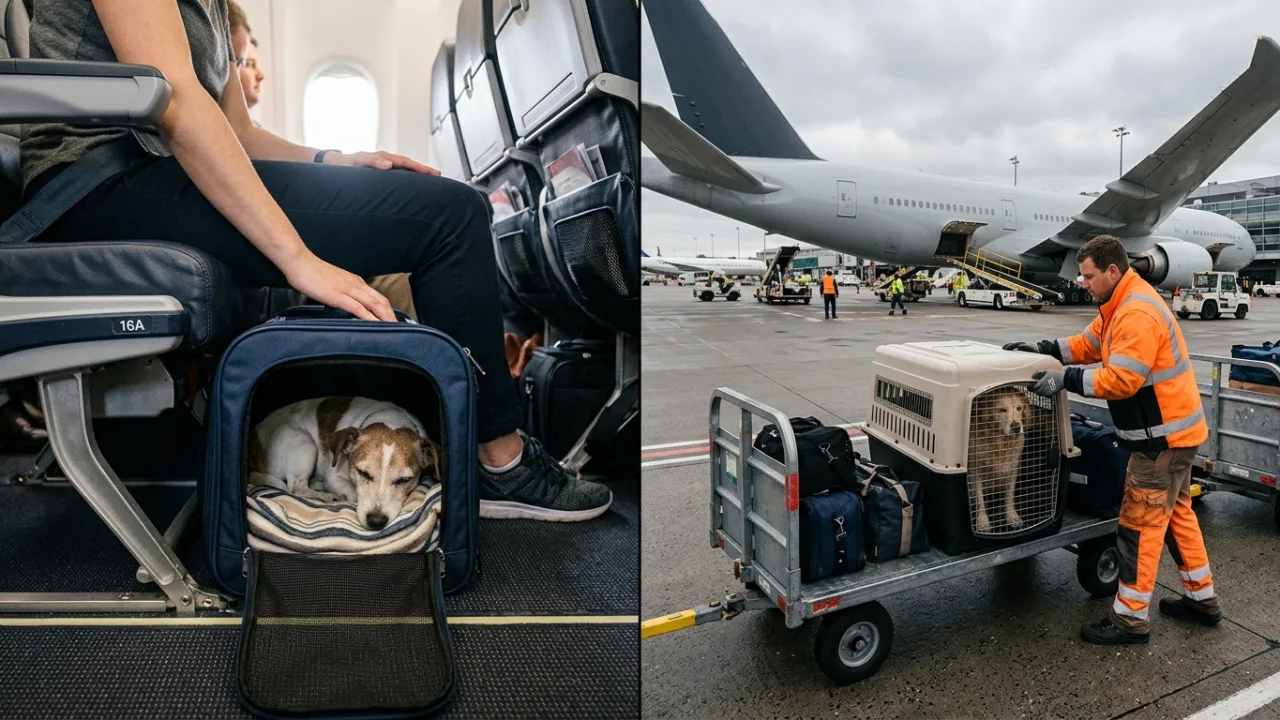
Policies change frequently, so always confirm directly with the airline before booking. This table reflects the kind of differences you’ll typically find when comparing how airlines handle in-cabin vs. cargo pet travel — useful for understanding what questions to ask rather than as a final booking reference.
| Factor | In-Cabin Travel | Cargo Hold Travel |
|---|---|---|
| Weight/size limits | Usually 20-25 lbs including carrier | Larger dogs, often 100+ lbs allowed |
| Temperature control | Same cabin as passengers | Climate-controlled in flight, variable on ground |
| Owner supervision | Direct, continuous | None during flight |
| Health certificate window | Typically 10 days | Typically 10 days, sometimes stricter |
| Breed restrictions | Fewer restrictions | Brachycephalic breeds often banned |
| Best fit for senior dogs | Generally preferred if size allows | Higher risk; needs strong vet clearance |
Pre-Flight Health Precautions Vets Recommend
Vet Checkup Timeline
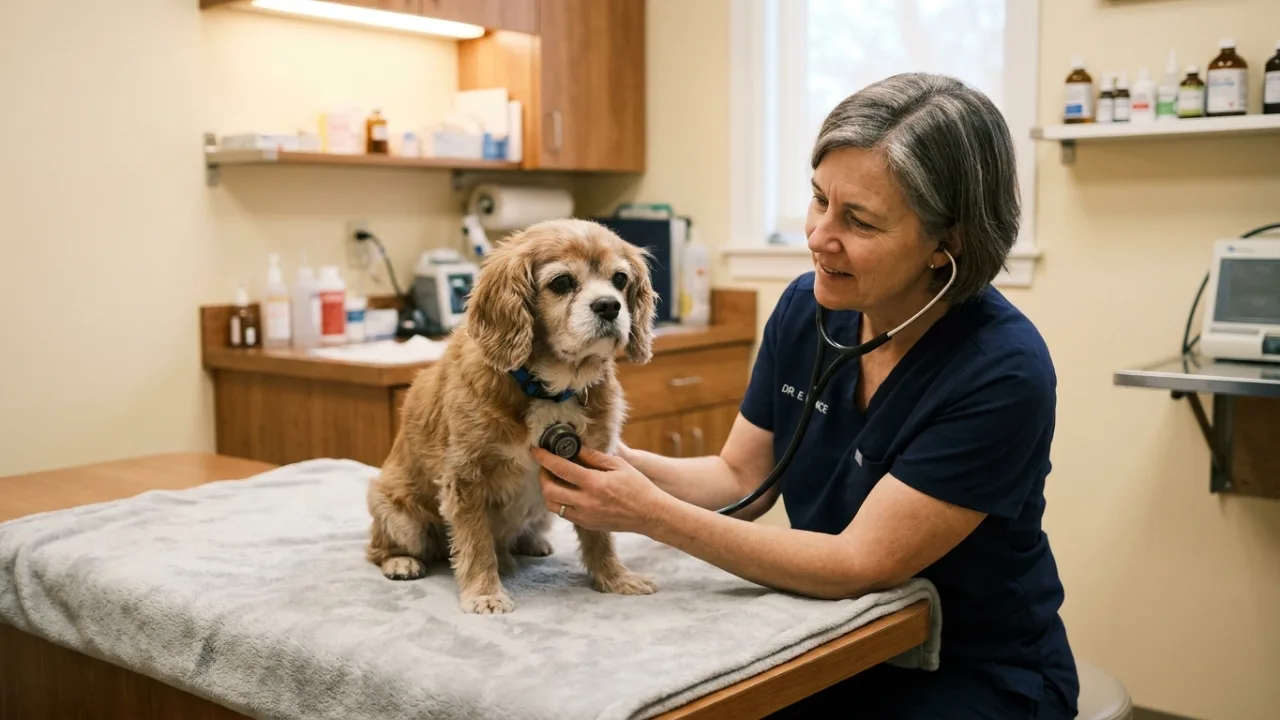
Don’t wait until the week of travel to see your vet for the first time this year. Ideally, schedule a full senior wellness exam 3-4 weeks before your flight, then a shorter fitness-to-fly check within the airline’s required window (usually 10 days).
The first appointment gives you time to address any issues that turn up — like early kidney changes, a heart murmur, or arthritis pain — before you’re locked into a nonrefundable ticket.
Ask your vet directly: “Based on my dog’s current health, is air travel advisable, and are there specific risks for their condition?” This puts the age-and-health-specific risk assessment in the hands of someone who actually knows your dog, rather than relying on generic airline language.
Medication and Sedation Warnings
This is one of the most important precautions airlines rarely mention with any real emphasis: sedating a senior dog for a flight can be dangerous. (see: why sedation is risky) Sedatives can lower blood pressure and depress respiratory function — both already more fragile in older dogs, especially at altitude where cabin pressure is lower than sea level.
Many veterinary professionals now recommend against routine sedation for flying and instead suggest natural calming approaches (pheromone sprays, familiar bedding, pressure wraps) combined with vet-approved anti-anxiety options only when specifically cleared for your dog’s cardiac and respiratory health.
If your senior dog is on daily medications for heart disease, thyroid conditions, or pain management, confirm the exact dosing schedule around time zone changes with your vet before you fly — missed or doubled doses due to confused time zones are a common and avoidable mistake.
Packing List for Senior Dog Air Travel
- Health certificate and full vet records — including recent bloodwork if your dog has a chronic condition
- Current medications in original labeled containers, plus 2-3 extra days’ supply in case of delays
- Familiar bedding or a worn t-shirt with your scent to reduce stress in an unfamiliar crate
- Collapsible water bowl and portable water to prevent dehydration, which hits aging kidneys harder
- Absorbent pads for accidents, since senior dogs often have less bladder control under stress
- Joint support items like a padded mat if your dog has arthritis and will be sitting for hours
- A recent photo in case of the rare event your dog becomes separated from their carrier during handling
- Vet contact info at your destination — research an emergency vet near where you’re landing before you go
In-Flight and Layover Precautions Airlines Don’t Emphasize
Layovers are where most of the hidden stress happens for senior dogs, and airlines rarely walk you through the reality of this. If you’re flying in-cabin, your dog stays in the carrier for security and boarding, which can mean 2+ hours without a real bathroom break or stretch.
Build in extra buffer time between connections — book layovers of at least 90 minutes longer than the airline’s stated minimum specifically so you can find a pet relief area and let your dog decompress.
If your dog is traveling in cargo, ask the airline directly (not just the booking agent) how ground crew handle temperature monitoring during tarmac delays, and whether your dog will be prioritized for early loading/late unloading to minimize time in the hold on the ground, where temperature control is weakest.
During the flight itself, cabin dogs should be checked periodically for panting, restlessness, or lethargy — all of which can indicate stress or a developing health issue that’s harder to spot in an older dog already inclined to sleep more.
Common Mistakes Owners Make When Flying With Senior Dogs
- Booking cargo for cost savings without weighing the health risk difference. A cheaper fare isn’t worth it if your dog has a heart or respiratory condition.
- Getting the health certificate too early. Most airlines require it within 10 days of travel — get it too soon and you may need a second visit anyway.
- Sedating without a specific vet conversation about age-related risk. What worked for your dog at age 3 may not be safe at age 12.
- Skipping a direct call to the airline’s pet desk. Website policies are general; a phone call can surface handling procedures specific to your route and aircraft.
- Not accounting for reduced mobility during boarding. Senior dogs may need more time getting in and out of carriers — request early boarding when available.
- Ignoring destination climate. Flying a senior dog with arthritis into extreme heat or cold without acclimation time can worsen joint pain and stress.
Flying vs. Alternatives: Weighing the Trade-Offs
Sometimes the most helpful precaution is recognizing when flying isn’t the best option at all. Here’s a practical comparison to help you decide.
| Option | Pros for Senior Dogs | Cons for Senior Dogs |
|---|---|---|
| Flying in-cabin | Fast, owner supervision, climate controlled | Size limits, cost, security line stress |
| Flying cargo | Accommodates large/giant breeds | No supervision, tarmac temperature risk |
| Driving | Frequent breaks, full control, no altitude stress | Much longer travel time, motion sickness in some seniors |
| Pet relocation/ground transport service | Specialized handling, climate-controlled vehicles | Higher cost, less common for short trips |
| Boarding/pet sitter (leaving dog home) | Zero travel stress on aging body | Separation from owner, boarding facility stress for some dogs |
If your senior dog has advanced heart disease, significant respiratory issues (especially in brachycephalic breeds), or recent surgery, many veterinary professionals would suggest that driving, a specialized ground pet transport service, or staying home with trusted care may be safer choices than flying — regardless of what an airline’s booking page tells you is allowed.
Expert Insight: When Not to Fly Your Senior Dog
A useful rule of thumb shared by many veterinarians who handle pre-travel exams: if your dog has had any hospitalization, medication change, or new diagnosis in the past 60 days, postpone the flight if at all possible and get explicit written clearance before rebooking.
Airlines will still sell you the ticket — they are not equipped to evaluate whether your dog’s specific condition makes flying unsafe on that day. That judgment call belongs to you and your veterinarian, not to the airline’s general fitness-to-fly policy.
It’s also worth asking your vet about your dog’s tolerance for barometric pressure changes if they have a history of ear infections, glaucoma, or sinus issues — conditions more common in senior dogs and rarely mentioned in airline pet guidelines at all.
Post-Flight Recovery Care for Senior Dogs

The precautions don’t end when you land. Senior dogs often need 24-48 hours to fully recover from the stress and physical demands of travel. Watch for:
- Reduced appetite for more than one day (brief loss is normal, prolonged loss is not)
- Excessive lethargy beyond normal travel tiredness
- Signs of dehydration — dry gums, sunken eyes, reduced urination
- Increased stiffness or limping if your dog has arthritis and was confined for hours
- Disorientation lasting more than a few hours, which could indicate stress or a medical event worth an urgent vet visit
Give your dog a quiet, low-stimulation space for the first day at your destination, keep hydration easily accessible, and stick as closely as possible to their normal feeding and medication schedule despite time zone shifts.
Conclusion: Fly Smart, Not Just Legal
Airlines are in the business of moving passengers and cargo safely from point A to point B — and their pet policies are written to meet minimum legal and logistical requirements, not to account for the specific realities of an aging dog’s body.
Flying with a senior dog can absolutely be done safely, but it takes precautions that go beyond what any airline website will tell you: a real conversation with your vet about your dog’s specific health status, an honest look at cabin versus cargo risk, smart packing, buffer time at every step, and close attention after landing.
When in doubt, let your veterinarian’s assessment of your individual dog outweigh the airline’s general “fit to fly” checkbox every time.
Before you book that ticket, talk to your vet about a fitness-to-fly evaluation specific to your senior dog’s health history — it’s the one precaution no airline will ever remind you to take, but it’s the one that matters most.
Frequently Asked Questions
At what age is a dog considered too old to fly?
There’s no universal age cutoff — airlines don’t set strict age limits, and risk depends more on individual health than age alone. Generally, dogs over 7-8 years (or 5-6 for giant breeds) warrant a closer pre-flight vet evaluation, especially if they have heart, respiratory, or kidney conditions. Your vet’s assessment of current health matters far more than a number on a birth certificate.
Is it safer to fly a senior dog in-cabin or in cargo?
In-cabin is generally safer for senior dogs because it offers climate control, owner supervision, and no tarmac temperature exposure. Cargo travel removes owner oversight and can expose dogs to temperature swings during ground handling. If your senior dog is small enough to qualify for in-cabin travel, that’s typically the lower-risk option.
Should I sedate my senior dog for a flight?
Most veterinary professionals now advise against routine sedation for flying, especially in senior dogs, because sedatives can lower blood pressure and depress breathing — risks that are amplified by altitude and existing age-related health changes. Discuss any calming approach directly with your vet, who can weigh your dog’s specific cardiac and respiratory health before recommending anything.
How soon before a flight does my senior dog need a vet checkup?
Most airlines require a health certificate signed within 10 days of departure, but it’s smart to schedule a full wellness exam 3-4 weeks earlier so you have time to address any issues before locking in nonrefundable travel plans. The closer, airline-required exam then confirms your dog is fit to fly on the actual travel date.
What are signs my senior dog is struggling during air travel?
Watch for excessive panting, restlessness, whining, drooling, or unusual lethargy. In cabin, check on your dog periodically during the flight. These signs can indicate stress or a developing health issue, and are sometimes harder to catch in older dogs who already sleep more than younger dogs.
Can arthritis or joint pain get worse from flying?
Yes. Extended time confined in a carrier or crate without movement can increase stiffness and discomfort for dogs with arthritis. Bringing a padded mat, planning extra time for stretching during layovers, and requesting early boarding to reduce standing/waiting time can all help minimize joint stress.
What should I do if my senior dog has a chronic illness and needs to fly?
Get explicit written clearance from your veterinarian specific to your dog’s condition, bring full medical records and recent bloodwork, pack extra medication, and identify an emergency vet near your destination before you travel. If your dog has had a recent hospitalization or medication change, consider postponing the flight until your vet confirms they’re stable enough to travel.
Are there alternatives to flying for senior dogs with health conditions?
Yes. Driving allows frequent breaks and avoids altitude-related pressure changes, specialized ground pet transport services offer climate-controlled handling for longer distances, and trusted in-home pet sitting or boarding avoids travel stress altogether. These can be safer choices for senior dogs with significant heart, respiratory, or mobility issues.