You finally found the perfect Airbnb for your six-month work trip, your dog is packed and ready, and then you spot it buried in the listing: a $500 ‘pet deposit’ that’s suddenly non-refundable, plus a $75 monthly ‘pet rent’ nobody mentioned in the chat. Multiply that confusion across three countries and two long-term leases, and you’ve got the exact headache that sends traveling pet owners into a late-night research spiral.
- Pet deposits, pet fees, and pet rent are legally different things — only true deposits are usually refundable, and many hosts mislabel them on purpose.
- Airbnb doesn’t set a standard pet policy; every host decides their own pet fees and rules, so always confirm in writing before booking.
- Long-term rentals are governed by state or national landlord-tenant law, which often caps deposit amounts — nomad leases and short stays sometimes fall into legal gray areas.
- Service animals and many emotional support animals are protected differently than ‘pets’ under U.S. law, which affects whether a deposit or fee can be charged at all.
- Always get pet terms in writing, photograph the unit’s condition before and after your stay, and know your local deposit-return deadline.
- If a host or landlord wrongfully withholds your deposit, small claims court, platform mediation, and tenant rights hotlines are all realistic options.
Why Pet Deposits Get Complicated When You’re Traveling
When you rent a home in the town where you live, you generally have time to read the lease carefully, ask a local friend for advice, and even negotiate. Travelers rarely get that luxury. You’re booking a nomad lease in a country with unfamiliar tenant laws, or reserving an Airbnb in a different state where deposit rules differ from your own, often within a tight window before a flight.
That time pressure is exactly why pet deposits and rental law while traveling trip up so many pet owners. Hosts and landlords know most guests won’t push back on unclear terms when they’re juggling flights, movers, and a nervous cat in a carrier. Understanding the difference between a legitimate deposit and an unenforceable fee — and knowing which rental type you’re actually dealing with — puts the negotiating power back in your hands.
Airbnb, Long-Term Rentals, and Nomad Leases: Not the Same Legal Animal

Before diving into deposits specifically, it helps to understand that these three rental types are governed very differently, even though they can look similar on a listing page.
| Rental Type | Typical Length | Who Sets Pet Rules | Legal Protection Level |
|---|---|---|---|
| Airbnb / short-term rental | 1 night – 30 days | Individual host, within platform guidelines | Low — mostly platform policy, not tenant law |
| Long-term rental (traditional lease) | 6–12+ months | Landlord, bound by state/local landlord-tenant law | High — formal tenant protections apply |
| Nomad lease / furnished mid-term rental | 1–6 months | Landlord or property manager, often with a custom contract | Medium — varies widely, sometimes a legal gray zone |
This distinction matters because the rules that protect you in a 12-month apartment lease often don’t apply at all to a two-week Airbnb stay, and a three-month nomad lease might sit somewhere in between, depending on how the contract is written and which country you’re in.
Pet Deposit vs. Pet Fee vs. Pet Rent: Know the Difference

These three terms get used interchangeably by hosts, but they mean very different things legally and financially.
- Pet deposit: A refundable amount held to cover potential pet-related damage. Ideally returned in full if there’s no damage, similar to a standard security deposit.
- Pet fee: A one-time, non-refundable charge for the privilege of bringing a pet. This is essentially extra income for the host and is rarely returned, regardless of your pet’s behavior.
- Pet rent: A recurring monthly charge added to your rent for the duration of your stay, common in long-term rentals and increasingly in nomad leases.
The problem: many listings and lease templates use these terms interchangeably or mislabel a non-refundable fee as a “deposit.” That single word choice can determine whether you’re legally entitled to get your money back.
Are Pet Deposits Refundable? What the Law Actually Says
In most U.S. states, landlords must treat pet deposits the same way they treat general security deposits — meaning the money must be returned within a specific window (often 14 to 30 days) after move-out, minus documented damage costs. Several states even cap the total deposit amount (security deposit plus pet deposit combined), so it’s worth checking your destination state’s landlord-tenant statute before you sign anything.
Airbnb and other short-term platforms operate differently. There’s no federal or state law requiring an individual host to itemize or refund a “pet fee” the way a long-term landlord must handle a deposit, because short stays are typically treated as licenses to occupy rather than formal tenancies. That’s why a host can advertise a “$150 pet fee” that’s simply non-refundable by design, and it’s usually legal as long as it was disclosed before booking.
Airbnb and Short-Term Rentals: What Travelers Need to Know
Airbnb itself does not mandate a standardized pet policy across listings. Each host decides individually whether to allow pets, and if so, what to charge. This flexibility is convenient for hosts but frustrating for travelers trying to compare listings.
How Airbnb Pet Charges Typically Work
- Some hosts build pet fees into the nightly rate instead of listing them separately — always check the full price breakdown before booking.
- Others add a flat per-stay pet fee, disclosed in the listing description or during the booking message thread.
- A smaller number of hosts request a refundable damage deposit specifically for pets, processed outside Airbnb’s normal payment flow (a red flag worth double-checking, since off-platform payments aren’t covered by Airbnb’s protections).
Service Animals and Emotional Support Animals on Airbnb
This is one of the most misunderstood areas of pet travel. Under U.S. law, trained service animals (as defined by the ADA) generally cannot be charged a pet fee or deposit, and hosts cannot refuse them based on a “no pets” policy, because they’re not legally considered pets at all. Emotional support animals occupy murkier territory — they have some protections under certain housing laws for long-term rentals, but those protections don’t automatically extend to short-term vacation rentals like Airbnb. If you’re traveling with an ESA, message the host directly, be upfront, and get any fee waiver or policy exception confirmed in writing before arrival rather than assuming the same rules apply everywhere.
How to Avoid Surprise Pet Charges on Airbnb
- Read the full listing description, not just the headline amenities — pet policies are often buried near the bottom.
- Message the host before booking to confirm pet fees, deposit amounts, and refund conditions in writing.
- Screenshot the conversation and the listing page at the time of booking, in case terms change later.
- Check the cancellation policy alongside the pet policy — some hosts tighten pet rules after booking is confirmed, which can be grounds for a dispute with Airbnb support.
Long-Term Rentals: The Lease Clauses That Actually Matter
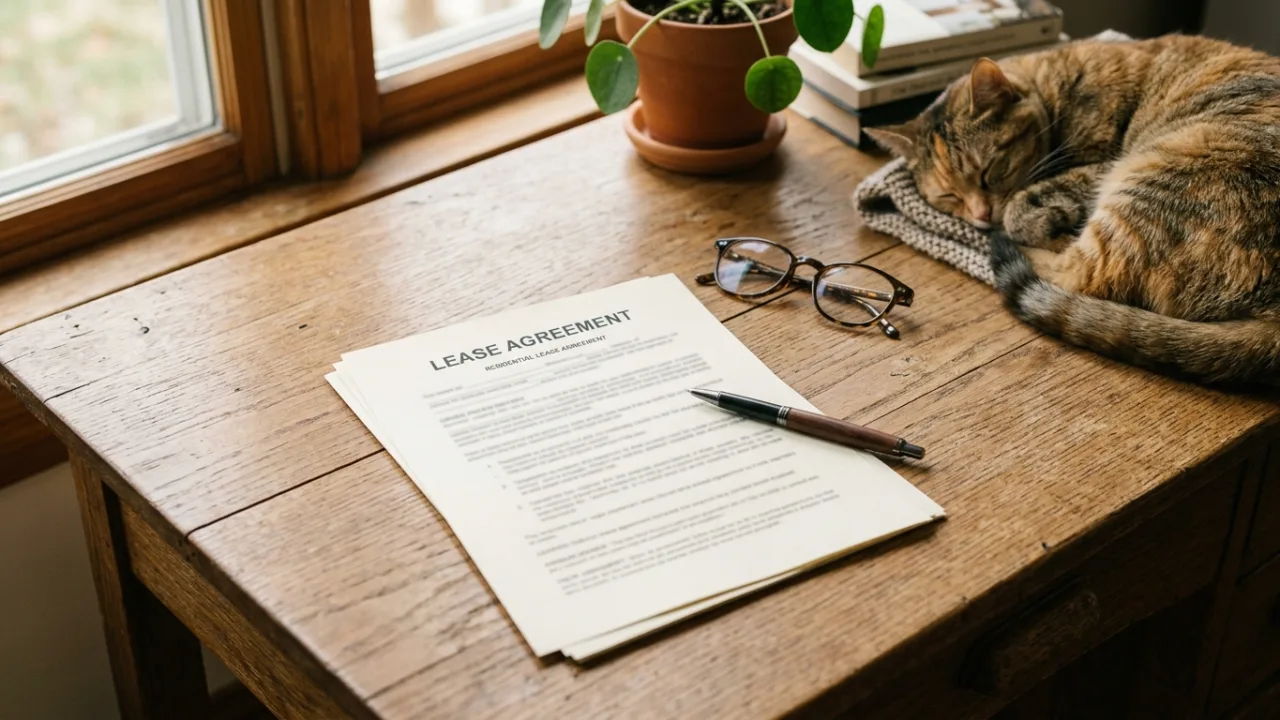
If you’re relocating somewhere for months or years, you’re likely signing a traditional lease, which means real landlord-tenant law applies. This is good news for pet owners because you have far more legal footing than in a short-term booking.
Key Clauses to Read Before Signing
- Deposit cap language: Many jurisdictions limit total deposits (security + pet) to a set number of months’ rent — know your local cap so you’re not overcharged.
- Damage definition: Look for how the lease defines “damage” versus normal wear and tear. Scratched flooring from an elderly dog’s nails may or may not count, depending on the wording.
- Refund timeline: Confirm the exact number of days the landlord has to return your deposit after move-out, and whether they must provide an itemized list of deductions.
- Breed and weight restrictions: Some leases (and sometimes the landlord’s own insurance policy) restrict certain breeds or size limits — get this confirmed before you commit to the unit, not after your pet is already there.
- Pet rent escalation: Check whether pet rent can increase during a lease renewal, and by how much.
State and Country Variations in Pet Deposit Rules
Pet deposit regulations vary significantly by location, and this is one of the biggest blind spots for people moving between states or countries. Some U.S. states treat pet deposits as fully refundable security deposits subject to strict return deadlines. Others allow non-refundable pet fees with far less oversight. Outside the U.S., rules diverge even more — some countries strictly regulate all rental deposits (pet-related or not) through national tenancy boards, while others leave terms almost entirely up to private contract negotiation. The safest habit: look up your specific destination’s landlord-tenant statute or renters’ rights organization before signing anything, rather than assuming your home country’s rules travel with you.
Nomad Leases: The Middle Ground That Trips People Up
Nomad leases — furnished mid-term rentals aimed at remote workers, typically one to six months — are the newest and least regulated category. (see: digital nomads traveling with dogs) They’re marketed like long-term rentals but often structured contractually more like short-term stays, which creates a legal gray zone for pet deposits.
- Some nomad lease platforms use standardized contracts that mirror long-term lease protections, including refundable deposits.
- Others use simplified “license agreements” that intentionally avoid full tenancy status, which can strip away deposit protections you’d otherwise expect.
- Pet policies on these platforms are frequently set property-by-property, similar to Airbnb, rather than standardized platform-wide.
If you’re booking a nomad lease with a pet, ask directly whether the agreement is legally classified as a tenancy or a license in that jurisdiction — the answer determines what deposit protections actually apply to you.
Traveling Internationally With Pets: Rental Rules Don’t Travel With You
One of the most common mistakes traveling pet owners make is assuming that because a rule applied at home, it applies abroad. It usually doesn’t. Deposit caps, refund deadlines, and even the legal definition of “pet damage” can differ dramatically from one country to the next. A few practical habits help regardless of destination:
- Search for the specific country’s tenant rights resource or renters’ association before signing a long-term or nomad lease.
- Ask hosts directly whether local law requires deposits to be held in a separate account or third-party escrow — this is common in several countries and adds a layer of protection.
- Request lease terms in writing in a language you’re fully fluent in, even if a translated version is offered as a courtesy.
Common Mistakes Traveling Pet Owners Make
- Assuming “deposit” always means refundable. Always ask directly whether the charge is refundable, and get the answer in writing.
- Not documenting the unit’s condition. Skipping a move-in walkthrough (photos and video) makes it nearly impossible to dispute damage claims later.
- Booking based on price alone. A cheaper nightly rate can hide a hefty pet fee that makes it more expensive overall than a pricier pet-inclusive listing.
- Ignoring breed or weight restrictions until arrival. Some hosts and landlords will cancel a booking or lease on the spot if an undisclosed pet doesn’t meet size or breed rules.
- Paying deposits off-platform. Wiring a “damage deposit” directly to an Airbnb host outside the app removes you from the platform’s dispute resolution protections entirely.
- Not knowing the local refund deadline. Missing the window to formally request your deposit back (some jurisdictions require a written request) can forfeit your right to dispute withheld funds.
Pre-Booking Checklist for Traveling Pet Owners
- Confirm pet policy and all associated charges in writing before paying anything.
- Clarify whether the charge is a deposit, fee, or recurring rent — and whether it’s refundable.
- Look up local (state or national) landlord-tenant law regarding deposit caps and refund deadlines.
- Photograph and video the unit’s condition immediately upon arrival, focusing on flooring, furniture, and doors.
- Save all correspondence about pet terms in one folder or thread for easy reference later.
- Ask about breed, weight, or number-of-pets restrictions explicitly, even if not mentioned in the listing.
- Check whether the deposit will be held in escrow or a separate account, if required locally.
- Note the exact refund timeline and calendar a reminder to follow up if it’s not returned on time.
What To Do If a Deposit Is Wrongfully Withheld
It happens more often than it should: you check out, leave the place spotless, and weeks later discover your pet deposit was quietly kept “for cleaning.” Here’s a realistic path forward.
- Request an itemized breakdown in writing. Most jurisdictions require landlords to justify any withheld amount with specifics, not vague language like “pet damage.”
- Use your move-in and move-out documentation. Timestamped photos and videos are your strongest evidence in any dispute.
- For Airbnb stays, use the Resolution Center. Disputes over fees charged through the platform are far easier to resolve than off-platform cash transactions.
- Contact a local tenant rights organization. Many cities and countries have free or low-cost renter assistance hotlines that can clarify your specific rights fast.
- Consider small claims court for long-term rentals. For traditional leases, small claims processes are often designed for exactly this kind of dispute and don’t require a lawyer.
Expert-Level Tips for Long-Term Nomads Traveling With Pets
- Build a simple template message you send to every host or landlord asking the same core questions: refundable or not, amount, timeline, and any breed/weight limits. Consistency makes it easier to compare listings apples-to-apples.
- Keep a dedicated folder (cloud storage works well) organized by property, with lease terms, payment receipts, and move-in/move-out photos for every stay — this becomes invaluable if a dispute arises months later after you’ve already moved on.
- Factor pet fees and pet rent into your total travel budget the same way you’d budget for flights or visas — over a year of nomad life, these charges add up meaningfully.
- When possible, favor listings or leases with a clearly itemized, refundable pet deposit over a vague “pet fee,” since it usually signals a more transparent host or landlord overall.
The Bottom Line
Navigating pet deposits and rental law while traveling doesn’t have to feel like a legal minefield. The core principle is simple: know exactly what you’re being charged, get it in writing, and understand which type of rental — Airbnb, long-term lease, or nomad lease — governs your rights in that specific location. A little homework before you book saves you from disputes after you’ve already left, and it means more energy spent enjoying your trip with your pet instead of chasing down a withheld deposit from three time zones away.
Before your next booking, run through the pre-booking checklist above, save every written confirmation, and don’t be afraid to ask hosts direct questions about fees and refunds. Your future self — and your travel budget — will thank you.
Frequently Asked Questions
Is a pet deposit refundable on Airbnb?
It depends entirely on the individual host. Airbnb doesn't set a universal pet policy, so some hosts offer a refundable pet damage deposit while others charge a non-refundable pet fee. Always confirm which type it is, and get the answer in writing, before you complete your booking.
What's the difference between a pet deposit and a pet fee?
A pet deposit is meant to be refundable if there's no pet-related damage, similar to a security deposit. A pet fee is a one-time, non-refundable charge for allowing a pet into the property. Many listings mislabel one as the other, so always ask hosts or landlords to clarify explicitly.
Can a landlord charge extra for a service animal?
Generally no. Under U.S. law, trained service animals aren't classified as pets, so landlords typically cannot charge pet deposits, pet rent, or pet fees for them, nor deny housing based on a no-pets policy. Emotional support animals have more limited protections that vary by rental type and location.
Do pet deposit laws apply to short-term rentals like Airbnb?
Not usually in the same way they apply to long-term leases. Most landlord-tenant deposit laws were written for traditional tenancies, so short-term Airbnb stays often fall outside those specific refund-timeline and cap requirements, leaving individual host policy as the main rule that governs your stay.
How much can a landlord legally charge for a pet deposit?
This varies by state and country. Some jurisdictions cap total deposits (security plus pet) at a set number of months' rent, while others leave the amount up to the landlord's discretion. Check your specific destination's landlord-tenant statute before signing a long-term or nomad lease.
What should I do if my pet deposit isn't returned?
Request a written, itemized explanation of any deductions, and use your move-in/move-out photos as evidence. For Airbnb, use the Resolution Center to dispute charges made through the platform. For long-term rentals, contact a local tenant rights organization or consider filing in small claims court if the landlord won't cooperate.
Are nomad leases legally the same as regular rental leases?
Not always. Some nomad lease platforms use full tenancy agreements with standard deposit protections, while others use simplified license agreements that intentionally avoid full tenancy status, which can reduce your deposit protections. Always ask directly how the agreement is classified in that specific location.
How can I avoid surprise pet charges when booking a rental while traveling?
Read the entire listing or lease, not just the headline pet policy line, and message the host or landlord directly to confirm the exact amount, whether it's refundable, and the refund timeline before you pay anything. Save that written confirmation in case a dispute comes up later.