If you’re flying a large dog across the Atlantic, your choice comes down to TAP versus Lufthansa. TAP works best for simple, nonstop trips, but caps checked dogs at 32 kg including the crate on US routes. Lufthansa handles heavier dogs, oversized crates, and complex multi-leg routes, backed by Frankfurt’s 4,000+ m² Animal Lounge. Both restrict brachycephalic breeds in heat. Knowing the specific rules, costs, and routes ahead can make all the difference.
TLDR Key Takeaways
- TAP caps in-hold dogs (AVIH) at 32 kg including crate on US transatlantic routes, while Lufthansa Cargo supports higher weights via Frankfurt and Munich.
- TAP charges fixed tiers (€230 up to 32 kg, €300 for 32–45 kg) and refuses pets over 45 kg; Lufthansa ranges €150–€400+ with oversize surcharges.
- Frankfurt offers superior hub connectivity and a 4,000+ m² climate-controlled Animal Lounge, while Lisbon relies on standard cargo infrastructure and bus boarding.
- TAP suits simple nonstop itineraries with shorter transit, while Lufthansa’s broader US–Europe network better handles complex multi-leg routing and same-day options.
- Both airlines exclude large dogs from cabin (max 8 kg) and require separate pet-segment booking after ticket purchase, not online reservations.
How to Choose an Airline for Your Large Dog
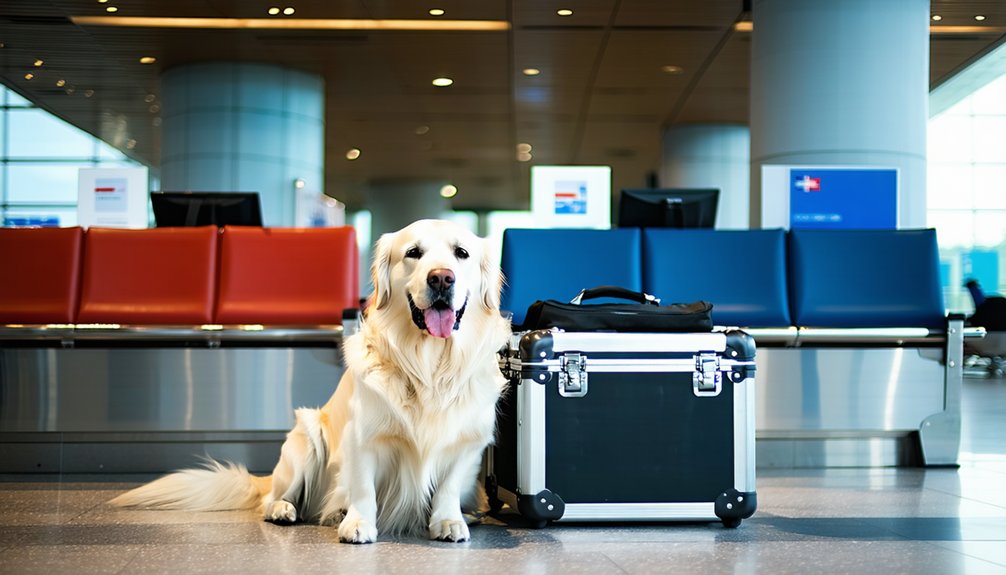
How do you pick the right airline for a large dog? You start by confirming your dog qualifies for transport, since most carriers restrict large breeds to checked baggage or manifest cargo.
Check weight and crate limits together—usually 32–45 kg including the crate—and verify your breed isn’t refused, especially if it’s brachycephalic.
Confirm the airline uses pressurized, temperature-controlled holds and meets IATA crate standards.
Review route limitations and seasonal embargoes, which can suspend hold acceptance during extreme heat or cold.
Ask for written airline checklists covering live-animal handling, priority loading, and shaded staging.
Don’t forget per-flight pet caps, so you’ll want to book early—often 24–48 hours ahead.
Like every responsible owner here, you’re choosing safety, transparency, and proven welfare standards first.
Why Large Dogs Can’t Fly in the Cabin
Three hard limits keep your large dog out of the cabin: weight, carrier size, and under-seat space.
Most transatlantic carriers cap cabin pets at 7–10 kg including the carrier, and Lufthansa’s stricter 8 kg limit excludes virtually every medium and large breed.
Since your Golden Retriever or German Shepherd routinely tops 25–30 kg, you won’t meet the threshold no matter how well-trained they are.
Cage compatibility matters too: carriers must fit fully under the seat (roughly 55 × 40 × 23 cm) and stay closed throughout the flight, ruling out large IATA crates.
Airline exemptions apply only to service animals, not pets, so your dog falls strictly under pet rules.
IATA welfare standards, evacuation requirements, and liability concerns leave no room for compromise here.
TAP vs. Lufthansa: Hold and Cargo Options
Since the cabin’s off the table, your large dog ascends in the hold or via cargo—and that’s where TAP and Lufthansa diverge sharply.
With TAP, you’ll book your dog as AVIH (animal in hold as checked baggage), capped at 32 kg including crate on US transatlantic routes by local law. That forces heavier dogs into true cargo (AVI)—or onto another carrier entirely.
Lufthansa, meanwhile, separates AVIH versus AVI cleanly, routing giant breeds and oversized cargo crate limits through Lufthansa Cargo’s dedicated facilities at Frankfurt and Munich, where weight allowances run higher.
If you belong to the giant-breed community, Lufthansa’s structure simply fits you better. Its broader US–Europe network also gives you more same-day routing options when weight or temperature rules sideline specific flights.
Large-Dog Size, Weight, and Crate Rules Compared
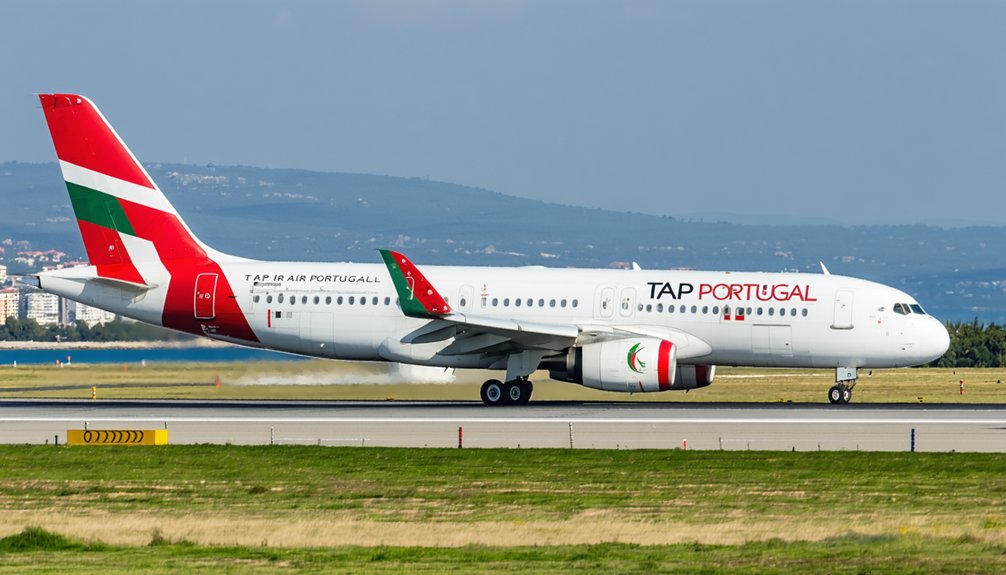
The numbers decide this for you. On TAP, weight cap constraints hit hard: cabin travel maxes at 8 kg including the carrier, and carrier dimension limits of 45 × 30 × 23 cm rule out large breeds entirely. Your big dog heads to the hold, where combined dog-plus-crate weight can’t exceed 32 kg on U.S.-linked routes.
| TAP Hold Limit | What It Means for You |
|---|---|
| 32 kg (U.S. routes) | Dogs ≈25–30 kg max |
| 45 kg (other routes) | Dogs ≈35–40 kg max |
| Crate weighs 8–15 kg | Eats your margin fast |
| One dog per crate | No doubling up |
If your shepherd, retriever, or doodle pushes past those bands, you’re out of options on TAP—and that’s exactly where Lufthansa’s roomier thresholds welcome you in.
Lisbon vs. Frankfurt: Hubs and Routes for Pets
Where your dog connects matters as much as which airline carries it. Frankfurt gives you stronger hub connectivity, with Lufthansa’s Animal Lounge—a 4,000+ m² facility offering species-specific stables, climate control, and on-site veterinary inspection.
That specialized ramp handling isolates animals from noise and streamlines complex third-country formalities, so even longer taxi distances won’t compromise transfer efficiency for your large dog.
Lisbon offers TAP’s reliable Europe–South America and North America–Africa network, plus a compact layout that shortens ramp transfers.
But you’ll rely on standard cargo infrastructure and bus boarding, and summer heat above 30°C triggers seasonal restrictions on midday departures.
Frankfurt’s cold winters bring de-icing delays, yet lower extreme-heat risk.
If you’re moving a high-value dog, Frankfurt’s vet-integrated environment belongs at the top of your list.
Whose Flight Gets Your Dog There Faster?
Speed isn’t about trip time—it’s about whether your dog flies on your itinerary at all. For large dogs, that’s where TAP pulls ahead.
Lufthansa caps cabin travel at 8 kg including the container, so your big dog can’t ride with you—forcing a separate arrangement that adds connections and hours.
TAP’s hold rules accept more aircraft types and weights, letting your dog match your flight directly.
When you’re considering the faster route, consider:
- Same-flight feasibility: TAP’s hold allowances (32 kg under 4 hours, 23 kg for 4–5 hours) keep you together.
- Weather impacts: Hold transport can face seasonal embargoes, delaying departures.
- Crate comfort: A properly sized kennel keeps your dog calm through longer trip.
Fewer detours mean faster arrivals.
How Heat and Season Affect Your Dog’s Hold Travel
Why does season matter so much for your large dog’s hold travel? Because your dog can’t be monitored during flight, seasonal heat becomes your biggest concern. The hold turns unsafe when ground temperatures climb or ramp delays stretch on.
Summer carries the highest risk, since boarding, deplaning, and airport handling happen during warm ground conditions.
Both TAP Air Portugal and Lufthansa make hold safety conditional. Each accepts your dog subject to route and operational factors, so temperature checks near departure are essential.
Lufthansa’s advance registration—required on U.S. routes—gives you time to confirm seasonal suitability. TAP’s acceptance similarly depends on conditions allowing safe transport.
To protect your companion, avoid peak summer departures, minimize connections that multiply loading cycles, and schedule around cooler airport times.
Which Snub-Nosed Breeds Get Restricted
The snub-nosed breed restrictions differ sharply between these two carriers, and knowing the distinction protects your dog before you book.
TAP publishes explicit breed-specific prohibitions, naming 20 brachycephalic breeds banned from the cargo hold because their flat-faced anatomy raises respiratory risk.
Lufthansa takes a broader, case-by-case approach, classifying snub-nosed dogs as high-risk and applying health-based restrictions that vary by size, route, and temperature.
Here’s where you’ll see the contrast:
- TAP: All Bulldog, Pug, and Mastiff types, plus Boston Terrier, Pekingese, Chow Chow, and Shar Pei, barred from the hold outright.
- Lufthansa: Many breeds accepted under cargo-only or embargo rules, pending consultation.
- Both: Long-haul transatlantic sectors trigger the strictest limits.
Always confirm directly before booking.
Layover and Connection Rules for Large Dogs
Once you’ve cleared the breed hurdle, your routing decides whether your dog flies at all. TAP often limits hold transport to direct flights, refusing many layover itineraries and rarely through-checking pets across interline or codeshare segments. Lufthansa’s more flexible, through-checking your dog to its final destination when every Group segment qualifies and transit rules permit staying airside.
| TAP Air Portugal | Lufthansa |
|---|---|
| Direct flights favored | Layovers allowed within Group |
| No interline pet through-check | Excess-baggage pets through-checked |
| Strict Lisbon/Porto connection times | UK/Ireland arrivals restricted |
You’ll need adequate connection time at hubs, and your kennel labeling compliance—”Live Animals” plus routing tags—prevents transfer errors. Complete every travel document check before departure, since mixed-carrier transfers force re-checking through customs and immigration.
What You’ll Pay to Fly a Large Dog
Because pricing structures differ sharply between these carriers, you’ll want to know exactly what your dog’s weight and crate size will cost before booking. TAP keeps it transparent with fixed fee tier comparisons: €230 (~$282) up to 32 kg, jumping to €300 (~$367) for 32–45 kg.
Lufthansa ties pricing to zones, weight bands, and crate dimension rules, typically €150–€400+ one-way transatlantic.
- Breed weight bands: Labradors and German Shepherds often cross TAP’s 32 kg threshold, triggering the higher tier.
- Oversize surcharge impacts: XL/XXL crates push Lufthansa into special-baggage or cargo categories, raising costs even at similar body weights.
- Hard caps: TAP refuses pets over 45 kg, forcing pricier cargo bookings.
You’re not alone dealing with these thresholds—knowing them protects your budget.
Booking Steps and Paperwork for Your Dog
Beyond pricing, the booking process itself demands attention because neither airline lets you add a large dog to a standard online reservation. You’ll book your own ticket first, then request the pet segment separately—through TAP Cargo or Lufthansa’s Service Center—so confirmation lands before your travel date. Pet space is limited per flight, so act fast.
| TAP Air Portugal | Lufthansa |
|---|---|
| Book via TAP Cargo or handler | Book via Service Center or Cargo |
| Species, breed, dog + crate weight | Breed, age, health, shoulder height |
| Crate dimension specs (L×W×H), photos | IATA container, ventilation, metal door |
Both carriers attach PNR pet adds as separate records, then quote your fee. Submit your crate dimension specs accurately—oversize crates get refused, so verify IATA compliance early to secure your spot.
The Better Airline for Your Dog’s Situation
With the paperwork sorted, you can match your dog’s specific situation to the airline that handles it best. Your decision comes down to route, size, and breed.
- Simple, nonstop itineraries: If you’re flying US or Brazil to Portugal direct, TAP serves you well, minimizing transit time through travel duration planning.
- Complex, multi-leg routes: Choose Lufthansa. Its Frankfurt Animal Lounge, structured transfers, and broader North America–Europe network reduce risk during long layovers.
- Very large or snub-nosed breeds: Lean toward Lufthansa’s pet-specialized infrastructure, but watch breed mismatch risk—both carriers restrict brachycephalic dogs in hot weather.
If your dog’s heavy or your routing’s intricate, Lufthansa’s the safer fit. For straightforward transatlantic hops, you’ll find TAP perfectly adequate.
Frequently Asked Questions
Can I Sedate My Large Dog Before Hold Travel?
You shouldn’t sedate your large dog for hold travel—it’s risky and often refused. Join responsible pet parents who skip it. Without veterinary clearance, avoid sedatives entirely, and prioritize preflight hydration to keep your companion safe and comfortable.
What Happens if My Dog Gets Sick Mid-Flight?
Crew notify the captain, document the event, and provide non-veterinary first aid—since there’s no in-flight vet assistance, they can’t medicate. Severe cases may trigger diversion, giving you emergency handler access and immediate veterinary coordination on landing, like fellow owners receive.
Are Large Dogs Insured Against Injury or Loss During Transport?
No, you’re not automatically covered. Both airlines treat your dog as baggage, capping liability and excluding inherent risks. Meeting carrier requirements and veterinary clearance helps, but you’ll need separate pet travel insurance for real protection.
Can I Check on My Dog During a Layover?
No, you can’t. Large dogs travel in the hold, and you won’t access secure areas during layovers. Unlike in-cabin rules, trained staff handle welfare checks. Trust the system—proper layover etiquette means letting professionals care for your companion.
What Feeding or Water Arrangements Apply During Long Hold Flights?
You’ll manage everything before handoff—staff can’t open kennels mid-flight. Attach a spill-proof portable water container, and complete scheduled feeding hours before departure. Like other pet parents, you’re prepping ahead, since neither airline confirms in-flight care.
Conclusion
You’ve seen the numbers, and the choice comes down to your route. If you’re flying through Frankfurt, Lufthansa’s pet-handling infrastructure and direct routings give your large dog the smoother trip. But if Lisbon connects you better—or you want lower fees—TAP holds its own. Match the airline to your origin, layover, and crate size. Book early, prep your paperwork, and you’ll get your dog there safely either way.
References
- https://www.flytap.com/en-us/information/traveling-with-animals/pets
- https://ia600904.us.archive.org/27/items/officialpetpolicy31/officialpetpolicy31.pdf
- https://www.lufthansa.com/us/en/travelling-with-animals
- https://ia601501.us.archive.org/10/items/p-d2-f-20/p-d2-f-18.pdf
- https://www.theadventuresofdjangoandarya.com/transatlantic-pet-airlines/
- https://www.flytap.com/en-us/information/traveling-with-animals
- https://www.flytap.com/en-us/information/traveling-with-animals/service-animals
- https://ia601600.us.archive.org/27/items/pet-flight-instrution-2026/2026-27-Pet-Travel-Blueprint-Adding-a-Dog-on-TAP-Air-Portugal-Airlines-jo9uhtnwi829sg.pdf
- https://www.bringfido.com/travel/airline_policies/tap_air_portugal/
- https://anz.fsc.org/sites/default/files/webform/problem_in_the_forest/_sid_/smile-pdf-16.pdf