Blue-green algae and Giardia both lurk in trail water, but they threaten your dog differently. Algae’s cyanotoxins strike fast—paralysis or liver failure within minutes to hours—so you can’t wait. Rinse your dog immediately, block licking, and call your vet. Giardia’s a slower parasite, with diarrhea and lethargy surfacing 5–14 days later. When water looks scummy, smells foul, or shows odd colors, stay out. Knowing the warning signs makes all the difference.
TLDR Key Takeaways
- Blue-green algae are toxic cyanobacteria causing rapid liver failure or paralysis within minutes to hours, while Giardia is a parasite causing delayed gut illness.
- Algae symptoms (neurotoxicity, vomiting, diarrhea) appear 15 minutes to hours after swimming; Giardia signs emerge 5–14 days later.
- After suspected toxic exposure, immediately rinse paws, legs, belly, and face with clean fresh water and prevent licking to reduce ingestion.
- Avoid water showing pea-soup color, scum, mats, foam, or strong odors; when in doubt, stay out per CDC guidance.
- Prevent Giardia by boiling water, filtering with one-micron or smaller pores, or using correct chemical dosing and contact time.
Blue-Green Algae vs. Giardia: What’s the Difference?
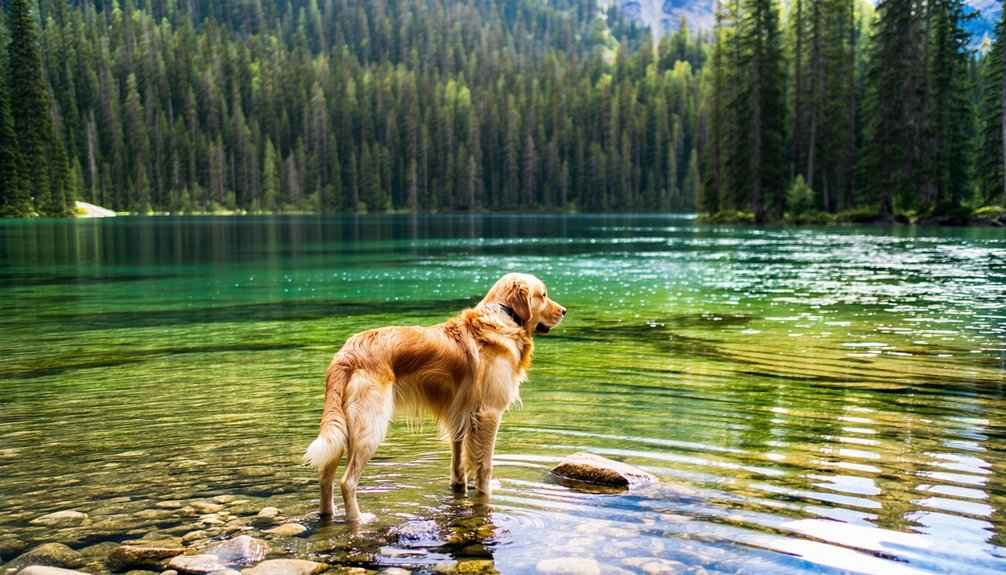
Anyone hitting the trail with a dog needs to understand that blue-green algae and Giardia are two completely different threats. Blue-green algae are cyanobacteria—photosynthetic bacteria, not true algae—that form blooms, scum, or mats in freshwater and sometimes brackish water.
Giardia, on the other hand, is a protozoan parasite that infects the intestines of humans and animals. This infection contrast matters at the most basic level: cyanobacteria represent environmental toxins, while Giardia poses an infectious parasite risk.
When you know what your fellow trail companions are facing, you protect your pup better. Cyanobacteria can act as a toxin emergency, causing rapid, severe illness, while Giardia typically causes gastrointestinal disease after your dog swallows cysts.
Recognizing the difference helps you respond correctly and confidently.
How Blue-Green Algae Poisons Your Dog
Now that you know what sets cyanobacteria apart from Giardia, let’s look at exactly how blue-green algae attacks your dog’s body. When your dog drinks contaminated water, licks blue green scum from their fur, or eats algal mats, they ingest cyanotoxins.
Microcystins flood liver cells, inhibiting protein phosphatases and triggering massive hepatocellular necrosis, intrahepatic hemorrhage, and rapid liver failure.
Anatoxin-a hijacks neuromuscular receptors, causing continuous stimulation, paralysis, and neurological collapse within minutes.
Toxin timing matters more than you’d expect.
Signs can appear in 15 minutes to several hours, and irreversible injury often occurs before symptoms show.
That narrow window means you can’t wait. If your dog’s been exposed, call an emergency vet immediately—every minute counts when respiratory or hepatic failure progresses this fast.
Why Giardia Acts More Slowly
Giardia rarely strikes with the speed of cyanotoxins because it has to complete an entire life cycle inside your dog’s gut before causing real damage. After your dog swallows cysts, they excyst in the small intestine, releasing trophozoites that attach, feed, and multiply by binary fission.
That’s why you won’t see signs for about 5–16 days, and cysts won’t appear in feces until 5–12 days later.
Unlike acute toxicosis, Giardia causes gradual intestinal injury—villus atrophy, crypt hyperplasia, and disrupted brush-border enzymes—leading to malabsorption and slowly worsening diarrhea. Immune response timing matters too: your dog’s local IgA and cellular defenses take days to mount, shaping a variable, often chronic course.
Many dogs you’ll meet show intermittent, low-grade signs rather than sudden collapse.
Symptom Timeline: Minutes vs. Weeks
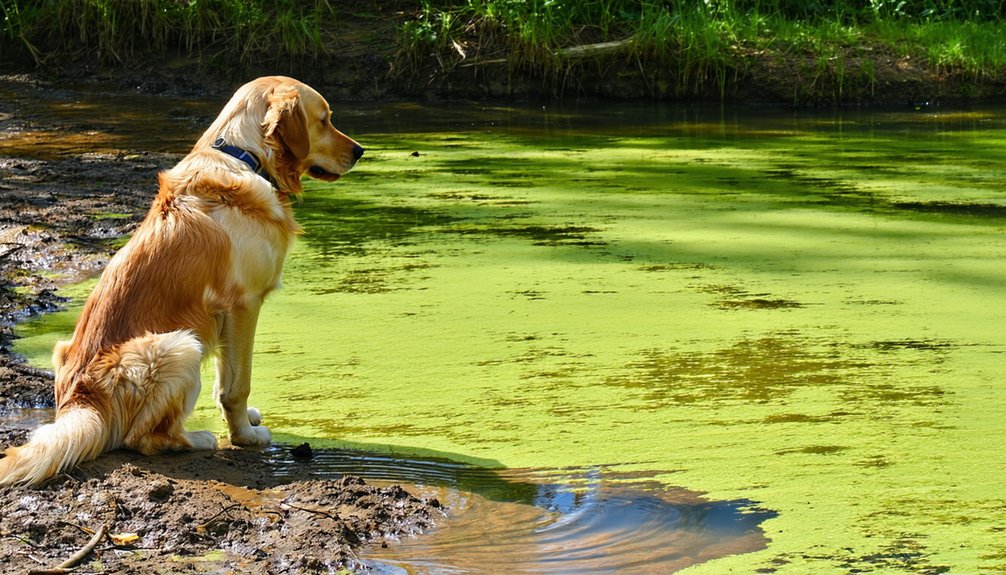
The clock tells you almost everything about which threat you’re facing.
When you and your dog encounter blue-green algae, symptoms move fast.
Rapid neurotoxicity can appear within 15 to 20 minutes of exposure, and fast GI upset—nausea, vomiting, abdominal pain, diarrhea—often follows shortly after swallowing contaminated water.
Hours to days liver effects round out the scene, so the quick onset is your clearest warning sign.
Giardia plays a slower game.
Symptoms usually start 1 to 2 weeks after your dog swallows the parasite, reflecting an incubation period rather than immediate toxin damage.
So if trouble hits minutes after a swim, suspect algae.
If diarrhea and fatigue show up a week or two later, you’re likely dealing with Giardia.
What Toxic Algae Water Actually Looks Like
Because toxic blooms wear so many disguises, you can’t rely on a single mental *image* to spot danger.
Discoloration is your first cue: water may look green, blue-green, brown, yellow, red, or pink.
Watch for that classic “pea soup” or spilled-green-paint surface, and treat surface scum—mats, streaks, foam, or thick slicks collecting along shorelines and calm coves—as a clear stop sign.
Murky, cloudy, or opaque water counts too, even when it isn’t bright green.
Add an odor warning: a strong, unpleasant smell often joins these blooms, and the CDC says smelly water means stay out.
Remember, though, that thin, patchy, or even clear-looking water can still hide toxins.
We protect our dogs the same way: when in doubt, stay out.
Where Blue-Green Algae Blooms Hide
Beneath calm, inviting surfaces, blue-green algae hides in predictable places, and knowing them keeps your dog safe. As fellow trail companions, we all share the goal of recognizing these danger zones before our dogs wade in.
Watch closely where wind, water, and nutrients concentrate buoyant cyanobacteria.
- Downwind shorelines and corners collect surface scum as wind pushes toxins toward access points.
- Leeward coves, docks, and vegetation beds trap drifting mats from elsewhere on the water.
- Hidden shoreline pockets behind emergent plants or fallen trees conceal dense accumulations from open view.
- Boat ramps and marinas gather surface buildup behind barriers and frequent disturbance.
Wildlife risk rises here too, since animals and dogs enter exactly where these blooms quietly concentrate.
Why Clear Streams Still Carry Giardia
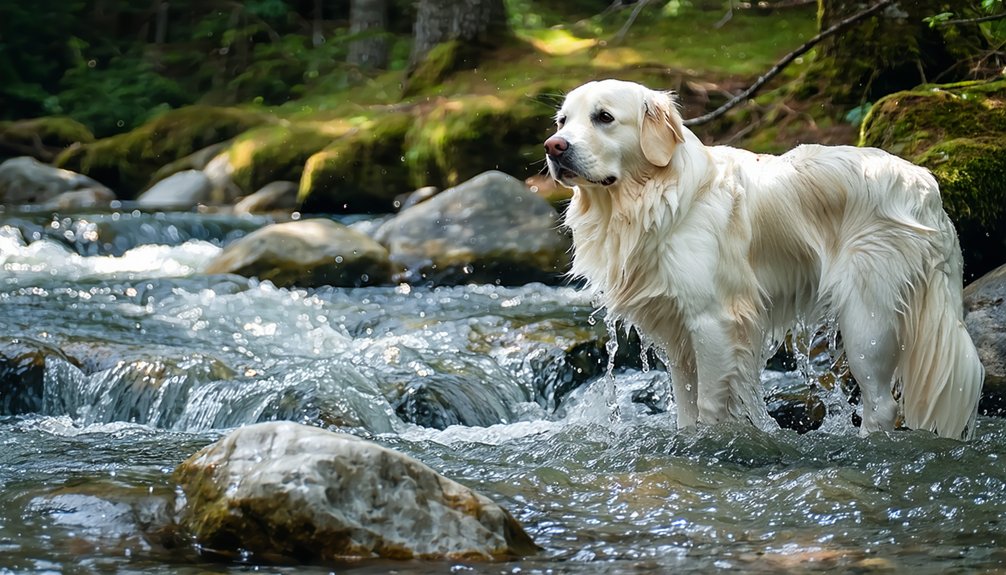
Although a mountain stream looks crystal clear, it can still carry Giardia cysts that you’ll never see, smell, or taste. These microscopic cysts survive outside a host, riding runoff from upstream campsites, wildlife, and livestock into the water your dog wants to drink.
Clarity isn’t a safety test—sediment settles while cysts remain, and cold, pristine-looking water offers no protection. That’s why every trail-savvy hiker treats natural water before sharing it.
Lean on boiling effectiveness, which EPA and USDA materials confirm reliably destroys cysts. If you’d rather filter, check filter ratings carefully; guidance commonly cites pore sizes around one micron or smaller for proper cyst removal.
Chemical disinfection helps too, but only with correct dose and contact time. Trust treatment, not appearance.
Water Your Dog Should Never Drink
Some water sources put your dog in real danger, and you’ve got to recognize them before your dog laps a single mouthful. Smart trail handlers treat certain spots as dog free zones, protecting their pack through safe hydration habits. Watch for these red flags:
- Algal blooms that look like green paint, pea soup, or blue-green, red, or brown sludge—assume they’re toxic.
- Stagnant puddles and ditches where high toxin concentrations deliver big doses in small volumes.
- Farm ponds and reservoirs fed by fertilizer and manure runoff fueling cyanobacteria.
- Stormwater ponds and canals collecting lawn chemicals, oil, and pesticides.
No reliable visual test confirms safety, so you pack clean water and keep your dog away from every suspicious source.
Smart Trail Habits Before Your Dog Swims
Before your dog ever touches the water, you set the conditions for a safe swim by planning ahead and reading each site on arrival.
Choose gentle, sloping entries and slow-moving streams, coves, or sheltered inlets over fast currents and wave-exposed shorelines.
Map multiple access points so you swim only where conditions look safest.
Check local advisories for algal blooms, sewage, and bacteria before you hike.
On arrival, scan the shoreline for hooks, glass, rebar, and sharp debris, and watch for currents, drop-offs, and boat traffic.
Maintain leash control with a well-fitting tackle and floating line, keeping your dog close and supervised.
Start with shallow checkins—short, calm wading sessions at the edge—before allowing fuller swimming.
These shared habits keep every trail companion safe.
What to Do After Suspected Algae Contact
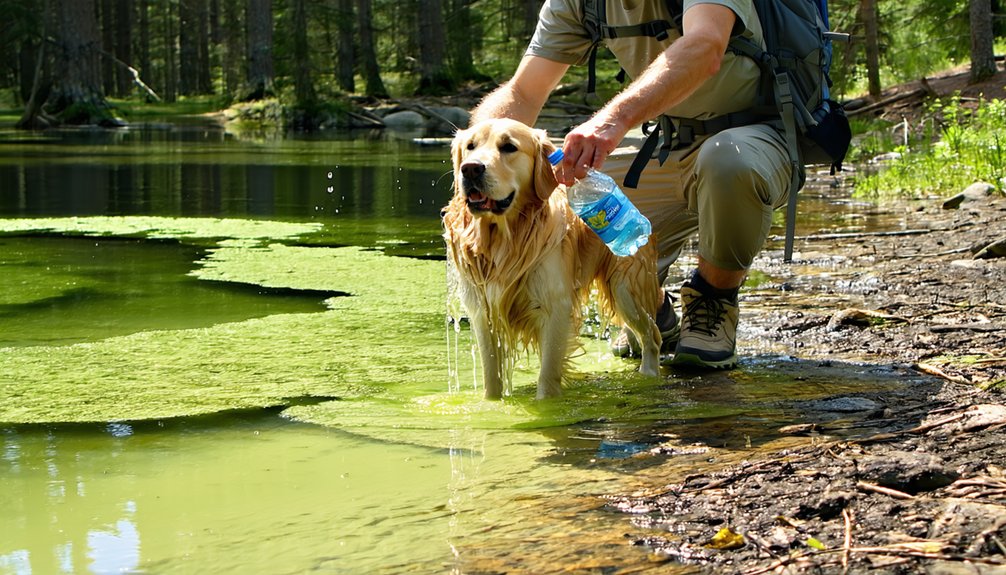
When you suspect your dog’s contacted a bloom, act fast and treat any contact with visible scum, mats, foam, or discolored water as potentially toxic exposure. Immediate Decontamination protects your trail companion, so move them out of the water and follow these steps:
- Rinse thoroughly with copious clean, fresh water, covering paws, legs, belly, and face while avoiding eyes and nose.
- Prevent licking with a leash, towel wrap, or barrier, since grooming raises toxin ingestion risk.
- Bathe with mild, pet-safe shampoo, especially for long-haired or double-coated breeds.
- Dry completely and keep them off contaminated shorelines and gear.
If your dog drank or licked contaminated water, treat it as suspected ingestion. That’s your Veterinary Call Prompt—contact a vet immediately.
Watching for Giardia Signs After a Swim
Because Giardia symptoms commonly surface 5–14 days after exposure, you mightn’t connect your dog’s illness to that lake, river, or puddle they swam in last week. That delay is why fellow trail-dog owners stay watchful long after the swim ends.
Diarrhea is the most common sign, sometimes green or laced with mucus or blood.
You might also notice vomiting, abdominal discomfort, decreased appetite, lethargy, weight loss, or steatorrhea—those classic fatty stools.
Symptoms can wax and wane, so don’t dismiss intermittent trouble.
If diarrhea or poor appetite follows a swim, schedule a vet screening and bring a fresh sample for stool testing.
Vets confirm Giardia through fecal cyst detection or antigen testing, catching infections even when signs aren’t constant.
Keeping Camp and Home Water Algae-Free
Although you’ve dodged the lake hazards, the water you store at camp and home can breed its own trouble if you let it sit. Sunlight, warmth, stagnation, and nutrients from dust, saliva, and food particles fuel algae blooms in tanks, troughs, bowls, and pitchers.
Join the trail-savvy crowd who keep their water clean with these proven moves:
- Opaque storage: Use dark containers or paint translucent barrels black to block the sunlight that triggers photosynthesis.
- Tank dumping: Fully drain and refresh camp tanks often to cut algae’s residence time.
- Bleach dosing: Add about 35 mL of 7% sodium hypochlorite per 100 gallons, then flush until odor-free.
- Bottle cleaning: Scrub pitchers and bowls regularly to strip biofilm that seeds regrowth.
Frequently Asked Questions
Can Humans Get Sick From Blue-Green Algae or Giardia Too?
Yes, you can. Both spread outdoors through contaminated surface water you touch or swallow. Watch for early symptom warnings like diarrhea, nausea, vomiting, or skin irritation, and seek help fast. We’ll keep our trail crew safe together.
Is There a Vaccine to Protect Dogs Against Giardia?
Yes, GiardiaVax exists, but it’s non-core and won’t replace prevention. It reduces clinical signs and cyst shedding by supporting your dog’s immune system. Since natural resistance varies and reinfection risks remain, you’ll still need hygiene and clean water.
Can My Dog Spread Giardia to Other Pets or People?
Yes, but it’s uncommon. Your dog mainly threatens other dogs through shared feces, while cross-species spread to cats or you is rare. Practice Proper Disinfection and Household Precautions, protecting everyone you love together.
Are Certain Dog Breeds More Vulnerable to Cyanotoxin Poisoning?
No—there’s no proven breed-specific risk for cyanotoxin sensitivity. Any dog you bring to a bloom can be poisoned. We all protect our trail companions by avoiding contaminated water, not by choosing breeds.
How Much Does Treating Algae Poisoning or Giardiasis Typically Cost?
You’ll pay roughly $500–$5,000+ for algae poisoning, since emergency veterinary expenses add up fast with ICU care. Giardiasis costs far less, around $100–$400. Expect regional price variation, so check local clinics like fellow trail owners do.
Conclusion
Knowing the difference could save your dog’s life. Blue-green algae kills within hours, so you can’t wait and see—rinse your dog immediately and call your vet if you suspect contact. Giardia moves slower, giving you time to watch for digestive signs and treat them. Scan every water source before letting your dog swim, keep camp water clean, and trust your instincts. When the water looks wrong, keep your dog out.
References
- https://www.dhs.wisconsin.gov/publications/p0/p00089.pdf
- https://www.bluecross.org.uk/advice/dog/blue-green-algae-and-its-dangers-to-dogs
- https://www.aspca.org/news/blue-green-algae-toxicosis-what-you-need-know-keep-your-pet-safe
- https://www.vet.cornell.edu/departments-centers-and-institutes/riney-canine-health-center/canine-health-topics/blue-green-algae-poisoning-cyanobacteria-toxicosis
- https://phys.org/news/2019-09-dog-safe-toxic-blue-green-algae.html
- https://www.pdsa.org.uk/pet-help-and-advice/pet-health-hub/conditions/blue-green-algae-poisoning-in-dogs
- https://www.cdc.gov/harmful-algal-blooms/hcp/veterinarians/index.html
- https://www.mspca.org/pet_corner/the-silent-threat-of-blue-green-algae-what-pet-owners-need-to-know/
- https://www.akc.org/expert-advice/news/blue-green-algae-symptoms-tips/
- https://vth.vetmed.vt.edu/animal-care-tips/blue-green-algae.html