If you’ve priced out flying a dog, you already know the airline’s pet fee is just the tip of the iceberg. Between health certificates, approved carriers, vet exams, microchips, and — if you’re going international — quarantine costs, the real total can range from a modest $150 to well over $3,000 for a single trip. We put together the numbers pet parents actually need, not just the headline airline fee.
TLDR: What It Really Costs to Fly a Dog
- Small dog, in-cabin, domestic: roughly $95-$200 in airline fees, plus $150-$400 in extras (carrier, vet visit, health certificate) — total around $250-$600.
- Large dog (50-100+ lbs), cargo, domestic: typically $200-$1,200 depending on kennel size and weight, plus vet and documentation costs — total often $400-$1,600.
- International travel: add $100-$400 for USDA endorsement and import paperwork, and — depending on the destination — anywhere from $0 (UK, with advance prep) to $2,000+ (Australia, Japan) in quarantine and permit fees.
- Cheapest overall option: a healthy, well-under-20-lb dog flying in-cabin, nonstop, on a no-frills domestic carrier, booked early.
- Most expensive option: a large or snub-nosed breed shipped cargo internationally to a quarantine-heavy country, booked last-minute.
What Actually Determines the Cost of Flying a Dog
Before we get into dollar figures, it helps to understand the variables airlines and governments use to calculate pet travel costs. The final price you pay depends on:
- Dog size and weight — this decides whether your dog flies in-cabin or in cargo, which changes the price category entirely.
- Cabin vs. cargo — in-cabin pet fees are flat; cargo is priced by combined kennel + dog weight.
- Domestic vs. international — international trips add government paperwork, USDA endorsements, and sometimes quarantine.
- Airline chosen — legacy carriers, budget carriers, and pet-specialty charters all price very differently.
- Booking timing — last-minute or same-day bookings often cost more and run a higher risk of the pet quota already being full.
- Breed — brachycephalic (snub-nosed) breeds face outright bans on many cargo programs, which can force you into pricier alternatives.
- Destination country — quarantine length and import rules vary hugely and can add hundreds or thousands of dollars.
In-Cabin vs. Cargo: Cost and Safety Comparison
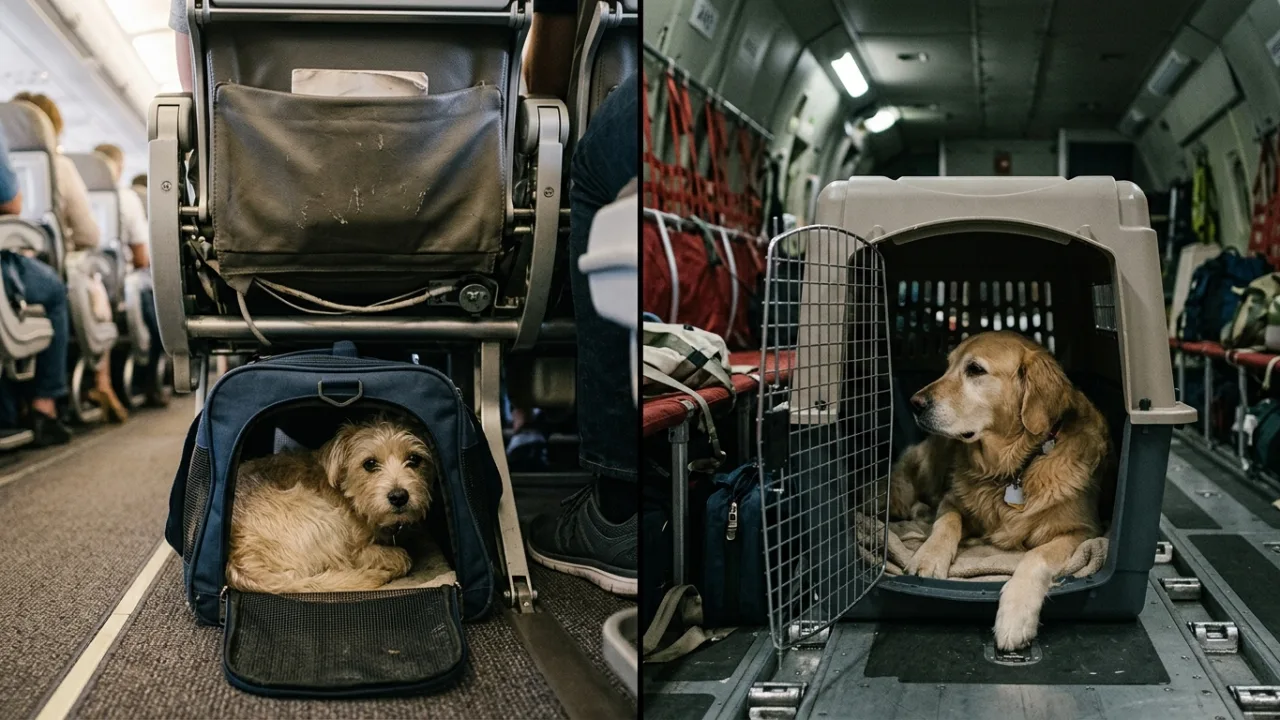
This is the single biggest fork in the road for cost. Most airlines allow small dogs (generally under 20 lbs, though limits vary) to ride in an approved soft-sided carrier under the seat in front of you. Anything larger typically has to travel as checked or manifest cargo, which is priced and handled completely differently.
| Factor | In-Cabin | Cargo |
|---|---|---|
| Typical cost (domestic) | $95-$200 flat fee | $200-$1,200+ based on kennel + dog weight |
| Weight limit | Usually 15-25 lbs including carrier | No firm upper limit, but very large dogs cost more |
| Where the dog rides | Cabin, under the seat, with you | Climate-controlled cargo hold (or checked baggage compartment) |
| Seasonal restrictions | Rare | Common — many airlines pause cargo pet shipping in extreme summer heat or winter cold (’embargo’ periods) |
| Safety considerations | Pet stays with you; lower stress for most dogs | Generally safe on airlines with dedicated pet programs, but riskier for brachycephalic breeds and anxious dogs |
The practical takeaway: if your dog is on the borderline of the in-cabin weight limit, it’s almost always worth investing in a slightly smaller approved carrier to stay in-cabin, since cargo shipping usually costs several times more once you factor in the required hard-sided IATA kennel.
Airline-by-Airline Pet Fee Comparison (Domestic, In-Cabin)
Pet fees change fairly often — most major carriers have nudged them upward over the last few years — so always confirm the current fee directly on the airline’s website before booking. As a planning baseline, here’s roughly where things stand:
| Airline | Typical In-Cabin Pet Fee (one-way, domestic) | Notes |
|---|---|---|
| Delta | ~$95-$150 | Limits pets per cabin; book early |
| United | ~$125-$150 | PetSafe program for larger dogs in cargo-style checked pet travel |
| American | ~$125-$150 | Carrier must fit fully under the seat |
| Southwest | ~$95-$125 | Often one of the lower flat fees among legacy-style carriers |
| JetBlue | ~$125-$150 | JetPaws program; limited pet spots per flight |
| Alaska | ~$100 | Also offers cargo/checked pet options for larger dogs |
| Spirit | ~$125-$160 | Budget carrier, but pet fee is comparable to or higher than legacy airlines |
| Frontier | ~$99 | One of the more competitively priced budget options |
Notice something important here: budget carriers don’t automatically mean a cheaper pet fee. Spirit’s pet fee, for example, often runs as high or higher than legacy carriers like Alaska. The lowest fare on the human ticket doesn’t guarantee the lowest total trip cost once your dog is added.
Cargo Shipping Costs by Dog Weight
If your dog is too large for the cabin, cargo pricing is based on the combined weight of the dog plus its IATA-approved kennel, not just the dog’s weight alone. This is why airline industry pricing teams calculate cargo fees by weight tier rather than a flat rate — a bigger kennel takes up more space and adds handling weight regardless of how much the dog itself weighs.
| Combined Weight (Dog + Kennel) | Approximate Domestic Cargo Cost |
|---|---|
| Under 25 lbs | $200-$400 |
| 25-50 lbs | $300-$600 |
| 50-90 lbs | $500-$900 |
| 90-150+ lbs | $700-$1,200+ |
International cargo shipments for large dogs regularly run $1,000-$3,000+ once you add customs handling, USDA endorsement (see: airlines that still allow large dogs in cargo), and destination-country import processing. Specialized pet shippers and airline cargo divisions can give you an exact quote based on your kennel’s dimensions and your specific route.
Domestic vs. International: Where the Real Cost Gap Appears
A domestic flight with your dog mostly involves the airline’s pet fee plus your own prep costs. International travel adds a whole extra layer:
- USDA endorsement fee for the health certificate — commonly in the $40-$175 range depending on how it’s processed.
- Import permits required by some countries before your dog can even enter, sometimes $50-$300.
- Rabies titer testing (required by countries like the UK, Australia, Japan, and Hawaii) — typically $150-$250 through a vet and approved lab.
- Quarantine fees, where applicable — covered in detail below.
Realistically, budget at least $300-$600 extra in paperwork and testing alone for an international trip, on top of whatever the airline charges to transport your dog.
The Real Total Cost: Everything Besides the Airline Fee
The airline pet fee is often the smallest line item once you add up everything else. Here’s a realistic total cost breakdown across three travel styles.
| Expense | Budget Trip | Mid-Range Trip | Premium Trip |
|---|---|---|---|
| Airline pet fee | $95 | $125 | $150+ (or private charter, see below) |
| Approved carrier | $35 (basic soft-sided) | $75-$120 | $150-$300 (premium ventilated crate) |
| Vet exam | $50-$75 | $75-$120 | $120-$200 |
| Health certificate (CVI) | $35-$75 | $75-$150 | $150-$250 (rush/international) |
| Microchip (if not already done) | $25-$50 | $45-$65 | $65-$85 |
| Calming aids/pheromone spray | $0-$20 | $20-$40 | $40-$80 |
| Estimated total | $240-$400 | $415-$680 | $675-$1,065+ |
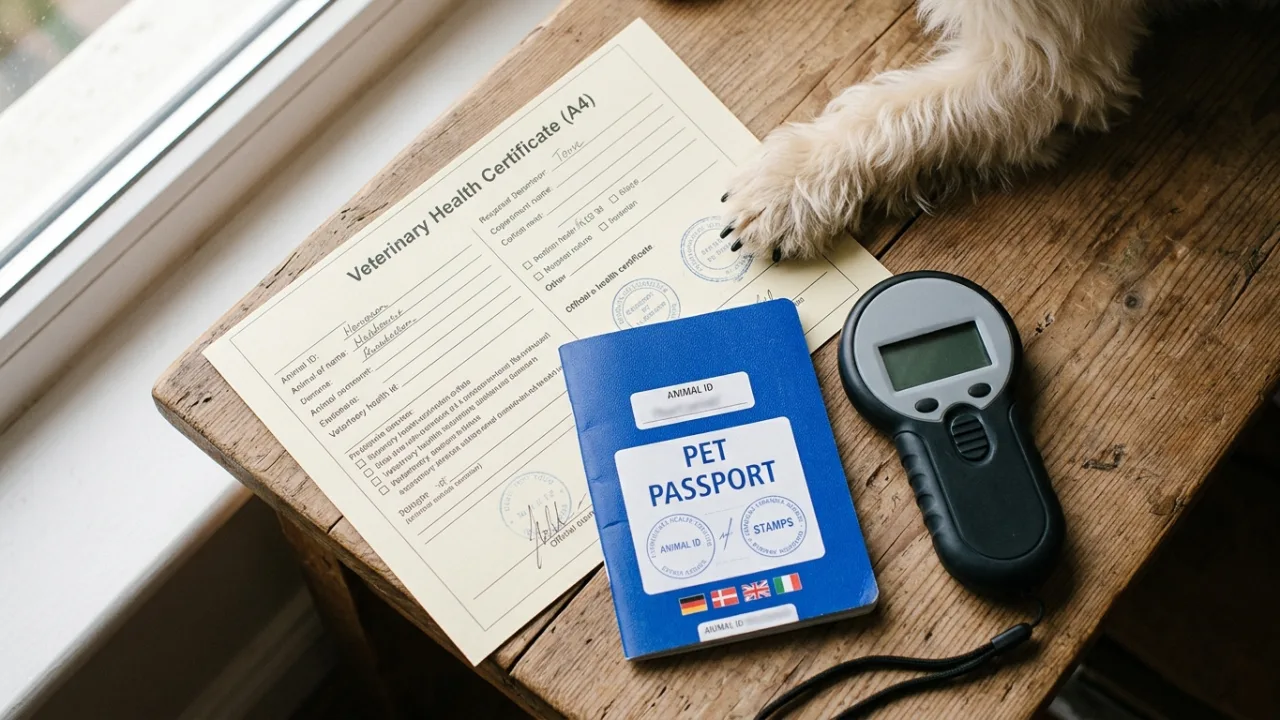
A quick note on the health certificate, sometimes called a CVI (Certificate of Veterinary Inspection): this is separate from a routine wellness exam.
Most airlines and every international destination require it to be signed by a licensed vet within a specific window before travel — often 10 days for domestic and sometimes as little as 5 days for international. Expect to pay $35-$150 for a domestic CVI and $75-$250 for an international one, since it usually requires extra paperwork and sometimes USDA endorsement.
Sedation: What It Costs and Why Many Vets Advise Against It
Sedatives for flying are a common ask, but most veterinarians recommend against sedating dogs for air travel, particularly for cargo. Sedation can affect a dog’s ability to regulate body temperature and balance at altitude, which is a real safety concern in the unpressurized or variably pressurized conditions of a cargo hold.
If your vet does approve a mild anti-anxiety option for an in-cabin flight, expect to pay for an additional vet visit ($50-$100) plus the cost of the medication itself. Non-sedating calming aids — pheromone sprays, anxiety wraps, or vet-approved supplements — are a lower-risk, lower-cost alternative many owners use instead, typically $15-$40.
One-Way vs. Round-Trip Pricing
Here’s something that catches a lot of pet parents off guard: airline pet fees are almost always charged per direction, not per round trip.
If the in-cabin fee is $125 one-way, a round trip will usually cost $250 in pet fees alone — airlines rarely offer a round-trip discount on pet fees the way they sometimes do on human fares. Cargo shipments follow the same logic: you’re quoted and charged separately for each leg. When budgeting, always double a one-way quote for a full round-trip estimate unless the airline explicitly states otherwise.
Service Animals, Emotional Support Animals, and Pets: Cost Differences
Since the Department of Transportation updated its rules in 2021, this category has real cost implications:
- Trained service dogs (task-trained to assist with a disability) can fly in-cabin at no extra charge, with no pet fee, provided you complete the airline’s required DOT form in advance. No seat purchase is required for the dog itself, though it must fit at your feet or in your foot space.
- Emotional support animals lost their special no-fee status under the 2021 rule change. They’re now treated the same as regular pets by every major U.S. airline — meaning the standard pet fee and carrier size rules apply.
- Regular pets pay the standard published pet fee and must fit in an approved carrier.
So to directly answer a common question: no, you generally don’t need to buy your dog a separate seat if it’s a legitimate service animal or a standard pet in an approved carrier — the dog either sits at your feet (service animal) or under the seat in its carrier (pet).
The exception is if you have an oversized dog you want in-cabin regardless of size; some owners have purchased an extra seat for a dog previously, but current policy at most major carriers no longer accommodates pets in a purchased passenger seat outside the approved carrier system.
Private Charters and Pet-Focused Airlines
For dogs that don’t fit standard cabin limits and owners who don’t want cargo at all, pet-focused charter services (such as BARK Air-style operations) let large dogs fly in the main cabin with their owners on private aircraft.
This is by far the most expensive option — often running into the thousands of dollars per dog for a single route, sometimes more than $1,000-$6,000+ depending on route length and aircraft size.
It’s a legitimate option for owners who prioritize comfort and safety over cost, particularly for anxious dogs, large breeds, or brachycephalic dogs who are restricted from standard cargo programs. It is not a budget option, but it solves the size and breed restriction problem that commercial cargo can’t.
Last-Minute and Same-Day Booking Costs
Airlines cap the number of pets allowed per cabin on each flight — often somewhere between 2 and 6 depending on aircraft type. Book late, and you risk two cost problems: the pet quota may already be full (forcing you onto a pricier flight, a different airline, or cargo), or you may be charged a same-day change or booking fee on top of the standard pet fee. As a practical rule, book your dog’s spot as soon as you book your own ticket — ideally weeks in advance for peak travel periods like holidays.
Brachycephalic (Snub-Nosed) Breeds: Extra Costs and Restrictions
Breeds like French Bulldogs, Pugs, English Bulldogs, Boston Terriers, and Pekingese face outright cargo bans on most major U.S. airlines (see: snub-nosed breeds banned from cargo) due to their higher risk of respiratory distress at altitude and in temperature-variable holds. This doesn’t change the in-cabin fee if your snub-nosed dog is small enough to fly in the cabin, but it does mean:
- If your brachycephalic dog is too large for in-cabin travel, you may have no standard cargo option at all with major carriers.
- Your realistic alternatives become a private pet charter (expensive), ground transport (see below), or driving yourself.
- Some airlines require extra veterinary sign-off specifically addressing breed-related health risk, which can add to your vet exam cost.
Flying Internationally: Quarantine, Permits, and Fees
International pet travel costs vary enormously by destination. Some countries have moved to titer-test-based entry with no quarantine at all if you plan far enough ahead; others still require a mandatory quarantine stay.
| Destination | Typical Requirement | Approximate Added Cost |
|---|---|---|
| Hawaii (from mainland US) | Rabies titer test done well in advance qualifies for a short quarantine program (a few days) instead of the full stay; incomplete prep means a longer, costlier quarantine | Roughly $200-$300 for the short program if requirements are met in advance; significantly more for extended quarantine |
| United Kingdom | Advance rabies titer test, microchip, and paperwork through the pet travel scheme; no quarantine if requirements are met ahead of time | $150-$400 in testing/paperwork; quarantine only if requirements aren’t met in advance |
| Australia | Mandatory quarantine at a government-approved facility, generally at least 10 days, plus extensive pre-export testing | Often $2,000-$4,000+ once quarantine facility fees, testing, and permits are combined |
| Japan | Advance notification and a waiting period (which can be shortened with proper prior planning and testing), plus microchip and vaccination requirements | $300-$700 in prep and paperwork if planned well ahead |
Because rules change and vary by your dog’s origin and vaccination history, always verify current requirements directly with the destination country’s official animal import authority (for example, the UK’s DEFRA or the equivalent agriculture/biosecurity department) months before travel — not weeks. Missing a deadline in the required testing timeline is one of the most expensive mistakes pet owners make, since it can force a much longer and pricier quarantine stay.
Case Example: Flying a Dog to Hawaii
Say you’re flying a 30-lb dog from California to Hawaii. If you complete the rabies titer test and paperwork correctly at least 4-5 months ahead, your dog may qualify for the shorter quarantine program.
A realistic total might look like: airline in-cabin fee ($100-$150), health certificate and titer testing ($200-$300), Hawaii program fee (roughly $200-$300), and your usual carrier/vet exam costs ($100-$150) — landing somewhere around $600-$900 total. Miss the prep window, and the quarantine portion alone can climb into the thousands.
Flying a Dog From California: What’s Different
California is a major hub for several airlines (Alaska, United, Southwest, Delta, American all have significant West Coast presence), which generally works in your favor: more nonstop route options mean less risk of the multi-leg fees discussed below, and more competition can mean slightly more flexible pet quotas.
If you’re flying internationally from California — say, to Australia, Japan, or Hawaii — you’ll usually find more direct or one-stop routing than from smaller regional airports, which reduces both cost and stress for your dog. If you’re near a hub airport, it’s almost always worth the extra drive to book a nonstop flight rather than connecting through a smaller regional airport with your dog.
Cheapest Airlines to Fly With a Dog in 2025-2026
Based on published in-cabin pet fees, Frontier and Southwest tend to sit at the lower end for domestic pet travel, with Delta and Alaska often close behind. That said, cheapest is relative — a slightly higher pet fee on an airline with a better nonstop route from your home airport can end up costing you less overall than a cheaper fee that requires a costly, stressful connection. When comparing, look at total trip cost (fare + pet fee + any connection risk) rather than the pet fee in isolation.
A note on airlines with no pet fee: as of now, none of the major U.S. carriers offer free pet transport for standard pets — the only true fee waiver applies to documented service animals under DOT rules. Be skeptical of any airline claiming a blanket free pet policy; confirm directly on their official pet travel page.
Pet Insurance and Travel Insurance Costs
Regular pet health insurance (covering vet bills generally) typically runs $25-$70 per month depending on your dog’s age, breed, and coverage level, and it’s worth having before any trip in case of a travel-related illness or injury. Separately, some travel insurance policies and travel credit cards offer trip-specific pet coverage or reimbursement for pet-related travel disruptions (like a canceled flight affecting a cargo shipment), usually as an add-on costing an extra $10-$40 per trip. Check whether your existing pet insurance already covers travel-related vet visits before purchasing a separate travel-specific policy.
Flying vs. Ground Pet Transport Services vs. Driving
For large dogs, brachycephalic breeds, or anxious pets, professional ground pet transport (climate-controlled vans or trucks that relocate pets door-to-door) is a real alternative to flying — and sometimes cheaper once you total everything up.
| Option | Typical Cost (cross-country example) | Best For |
|---|---|---|
| Flying in-cabin | $250-$600 total | Small dogs, short notice, tight timelines |
| Flying cargo | $500-$1,600+ total | Large dogs when driving isn’t feasible |
| Professional ground pet transport | $800-$2,000+ for long cross-country routes | Anxious dogs, brachycephalic breeds, dogs banned from cargo |
| Driving yourself | Gas, lodging, time — often $300-$900 for a multi-day cross-country trip | Owners with flexible schedules who want full control |
Is it cheaper to drive or fly with a large dog? For shorter distances, driving is almost always cheaper. For long cross-country moves, once you add multiple nights of pet-friendly lodging, fuel, and your own time off work, flying cargo or using a ground pet transport service can come out roughly comparable — the deciding factor is usually your dog’s temperament and health rather than pure cost.
Carrier and Crate Requirements: What to Buy
Every airline publishes specific maximum carrier dimensions for in-cabin travel, and cargo shipments require a hard-sided, IATA-approved kennel sized so your dog can stand, turn around, and lie down naturally. Buying the wrong size is one of the most common — and expensive — mistakes, since it can mean a same-day carrier purchase at an inflated airport price or a denied boarding.
| Airline | Typical In-Cabin Carrier Max (L x W x H, approx.) | Cargo Kennel Standard |
|---|---|---|
| Delta | ~18 x 11 x 11 in | IATA-compliant, sized to dog’s standing/turning room |
| United | ~18 x 11 x 11 in | IATA-compliant via PetSafe program |
| American | ~19 x 13 x 9 in | IATA-compliant |
| Southwest | ~18.5 x 8.5 x 13.5 in | In-cabin only; no cargo program |
| Alaska | ~17 x 11 x 9.5 in | IATA-compliant, checked pet program |
Buying advice: a $35 basic soft-sided carrier is fine for a calm dog on a short domestic hop, but if you fly regularly or your dog is anxious, a mid-range ($75-$120) ventilated carrier with better structure and a washable liner is usually worth the extra cost.
For cargo, don’t buy the cheapest hard-sided crate you can find — get one specifically labeled IATA-compliant, since airlines will turn away non-compliant kennels at check-in (see: IATA-compliant crates reviewed), and buying a replacement at the airport is rarely cheap or convenient.
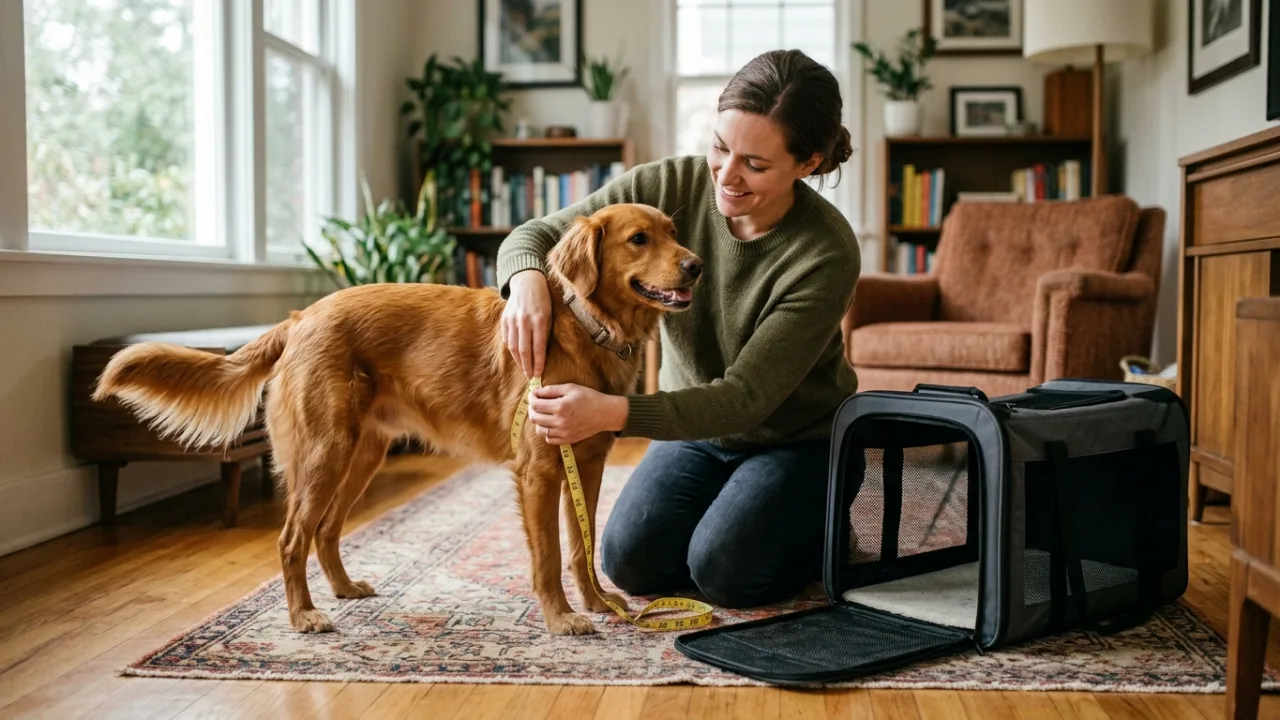
Before you book anything, measure your dog from the floor to the top of the head or ears (whichever is taller) while standing naturally, and from nose to base of tail. Add a couple of inches for the carrier’s internal walls.
Compare that to the airline’s published under-seat dimensions. This five-minute check prevents the single most common surprise fee: discovering at the airport that your dog doesn’t actually fit in-cabin.
Multi-Leg and Connecting Flights
Here’s a detail many owners miss: pet fees are typically charged per segment, not per itinerary. A connecting flight with one layover can mean paying the pet fee twice if the two legs are technically separate bookings or operated by different airlines — even on what looks like a single ticket. Whenever possible, book nonstop, and if a connection is unavoidable, confirm with the airline directly whether the pet fee applies once per itinerary or once per segment before you pay.
Refunds, Cancellations, and Loyalty Program Perks
Most airlines will refund the pet fee if the flight itself is canceled by the airline, similar to how they handle canceled fares. If you cancel voluntarily, refund policies vary — some airlines treat the pet fee like a standard fare (refundable if your ticket is refundable) while others treat it as non-refundable regardless of your ticket type. Always ask specifically about the pet fee’s refund policy when you book, since it’s often handled separately from your own ticket’s fare rules.
On the loyalty side, a small number of airline co-branded credit cards offer occasional statement credits or reimbursements that can apply to pet fees as part of broader travel purchase categories. It’s worth checking your specific card’s benefits guide, since this changes frequently and isn’t standardized across the industry.
Real-World Cost Examples
Example 1: Small Dog, Domestic, In-Cabin
A 12-lb terrier flying round-trip within the US: airline pet fee ($125 x 2 = $250), soft-sided carrier ($60), vet exam and health certificate ($90), microchip already done ($0), calming spray ($20). Total: approximately $420.
Example 2: Large Dog, International, Cargo
A 75-lb Labrador shipped cargo one-way internationally: IATA kennel ($150), cargo shipping fee ($900) (see: flying a 70-lb dog to Europe), vet exam ($120), international health certificate with USDA endorsement ($225), rabies titer test ($200), import permit ($150). Total: approximately $1,745 — and that’s before any destination quarantine fees.
Example 3: Booking Early vs. Last-Minute
Booking a pet’s in-cabin spot three months ahead: standard $125 fee, full choice of flight times. Booking the same trip four days before departure: the pet quota on the preferred flight is full, forcing a rebooking onto a different flight with a $75 same-day change fee added on top of the $125 pet fee — a difference of roughly $75-$150 just for waiting.
Pre-Flight Cost Checklist
- Vet exam completed within the airline’s required window
- Health certificate (CVI) signed and dated correctly
- Airline pet fee paid and confirmation saved
- Approved carrier measured against airline’s exact dimensions
- Microchip registered with current contact information, plus a physical ID tag
- Food, collapsible water bowl, and absorbent liner packed for the carrier
- Calming aid or comfort item (if vet-approved) on hand
International Travel Document and Cost Checklist
- Import permit (if required by destination) applied for well in advance
- Rabies titer test completed within the destination’s required timeframe
- USDA endorsement on the international health certificate
- Quarantine deposit or booking confirmed (if applicable) with the destination’s official animal import agency
- Return-trip requirements checked — some countries have separate rules for pets leaving versus entering
Day-of-Travel Checklist for Cargo Shipments
- Arrive at the cargo facility at the specific time window the airline requires (often earlier than passenger check-in)
- Bring printed copies of the health certificate and all permits, not just digital copies
- Confirm the flight isn’t delayed enough to trigger a cargo pet embargo related to ground temperature
- Attach a clear ID label to the kennel with your contact information and destination details
- Avoid feeding a large meal right before travel; follow your vet’s specific pre-travel feeding guidance
Common Mistakes That Cost Pet Parents Extra
- Not measuring the carrier against the airline’s exact specs before booking, leading to a denied boarding or a rushed, overpriced airport carrier purchase.
- Assuming round-trip pet fees are discounted — they’re almost always charged per direction.
- Booking the pet spot late and finding the flight’s pet quota already full.
- Letting the health certificate expire before the actual travel date — most are only valid for a specific number of days.
- Assuming an emotional support animal flies free under outdated pre-2021 rules.
- Not checking seasonal cargo embargoes before booking a summer or winter cargo shipment for a large dog.
- Skipping the destination country’s official import site and relying on outdated blog information for international quarantine rules.
Expert Insight: What Vets and Pet Travel Specialists Want You to Know
Veterinarians who regularly sign off on travel health certificates generally caution against sedating dogs for flights, especially cargo flights, since sedation can interfere with a dog’s ability to maintain body temperature and balance — both important at altitude.
If your dog has anxiety around travel, it’s worth discussing non-sedating options with your vet well before your trip date, not the week before, so you have time to test how your dog responds.
Pet relocation specialists who coordinate international pet shipments often point to the same hidden costs tripping up first-time flyers: the USDA endorsement processing fee, the cost of a properly sized IATA kennel (often underestimated), and destination-side handling fees charged by the receiving airport’s cargo facility — all of which show up after the airline’s own fee and can add several hundred dollars that weren’t part of the original budget.
From the airline operations side, cargo pricing is structured around kennel-plus-dog weight rather than a flat fee because cargo space and handling capacity are priced by volume and weight the same way any other freight is — a large kennel takes up proportionally more hold space regardless of how light or heavy the dog inside it actually is, which is why oversized carriers can trigger a higher charge even for a smaller dog.
Troubleshooting Common Problems
My dog no longer fits the in-cabin limit close to departure
Contact the airline immediately. Depending on the carrier, you may be able to switch to their checked-pet or cargo program for an additional fee, or rebook onto a route where a cargo option exists. Don’t wait until the airport to discover this.
I’m hit with an unexpected fee at the airport
Most surprise fees come from oversized carriers or missing paperwork. Keep a printed copy of every document and your carrier’s exact measurements on your phone so you can push back on a fee that seems inconsistent with the airline’s published policy.
My flight with a cargo pet is delayed or canceled
Ask the airline’s cargo desk directly about their pet care protocol during delays — most airlines with dedicated pet programs have a process for holding animals in a climate-controlled area, but policies vary. This is exactly the kind of situation trip insurance with pet coverage is designed to help offset financially (see: travel insurance that covers pets during transit).
My dog was denied boarding due to breed or size
Ask for the specific policy in writing and check whether an alternative — a different routing, a larger cabin aircraft with more legroom, or a cargo program that does accept the breed — exists before assuming you have no options.
My health certificate expires before the travel date
Rebook a vet appointment immediately; most clinics can turn around a new certificate quickly, but this will mean a second vet exam fee. This is exactly why booking your vet appointment as close as reasonably possible to your actual departure date (within the required window) is smarter than doing it too early.
Final Thoughts
The honest answer to how much it costs to fly a dog is: it depends heavily on size, cabin versus cargo, breed, and destination — but very few pet parents get away with just paying the airline’s advertised fee. Budget for the full picture: vet exam, health certificate, an airline-compliant carrier, and — if you’re heading overseas — the paperwork and possible quarantine costs specific to your destination.
Book early, measure your dog and carrier before you pay for anything, and when in doubt about breed restrictions or a large dog’s options, compare cargo, private charter, and ground transport side by side before deciding.
Want more practical, no-fluff guidance for traveling with your pet? Explore more travel and care guides on All Happy Pets to plan your dog’s next trip with confidence.
Frequently Asked Questions
Can I buy my 50 lb dog a seat on a plane, and how much does that cost?
Most major airlines no longer allow you to purchase a separate passenger seat for a pet outside an approved carrier. A 50 lb dog typically exceeds standard in-cabin weight limits, so it would need to travel in cargo or via a checked-pet program instead, which is priced by kennel and dog weight rather than as a seat purchase.
Can you bring a 70 lb dog on a plane, or does it have to go in cargo?
A 70 lb dog is too large for any standard in-cabin carrier program, so it would need to fly as cargo or through the airline’s checked-pet service. Costs typically range from $500-$1,000+ domestically depending on the airline and kennel size, or you could consider ground pet transport as an alternative.
What is the cheapest way to fly with a dog?
The cheapest option is usually a small dog flying in-cabin, in a basic approved soft-sided carrier, on a nonstop domestic flight booked well in advance. Choosing an airline with a lower published pet fee and avoiding connecting flights (which can trigger per-segment fees) keeps the total cost as low as possible.
How much does it cost to fly a dog internationally?
International pet travel typically costs $400-$1,500+ once you add the airline fee, USDA-endorsed health certificate, import permits, and rabies titer testing on top of standard vet and carrier costs. Destinations with mandatory quarantine, like Australia, can push total costs to $2,000-$4,000 or more.
Is it cheaper to drive or fly with a large dog?
For shorter distances, driving is almost always cheaper since you avoid cargo fees and specialized kennels entirely. For long cross-country trips, once you factor in multiple nights of pet-friendly lodging, fuel, and time off work, flying cargo or using a ground pet transport service can end up costing about the same.
Do airlines charge extra for oversized pet carriers?
Airlines generally don’t charge an extra fee for a carrier that’s larger than allowed — instead, they simply won’t permit it in the cabin, requiring you to switch to a checked or cargo option at a higher price, or purchase a properly sized carrier on the spot, which often costs more at the airport.
Are there airlines that don’t charge a pet fee?
No major US airline currently offers free pet transport for standard pets. The only exception is a documented, task-trained service animal, which flies at no charge under current DOT rules. Emotional support animals are treated as regular pets and are charged the standard pet fee.
How much does it cost to fly a cat vs. a dog?
Airline pet fees for cats and dogs are typically identical for in-cabin travel since they’re based on the carrier fitting under the seat, not the species. Costs diverge mainly around cargo shipping and international requirements, where dog-specific rules (like breed restrictions) don’t usually apply to cats.
What happens if my dog exceeds the in-cabin weight limit after booking?
Contact the airline immediately rather than waiting until the airport. Depending on availability, you may be able to switch to a checked-pet or cargo program for an additional fee, rebook a different flight, or in some cases arrange ground pet transport instead.
Can I get a refund on my pet fee if my flight is canceled?
If the airline cancels the flight, the pet fee is generally refunded similarly to the fare itself. If you cancel voluntarily, refund policies vary by airline and aren’t always tied to your ticket’s own refund rules, so it’s worth confirming the pet fee’s specific cancellation policy at booking.